Jomon Kuriakose
Indian chef, culinary director, and hospitality professional
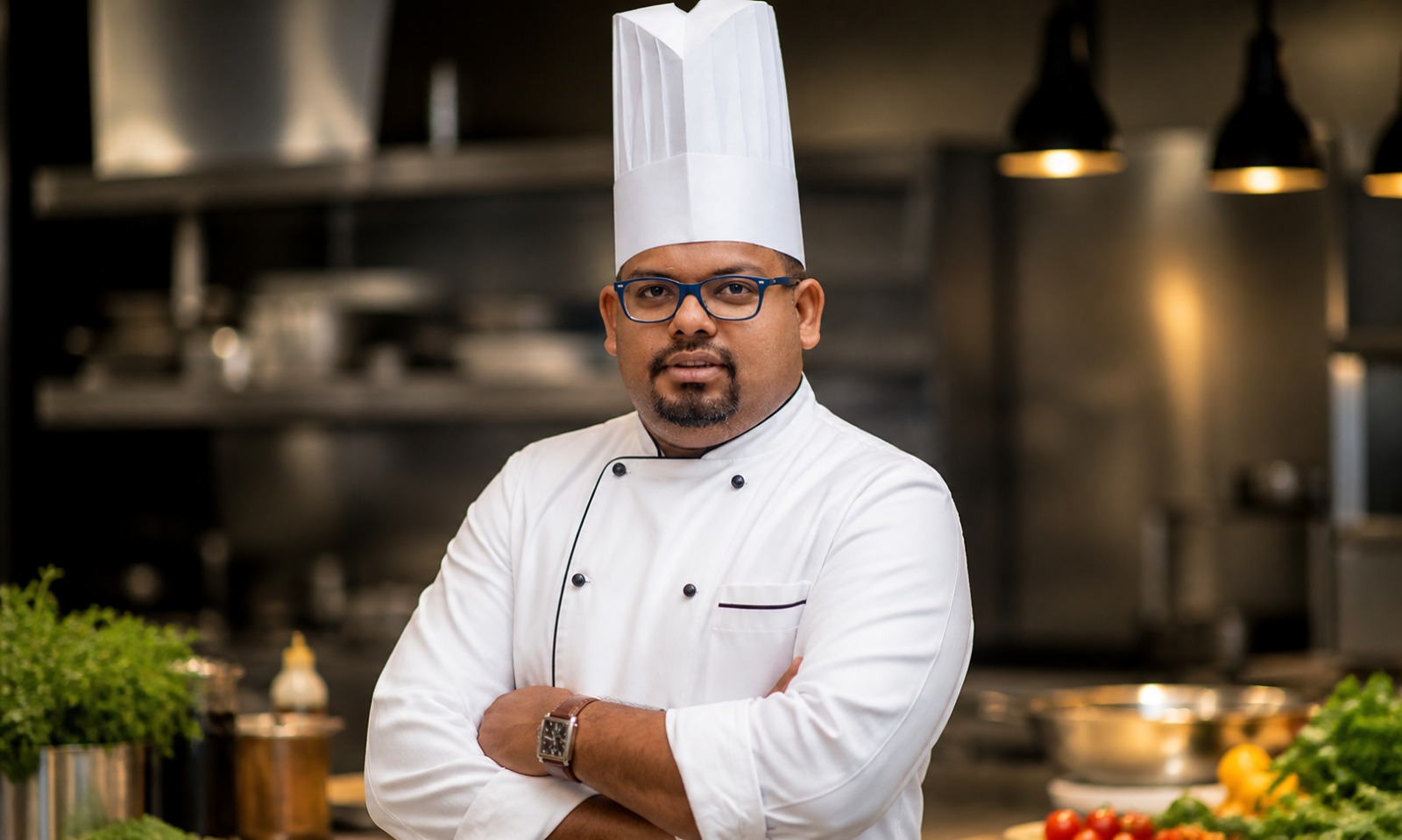
Jomon Kuriakose, also known as Chef Jomon, is the Director of Culinary at The Tiffin Box a chain of international restaurants since April 2024. He was previously the Executive Chef at LaLiT London, England making him one of the youngest executive chefs in London. and before that Chef de Cusine at LaLiT London. senior Chef de Partie and then Sous-chef under Vivek Singh (chef) at the Cinnamon Collections in London. He has also participated in MasterChef (British TV series) 2018 where he trained Spencer Matthews and Frankie Bridge. He was a competitor on the National Chef of the Year, 2021 and also writes regularly for Malayala Manorama Online.
Key Facts
Full Name: Jomon Kuriakose
Place of Birth: Mavelikkara, Kerala, India
Education: Bachelor’s in Hotel Management, Sarosh Institute (Mangalore University)
Current Role: Director of Culinary, The Tiffin Box (since April 2024)
Previous Roles: Executive Chef, Chef de Cuisine, Sous Chef, Senior Chef de Partie
Known For: Indian cuisine, Anglo-Indian fine dining, global culinary leadership
Media Presence: Contributor to Malayala Manorama Online
Television: MasterChef UK (2018), trainer to Spencer Matthews and Frankie Bridge
From Mavelikkara to London
Jomon Kuriakose’s story begins in Mavelikkara, a town in Kerala where food is less a profession and more a lived cultural rhythm. Like many Malayali households, his early exposure to cooking came not through formal training but through observation, watching spices being ground, flavours layered, and meals prepared with an instinctive understanding of balance.
Yet, unlike the romanticised narratives of chefs discovering their passion early, Jomon’s path was more structured. He chose hospitality as a profession, enrolling at the Sarosh Institute of Hotel Administration under Mangalore University. The training gave him a technical foundation, but more importantly, it exposed him to the rigour of professional kitchens, where creativity must operate within systems.
This combination, cultural intuition and institutional discipline, would later define his culinary identity.
First Steps into the Industry
His early career at Speciality Restaurant Pvt Ltd marked his entry into India’s organised hospitality sector. These formative years were less about visibility and more about repetition, learning kitchen hierarchies, mastering prep work, and understanding the economics of restaurant operations.
The decisive shift came in 2008 when he moved to London, a move that many Indian chefs aspire to but few navigate successfully. London’s culinary scene is both opportunity and test, deeply competitive, culturally diverse, and unforgiving of inconsistency.
At Bombay Palace, where he worked as Chef de Partie, Jomon began to refine his approach to Indian cuisine in an international context. This was not the Kerala kitchen he grew up in. Here, Indian food had to translate across cultures, retaining authenticity while meeting global expectations.
It was also where he began engaging with Anglo-Indian fine dining, a hybrid space that requires both historical understanding and technical finesse.
Climbing the London Culinary Ladder
Progression in London kitchens is rarely rapid, and Jomon’s ascent followed the traditional hierarchy. From Chef de Partie to Senior Chef de Partie and then Sous Chef, each role came with increased responsibility, not just for cooking but for team management, inventory control, and service precision.
A significant phase of his career was his time under Chef Vivek Singh at the Cinnamon Collection. Singh is known for redefining Indian cuisine in the UK, moving it away from stereotype-driven menus toward a more refined, ingredient-driven approach.
Working in such an environment exposed Jomon to a different philosophy of cooking, one that prioritised narrative as much as technique. Dishes were not just prepared; they were contextualised, drawing from history, geography, and personal interpretation.
This phase sharpened his understanding of modern Indian gastronomy, where authenticity is not static but evolving.
The LaLiT London Phase: Defining Years
If the earlier years were about learning and adaptation, his tenure at Baluchi, The LaLiT London, marked consolidation.
Joining as Chef de Cuisine in 2017, Jomon was tasked with leading a kitchen that represented Indian fine dining within a luxury hospitality framework. Baluchi was not just a restaurant; it was part of a larger narrative positioning Indian cuisine within premium global spaces.
His elevation to Executive Chef made him one of the youngest in London to hold such a role, a distinction that reflects both capability and trust. But the title alone does not capture the complexity of the role.
As Executive Chef, he was responsible for menu engineering, team leadership, consistency across services, and maintaining a culinary identity that aligned with both brand and audience expectations.
This period also saw him refining his signature style, rooted in Indian flavours but expressed through contemporary plating and technique.
Media, Competitions, and Public Recognition
Jomon’s engagement with the culinary world has extended beyond the kitchen.
His involvement with the 2018 edition of MasterChef UK, where he trained public figures such as Spencer Matthews and Frankie Bridge, brought his work into a more public-facing space. It demonstrated his ability to translate professional cooking into accessible formats, an increasingly important skill in a media-driven culinary landscape.
Participation in the National Chef of the Year competition in 2021 further positioned him within the UK’s professional culinary circuit, where such competitions serve as benchmarks of technical and creative ability.
Alongside this, his writing for Malayala Manorama Online reflects another dimension of his engagement, communicating food not just as craft but as culture.
Leadership at The Tiffin Box
In April 2024, Jomon took on the role of Director of Culinary at The Tiffin Box, an international restaurant chain. This transition marks a shift from individual kitchen leadership to strategic culinary direction.
In this capacity, his role extends beyond cooking. It involves defining menus across locations, maintaining brand consistency, training teams, and aligning culinary output with business strategy.
The challenge here is scale. Unlike a single restaurant, a chain requires systems that ensure uniformity without diluting quality. For a chef trained in high-end kitchens, this shift requires recalibrating priorities, balancing creativity with operational efficiency.
His appointment signals the growing global appetite for structured Indian dining experiences that go beyond traditional formats.
Awards and Recognition
Recognition has followed his steady rise, though it has not been the defining feature of his career.
Being named a Culinary Hero in 2021 by the Craft Guild of Chefs places him within a respected professional network in the UK. Inclusion among the 100 Most Influential Malayalis in the UK reflects his broader cultural impact, while the News Person of the Year award in 2019 by British Malayali highlights his visibility within the diaspora.
These acknowledgments, while significant, are byproducts of sustained work rather than isolated achievements.
Style, Philosophy, and Culinary Identity
At the core of Jomon’s cooking is a negotiation between authenticity and evolution.
His work in Anglo-Indian cuisine reflects an understanding that food is historically layered. Rather than presenting Indian cuisine as monolithic, he engages with its regional and colonial intersections, reinterpreting them for contemporary audiences.
Technically, his approach leans toward precision and balance. Flavours are controlled, plating is deliberate, and there is an emphasis on consistency, a hallmark of chefs trained in structured kitchens.
As a leader, he operates within the realities of high-pressure environments, where discipline and communication are as critical as creativity.
The Malayali Global Narrative
Jomon Kuriakose’s journey is part of a broader Malayali diaspora story, one that spans healthcare, technology, and increasingly, culinary arts.
Kerala’s long history of migration has produced professionals who operate across geographies while retaining cultural anchors. In the culinary world, this translates into chefs who bring regional sensibilities into global contexts.
What distinguishes Jomon is not just his presence in London, but his ability to navigate its competitive ecosystem without losing the essence of his culinary roots.
He represents a shift from the earlier generation of diaspora chefs who often adapted Indian food to Western tastes, toward a newer generation that asserts its authenticity while still engaging globally.
Legacy and Future Outlook
At this stage in his career, Jomon Kuriakose is not yet a finished story. His trajectory suggests continued evolution, particularly in how Indian cuisine is positioned within global dining formats.
As Director of Culinary, his influence now extends beyond individual dishes to shaping how Indian food is experienced across multiple markets.
For aspiring chefs from Kerala, his journey offers a realistic template, one that acknowledges both opportunity and effort. It underscores that global success in the culinary world is less about sudden breakthroughs and more about sustained discipline.
In an industry where visibility often overshadows substance, Jomon’s career stands out for its methodical progression and grounded approach. That, perhaps, is what makes him not just successful, but an outstanding Malayali professional whose work continues to bridge cultures, cuisines, and continents.
Awards and recognition
He was recognised as a culinary hero (2021) by the Craft Guild of Chefs
100 most influential Malayalis in the UK
The news person of the year 2019, British Malayali