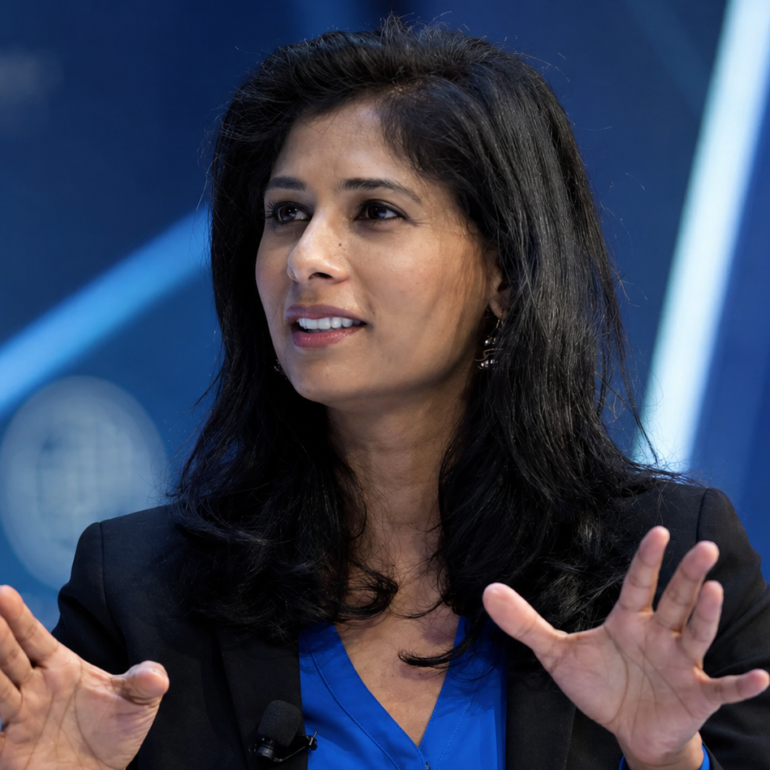
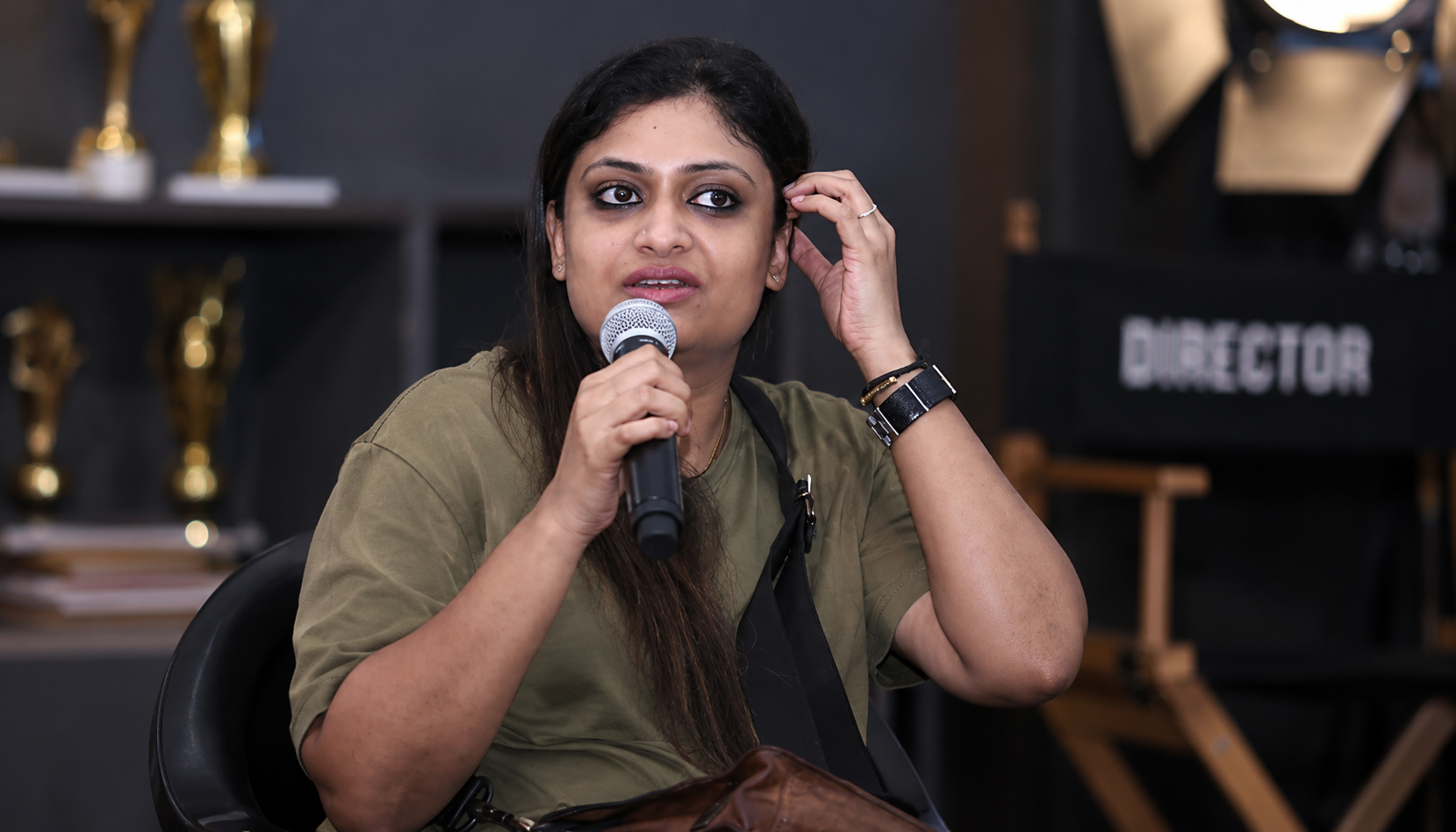
Geetu Mohandas
Indian former actress and director
Gayatri Das known professionally as Geetu Mohandas is an Indian former actress and director known for her works in Malayalam cinema. Geetu’s official name is Gayatri Das. Affectionately called Geetu by her family, the name was adopted as her screen name when she starred in her fourth movie Onnu Muthal Poojyam Vare in 1986 with Mohanlal in the lead role.
Key Factors
Full Name: Gayatri Das
Professional Name: Geetu Mohandas
Born: 8 June 1981
Occupation: Actress, Film Director, Screenwriter, Producer
At international film festivals, where cameras flash endlessly and filmmakers move through crowded corridors speaking the language of cinema, Geetu Mohandas often appears with a quiet intensity that feels strikingly different from the noise around her. When Moothon premiered at the Toronto International Film Festival in 2019, audiences encountered not merely another Indian independent film, but a raw, deeply human story shaped by loneliness, violence, desire, migration, and identity. Long before that moment, however, Kerala had already known her face. Malayali audiences remembered the child with luminous eyes from Onnu Muthal Poojyam Vare, the little girl who carried grief and innocence with astonishing emotional depth on screen. What they did not yet know was that the child actor they adored would eventually become one of Indian cinema’s most daring auteurs.
Over the years, Geetu Mohandas has transformed herself from a beloved actress into an internationally respected filmmaker whose work travels effortlessly between Kerala’s emotional landscapes and global festival circuits. Her cinema resists easy categorisation. It is intimate but political, poetic yet unsettling, deeply local while globally resonant. In an industry often driven by formula and spectacle, she has emerged as an outstanding Malayali artist who chooses emotional truth over comfort, silence over excess, and artistic risk over predictability.
The Child Who Captured Kerala’s Heart
Before international critics discussed her visual language and festival programmers celebrated her artistic courage, Geetu Mohandas was simply “Geetu” to Malayali audiences, a child actor who arrived on screen with remarkable emotional intelligence.
Born Gayatri Das in Kochi in 1981, she entered cinema at an age when most children are still discovering language itself. Her screen name emerged from family affection. “Geetu,” the name used at home, soon became familiar across Kerala after her appearance in Onnu Muthal Poojyam Vare alongside Mohanlal in 1986.
The film left an extraordinary emotional impact on viewers. Geetu played a fatherless child who develops a tender connection with an anonymous telephone caller. The role demanded vulnerability far beyond conventional child performances, and audiences responded immediately. Kerala cinema has always had a strong emotional relationship with child characters, but Geetu’s performance felt unusually authentic. She did not perform sentiment mechanically. She inhabited loneliness with startling naturalism.
Soon after, she appeared in the Tamil film En Bommukutty Ammavukku, itself emotionally rooted in the Malayalam classic Ente Mamattikkuttiyammakku. Even as a child artist, Geetu possessed something difficult to teach, emotional restraint. Her expressions rarely felt exaggerated. There was silence in her acting, and that silence later became central to her filmmaking style as well.
Malayali audiences watched her grow up on screen through the late 1980s and 1990s. Unlike many child actors whose careers disappear with adulthood, Geetu carried forward a recognisable emotional intimacy with viewers.
Reinventing Herself Beyond Stardom
Transitioning from child actor to adult performer is notoriously difficult in Indian cinema. Many actors become trapped by audience nostalgia or pushed toward superficial glamour roles. Geetu Mohandas chose another route entirely.
Her adult acting career began with Life Is Beautiful, again featuring Mohanlal, before she moved into films such as Thenkasi Pattanam, Valkannadi, and Nammal Thammil. Yet what distinguished her career choices was an evident refusal to surrender completely to commercial formulas.
She gravitated toward emotionally layered roles rather than ornamental presence.
Directors increasingly recognised her capacity for interiority. On screen, she carried a thoughtful stillness that contrasted sharply with the louder emotional performances common in mainstream Malayalam cinema during that period. Even in ensemble casts, Geetu often appeared emotionally self-contained, as though her characters were processing worlds invisible to others.
That instinct eventually aligned perfectly with filmmakers interested in psychological realism and emotional complexity. Among them, director Shyamaprasad played a particularly important role.
Akale and the Turning Point
If Geetu Mohandas’ child performances introduced her to Kerala, Akale revealed the depth of her artistic maturity.
Released in 2004 and directed by Shyamaprasad, the film adapted emotional themes inspired by Tennessee Williams’ The Glass Menagerie into a distinctly Malayali atmosphere of fragility, repression, and familial pain. Geetu played Rose, a deeply vulnerable woman navigating emotional isolation within a damaged family structure.
The performance changed how critics viewed her.
There was extraordinary control in the way she portrayed emotional collapse. Instead of theatrical breakdowns, Geetu used pauses, hesitant glances, and physical stillness to communicate psychological distress. Critics noted how fully she surrendered herself to Rose’s loneliness.
The role earned her the Kerala State Film Award for Best Actress and the Filmfare Award for Best Actress – Malayalam.
But more importantly, Akale became a bridge.
It connected the actor Geetu Mohandas had been with the filmmaker she would eventually become. The emotional themes that later shaped her directorial work, alienation, displacement, silence, wounded families, were already visible here.
The Birth of a Filmmaker
In 2009, Geetu Mohandas founded her production company, Unplugged.
The name itself suggested a creative philosophy stripped of excess. Rather than pursuing mainstream commercial filmmaking, she moved toward intimate, emotionally charged storytelling rooted in realism.
Her directorial debut came through the short film Kelkkunnundo? (Are You Listening?).
The film premiered at the International Film Festival Rotterdam and quickly drew attention for its quiet emotional devastation. The story explored loneliness, migration, and emotional disconnection with remarkable restraint. It later won the National Film Award along with multiple international honours.
What distinguished Geetu’s filmmaking immediately was atmosphere.
She trusted silence. She allowed landscapes, faces, and pauses to carry emotional meaning. Her visual grammar resisted melodrama. Instead, she drew viewers into emotional spaces gradually, almost hypnotically.
Migration, identity, and emotional exile became recurring themes in her work. Characters in her films often exist between worlds, geographically, emotionally, or psychologically displaced. That sense of in-betweenness would later define her finest cinema.
Liar’s Dice and Global Recognition
When Liar’s Dice premiered at the Sundance Film Festival in 2014, Geetu Mohandas arrived decisively on the global cinema map.
The film followed a woman travelling across northern India searching for her missing migrant-worker husband. At one level, it was a road film. At another, it was a meditation on migration, labour invisibility, vulnerability, and survival within contemporary India.
The film’s emotional power came from its minimalism.
Geetu resisted explanatory dialogue and dramatic manipulation. Instead, she built emotional tension through observation. The mountainous landscapes felt both beautiful and isolating. Silence became political. Human absence became narrative presence.
International critics praised the film’s visual precision and emotional authenticity. Indian critics recognised it as part of a new wave of independent cinema capable of speaking globally without losing cultural specificity.
Liar’s Dice received two National Awards and became India’s official submission for the 87th Academy Awards in the Best Foreign Language Film category.
The achievement mattered enormously for Malayalam cinema as well.
Historically, Malayalam filmmakers have often balanced realism with literary sophistication, but Geetu brought those traditions into contemporary global arthouse language. Comparisons emerged with filmmakers from Iranian, European, and Latin American independent cinema traditions, not because she imitated them, but because her storytelling possessed similar emotional patience and humanistic depth.
Moothon: Fearless Malayalam Cinema on the World Stage
If Liar’s Dice established Geetu Mohandas internationally, Moothon confirmed her as one of India’s boldest contemporary filmmakers.
Premiering at the Toronto International Film Festival in 2019 and opening the Mumbai Academy of the Moving Image festival, Moothon confronted themes rarely explored with such honesty in Indian cinema, queer identity, masculinity, violence, trauma, and migration.
The film followed a young boy searching for his older brother in Mumbai, only to uncover hidden emotional and sexual realities.
What made Moothon remarkable was its refusal to simplify identity.
The film moved between tenderness and brutality with unsettling fluidity. It portrayed queer desire not as spectacle or tokenism, but as emotionally lived experience within environments shaped by violence and shame.
Geetu’s visual language evolved significantly here. The film was more ambitious structurally and emotionally than her earlier work. Yet it retained her signature fascination with damaged human beings searching for belonging.
Critics across India and internationally praised the film’s courage and aesthetic confidence. Many noted how unusual it was for an Indian filmmaker, especially from mainstream industry backgrounds, to approach such themes without compromise.
Moothon also reinforced Geetu Mohandas’ reputation as an artist unwilling to dilute difficult truths for comfort or commercial safety.
Personal Life and Creative Partnership
Geetu Mohandas’ marriage to cinematographer and filmmaker Rajeev Ravi has often been viewed as one of Indian cinema’s most intellectually compelling creative partnerships.
Ravi himself is known for his deeply textured visual realism and politically grounded cinema. Together, they belong to a generation of Malayalam filmmakers who expanded the boundaries of regional cinema into internationally recognised artistic spaces.
Their partnership appears rooted not in celebrity spectacle but shared artistic curiosity.
Geetu’s exposure to different countries during childhood, India, Malaysia, and Canada, also shaped her worldview significantly. That global exposure perhaps explains why her films move comfortably between local specificity and universal emotional themes.
Yet despite international recognition, her cinema remains emotionally tied to Kerala’s cultural sensibilities, especially its understanding of silence, emotional repression, migration, and social hierarchy.
Geetu Mohandas as an Outstanding Malayali
Malayalam cinema has long produced directors celebrated for realism and literary depth. Yet Geetu Mohandas occupies a distinctive position within that tradition.
She emerged not from film-school intellectualism alone, but from lived experience within cinema itself, first as a beloved child actor, then as a performer navigating artistic identity, and finally as a filmmaker reshaping narrative possibilities.
Her importance also extends beyond cinema aesthetics.
Geetu represents a generation of Malayali women artists who refused to remain confined within supporting creative roles. She entered spaces historically dominated by men, independent filmmaking, festival cinema, political storytelling, and established her own artistic authority without imitation.
For young filmmakers, especially women in regional cinema industries, her journey demonstrated that Malayalam cinema could speak globally without sacrificing complexity or cultural texture.
Her work carries Kerala into international cinema spaces not through tourism aesthetics or nostalgia, but through emotional intelligence and political honesty.
Legacy and Future
Today, Geetu Mohandas stands among the most respected voices in Indian independent cinema, not because she produces films frequently, but because each project carries unmistakable artistic conviction.
Future works such as Toxic continue to generate anticipation precisely because audiences and critics now expect cinema that challenges emotional and narrative boundaries.
What makes her legacy particularly compelling is its evolution. She began as a child audiences loved instinctively. She became an actor critics admired seriously. Then she transformed into a filmmaker whose work travels across Sundance, Rotterdam, Toronto, and global cinema conversations without ever abandoning emotional roots in Kerala.
In an era where cinema often prioritises speed, noise, and algorithmic visibility, Geetu Mohandas continues to create films that demand stillness, empathy, and reflection. That is perhaps why her work lingers so deeply. She is not merely an acclaimed director or former actress, but an outstanding Malayali artist who turned vulnerability into cinematic language and carried the emotional soul of Malayalam storytelling onto the world stage.
Awards
As director
International Film Festival of India
- 2009 – IFFI Golden Lamp Tree Award for Best Film and Director – Kelkkunnundo Film Chamber of Commerce
International Awards
- 2017 – Global filmmaking award for story in Sundance Film Festival 2016 – Moothon
Mumbai International Film Festival
- 2010 – Jury Award – Kelkkunnundo
Awards for Moothon
- 2020- 3 awards at NYIFF for Best Film, Best Actor, Best Child Actor
- 2020- 3 awards at NYIFF for Best Supporting Actor for Shashank Arora, Best Child Actor for Sanjana Dipu,Best Screenplay for Geetu Mohandas
- 2020- 2 awards at INDO – GERMAN FILM WEEK 2020 for Audience Choice Award, Best Supporting Actor for Roshan Mathew
- 2020- 2 awards at Iat NEWYORK INDIAN FILM FESTIVAL for 4 nominations for Best Film, Best Director, Best Actor, Best Child Actor 2020
- 2020- won the Best Film and Jury Prize at the prestigious Festival du Film d’Asie du Sud – FFAST in Paris
Festivals for Moothon
- 2020- selected to the 18th ANNUAL IFFLA at Los Angeles, California
- 2020- screened at London Indian Film Festival and Birmingham Indian Film Festival.
- 2020- premiered at 43rd GOTEBORG FILM FESTIVAL 2020 In Sweden
- 2020-24th edition of International Film Festival of Kerala – IFFK
Awards for Liar’s Dice
- 2014- Sofia International Film Festival -Special Mention award & FIPRESCI AWARD for best film
- 2014- New York Indian Film Festival – Best Actress award
- 2014 – Special Jury award at the 18th Sofia International Film Festival – Liar’s Dice
- 2014- Pesaro International Film Festival- Lino Micciche Award for the Best Film
- 2014- Granada Cines del Sur Film Festival- Bronce Alhambra award
As actress
Kerala State Film Awards
- 2004- Kerala State Film Award for Best Actress – Akale, Oridam
- 1986- Kerala State Film Award for Best Child Artist – Onnu Muthal Poojyam Vare
Filmfare Awards South
- 2004-Filmfare Award for Best Actress – Malayalam – Akale
Asianet Film Awards
- 2004-Special Jury Mention – Akale
Kerala Film Critics Association Awards
- 2001- Best Actress – Shesham
- 2004- Special Jury Award – Akale
Mathrubhumi, Medimix film
- 2004-Best character Actress – Akale
Ramu Karyat award
2020- Promising director Award -Moothon