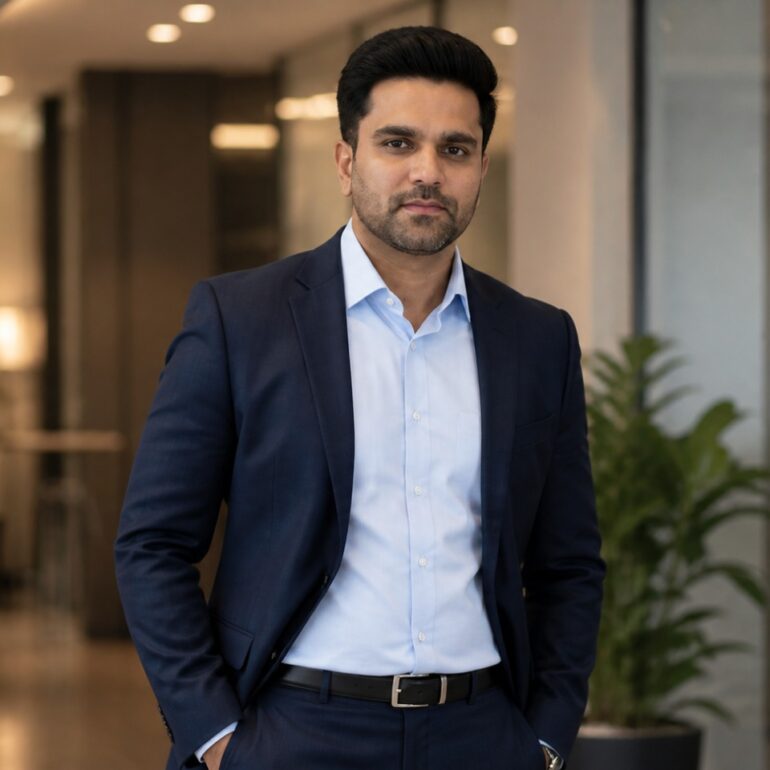

Dr. Ajit Ravi
Founder of Pegasus
Dr. Ajit Ravi, A prominent figure in the fields of fashion, media and pageantry. He is the founder of Pegasus, which organises beauty pageants and fashion events in India. He has organized over 2,300 national and international pageants over the past 20 years, including for major brands such as Miss Asia, Miss South India, and Miss Glam World. He is also the owner and editor of Unique Times magazine. Apart from fashion, he has directed commercials and documentaries and ventured into direction with the Malayalam film Raavu. He is the owner and editor of Unique Times, a leading business and lifestyle magazine. They are also associated with brands like DQUE.
Key Facts
Full Name: Dr. Ajit Ravi
Place: Kerala, India
Title: Founder, Pegasus Global Pvt Ltd; Editor, Unique Times
Occupation: Media Entrepreneur, Pageant Director, Publisher, Filmmaker
Known For: Organizing national and international pageants; building Pegasus; publishing Unique Times; film direction
Entering the World of Media and Fashion
Dr. Ajit Ravi’s journey into fashion and media does not follow the familiar arc of celebrity designers or film personalities. Instead, it is rooted in production, organization, and the mechanics of building platforms.
Publicly available information about his early life remains limited, and specific details about his formative years are not consistently documented. What is clearer is his early entry into media production and event management, sectors that require a combination of logistical precision and creative direction.
In India, particularly in Kerala, the fashion and pageantry industries have historically been smaller and less institutionalized compared to metropolitan hubs like Mumbai or Delhi. Entering this space meant not just participating in an industry but helping define its structure.
The Birth of Pegasus
The founding of Pegasus Global Pvt Ltd marked a turning point. Pegasus was conceived as an integrated platform for organizing beauty pageants, fashion events, and related media productions.
Unlike standalone event organizers, Pegasus positioned itself as a recurring ecosystem, producing multiple pageants annually across different categories and regions. Over time, it became associated with titles such as Miss Asia, Miss South India, and Miss Glam World.
The significance of Pegasus lies less in any single event and more in its cumulative output. Organizing pageants is operationally complex, involving talent scouting, grooming, sponsorship acquisition, venue management, and media coordination. Scaling this to thousands of events over two decades suggests a model built on repeatability and network building.
Scale as Strategy
The figure often associated with Ajit Ravi’s work, over 2,300 national and international pageants, is striking. While such numbers should be interpreted within the context of varying event sizes and formats, they nevertheless indicate sustained activity in a niche industry.
India’s pageantry ecosystem operates differently from Western markets. It is less centralized and more fragmented, with multiple organizers, regional competitions, and evolving standards. In this environment, consistency becomes a competitive advantage.
Pegasus appears to have leveraged this dynamic by creating a pipeline of events that cater to different demographics, regional, national, and international. This approach not only sustains business operations but also creates recurring opportunities for participants.
For aspiring models, particularly from smaller cities, such platforms can serve as entry points into the fashion and entertainment industries. However, the broader impact of pageantry on career trajectories varies widely and is not always linear.
Shaping a Regional Pageantry Ecosystem
One of Ajit Ravi’s more notable contributions is his role in institutionalizing pageantry within Kerala and extending it beyond regional boundaries.
Kerala has traditionally had a strong presence in cinema and literature but a comparatively smaller footprint in organized fashion and pageantry. Platforms like Miss South India helped create visibility for regional talent, while international titles aimed to position participants on a broader stage.
At the same time, the pageant industry globally has faced scrutiny over issues ranging from representation to commercialization. In India, these debates are less formalized but still present. Organizers like Pegasus operate within this evolving landscape, balancing aspirational branding with changing social expectations.
Publishing and the Media Extension
Ajit Ravi’s expansion into publishing through Unique Times reflects a broader strategy of content ownership.
Magazines in the lifestyle and business segments serve multiple purposes. They act as branding tools, content platforms, and networking channels. For someone operating in fashion and pageantry, publishing offers a way to extend influence beyond events.
Unique Times positions itself as a business and lifestyle publication, covering entrepreneurship, fashion, and culture. While detailed circulation and readership data are not widely available, its existence adds another layer to Ravi’s media ecosystem.
Visual Storytelling and Film
Ajit Ravi’s work also extends into visual media, including commercials, documentaries, and feature films. His directorial debut, Raavu, marks an attempt to transition from event production to narrative storytelling.
The move from organizing pageants to directing films is not entirely unexpected. Both domains involve managing talent, visual aesthetics, and audience engagement. However, filmmaking introduces a different set of challenges, including narrative coherence, critical reception, and market dynamics.
Information about the film’s commercial and critical performance remains limited in widely available sources, making it difficult to assess its broader impact. Nonetheless, it signals Ravi’s interest in expanding into content creation beyond live events.
Brand Collaborations and Business Philosophy
Ajit Ravi’s association with brands such as DQUE highlights another dimension of his work, partnerships and ecosystem building.
Pageantry is inherently linked to branding. From grooming partners to fashion designers and sponsors, each event functions as a convergence point for multiple stakeholders. Building long-term relationships with such partners is essential for sustainability.
Ravi’s business model appears to emphasize continuity over disruption. Rather than positioning Pegasus as a disruptive startup, it functions more like a steady production house, generating recurring events and maintaining industry relationships.
Opportunities and Industry Realities
The pageantry and fashion event industry in India operates in a complex environment. On one hand, it offers opportunities for visibility, networking, and career entry. On the other, it faces challenges related to standardization, credibility, and long-term value creation for participants.
Criticism of the industry, where it exists, often revolves around commercialization and the proliferation of titles. With numerous pageants operating simultaneously, differentiation becomes difficult, and the value of individual titles can vary.
For organizers, this creates a balancing act between scale and perceived prestige. While Pegasus has focused on scale, the broader question of how pageantry translates into sustained careers remains open.
Legacy in Motion
Dr. Ajit Ravi’s career is best understood not through a single breakthrough moment but through accumulation, events, platforms, and extensions into media.
He represents a category of entrepreneurs who operate behind the scenes, building structures that others perform within. In industries like fashion and pageantry, where visibility often centers on participants, such roles can be overlooked.
Yet, the infrastructure matters. Without organizers, platforms, and production ecosystems, the industry itself cannot function.
Looking Ahead
The future of pageantry and fashion events in India is likely to be shaped by digital platforms, changing social norms, and evolving definitions of beauty and representation.
For someone like Ajit Ravi, the challenge will be adaptation, integrating digital engagement, maintaining relevance, and navigating a landscape that is becoming more critical and more global at the same time.
His expansion into publishing and film suggests an awareness of these shifts, though the long-term success of these ventures will depend on execution and audience reception.
Reflection
Dr. Ajit Ravi’s journey is not defined by a single brand or moment, but by a sustained effort to build and maintain a multi-layered ecosystem across pageantry, media, and content. In a sector often driven by visibility and short cycles, his work stands out for its continuity and scale. Whether through thousands of events, a magazine platform, or ventures into film, his influence is embedded in the structures he has helped create. It is a legacy still unfolding, shaped by persistence, adaptation, and an undeniably outstanding commitment to staying in motion.