A timeless performance art where humour, mythology, theatre, and wisdom come alive inside Kerala’s sacred temple halls
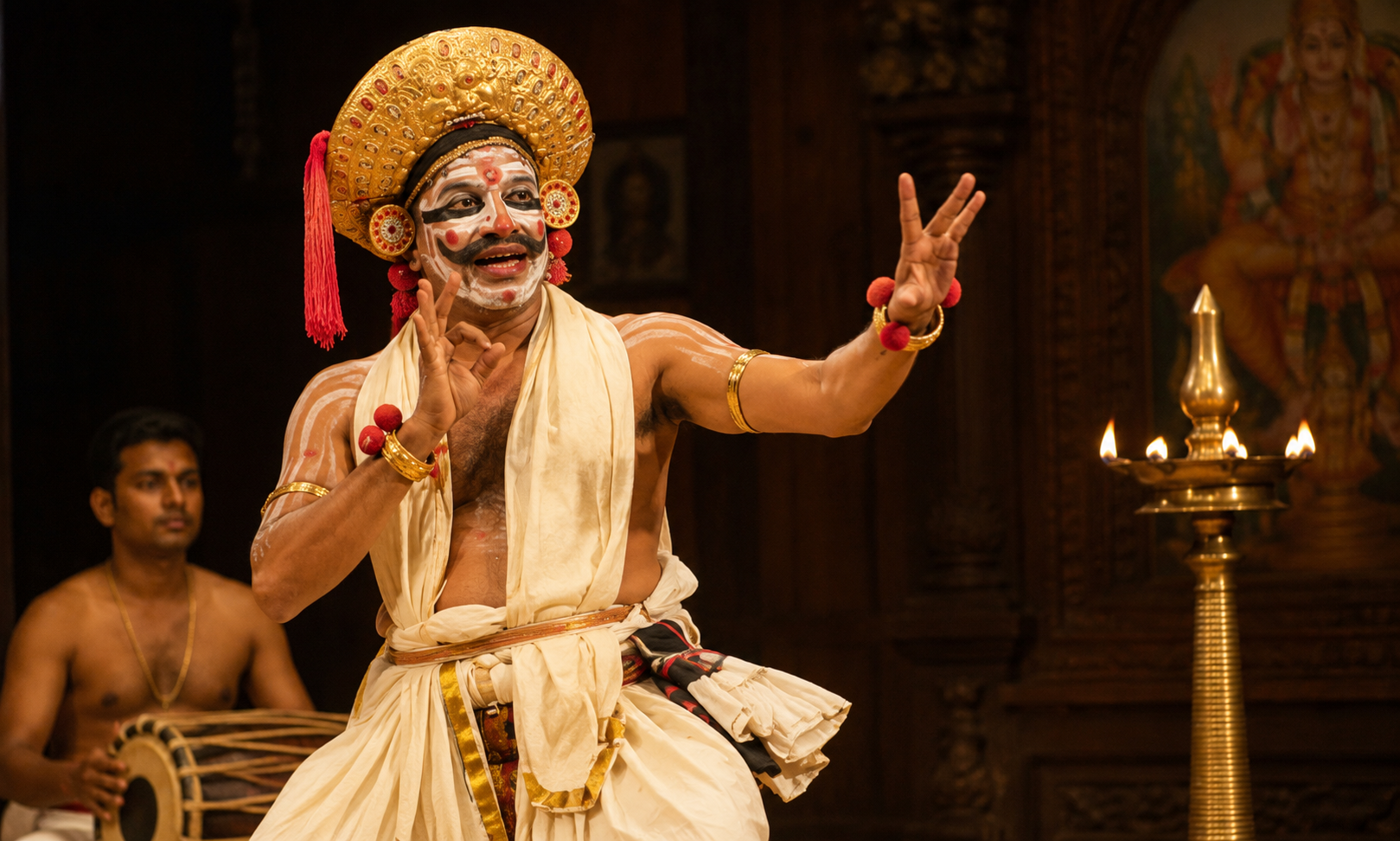
Inside a traditional Kerala temple, oil lamps flicker softly against ancient wooden pillars. The deep sound of the mizhavu drum slowly fills the air. A lone performer steps forward with expressive eyes, dramatic gestures, and a voice that moves between seriousness and laughter. Within moments, stories from the Mahabharata and Ramayana begin to unfold, not through grand dance movements, but through storytelling, wit, emotion, and powerful acting.
This is Chakyar Koothu, one of the oldest and most fascinating temple art forms of Kerala. More than a performance, it is a living tradition that combines storytelling, spirituality, humour, theatre, Sanskrit literature, and social criticism into a unique cultural experience.
For centuries, Chakyar Koothu has been performed inside temple theatres known as Koothambalams, where performers transformed epic stories into engaging performances filled with wisdom and satire. Even today, the art form continues to captivate audiences with its rare ability to make people laugh, think, and reflect at the same time.
What is Chakyar Koothu?
The word “Koothu” in Malayalam roughly means performance or enactment. Unlike classical dance forms that focus heavily on movement, Chakyar Koothu is mainly a storytelling and acting tradition.
In this art form, a single performer narrates stories from Hindu epics such as the Ramayana and Mahabharata, along with stories from the Puranas. The performer uses dramatic expressions, humour, dialogue, gestures, and improvisation to bring these stories to life.
One of the most unique aspects of Chakyar Koothu is its conversational style. The performer often explains ancient Sanskrit verses in simple Malayalam, making complex stories accessible to ordinary people.
At times, the performance feels surprisingly modern. Chakyar artists traditionally included jokes, satire, and comments about society, politics, and even audience members sitting in front of them. Because of this sharp wit and audience interaction, many people compare Chakyar Koothu to an early form of stand-up comedy, though its roots are deeply classical and spiritual.
The result is a performance that feels intellectual, entertaining, emotional, and highly personal all at once.
Where is Chakyar Koothu Performed?
Traditionally, Chakyar Koothu is performed inside the Koothambalam, a special temple theatre found in certain Kerala temples. These theatre spaces are considered sacred and are built according to ancient architectural principles.
Koothambalams are usually made of wood with sloping tiled roofs, beautifully carved pillars, and a calm spiritual atmosphere. The design helps amplify both sound and expression, creating an intimate connection between performer and audience.
Temple festivals were historically the most important occasions for Chakyar Koothu performances. Audiences gathered not only for entertainment but also for spiritual reflection and cultural learning.
Several places in Kerala remain closely associated with this art form:
- Guruvayur Temple
- Vadakkunnathan Temple
- Kerala Kalamandalam
Today, performances are also held at cultural centers, heritage festivals, and tourism events across Kerala, allowing wider audiences to experience this ancient art.
How the Performance Happens
A Chakyar Koothu performance is visually simple compared to Kathakali, but emotionally and intellectually intense.
The performer traditionally wears a special costume along with ornaments and a distinctive headgear that resembles the hood of a serpent. Sandalwood paste is applied on the forehead and body, adding to the sacred appearance.
The real power of the performance lies in expressions and dialogue. A Chakyar artist can shift between humour, anger, devotion, sarcasm, and wisdom within seconds. Facial expressions, eye movements, and voice modulation are central to the storytelling.
The performer usually begins with Sanskrit verses taken from classical texts. These verses are then explained in Malayalam, often with humorous commentary and modern references.
The mizhavu drum plays a major role in creating dramatic intensity. This large copper drum is traditionally played by members of the Nambiar community. The rhythmic beats enhance emotions and help shape the pace of the performance.
Another instrument used is the ilathalam, a type of metallic cymbal that maintains rhythm.
Audience interaction is one of the most fascinating parts of Chakyar Koothu. Performers may directly address spectators, tease individuals, or make spontaneous jokes based on current social situations. This improvisational style makes every performance feel unique.
Chakyar Koothu and Humour
Humour is at the heart of Chakyar Koothu.
Even while narrating serious mythological stories, performers often include witty observations about society, politics, human behavior, and everyday life. They may jokingly criticize social attitudes or gently mock audience members in a playful manner.
This ability to mix classical storytelling with satire makes Chakyar Koothu feel surprisingly contemporary even today.
In many ways, the performer acts like a storyteller, actor, philosopher, and social commentator at the same time. The audience is not just watching a story unfold, they are actively participating through laughter, reactions, and emotional connection.
While comparisons to modern stand-up comedy are sometimes made, Chakyar Koothu remains rooted in spiritual and literary traditions that are centuries old.
The Role of the Chakyar Community
Traditionally, Chakyar Koothu was performed by members of the Chakyar community, who were hereditary temple performers and scholars.
The Nambiar community played the mizhavu drum during performances, while Nangyarammas, women from the Nambiar community, were associated with related art forms and supporting roles.
Chakyar Koothu is closely connected with two other important Kerala temple arts:
- Nangiar Koothu – a solo performance tradition performed by women
- Koodiyattam – one of the oldest surviving Sanskrit theatre traditions in the world
Together, these art forms represent a rich cultural ecosystem deeply rooted in Kerala temple heritage.
Legendary Artists Who Preserved the Art
No discussion about Chakyar Koothu is complete without mentioning Māni Mādhava Chākyār, one of the greatest masters of the art form.
He played a historic role in bringing Chakyar Koothu and Koodiyattam beyond temple walls and introducing them to wider audiences across India. His performances on All India Radio and Doordarshan helped preserve and popularize Kerala’s temple arts during the modern era.
Māni Mādhava Chākyār was respected for his extraordinary mastery of Sanskrit literature, expressions, improvisation, and storytelling techniques. His performances combined scholarship with emotional depth and humour.
Other legendary artists who contributed significantly include:
- Ammannur Madhava Chakyar
- Painkulam Raman Chakyar
These artists dedicated their lives to preserving Kerala’s traditional performance heritage and training future generations.
Chakyar Koothu Today
Today, Chakyar Koothu continues to survive through cultural institutions, temple festivals, and dedicated artists who work to preserve the tradition.
Organizations like Kerala Kalamandalam play an important role in training students and keeping the art form alive for future generations.
Performances are now organized not only in temples but also at cultural festivals, tourism events, museums, and heritage centers. Tourists visiting Kerala increasingly seek out live performances to experience the state’s deeper cultural traditions.
At the same time, traditional arts face modern challenges such as changing entertainment habits, limited audiences, and reduced financial support. Preserving these art forms requires continued cultural awareness and public interest.
Despite these challenges, Chakyar Koothu remains a respected symbol of Kerala’s artistic intelligence and storytelling tradition.
Conclusion
Chakyar Koothu is far more than an ancient performance tradition. It is a living expression of Kerala’s humour, spirituality, storytelling, literature, theatre, and cultural wisdom.
Inside the quiet atmosphere of a temple theatre, a single performer can transform mythological stories into something deeply human, emotional, and surprisingly relevant even today. Through laughter, satire, dramatic expressions, and philosophical insight, Chakyar Koothu continues to connect audiences with centuries of Kerala’s heritage.
For anyone interested in Kerala’s culture, witnessing a live Chakyar Koothu performance is an unforgettable experience. It offers not just entertainment, but a rare glimpse into one of India’s oldest and most intelligent storytelling traditions.
In every drumbeat, every expression, and every moment of humour, the spirit of Kerala’s temple arts continues to live on.