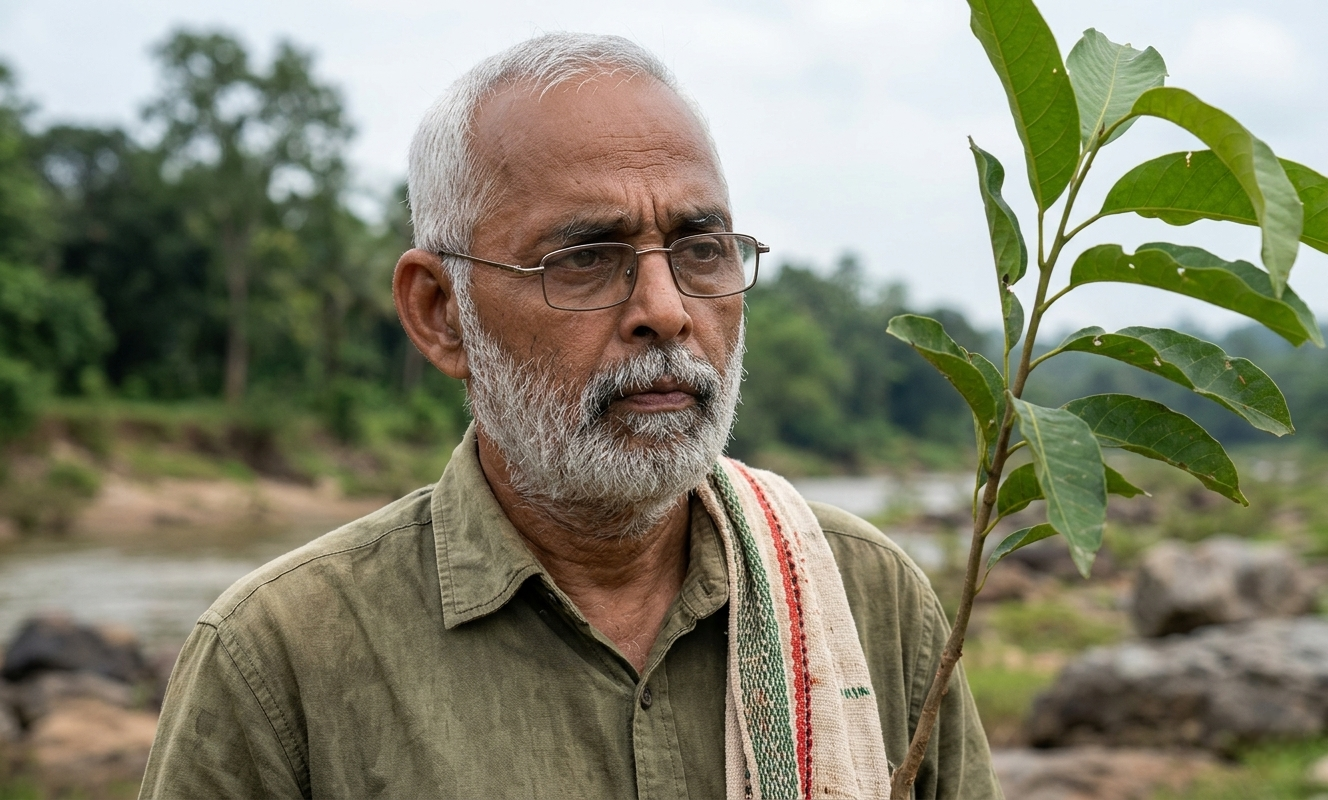
C. R. Neelakandan
Environmental activist, writer
Born: 1957 (age 68–69)
Place: Karuvannoor, Thrissur district, Kerala, India
Title: Environmental activist, writer
The Hearing Room
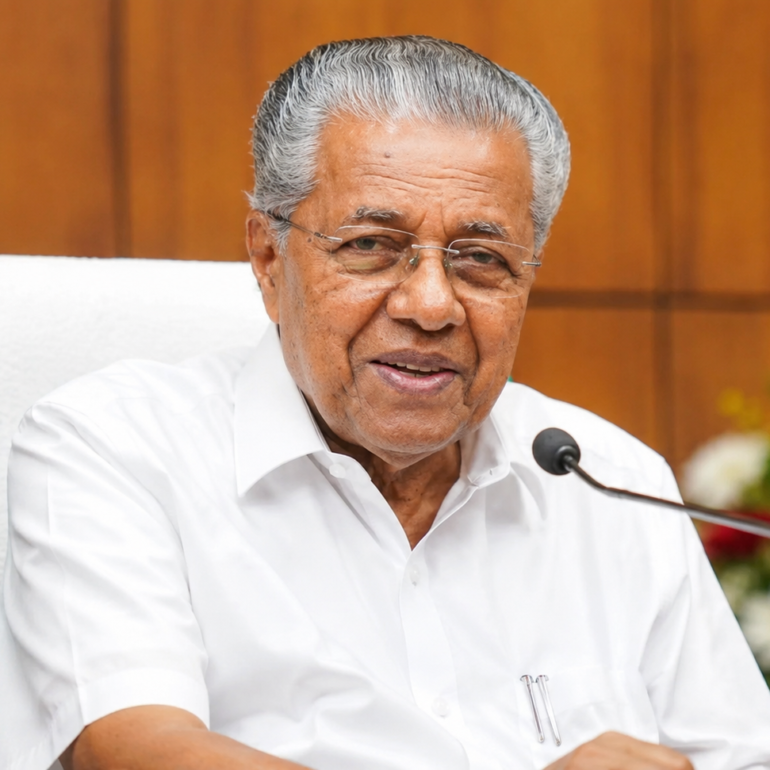
The microphone passes from official to resident, from engineer to activist, each voice carrying its own version of necessity. The room is dense with argument, charts, maps, testimonies. When C. R. Neelakandan speaks, it is not to end the debate but to complicate it. He brings in data, precedent, ecological consequence, often shifting the discussion away from immediate gain toward long-term cost. In Kerala, where development projects frequently intersect with fragile ecosystems, such interventions rarely produce consensus. They produce friction. It is an outstanding kind of presence, one that resists resolution and insists on scrutiny, even when the momentum of policy moves in the opposite direction.
Intellectual Formation: A Political Ecology Takes Shape
C. R. Neelakandan’s trajectory cannot be understood outside Kerala’s unique socio-political landscape.
Educated in engineering, he trained in a discipline typically aligned with infrastructure and development. This technical background is significant. It allowed him to engage with environmental issues not only as a moral or ideological concern but as a matter of systems, design, and consequence.
Kerala, during his formative years, was already a site of intense political engagement. High literacy, active civil society networks, and a history of grassroots movements created an environment where public debate was both expected and sustained.
Neelakandan’s early influences drew from this milieu. He was shaped by:
- Left-leaning political discourse
- Grassroots activism traditions
- Emerging environmental concerns linked to rapid development
This convergence produced a framework that would define his work, development as a contested space, not an unquestioned good.
Rise as an Environmental Voice: From Participant to Public Figure
Neelakandan’s emergence as a public environmental voice was gradual.
He became involved in local campaigns addressing ecological degradation, issues that were often specific, localized, and initially underreported. These included concerns around resource extraction, pollution, and land use.
Over time, his role expanded from participant to spokesperson.
His ability to articulate complex environmental issues in accessible terms contributed to his visibility. He was not confined to field-level activism. He moved into public discourse, writing, speaking, and engaging with media.
This dual positioning, on-ground and in public debate, allowed him to influence both community-level understanding and policy conversations.
Major Environmental Interventions: Conflict as Method
Neelakandan’s activism spans multiple environmental issues, often intersecting with development policies.
- River Sand Mining
Kerala’s rivers have long been subject to sand mining, driven by construction demand. Neelakandan has been vocal about its ecological consequences, riverbed degradation, groundwater impact, and long-term hydrological instability.
- Industrial Pollution
He has engaged in campaigns addressing pollution from industrial units, raising concerns about regulatory failures and environmental compliance.
- Endosulfan Issue
While not the sole figure in the movement, he has been part of the broader discourse surrounding the endosulfan pesticide tragedy in Kerala, emphasizing public health and environmental accountability.
- Waste Management
Urban waste management has emerged as a major issue in Kerala, and Neelakandan has contributed to debates around decentralized systems, policy failures, and community resistance to centralized waste facilities.
Across these interventions, a pattern emerges. He positions environmental issues not as isolated incidents but as systemic failures, linked to governance, regulation, and economic priorities.
Writer, Thinker, Public Intellectual: Language as Intervention
Beyond activism, Neelakandan has established himself as a writer and public intellectual.
His columns, essays, and books engage with themes such as Sustainable development, Environmental justice, Public policy and governance and Science communication.
His writing style is direct, often argumentative, and grounded in both data and observation. He avoids technical abstraction when addressing general audiences, translating complex environmental issues into accessible narratives.
This has expanded his influence. He is not limited to protest spaces. He participates in shaping how environmental issues are understood within Kerala’s public sphere.
Ideology and Approach: Development Under Question
At the core of Neelakandan’s work is a critique of unregulated development.
He challenges the assumption that economic growth and infrastructure expansion are inherently beneficial. Instead, he emphasizes Ecological limits, Long-term sustainability and Community impact.
His approach aligns with strands of environmental thought that question centralized, large-scale development models in favor of decentralized, context-specific solutions. However, this position is not without complexity.
Kerala itself faces competing demands, urbanization, employment generation, infrastructure needs. In such a context, environmental critique often intersects with economic concerns.
Neelakandan’s work operates within this tension, advocating for caution without always providing easily implementable alternatives.
Controversies and Criticism: The Limits of Opposition
Neelakandan’s positions have attracted criticism.
Some critics argue that his stance tends toward obstruction, opposing projects without sufficiently engaging with economic imperatives. Others question whether environmental activism, as practiced in such contexts, can scale into actionable policy frameworks.
There is also the broader critique often directed at environmental movements in India, that they can delay infrastructure projects deemed necessary for development.
These criticisms are not easily dismissed. They reflect a genuine conflict between ecological preservation and economic expansion.
Neelakandan’s response, implicit in his work, is that the cost of ignoring environmental limits is often deferred rather than avoided. The debate, therefore, remains unresolved.
The Politics of Communication
As a public figure, Neelakandan is defined by his communication style.
He is articulate, often direct, and willing to engage in debate. His presence in media discussions and public forums reflects an ability to navigate both technical and political language.
This dual fluency enhances his influence. He is not confined to activist circles. He interacts with policymakers, media, and academic audiences.
At the same time, this visibility exposes him to scrutiny. Public intellectuals operate within a space where ideas are constantly contested.
Ecology in an Era of Acceleration
C. R. Neelakandan’s legacy lies in his contribution to Kerala’s environmental consciousness.
He has helped frame environmental issues as public concerns rather than isolated technical problems. His work has influenced both grassroots activism and policy discourse, even where it has not led to immediate outcomes.
In the context of climate change, his interventions gain renewed relevance.
Kerala’s experience with floods, landslides, and coastal erosion underscores the urgency of integrating ecological considerations into development planning.
For younger activists and thinkers, his work offers both inspiration and caution. It demonstrates the importance of sustained engagement, while also highlighting the challenges of translating critique into policy.
His legacy is not defined by consensus. It is defined by persistence.
It is an outstanding reminder that environmental debates are not meant to be comfortable. They are meant to be necessary, ongoing, and, at times, unresolved.