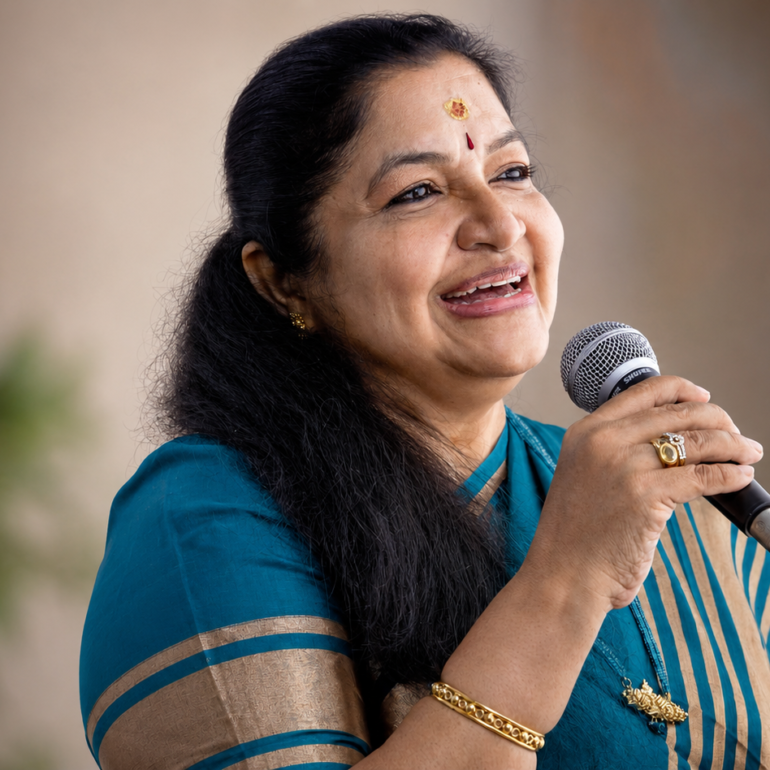

Amal Neerad
Indian Film Director, Cinematographer and Producer
Amal Neerad is one of the most influential filmmakers in Malayalam cinema, renowned for his visually striking storytelling and stylish filmmaking techniques. Beginning his career as a cinematographer before moving into direction, he has redefined the visual language of Malayalam films with a blend of technical excellence and commercial appeal. His films are known for their sleek cinematography, gripping narratives, and memorable action sequences, making him one of the industry’s most sought-after directors.
Key Facts
• Full Name: Amal Neerad
• Born: 4 October 1976
• Birthplace: Kochi, Kerala, India
• Profession: Film Director, Cinematographer, Producer
• Education: Graduate of the Satyajit Ray Film and Television Institute (SRFTI), Kolkata
A Filmmaker with a Distinct Visual Language
Amal Neerad ISC (born 13 February 1978) is an Indian film director, cinematographer, and producer who primarily works in Malayalam cinema. Over the years, he has built a reputation as one of the most visually distinctive filmmakers in contemporary Indian cinema, known for his stylized frames, deliberate pacing, and strong cinematic identity.
What sets him apart is not just direction, but a dual command over cinematography and storytelling—an overlap that continues to define his films even today.
Early Life and Student Leadership
Amal Neerad was born in Kollam, Kerala, and later completed his schooling and college education in Kochi. During his student years, he was actively involved in campus politics and was elected as the college union chairman of Maharaja’s College, Ernakulam, serving two consecutive terms in 1992–93 and 1993–94.
This early exposure to leadership and public engagement ran parallel to his growing interest in visual storytelling, eventually steering him toward formal film education.
Film Education and National Recognition
In 1995, he joined the Satyajit Ray Film and Television Institute in Kolkata, part of its first batch. His training there played a decisive role in shaping his cinematic sensibilities, particularly his approach to framing, lighting, and visual rhythm.
During his diploma period, his short feature Meena Jha brought him national attention. He received a National Film Award – Special Mention for Best Cinematography in 2001, marking an early recognition of his technical precision and visual maturity.
Before entering mainstream cinema, Amal Neerad worked across music videos, documentaries, and advertising films, gradually refining a strong visual identity that would later become central to his filmmaking style.
Entry into Indian and Malayalam Cinema
His diploma film caught the attention of director Ram Gopal Varma, leading to opportunities in Hindi cinema. Amal Neerad worked on a series of films in quick succession, including James (2005), Darna Zaroori Hai (2006), and Shiva (2006), establishing himself as a cinematographer with a bold, modern visual approach.
In 2004, he shot the Malayalam film Black, directed by Ranjith and starring Mammootty, marking his entry into Malayalam cinema as a cinematographer.
These early years positioned him at the intersection of two film industries, giving him exposure to both mainstream Hindi cinema and evolving Malayalam storytelling.
Directorial Debut and Rise of a Visual Style
Amal Neerad made his directorial debut in 2007 with Big B, starring Mammootty. While the film had a modest box office performance, it quickly gained cult status for its stylistic execution.
The film introduced a new visual grammar to Malayalam cinema—slow-motion sequences, noir-inspired lighting, stylized action choreography, and a tightly controlled mood-driven narrative. Big B marked a clear shift from conventional realism to a more graphic, cinematic aesthetic.
This was followed by Sagar Alias Jacky Reloaded, starring Mohanlal, a continuation of the 1987 classic Irupatham Noottandu. The film further expanded his action-oriented visual language.
In 2010, he directed Anwar, featuring Prithviraj Sukumaran in the lead role, continuing his exploration of intense, stylized narratives.
Production House and Creative Expansion
In 2012, Amal Neerad launched Amal Neerad Productions with Bachelor Party, which he also directed. The film reflected his interest in ensemble storytelling and urban youth narratives.
In 2013, he produced the anthology film 5 Sundarikal, contributing as a filmmaker in the segment Kullante Bharya, starring Dulquer Salmaan. He also worked as cinematographer for Aami, directed by Anwar Rasheed.
In 2014, he directed and co-produced Iyobinte Pusthakam alongside Fahadh Faasil. The period thriller, set against the backdrop of colonial-era Munnar, is widely considered one of his most accomplished works. With layered storytelling, strong visual composition, and atmospheric depth, the film solidified his reputation as a filmmaker capable of merging narrative ambition with visual precision.
Continued Success and Mainstream Impact
In 2017, he directed Comrade in America starring Dulquer Salmaan. The film explored political consciousness and migration themes, wrapped in his signature visual style.
He followed this with Varathan (2018), starring Fahadh Faasil and produced jointly with him. The film marked a shift toward more grounded survival thriller territory while still retaining his controlled visual tone.
Amal Neerad later reunited with Anwar Rasheed as cinematographer for Trance, again working with Fahadh Faasil.
In 2022, he collaborated once more with Mammootty after a gap of 15 years for Bheeshma Parvam, which became one of the biggest commercial successes in Malayalam cinema. The film reinforced his ability to combine mass appeal with stylized filmmaking.
Personal Life
Amal Neerad was born in Kollam but grew up in Kochi. He is married to actress Jyothirmayi, with whom he tied the knot on 4 April 2015.
Cinematic Identity and Influence
Amal Neerad’s cinema is often defined by its visual confidence. He is known for treating framing, lighting, and movement as narrative tools rather than technical choices.
His films frequently rely on atmosphere as much as dialogue, with strong attention to colour palettes, pacing, and sound design. Over time, his style has influenced a younger generation of filmmakers who view visual storytelling as central to mainstream cinema.
While his approach has sometimes divided opinion, it has also helped expand the visual vocabulary of Malayalam cinema, pushing it toward more stylized and genre-driven storytelling.
Legacy in Contemporary Malayalam Cinema
Amal Neerad occupies a distinct space in Malayalam cinema—neither fully conventional nor entirely experimental, but firmly auteur-driven.
From Big B to Bheeshma Parvam, his journey reflects a consistent commitment to visual storytelling. Whether through stylized action films or layered period dramas, his work continues to challenge expectations of what Malayalam cinema can look and feel like.
His contribution lies not just in the films he has made, but in how he has changed the way visual design is perceived in mainstream storytelling.