For decades, Kerala has been known for its educated workforce, thriving diaspora, tourism industry, and remittance-driven economy. Yet despite its long coastline and strategic location along one of the world’s busiest shipping routes, the state remained largely absent from the global maritime map. That narrative is now beginning to change.
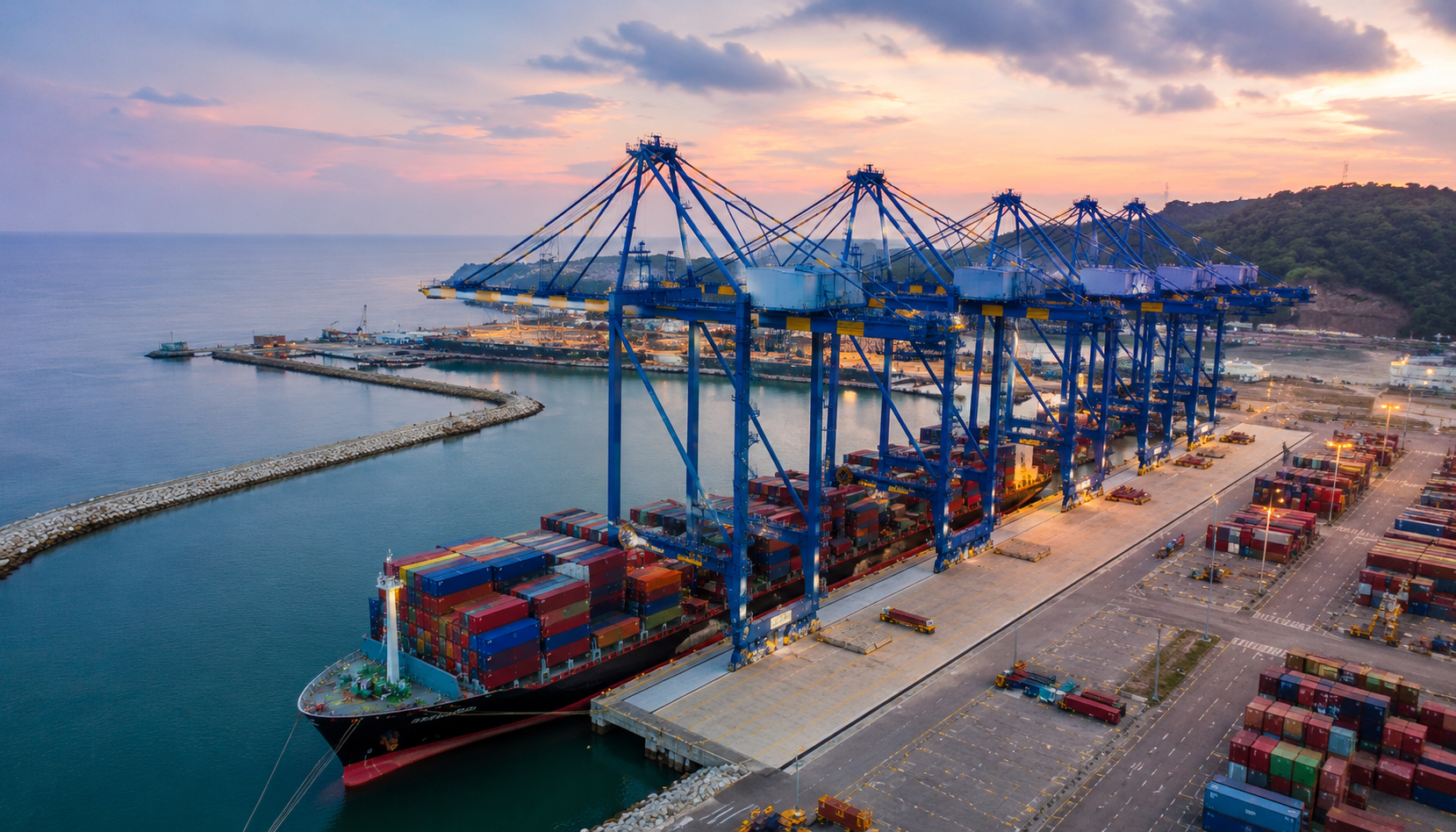
On the southern tip of Kerala, near Thiruvananthapuram, the Vizhinjam International Seaport is emerging as one of India’s most ambitious infrastructure projects. What was once viewed as a long-term dream is rapidly becoming a reality, attracting attention from shipping companies, logistics operators, investors, and policymakers around the world.
The significance of Vizhinjam lies in its geography. Positioned close to major international shipping lanes that connect Europe, the Middle East, Africa, and Asia, the port enjoys a natural advantage that very few ports can claim. Every day, thousands of cargo vessels pass through waters not far from Kerala’s coast. Until recently, much of that cargo was handled by foreign ports such as Colombo, Singapore, and Dubai. Vizhinjam aims to bring a significant portion of that business back to India.
The impact extends far beyond shipping. Ports have historically been catalysts for economic transformation. Around the world, successful ports have created ecosystems that include logistics parks, warehouses, manufacturing facilities, transportation networks, and service industries. Kerala is hoping to replicate that model.
Industry experts believe the project could trigger a new phase of economic growth for the state. Better connectivity means faster movement of goods, reduced transportation costs, and greater competitiveness for exporters. Businesses involved in seafood, spices, rubber products, engineering goods, and value-added manufacturing stand to benefit from improved access to global markets.
Employment is another area where expectations are high. While the port itself creates direct jobs in operations, maintenance, and administration, the larger economic impact is expected to come from the industries that develop around it. Logistics companies, transport operators, customs services, warehousing providers, technology firms, and support businesses could collectively generate thousands of new opportunities over the coming years.
What is particularly noteworthy is the growing interest from global shipping companies. International container lines constantly seek ports that offer efficiency, strategic location, and the ability to handle large vessels. Vizhinjam’s deep natural draft allows some of the world’s largest container ships to dock without extensive dredging, giving it a competitive edge in the region.
The project is also helping to reshape perceptions about Kerala as an investment destination. For years, discussions about the state’s economy often focused on tourism, remittances, and services. Vizhinjam introduces a different conversation—one centered on infrastructure, logistics, international trade, and industrial development.
The next few years will be crucial. Expansion plans involving investments worth thousands of crores are expected to significantly increase the port’s handling capacity by 2029. As additional infrastructure comes online, the surrounding region could evolve into a major logistics and industrial hub, creating new business opportunities for both domestic and international investors.
Challenges remain, of course. Large infrastructure projects require continuous investment, efficient connectivity, environmental stewardship, and long-term policy support. Success will depend not only on the port’s operational performance but also on Kerala’s ability to build a broader ecosystem around it.
Yet there is little doubt that Vizhinjam represents one of the most significant economic developments in Kerala’s recent history. It is more than a port. It is a statement of ambition—a signal that Kerala intends to play a larger role in global commerce.
For a state that has long looked outward through the achievements of its people across the world, Vizhinjam offers something different: an opportunity to become a gateway through which the world comes to Kerala.
If the project delivers on its promise, future generations may look back on this period as the moment when Kerala’s economic story entered a new chapter—one written not only by its people abroad, but also by the ships arriving at its shores.