Blessy
Indian film director, screenwriter, producer
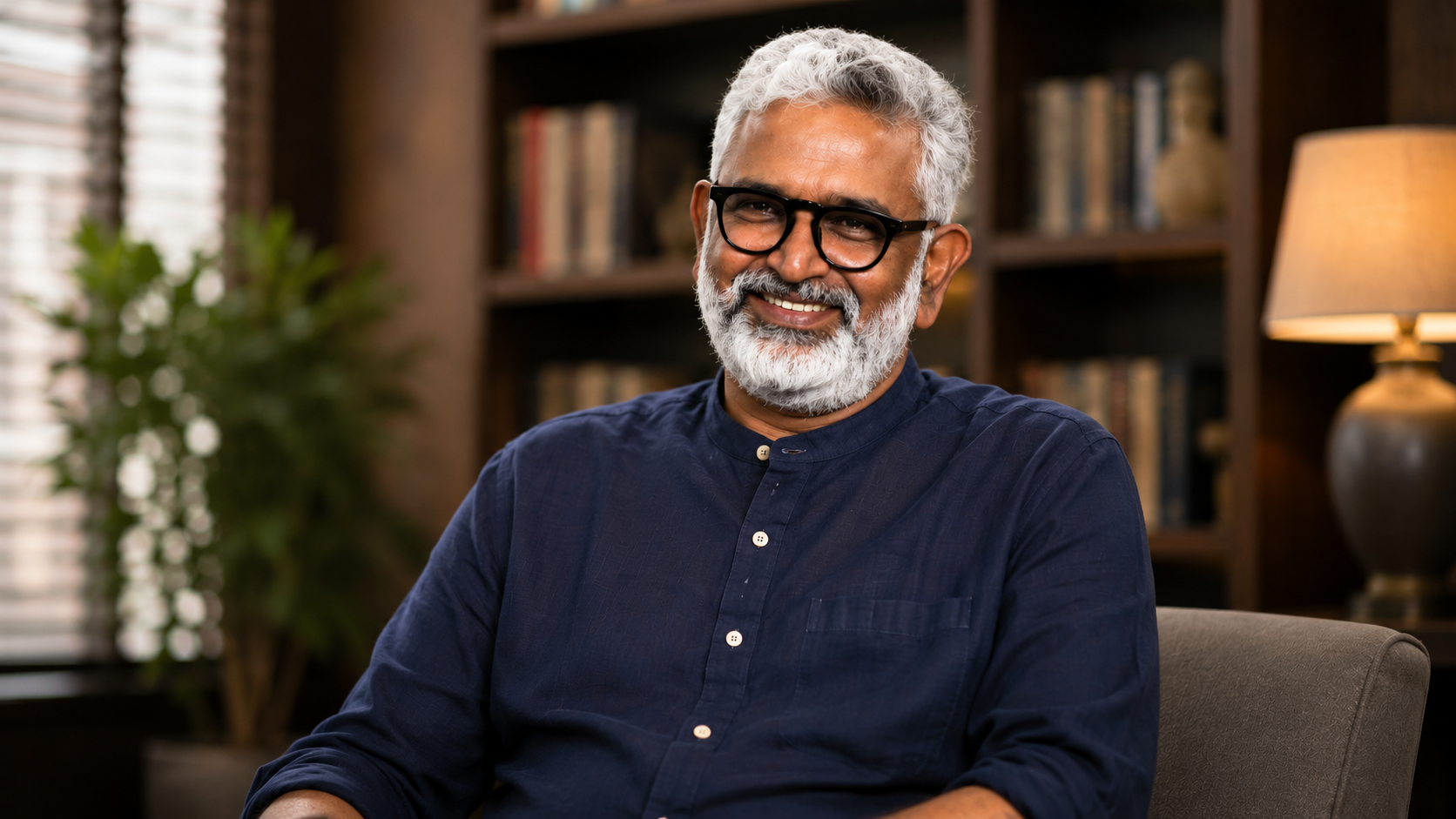
Blessy is one of the most acclaimed filmmakers in Malayalam cinema, renowned for his emotionally powerful storytelling and deeply human narratives. A protégé of legendary filmmaker Lohithadas, he has built a distinguished career by directing films that explore relationships, resilience, and social realities with remarkable sensitivity. His work has earned widespread critical acclaim, national recognition, and numerous prestigious awards.
Key Facts
• Full Name: Blessy (Blessy Ipe Thomas)
• Date of Birth: 30 September 1960
• Birthplace: Kottayam, Kerala, India
• Profession: Film Director, Screenwriter, Producer, Actor
• Directorial Debut: Kazhcha (2004)
Early Life and Family
Blessy Ipe Thomas, known simply as Blessy, was born on 3 September 1963 in Thiruvalla, Kerala. He grew up as the youngest of six children in a traditional Kerala household, born to Benny Thomas and Ammini Thomas. His early years were marked by personal loss, as he lost both parents at a young age, a life experience that would later reflect in the emotional depth of his films.
He completed his schooling at Mar Thoma School and SCS High School in Thiruvalla and later studied at Mar Thoma College. Those formative years in central Kerala quietly shaped his sensitivity toward human relationships and social realities, themes that would become central to his cinema.
Blessy is married to Mini, and the couple has two children, Adith and Akhil.
Career Beginnings
Before stepping into direction, Blessy spent years learning the craft behind the camera. He worked as an assistant director with some of Malayalam cinema’s most respected filmmakers, including Padmarajan, Lohithadas, and Jayaraj. This phase gave him a strong grounding in storytelling rooted in realism and emotional honesty.
He eventually moved into writing and direction, making his independent debut in 2004.
Rise as a Director
Kaazhcha (2004) marked Blessy’s debut as a director and immediately established his signature style. The film told the story of an orphaned boy affected by the Gujarat earthquake and the unexpected emotional bond he forms with a small-town cinema operator played by Mammootty. The film was widely appreciated for its warmth and simplicity and went on to receive major Kerala State Film Awards, including Best Debut Director and Best Film with Popular Appeal and Aesthetic Value.
With Thanmathra (2005), Blessy delivered what is often considered one of Malayalam cinema’s most sensitive portrayals of illness and family. Starring Mohanlal as a government employee diagnosed with Alzheimer’s disease, the film explored memory loss not just as a medical condition but as a slow emotional unravelling of an entire family. It won him the National Award for Best Feature Film in Malayalam along with multiple Kerala State Film Awards, including Best Director and Best Screenplay.
In the following years, Blessy continued working with leading actors and varied themes. Palunku (2006) starred Mammootty, while Calcutta News (2008) featured Dileep and Meera Jasmine. Bhramaram (2009), again with Mohanlal, was a gripping emotional thriller about injustice and revenge, and was both a critical and commercial success.
His 2011 film Pranayam brought together Mohanlal, Anupam Kher, and Jaya Prada in a deeply reflective story about love that survives across age and time. Kalimannu (2013), starring Swetha Menon and Biju Menon, explored childbirth and parenthood in a controversial yet intimate narrative that even included the real-life recording of childbirth scenes.
Documentary Work and Later Cinema
In 2018, Blessy ventured into documentary filmmaking with 100 Years of Chrysostom, based on the life of Philipose Mar Chrysostom Mar Thoma. What began as a two-year project expanded into an ambitious production that ultimately set a Guinness World Record as the longest documentary film in the world, with a runtime of 48 hours and 10 minutes. Narrated by Mohanlal, it stood out as an unusual but deeply personal tribute.
After years of development, Blessy released Aadujeevitham (2024), his long-cherished project based on Benyamin’s novel Goat Days. Starring Prithviraj Sukumaran and featuring music by A. R. Rahman, the film took more than a decade to reach completion, delayed by production challenges and the pandemic. It arrived as a survival drama that highlighted endurance, isolation, and the human will to survive under extreme conditions.
Filmography (As Director and Screenwriter)
Kaazhcha (2004)
Thanmathra (2005)
Palunku (2006)
Calcutta News (2008)
Bhramaram (2009)
Pranayam (2011)
Kalimannu (2013)
100 Years of Chrysostom (2018, documentary)
Aadujeevitham / The Goat Life (2024)
Awards and Recognition
National Film Awards
* Best Feature Film in Malayalam – Thanmathra (2005)
Kerala State Film Awards
* Best Director – Aadujeevitham (2024)
* Best Screenplay (Adapted) – Aadujeevitham (2024)
* Best Film with Popular Appeal and Aesthetic Value – Aadujeevitham (2024)
* Best Director – Pranayam (2011)
* Best Director – Thanmathra (2005)
* Best Screenplay – Thanmathra (2005)
* Best Film – Thanmathra (2005)
* Best Film with Popular Appeal and Aesthetic Value – Kaazhcha (2004)
* Best Debut Director – Kaazhcha (2004)
Filmfare Awards South
* Best Director – Pranayam (2011)
* Best Director – Thanmathra (2005)
* Best Director – Kaazhcha (2004)
Asianet Film Awards
* Best Director – Thanmathra (2005)
* Best Film – Kaazhcha (2004)
Other Awards
* Kalavedi International Prathibha Award – Best Filmmaker (Thanmathra, 2006)
* Kalavedi International Prathibha Award – Best Filmmaker (Kaazhcha, 2005)
* 15th Ramu Kariat Award – Kaazhcha (2005)
Legacy
Blessy’s cinema is often described as emotionally grounded and deeply human. Rather than relying on spectacle, his films focus on memory, relationships, and moral complexity. Whether it is the fragility of the mind in Thanmathra or the endurance of the human body and spirit in Aadujeevitham, his storytelling consistently returns to one idea: ordinary lives carrying extraordinary emotional weight.