Minnu Mani
Indian Cricketer
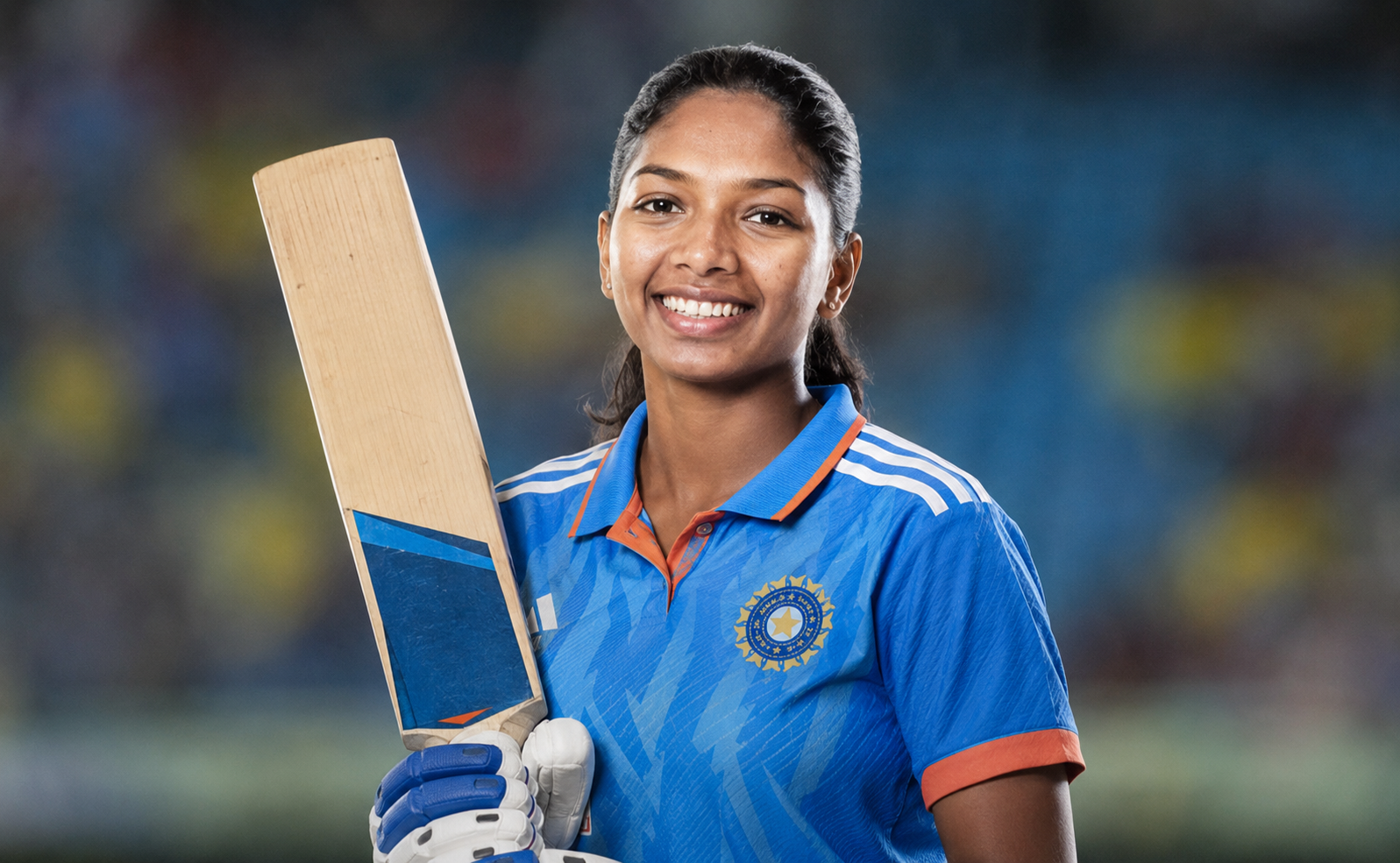
Minnu Mani is an Indian international cricketer who represents the Indian women’s national team. She plays for Delhi Capitals in Women’s Premier League. In domestic cricket, she represents Kerala cricket team. She became the first Kerala woman cricketer to play for India. Minnu hails from Choyimoola in Wayanad district of Kerala.
Key Factors
Full Name: Minnu Mani
Date of Birth: 24 March 1999
Birthplace: Choyimoola, Wayanad, Kerala, India
Occupation: Cricketer
Teams Represented: Kerala women’s cricket team, India women’s national cricket team, Delhi Capitals Women
Known For: First woman cricketer from Kerala to represent India
Minnu Mani is more than a cricketer from Kerala. She represents a shift in Indian women’s cricket itself, a story of how talent can emerge from landscapes far removed from elite academies, television cameras, and urban sporting privilege. Born in the hills of Wayanad and raised in a family that struggled financially, Minnu grew up playing cricket barefoot in muddy paddy fields alongside boys who rarely imagined that one among them would one day wear the India jersey.
Her rise from Choyimoola village to the India women’s national cricket team and the Women’s Premier League is one of the most significant sporting journeys in Kerala’s recent history. As the first woman cricketer from Kerala to represent India, Minnu became both a sporting milestone and a cultural symbol, proof that Indian cricket’s future may emerge from places the system once overlooked.
From Wayanad’s Paddy Fields to Team India
Minnu Mani’s rise from rural Kerala to international cricket became a story of resilience, sacrifice, and the changing face of Indian women’s sport
Long before stadium lights, television broadcasts, and the India cap, there were paddy fields.
In Choyimoola, a small village tucked deep inside Kerala’s Wayanad district, cricket did not arrive through expensive coaching centres or polished turf wickets. It arrived through improvised games played on uneven land, through borrowed bats, through children shouting over monsoon winds while the earth beneath them turned slippery with rain.
Among those children was Minnu Mani, a girl who insisted on playing with boys because there were barely any girls around her who played cricket seriously. She batted, bowled, fielded, fought for her place in games, and slowly developed the stubborn resilience that would eventually define her career.
Years later, when she walked onto the field wearing India colours during the Bangladesh tour in 2023, the moment carried significance far beyond cricket statistics. For Kerala, it was historic. For Wayanad, it felt almost unbelievable.
A girl from the hills had reached Indian cricket.
A Childhood in the Heart of Wayanad
Minnu was born on 24 March 1999 in Choyimoola near Mananthavady in Wayanad district, a region known more for forests, plantations, and mist-covered hills than professional cricket infrastructure.
Her father, Mani C. K., worked as a daily wage labourer. Her mother, Vasantha, managed the household. Financial stability was never guaranteed. Every rupee mattered.
Life in rural Wayanad moved differently from the cities where Indian cricket dreams are usually built. Roads were longer. Facilities were limited. Travel itself often became a challenge.
But sport has always survived in India through improvisation.
Children in villages create games out of whatever space exists. Minnu’s earliest cricket memories were shaped by open grounds, paddy fields, and local matches where boys dominated participation. She rarely treated that as intimidation.
Instead, she adapted.
The geography of Wayanad also shaped her physically and mentally. Long travel routes, isolated communities, unpredictable weather, and minimal sporting infrastructure demanded endurance early in life. Cricket was not organised around convenience there.
It required effort simply to continue playing.
The Girl Who Played With Boys
Minnu first began playing cricket seriously around the age of ten.
At that time, girls’ cricket in rural Kerala barely existed structurally. Cricket itself remained overwhelmingly male-dominated, especially outside major cities. Girls who played the sport often faced scepticism, ridicule, or dismissal.
Minnu encountered that environment early.
Yet she continued playing with boys in her village because there were few alternatives. Those games became her first training ground. Competing against boys forced her to develop toughness quickly, particularly as an all-rounder capable of contributing in multiple ways.
One of the most important turning points came through her physical education teacher, Elsamma, who recognised her talent and encouraged structured participation in cricket. That mentorship mattered enormously.
In Indian sport, especially for athletes from underprivileged backgrounds, one teacher or coach often changes everything.
For Minnu, recognition created direction.
Soon, district-level opportunities followed.
The Hardest Part Was Reaching Practice
Talent alone rarely guarantees success in Indian women’s sport. Access remains the bigger battle.
For Minnu, professional cricket demanded exhausting travel. Training facilities were far away. Practice sessions often meant taking multiple buses across difficult routes in Wayanad. Some days were spent travelling almost as much as training.
Financial pressure shadowed every stage of the journey.
Equipment costs, travel expenses, tournament participation, nutrition, these are often invisible struggles in stories about athletes. For families surviving on unstable incomes, supporting sport becomes an act of sacrifice.
Her parents continued supporting her despite uncertainty.
That support carried emotional weight because women’s cricket at the time still lacked the visibility and financial stability it enjoys today. Careers were uncertain. Opportunities were limited. Recognition came slowly.
Minnu balanced studies alongside cricket while gradually climbing through Kerala’s domestic system. The emotional challenge was not only physical exhaustion but sustaining belief without immediate rewards.
For many young women athletes from rural India, the biggest obstacle is not lack of talent.
It is the exhaustion of persistence.
Kerala Cricket and the Rise of an All-Rounder
Minnu’s cricketing rise within Kerala cricket happened steadily rather than dramatically.
She entered Kerala’s under-16 setup and eventually made her senior debut at just 16. Coaches and selectors quickly noticed her value as an all-rounder. She could contribute with disciplined off-spin bowling, aggressive lower-order batting, and energetic fielding.
Her performances in domestic tournaments began attracting wider attention.
One especially important phase came when she played a key role in Kerala’s success in the Under-23 Women’s T20 competitions. Beyond statistics, observers noticed her temperament. She appeared calm under pressure and increasingly capable of influencing matches tactically.
At a time when Kerala women’s cricket was still fighting for recognition nationally, Minnu emerged as one of its defining figures.
That rise carried symbolic importance too.
Kerala has produced internationally respected athletes across athletics, football, volleyball, and other sports, but women’s cricket from the state remained comparatively underdeveloped for years. Minnu’s emergence hinted at changing possibilities.
India A and the WPL Revolution
Her growing domestic reputation eventually led to India A opportunities and selection for tournaments like the Emerging Women’s Asia Cup.
These stages mattered because they exposed her to stronger competition and professional cricketing environments beyond Kerala’s ecosystem.
Then came another transformative moment, the Women’s Premier League.
When Delhi Capitals Women picked Minnu Mani, the significance extended beyond personal achievement. The WPL radically changed visibility for Indian women cricketers, especially those from smaller states and lesser-known domestic systems.
Suddenly, players who had spent years performing quietly in domestic cricket found themselves sharing dressing rooms with global stars.
The WPL exposed Minnu to elite fitness standards, tactical preparation, international players, sports science support, and pressure environments previously unavailable to many Indian domestic cricketers.
More importantly, it made stories like hers visible nationally.
The Historic India Call-Up
In 2023, Indian women’s cricket crossed a historic milestone for Kerala.
Minnu Mani was selected for India’s tour of Bangladesh.
The announcement carried emotional resonance across the state because no woman cricketer from Kerala had previously represented India at senior international level. For young girls across the region, especially outside major cities, her selection felt deeply personal.
When she made her WT20I debut, the moment symbolised far more than an individual achievement.
It represented arrival.
Minnu justified the faith quickly. During the Bangladesh series, she emerged as India’s leading wicket-taker, showcasing maturity and tactical intelligence despite being new to international cricket.
Her performances reflected the traits that had shaped her journey all along, composure, discipline, and quiet competitiveness.
Understanding Minnu the Cricketer
Technically, Minnu’s value comes from versatility.
As an all-rounder, she offers balance. Her off-spin bowling relies less on mystery and more on control, accuracy, and tactical awareness. She understands field placements well and adapts intelligently to match situations.
With the bat, she brings aggression and intent, especially in shorter formats.
Her fielding energy also stands out. Modern cricket increasingly demands athletic multidimensional players, and Minnu fits that evolution naturally.
Yet like any developing international cricketer, there remain areas for growth. Consistency against stronger international batting line-ups, expanding batting range, and adapting tactically under pressure will shape the next phase of her career.
Still, her rise reflects larger changes within Indian women’s cricket, where opportunities are gradually expanding beyond traditional cricketing centres.
Beyond Cricket
Away from cricket, Minnu has maintained a grounded public image.
She pursued sociology studies alongside her sporting career and continues to speak openly about the importance of family support. Those close to her often describe her as disciplined, reserved, and emotionally resilient.
Despite growing fame after the WPL and India selection, she remains deeply connected to her roots in Wayanad.
That grounded personality matters because Indian sport increasingly celebrates athletes not only for performance but for authenticity.
Minnu’s story resonates precisely because it feels real.
What Minnu Mani Means to Kerala
Minnu’s achievement carries importance beyond cricket.
She represents rural Kerala, districts often absent from national sporting narratives. She represents girls who grow up without access to elite academies or financial security. She represents families who support sporting dreams despite uncertainty.
Her journey also challenges assumptions about where Indian cricket talent can emerge from.
For decades, the cricket system focused heavily on urban centres and established regions. Stories like Minnu’s force Indian cricket to look differently at grassroots potential.
In Kerala especially, her success may influence an entire generation of girls to take cricket seriously.
That cultural impact could outlast statistics.
Conclusion
The distance between Wayanad’s muddy paddy fields and the Indian cricket team cannot be measured only in kilometres.
It is measured in bus journeys, family sacrifices, borrowed opportunities, social barriers, and years of persistence without certainty. Minnu Mani’s rise is not simply the story of a cricketer reaching the national team. It is the story of how talent survives despite systems that often fail to notice it.
When she wore the India jersey for the first time, she carried more than personal ambition. She carried the hopes of rural Kerala, the dreams of girls who play sport without infrastructure or visibility, and the belief that Indian cricket’s future may emerge from places the sport once ignored completely.
And somewhere in Wayanad today, another young girl is probably playing cricket in a paddy field, believing that her dream might no longer be impossible.