Salim Kumar
Actor, Comedian
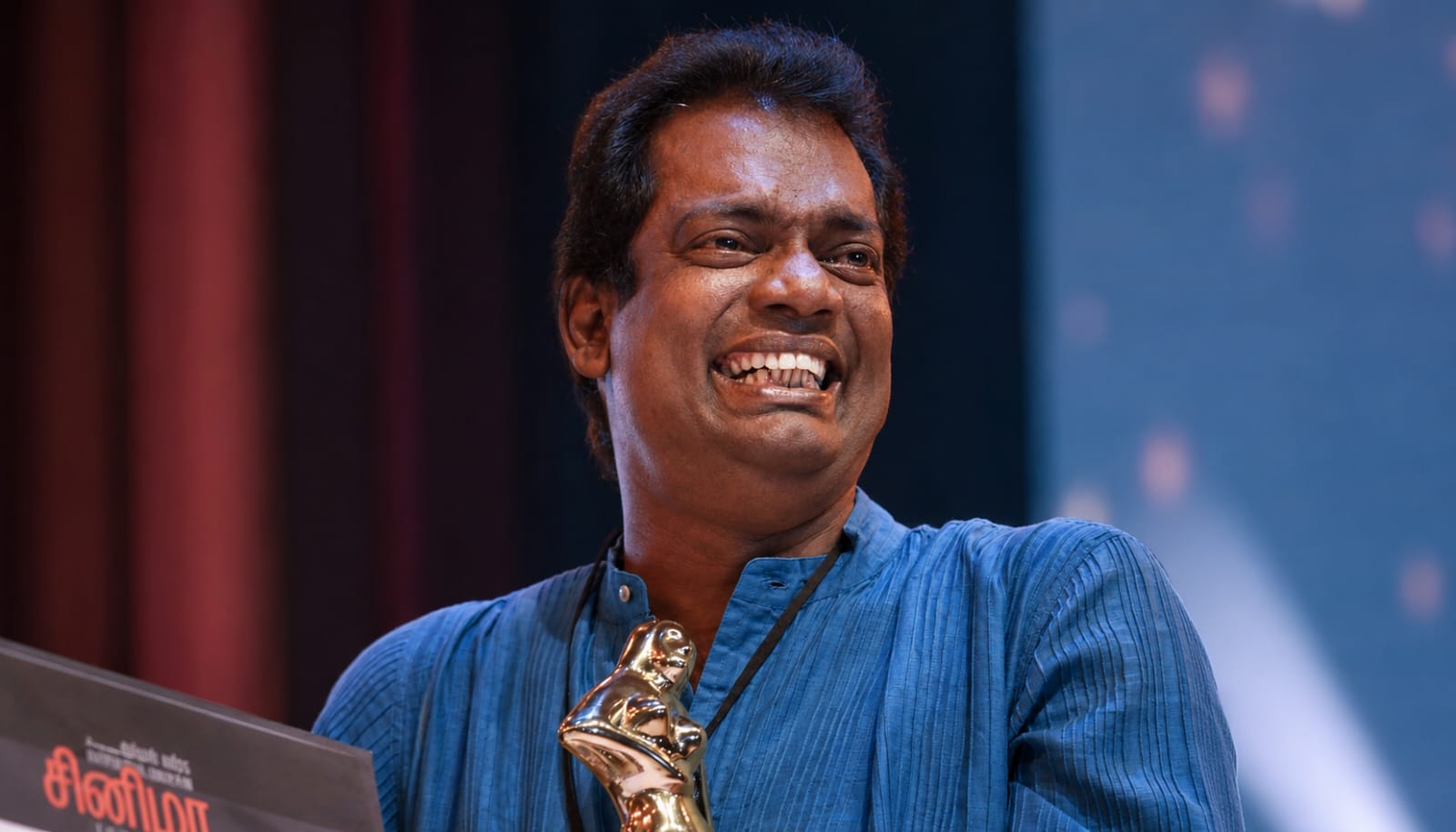
Salim Kumar is an Indian actor, comedian, director and writer in Malayalam cinema. Mostly known for his comic and comedy roles, Salim Kumar is considered one of the best and most prominent comedians in the history of Malayalam cinema. He graduated with a BA from Maharajas College, Ernakulam where he won the university’s Mimicry title thrice. He started his stage career at Kalabhavan. Salim Kumar won the National Film Award for Best Actor in 2010 for his role in Adaminte Makan Abu (which also won the year’s Kerala State Film Award). His directorial film Karutha Joothan won the 2017 Kerala State Film Award for Best Story. He has also won the Kerala State Film Award for Second Best Actor for Achanurangatha Veedu (2005) and a Kerala State Television Award for Best Actor (2013).
Quick Profile
Full Name: Salim Kumar
Date of Birth: 10 October 1969
Birthplace: North Paravur, Kerala
Occupation: Actor, comedian, director, writer, mimicry artist
Known For: Comedy roles, character acting, mimicry
Major Awards: National Film Award for Best Actor, Kerala State Film Awards
In Pulival Kalyanam, there is a moment when Manavalan smiles with wounded pride, pipe in hand, pretending to be richer, stronger, and more dignified than life has allowed him to be. The theatre erupts in laughter. Yet beneath the comic exaggeration lies something painfully familiar, the fragile self-respect of an ordinary Malayali man trying not to collapse in front of the world.
That emotional duality became the essence of Salim Kumar.
For decades, Malayalam audiences laughed at his stammering confidence, elastic facial expressions, awkward bravado, and brilliantly timed absurdity. But somewhere along the way, Kerala also began to recognize something else in him: a profound actor hiding beneath comic chaos. Unlike many comedians who merely delivered punchlines, Salim Kumar carried loneliness, humiliation, desperation, class anxiety, and emotional vulnerability into his performances. His comedy came from lived observation.
From the mimicry movement of the 1990s to the cult-comedy explosion of early-2000s Malayalam cinema, and eventually to the haunting realism of Adaminte Makan Abu, Salim Kumar evolved into one of the most extraordinary performers in Indian cinema, an artist who proved that the line between laughter and sorrow is often dangerously thin.
From mimicry stages in North Paravur to the National Award stage in New Delhi, Salim Kumar transformed Malayalam comedy into something deeply human, outstanding in both its humor and heartbreak.
A Childhood Built on Contradictions
Salim Kumar’s story begins not in cinema, but in the culturally layered town of North Paravur, where politics, social reform movements, theatre culture, and everyday working-class life existed side by side.
Born on 10 October 1969 to Gangadharan and Kausalya, he grew up in a household shaped by unusual ideological influences. His father was an atheist deeply influenced by social reformer Sahodaran Ayyappan. Even the name “Salim Kumar” reflected that worldview, intentionally chosen to avoid rigid religious identity.
That atmosphere mattered.
Much later, one could sense in Salim Kumar’s comedy a deep awareness of caste anxieties, social pretensions, and class performance. His characters were often men struggling to appear important in systems designed to humiliate them.
As a child, however, his first dream was not comedy.
He wanted to become a singer.
He studied at Government LP School in Chittattukara, later at Government Boys High School in North Paravur, before continuing his pre-degree studies at Sree Narayana Mangalam College. Music fascinated him, but mimicry gradually consumed his attention.
Then came Maharajas College in Ernakulam, a place that shaped generations of Kerala artists, intellectuals, and performers. There, Salim Kumar became a campus sensation, winning the university mimicry title three times.
Mimicry in Kerala during the 1980s and 1990s was not merely entertainment. It was a social phenomenon. Young men from modest backgrounds used mimicry stages to enter public life. It blended satire, observation, politics, and survival.
Salim Kumar found his language there.
The Mimicry Movement and the Making of an Actor
Kerala’s mimicry movement changed Malayalam cinema forever.
Institutions like Kalabhavan became alternative acting schools, producing artists who understood rhythm, improvisation, dialects, and crowd psychology better than many formally trained actors. Salim Kumar emerged from that ecosystem, but even among mimicry artists, he stood apart.
At Kalabhavan, he sharpened not just imitation, but character creation. His body language was unusually elastic. His face could move from arrogance to helplessness within seconds. More importantly, he understood silence.
Many mimicry artists relied on loudness. Salim Kumar mastered awkward pauses.
Television further amplified his reach. Through Comicola on Asianet, he became familiar to Malayali households long before cinema fully accepted him. He also spent years with Arathi Theatres in Kochi, absorbing stage discipline and audience rhythm.
Those years were financially unstable and emotionally exhausting. Stage artists often traveled endlessly for modest pay, performing in temporary venues and sleeping little. But those experiences gave Salim Kumar something priceless: observational realism.
His comedy never felt manufactured because he knew these people intimately.
Cinema’s Slow Acceptance
Malayalam cinema did not immediately recognize Salim Kumar’s potential.
He made his debut in Ishtamanu Nooru Vattam in 1997. The roles were tiny. Often forgettable. He was another mimicry artist trying to survive inside an industry already crowded with comic performers.
One humiliating moment became part of Malayalam cinema folklore. During the filming of Nee Varuvolam, he was reportedly removed from the set because the production team felt his acting “was not right.” Another actor replaced him.
That rejection could easily have ended his film career.
Instead, he persisted.
The breakthrough arrived gradually after Satyameva Jayathe in 2000, where filmmakers noticed his screen presence. Directors Rafi and Mecartin then cast him in Thenkasipattanam, one of the biggest commercial hits of that era.
Malayalam cinema was entering its slapstick-heavy phase. Loud ensemble comedies dominated theatres. Within that chaos, Salim Kumar began stealing scenes.
The Era of Immortal Comedy
The early 2000s belonged to Salim Kumar.
Film after film, he created characters that escaped cinema halls and entered Kerala’s everyday language.
In Ee Parakkum Thalika, his cook Koshi became unforgettable through nervous desperation and bizarre sincerity. In Meesha Madhavan, Advocate Mukundan Unni became comic absurdity elevated into performance art.
Then came the avalanche.
The mentally unstable patient in C.I.D. Moosa. Usman in Kilichundan Mampazham. Gabbar Keshavan in Pattalam. Dance Master Vikram in Chathikkatha Chandu. Kannan Srank in Mayavi.
But nothing surpassed Manavalan from Pulival Kalyanam.
Manavalan was hilarious because he was tragic.
The fake sophistication, the emotional insecurity, the helpless attempts at masculinity, these were recognizable social performances inside Kerala’s middle and lower-middle-class worlds. Salim Kumar turned that insecurity into comedy without ever mocking the humanity beneath it.
That is why the character survived beyond the film.
Today, Manavalan exists everywhere in Kerala meme culture. His pipe-smoking pose, embarrassed grin, wounded expressions, and awkward confidence remain endlessly recycled online.
His comedy aged unusually well because it emerged from observation, not trend-based humor.
The Pain Beneath the Laughter
By the mid-2000s, some filmmakers began recognizing what comedy had hidden all along.
Salim Kumar was an exceptional dramatic actor.
In Perumazhakkalam, directed by Kamal, he revealed emotional restraint rarely seen in comic actors. Then came Achanurangatha Veedu, where he portrayed a devastated father with heartbreaking realism.
Malayalam cinema has historically typecast comedians brutally. Comic actors were often denied emotional complexity.
Salim Kumar shattered that barrier.
His greatest triumph arrived with Adaminte Makan Abu.
As Abu, an aging Muslim perfume seller dreaming of performing Hajj, Salim Kumar abandoned every trace of comic exaggeration. The performance was quiet, dignified, spiritually exhausted. It carried the sorrow of ordinary aspiration.
When he won the National Film Award for Best Actor, Kerala reacted emotionally. It felt like a cultural correction, an acknowledgment that comic actors could carry profound artistic depth.
The award transformed how Malayalam cinema viewed him.
But more importantly, it transformed how audiences understood comedy itself.
The Observer of Ordinary Lives
Salim Kumar’s artistic instincts extended beyond acting.
He directed documentaries and feature films, often exploring social themes and moral ambiguities. His film Karutha Joothan won the Kerala State Award for Best Story.
There is a philosophical sadness in much of his writing. His memoir, Ishwara Vazhakkillello, reflected the same observational honesty visible in his performances.
He understands ordinary people deeply because he comes from them.
The Man Behind the Persona
Away from cinema, Salim Kumar lives in North Paravur in a home called “Laughing Villa,” an oddly fitting name for someone whose career constantly explored the sadness inside laughter.
He is married to Sunitha and has two sons, Chandu and Aaromal. Through his mimicry troupe, Cochin Stallions, he also helped nurture younger performers including Ramesh Pisharody.
Unlike many comic stars, Salim Kumar’s off-screen personality is often reflective and politically aware. His upbringing under rationalist influence shaped a worldview more introspective than audiences initially expected.
A Permanent Presence in Kerala’s Cultural Memory
Few Malayalam actors survive generational shifts as organically as Salim Kumar.
Teenagers who never watched his films in theatres still know Manavalan, Gabbar Keshavan, and Dance Master Vikram through memes and social media edits. His expressions have become visual shorthand for embarrassment, fake confidence, panic, and emotional collapse.
That cultural survival matters.
It means his performances captured something universal about Malayali behavior.
But reducing Salim Kumar to meme culture alone would be unfair. Beneath the comedy lies one of Malayalam cinema’s finest character actors, a performer who gave emotional dignity to people often ignored by mainstream storytelling.
He made foolish men human.
He made loneliness funny.
And he proved that laughter, when performed honestly, can reveal truths more painful than tragedy itself.
In the history of Malayalam cinema, Salim Kumar will never be remembered merely as a comedian. He remains an outstanding chronicler of ordinary life, an actor who transformed mimicry into art, comedy into social observation, and pain into unforgettable cinema.
Awards and nominations
- 2010 : National Film Awards-Best Actor (Adaminte Makan Abu)
Kerala State Film Awards
- 2005: Second Best Actor (Achanurangatha Veedu)
- 2010: Best Actor (Adaminte Makan Abu)
- 2013: Best Comedian (Ayalum Njanum Thammil)
- 2016: Best Story (Karutha Joothan)
Kerala State Television Awards
- 2013: Best Actor (Parethante Paribhavangal
Filmfare Awards South
- 2011: Best Actor (Adaminte Makan Abu)
South Indian International Movie Awards
- 2012: Special Jury Award (Adaminte Makan Abu)
Kerala Film Critics Association Award
- 2010: Special Jury Award (Adaminte Makan Abu)
Asianet Film Awards
- 2008: Best Comedy Actor (Annan Thambi)
- 2011: Special Jury Award (Adaminte Makan Abu)
Vanitha Film Awards
- 2011: Best Comedian (Marykkundoru Kunjaadu)
Other awards
- 2005: Sathyan Award – Achanurangatha Veedu
- 2005: Bharathan Award – Achanurangatha Veedu
- 2010: Jaihind TV Film Award for Best Actor – Adaminte Makan Abu
- 2010: Amrita-FEFKA Film Award’s Special Jury Award – Adaminte Makan Abu
- 2011: Prem Nazir Award
- 2012: Best Actor for Adaminte Makan Abu at Imagine India International Film Festival