Kerala’s Economy: Built on Migration and Modern Aspirations
Ancient Times
Kerala begins as a spice-rich trading land, known globally for pepper, cardamom, and ancient sea trade.
Traditional Era (Before 1970s)
Life depends mainly on agriculture, fishing, coconut farming, rubber, and coir industries.
1970s–80s
A major shift begins — people start migrating to Gulf countries for jobs, searching for better income.
1980s–2000s
Gulf remittances transform everyday life — better homes, education, healthcare, and rising living standards.
1990s onwards
Tourism grows fast. Kerala becomes known as “God’s Own Country” with backwaters, Ayurveda, and nature travel.
2000s–Present
New opportunities in IT parks like Technopark & Infopark. Youth move into tech, startups, and global remote jobs.
Today -Major Income Sources
1. Service Sector (Largest Part)
2. Remittances from Overseas Malayalis
3. Tourism
4. IT and Startups
5. Traditional Industries
6. Emerging Sectors
Future
Focus shifts toward startups, AI, green economy, healthcare exports, and sustainable development.
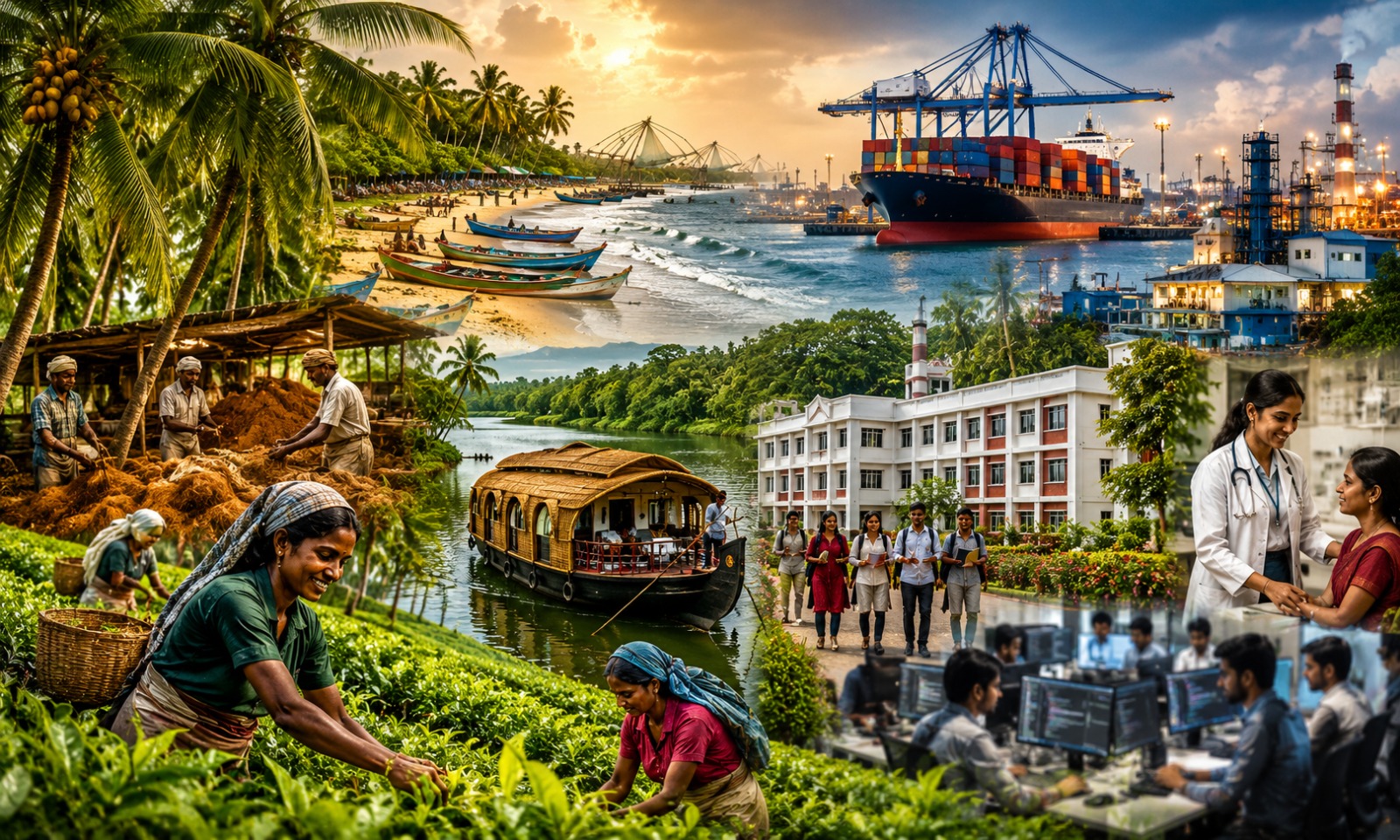
Before sunrise at Kochi International Airport, the arrival hall begins to fill quietly. Men wheel oversized cartons wrapped in rope and tape. Families wait behind metal barriers holding flowers, snacks, and restless children. Flights from Dubai, Doha, Muscat, and Riyadh land one after another, carrying workers returning home after years abroad or young professionals visiting briefly between contracts. Outside the airport, taxis move toward villages where Gulf money built concrete homes, financed education, sustained small businesses, and reshaped entire communities.
A few hundred kilometers away, fishermen push boats into rough Arabian Sea waters before dawn. In Wayanad, cardamom growers watch global price fluctuations as closely as weather forecasts. In Technopark, Thiruvananthapuram, software engineers log into meetings with clients in Europe and North America. Along the Alappuzha backwaters, houseboats carrying tourists drift past paddy fields reclaimed below sea level generations ago.
This is Kerala’s economy, layered, contradictory, deeply globalized, and intensely local at the same time.
For decades, economists have described Kerala as an anomaly within India. The state achieved literacy, healthcare access, and human development indicators comparable to middle-income countries without building the large industrial base associated with rapid economic growth elsewhere. Its economy grew not through factories alone, but through migration, remittances, education, welfare systems, tourism, and service industries.
To understand Kerala economically is to understand how aspiration, mobility, and survival shaped an entire society.
The Roots of Kerala’s Economy
Kerala’s economic story began long before modern India. The Malabar Coast was once among the world’s most important spice regions, drawing Arab, Chinese, Roman, and later European traders searching for black pepper, cardamom, cinnamon, cloves, and nutmeg. Ports like Muziris became centers of maritime exchange where commerce moved alongside culture, religion, and migration.
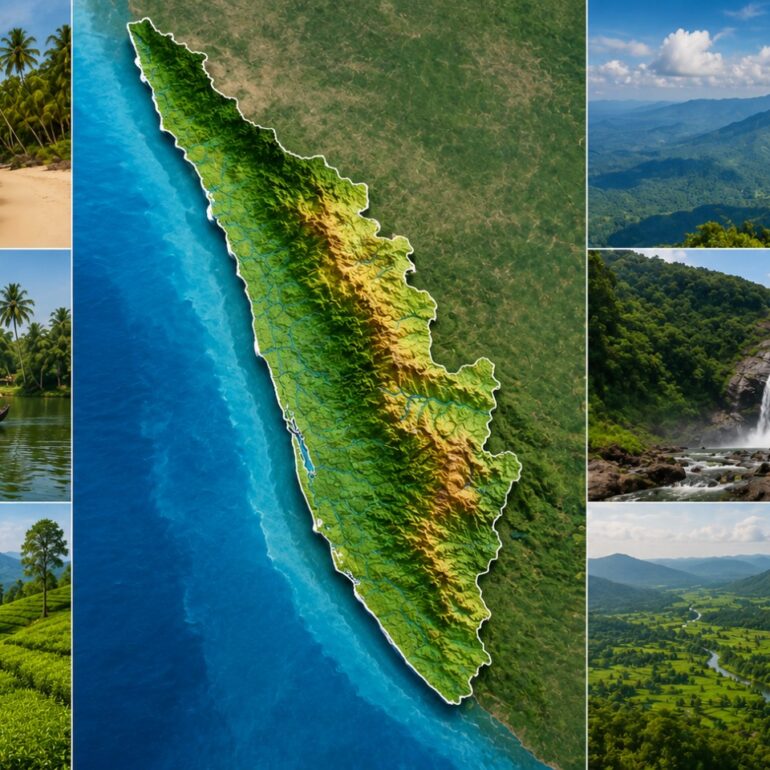
Geography shaped this commercial identity profoundly. The Arabian Sea connected Kerala outward to global trade routes while the Western Ghats provided fertile highlands for spices, tea, coffee, and rubber. Coconut groves dominated coastal landscapes. Backwaters became arteries of inland trade long before highways existed.
Agriculture defined everyday economic life for centuries. Pepper growers in northern Kerala, coconut farmers in coastal belts, rubber plantations in Kottayam and Pathanamthitta, and tea estates in Munnar collectively formed the backbone of the state’s early economy.
Fishing communities along Kerala’s coast also built livelihoods deeply tied to maritime culture. Sardines, mackerel, prawns, tuna, and pearl spot sustained both local consumption and export markets. Coir-making from coconut husk emerged as another significant traditional industry, especially in Alappuzha.
But Kerala’s modern economic transformation would arrive not from plantations or ports alone, but from migration.
The Gulf Migration Revolution
Few forces changed Kerala more dramatically than migration to the Gulf.
Beginning in the 1970s, oil-driven construction booms in West Asia created unprecedented demand for labor. Thousands of Malayalis, initially from northern Kerala districts like Malappuram and Kozhikode, left for Saudi Arabia, the UAE, Kuwait, Oman, Bahrain, and Qatar.
What began as temporary labor migration evolved into one of the largest remittance economies in India.
The impact reached almost every village. Gulf money funded concrete houses replacing tiled ancestral homes. Families invested heavily in education, healthcare, gold, and land. Consumer culture expanded rapidly as imported electronics, cars, and Gulf-returned lifestyles reshaped aspirations.
Kerala’s remittance economy eventually became enormous. Studies by institutions such as the Centre for Development Studies repeatedly showed that remittances often exceeded the state’s annual revenue collections. Entire local economies, construction, retail, private healthcare, real estate, and banking, grew around migrant income.
Yet migration carried emotional costs as well.
For decades, Kerala households lived around absence. Fathers missed childhoods. Wives managed families alone. Elderly parents waited for brief annual visits timed around school vacations and festival seasons. Gulf migration became both economic necessity and emotional sacrifice.
Even today, migration remains central to Kerala’s economy, though patterns are changing. Younger migrants increasingly move into skilled professions, healthcare, IT, finance, and hospitality rather than manual labor alone. New migration destinations like Canada, the UK, Australia, and Europe are also becoming more important.
The Kerala Model of Development
Kerala’s economic identity cannot be separated from what scholars often call the “Kerala Model.”
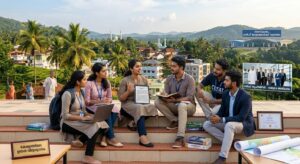
Despite relatively modest industrialization, the state achieved exceptionally high literacy rates, strong public healthcare systems, low infant mortality, and long life expectancy. Land reforms, investments in education, decentralized governance, and social welfare programs created broad social development uncommon in many parts of India during the twentieth century. Literacy became Kerala’s most powerful economic asset.
Families across class lines viewed education not merely as personal advancement, but as economic survival. Teachers, nurses, engineers, doctors, and Gulf professionals emerged from households that often prioritized schooling above immediate financial comfort.
Healthcare evolved similarly. Public hospitals and primary health systems reached deep into rural areas, contributing to strong health indicators that later helped Kerala manage crises more effectively than many regions. Yet the Kerala Model has always carried contradictions.
The state created highly educated citizens faster than it created enough high-quality local jobs. Unemployment among educated youth, especially women, remained persistently high. Industrial investment lagged behind states with more aggressive manufacturing growth. Trade unions strengthened worker protections but were sometimes criticized for discouraging large-scale industrial expansion.
Kerala became economically dependent on migration partly because local opportunities could not absorb its educated workforce. This paradox still defines much of the state’s economic conversation today.
Tourism: Selling “God’s Own Country”
In the 1990s, Kerala successfully transformed itself into one of India’s strongest tourism brands through the now-iconic “God’s Own Country” campaign.
The strategy worked because Kerala offered something distinct from conventional Indian tourism. Instead of monumental architecture or urban spectacle, the state marketed atmosphere, backwaters, monsoon landscapes, Ayurveda, village life, ecotourism, and cultural intimacy.
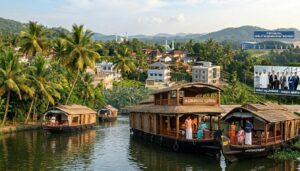
Houseboats drifting through Alappuzha canals became global imagery. Munnar’s tea plantations, Wayanad’s forests, Kovalam’s beaches, and Fort Kochi’s colonial streets attracted both domestic and international visitors.
Tourism created employment across sectors, hospitality, transport, handicrafts, food services, homestays, and local guiding networks. Responsible tourism initiatives attempted to connect visitors more directly with local communities, farmers, and artisans. But tourism also revealed vulnerabilities.
Climate change increasingly threatens Kerala’s ecological balance through floods, coastal erosion, and landslides. Over-commercialization pressures fragile ecosystems. Seasonal tourism dependence leaves local economies vulnerable during crises such as the 2018 floods or the COVID-19 pandemic. Kerala’s tourism industry today faces the challenge of balancing sustainability with growth.
IT, Startups, and the New Economy
If Gulf migration shaped Kerala’s late twentieth century, technology may shape its future.Technopark in Thiruvananthapuram, launched in 1990, became India’s first major IT park outside metropolitan giants like Bengaluru and Mumbai. Later, Infopark in Kochi and Cyberpark in Kozhikode expanded Kerala’s digital infrastructure.
The rise of remote work and startup culture has altered aspirations among younger Malayalis. Increasingly, educated youth see entrepreneurship, digital services, fintech, AI, content creation, and software development as alternatives to government jobs or migration.
Kochi in particular has emerged as a startup hub, supported by initiatives such as Kerala Startup Mission. Co-working spaces, incubators, and tech communities reflect a state attempting to build a knowledge economy rather than relying solely on remittances.
The shift is cultural as much as economic. For decades, security often meant a Gulf visa or government employment. Today, many young Malayalis imagine careers in product design, coding, media, sustainability, healthcare technology, and global remote work.
Still, the ecosystem remains uneven. Funding limitations, market scale challenges, and bureaucratic hurdles continue to slow growth compared to India’s largest startup cities.
Agriculture, Fisheries, and Traditional Industries
Even as Kerala modernizes, traditional sectors continue carrying enormous social importance. Rubber remains crucial in central Kerala despite fluctuating global prices. Cardamom, pepper, cloves, and nutmeg still connect the state to international spice markets centuries after ancient trade routes first emerged. Coconut farming remains deeply embedded in rural livelihoods despite declining profitability in some areas.
Fishing communities continue supporting marine exports, though climate volatility, fuel costs, and overfishing pressures increasingly threaten sustainability.
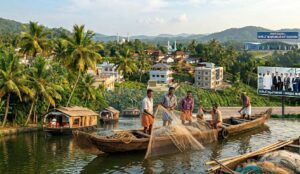
Traditional industries like coir and handloom face similar tension between heritage and economic survival. Coir-making once defined large parts of Alappuzha’s economy, but mechanization and global competition changed the sector dramatically.
These industries carry emotional and cultural weight beyond economics alone. They represent continuity with Kerala’s agrarian and maritime past even as younger generations move toward service-sector employment.
The Future of Kerala’s Economy
Kerala now stands at an important transition point. The old economy of remittance-driven consumption still matters enormously, but a younger generation is searching for new models built around technology, sustainability, healthcare, education exports, and entrepreneurship.
The state has significant advantages. A highly educated population, strong digital literacy, healthcare expertise, tourism potential, and global Malayali networks create opportunities difficult to replicate elsewhere.
Green economy initiatives, sustainable tourism, AI-driven services, medical tourism, and knowledge-sector growth may define Kerala’s next economic chapter. Women-led entrepreneurship and startup ecosystems are also slowly reshaping traditional economic structures.
Perhaps most importantly, Kerala possesses something often overlooked in economic debates, a deeply global society rooted in local identity.
Few places understand migration, adaptation, and reinvention as intimately as Kerala does. Its economy has always been shaped by movement across oceans, whether through spice traders centuries ago or software engineers and nurses today.
And maybe that is Kerala’s real economic story. Not merely GDP growth or remittance figures, but a society that repeatedly transformed uncertainty into survival, education into mobility, and memory into resilience while carrying the emotional weight of migration, aspiration, and home across generations.