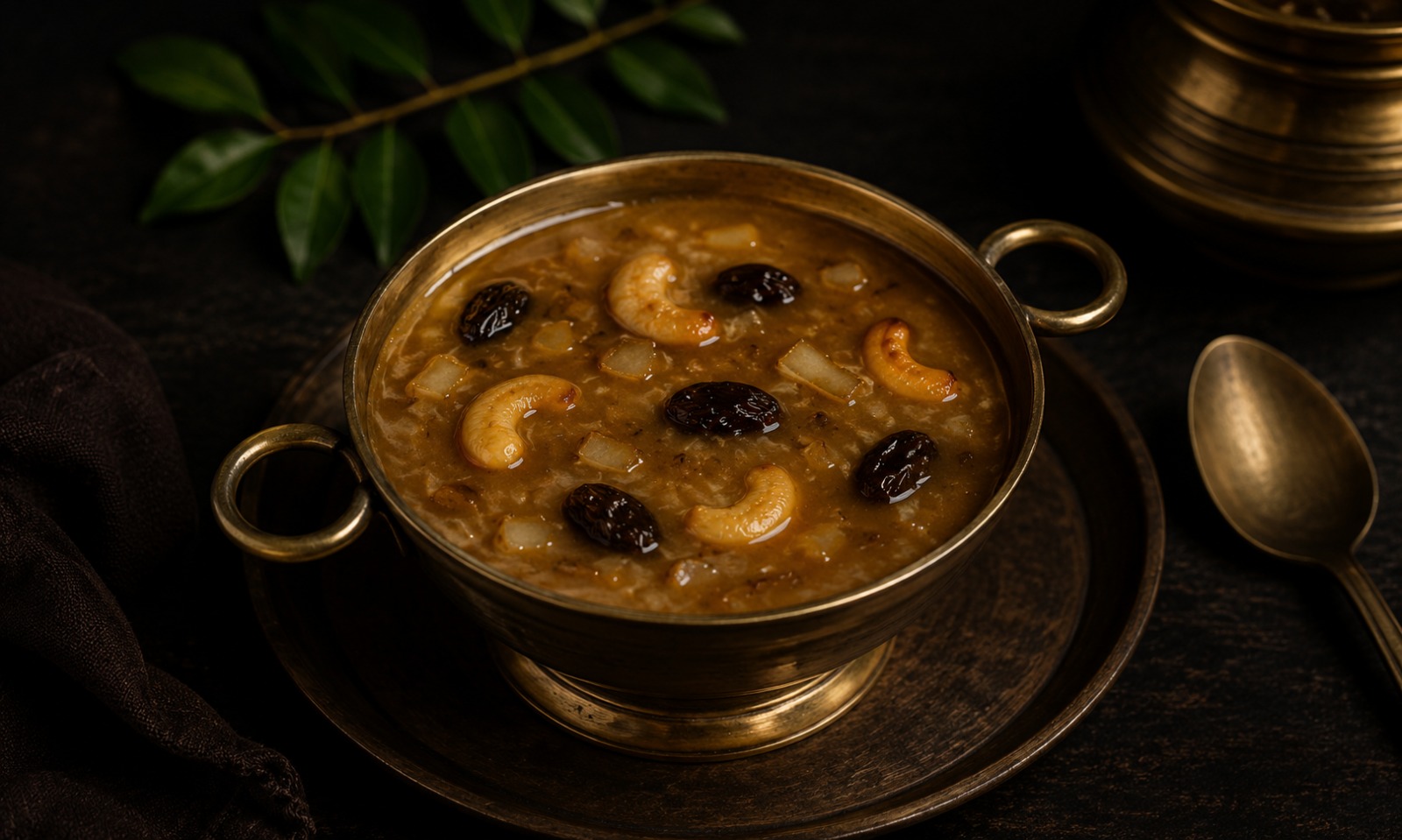
Ada Pradhaman is one of Kerala’s most beloved traditional desserts, made with rice ada, jaggery, coconut milk, ghee, and cardamom. Traditionally served at the end of a Sadya, it is closely associated with Onam, weddings, temple festivals, and family celebrations. Rich, warm, and deeply comforting, Ada Pradhaman remains an important part of Kerala’s festive food culture.
The Sweet Finale of Kerala Sadya
By the time the final course of a Kerala sadya arrives, the banana leaf already carries traces of a feast, streaks of sambar, crushed pappadam, the sweetness of pachadi, and the lingering aroma of curry leaves and coconut oil. Then comes the moment everyone quietly waits for. A ladle dips into a large bronze uruli, lifting thick golden-brown Ada Pradhaman that glows softly under rising steam. The fragrance of jaggery, roasted coconut, cardamom, and ghee drifts across the dining hall as the dessert spreads slowly over the leaf. In Kerala, few culinary experiences feel as emotionally complete or culturally outstanding as this.
Ada Pradhaman is not merely a dessert. It is the emotional climax of Kerala’s festive table, deeply woven into the state’s memory of Onam, temple feasts, weddings, and family gatherings. Rich without being excessive, sweet without becoming cloying, it carries the warmth of slow cooking and inherited tradition in every spoonful. Across generations, Malayalis have regarded Ada Pradhaman as the “King of Kerala Desserts,” not because of extravagance alone, but because of the way it transforms simple ingredients into something ceremonial and deeply comforting.
At the heart of the dessert is ada, small rice flakes or pieces made from rice batter that soften beautifully when cooked. Unlike vermicelli-based payasams, Ada Pradhaman carries a more textured, layered character because the rice ada absorbs sweetness slowly while still retaining gentle bite.
Jaggery shapes the soul of the dish. Kerala’s dark, earthy jaggery lends a caramel-like depth that white sugar could never recreate. When melted and reduced carefully, it gives Ada Pradhaman its deep amber color and smoky sweetness. Coconut milk follows, usually added in stages from thin to thick extracts, creating richness without heaviness.
Then comes ghee, cardamom, and often roasted coconut bits fried until dark and aromatic. Cashews and raisins may appear as finishing touches, though traditional households sometimes prefer restraint over decoration. Together, these ingredients create a dessert that feels layered and mature rather than merely sweet.
In Kerala, Ada Pradhaman belongs inseparably to celebration.
No Onam sadya feels truly complete without it. After rows of savory dishes, pickles, curries, and rice preparations, the payasam arrives almost like a ritual conclusion, signaling abundance, gratitude, and togetherness. During temple festivals and weddings, giant vessels of Ada Pradhaman simmer slowly for hours while kitchens fill with the scent of jaggery and coconut milk.
For many Malayalis, childhood memories of Onam begin not with decorations or flowers, but with the smell of payasam cooking somewhere deep inside the house.
Traditional preparation demanded patience. In older Kerala homes, Ada Pradhaman was often cooked over firewood in heavy bronze vessels. The jaggery syrup had to reach the right consistency before the cooked ada was folded into it gradually. Coconut milk was added carefully in stages, thinner extracts first, thicker milk later, ensuring the dessert developed depth without curdling or splitting.
The slow-cooking process mattered enormously. Firewood heat caramelized jaggery gently while allowing the flavors to merge gradually. Elderly cooks often judged readiness not through timers, but through aroma, texture, and the sound of simmering itself.
Even today, traditionalists insist that the finest Ada Pradhaman cannot be rushed.
The dessert also reflects Kerala’s agricultural identity beautifully. Rice and coconut, two pillars of Kerala cuisine, come together at its center. The use of jaggery rather than refined sugar speaks to older culinary traditions rooted in local farming and natural sweeteners.
What distinguishes Ada Pradhaman from other Kerala payasams is its density and complexity. Palada Payasam may feel creamier and lighter, while Parippu Payasam carries the earthiness of lentils. Ada Pradhaman, however, occupies a middle ground between richness and restraint. Its sweetness arrives slowly rather than sharply.
The sensory experience unfolds in layers. First comes the aroma of roasted coconut and cardamom. Then the warmth of jaggery spreads across the palate before the softness of coconut milk balances everything gently. The ada itself gives the dessert texture, preventing it from becoming overly smooth or heavy.
Served warm on a banana leaf after a full sadya, Ada Pradhaman tastes almost inseparable from the atmosphere surrounding it, crowded dining halls, relatives calling for second servings, children waiting impatiently beside the payasam vessel, and the lingering scent of banana leaf and ghee.
Its emotional power extends far beyond Kerala itself. Across Gulf countries, Europe, and North America, Malayali communities continue preparing Ada Pradhaman during Onam celebrations as a way of preserving connection with home. In many diaspora households, the dessert becomes less about culinary perfection and more about memory.
Modern Kerala has also carried Ada Pradhaman into restaurants, luxury sadya catering, and tourism cuisine. Upscale hotels may serve elegant versions in polished bowls, yet the essence remains unchanged. The dessert still depends on slow cooking, coconut milk, jaggery, and patience.
Perhaps that is why it continues to endure across generations despite changing food trends.
Because Ada Pradhaman is not simply sweet food served after lunch. It is the taste of Onam afternoons beneath ceiling fans, temple festivals echoing with drums, and family kitchens alive with celebration. In every spoonful lives Kerala’s agrarian heritage, coconut-rich landscape, and collective memory of togetherness. Even today, this outstanding dessert remains one of Kerala’s most beloved culinary expressions, warm, golden, deeply nostalgic, and timelessly tied to the spirit of home.