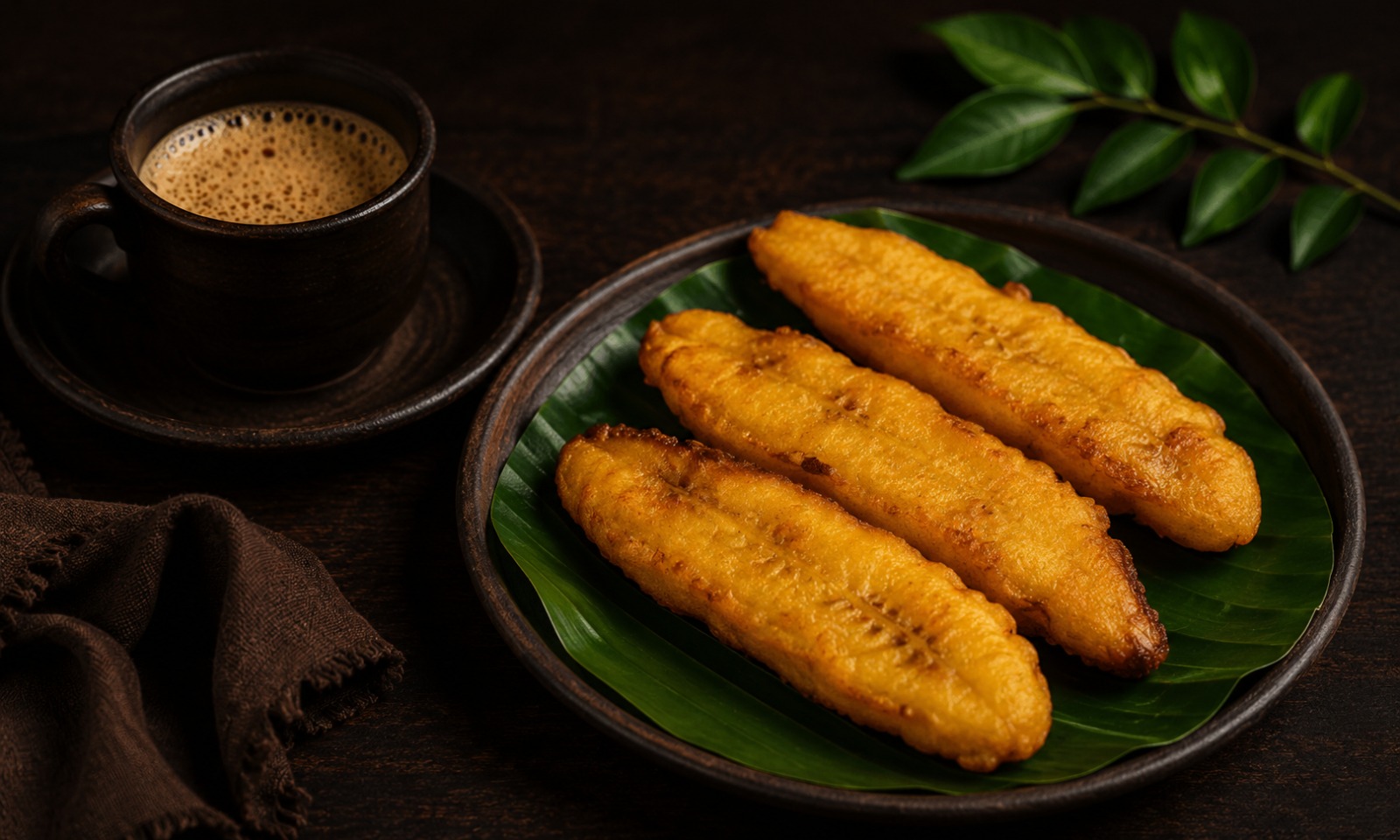
Pazham Pori is one of Kerala’s most popular tea-time snacks, made by coating ripe Nendran bananas in a light batter and deep-frying them until golden and crisp. A familiar sight in roadside tea shops, bakeries, and homes across the state, it is especially loved during rainy evenings. Simple, affordable, and comforting, Pazham Pori remains a much-loved part of Kerala’s everyday food culture.
The Golden Tea-Time Favourite
By late afternoon, Kerala begins to slow down. Rain taps softly against tin roofs, buses hiss to a stop beside crowded junctions, and the scent of freshly brewed chai drifts from small roadside tea shops glowing under yellow lights. Inside these chaayakkadas (Tea Shop), steel kettles whistle continuously while bananas dipped in pale batter slide into shimmering hot oil. Within moments, they emerge crisp, golden, and steaming, stacked beside glass jars of biscuits and parippu vada. This is the hour of Pazham Pori, one of Kerala’s most outstanding everyday comforts.
Known outside the state simply as banana fritters, Pazham Pori is far more than a fried snack in Kerala. Made using ripe Nendran bananas coated in a light flour batter and deep-fried until golden, it carries the warmth of monsoon evenings, tea-time conversations, bus stand memories, and the rhythm of ordinary life itself. Crisp at the edges and soft at the center, the snack balances sweetness and texture with remarkable simplicity.
Its ingredients are humble but deeply rooted in Kerala’s culinary landscape. The heart of the dish is the Nendran banana, a variety inseparable from Kerala food culture. Unlike softer bananas, Nendran holds its shape while frying, developing a creamy texture inside while maintaining structure. Its natural sweetness deepens when heated, giving Pazham Pori its unmistakable flavor.
The batter itself is traditionally made from maida flour mixed with water, sugar, and a pinch of turmeric for color. Some tea shops keep the coating thin for crispness while others prefer a slightly thicker outer layer. The bananas are sliced lengthwise, dipped gently into batter, and lowered into hot oil until the surface turns deep golden-yellow.
But Pazham Pori’s story is not really about ingredients. It is about atmosphere.
The Golden Heart of Kerala Evenings
A Kerala monsoon evening has its own soundtrack. Rainwater rushing through roadside drains. Tea glasses clinking against wooden counters. Newspaper pages turning slowly beneath ceiling fans. Somewhere in the background, oil crackles continuously as fresh batches of Pazham Pori fry beside ulli vada and sukhiyan.
Inside a village tea shop, the scene rarely changes across generations. Students gather after tuition classes. Bus conductors stop briefly between routes. Elderly men debate politics over strong tea poured from steel tumblers. A traveler arriving drenched from rain orders chai almost instinctively, and beside it comes a hot Pazham Pori wrapped loosely in newspaper.
Few snacks in Kerala feel as emotionally familiar.
Unlike festival foods reserved for special occasions, Pazham Pori belongs to daily life. It exists equally in roadside stalls near paddy fields, railway station cafés, college canteens, and modern coffee shops in Kochi. The snack cuts across class and age effortlessly because its appeal is immediate and comforting.
Much of that appeal begins with the Nendran banana itself.
Kerala’s relationship with Nendran runs deep through agriculture and cuisine. Cultivated widely across the state, especially in regions like Thrissur and Palakkad, the banana became central to countless traditional dishes, steamed snacks, chips, baby food, and desserts. Its firm texture and rich flavor make it ideal for frying, unlike softer banana varieties that collapse under heat.
There is also something deeply practical about Nendran. Slightly overripe bananas unsuitable for direct eating often become perfect for Pazham Pori because frying intensifies their sweetness beautifully.
And nowhere showcases this transformation better than Kerala’s tea shops.
The chaayakkada is one of Kerala’s most enduring social spaces. More than eateries, these tea shops function as informal meeting points where politics, cinema, cricket, and village gossip move as freely as tea itself. Their menus are often modest, but Pazham Pori holds permanent status beside classics like parippu vada and bonda.
Freshness matters deeply here. A good Pazham Pori should never sit too long. It must arrive hot enough for steam to escape when torn open. The outer layer should crack lightly between the fingers while the banana inside remains soft, almost custard-like.
Paired with strong Kerala tea, dark, sweet, and slightly overboiled by design, the experience becomes intensely satisfying. The bitterness of tea balances the sweetness of fried banana while the crisp batter contrasts against the creamy fruit inside.
For travelers visiting Kerala, Pazham Pori often becomes an unexpected memory. Tourists may arrive searching for elaborate seafood feasts or grand Sadya meals, yet many leave remembering a rainy roadside evening with hot tea and banana fritters eaten while watching buses disappear into mist.
Perhaps because the snack feels honest. Unpretentious. Entirely woven into local life.
In recent years, Pazham Pori has also evolved beyond tradition. Cafés now serve versions stuffed with chocolate, cheese, or Nutella. Some restaurants pair Pazham Pori with spicy beef curry, creating combinations that gained popularity through Kerala’s café culture and social media food trends.
Yet traditionalists still argue that the finest Pazham Pori needs nothing more than ripe Nendran banana, hot oil, and chai served in a small glass.
And maybe they are right.
Because Pazham Pori succeeds not through complexity, but through memory and atmosphere. It tastes of rainy evenings, crowded tea shops, and conversations stretching longer than intended. It belongs to Kerala’s roadsides and kitchens with equal ease.
Even today, amid changing food trends and modern café culture, Pazham Pori remains one of Kerala’s most outstanding edible symbols of comfort, simple, golden, slightly sweet, and forever tied to the sound of rain and the warmth of tea shared among people.