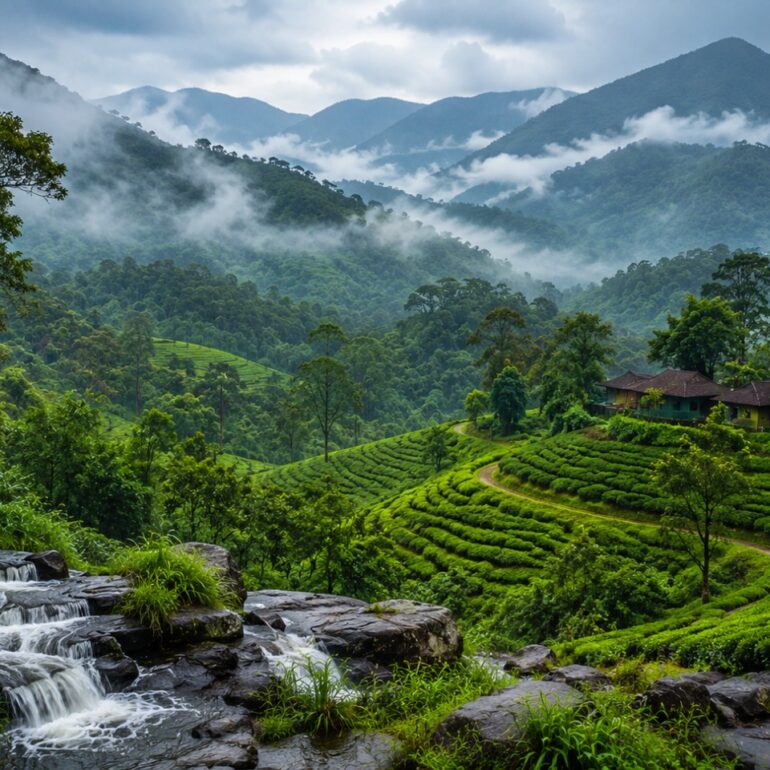
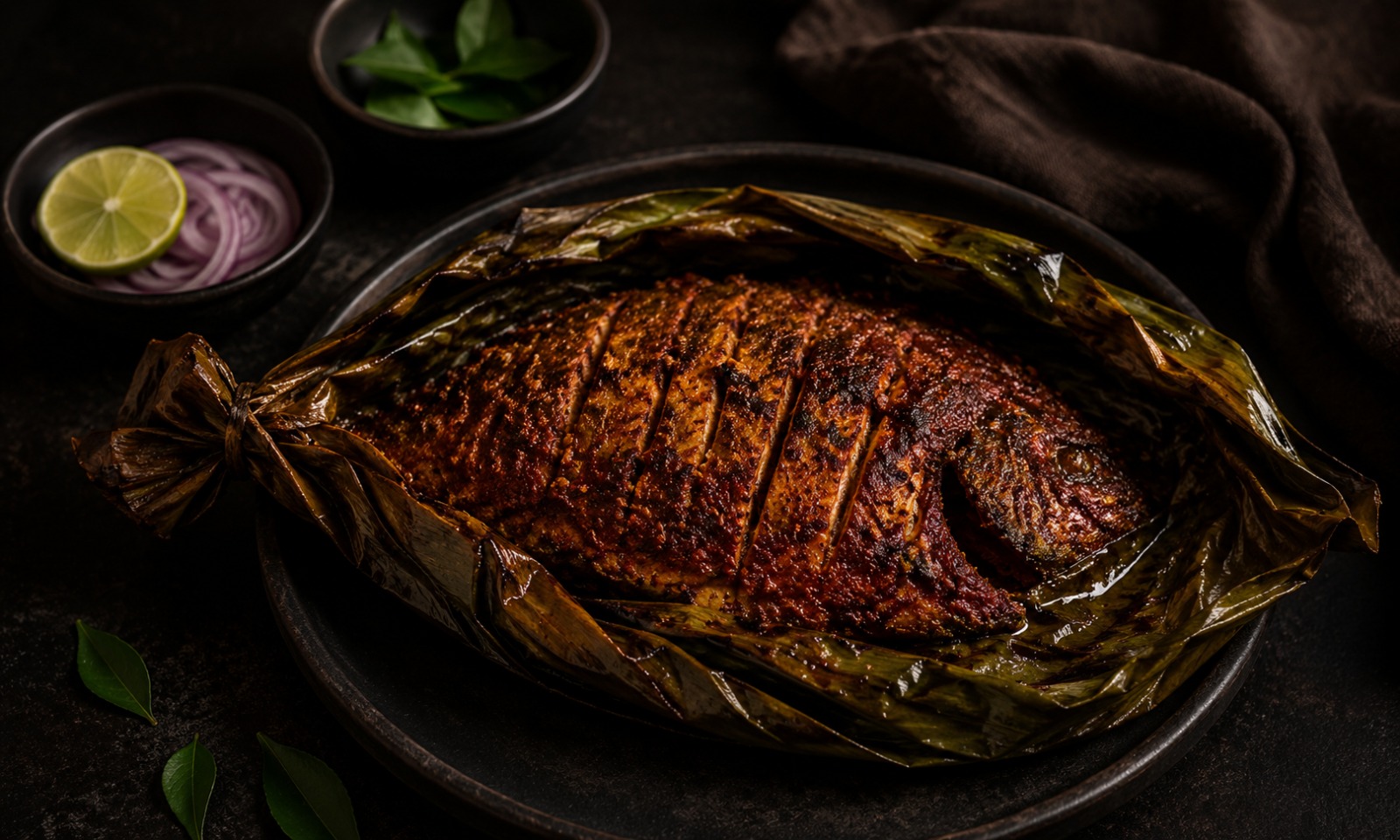
Karimeen Pollichathu is one of Kerala’s most iconic seafood dishes, known for its spicy masala, tender pearl spot fish, and distinctive banana-leaf preparation. Closely connected with the backwaters of Alappuzha and Kottayam, it is a popular choice in traditional homes, toddy shops, houseboats, and restaurants. The fish is marinated, lightly fried, covered with a rich masala, wrapped in banana leaf, and roasted to create its signature smoky flavour.
The Pride of Kerala’s Backwaters
For many Malayalis, Karimeen Pollichathu is not merely seafood. It is hospitality, celebration, and memory wrapped carefully inside banana leaf. The dish carries the essence of Kerala’s backwaters in every bite, earthy, spicy, smoky, and delicate at once. Served in traditional homes, toddy shops, luxury houseboats, and heritage restaurants alike, it remains one of the state’s most emotionally cherished delicacies.
At the center of the dish is karimeen, the Pearl Spot fish native to Kerala’s brackish backwaters. Found abundantly in the lakes and canals stretching through Alappuzha and Kottayam, the fish has long occupied a special place in Kerala cuisine. Unlike stronger-tasting sea fish, karimeen possesses a subtle sweetness and tender flesh that absorbs spices beautifully without losing its own character.
That balance is precisely what makes Karimeen Pollichathu remarkable.
The preparation begins with careful marination. Fresh pearl spot fish is cleaned while keeping its shape intact, then rubbed deeply with lemon juice, turmeric, red chilli powder, black pepper, ginger-garlic paste, and salt. Coconut oil adds richness and helps the spices cling to the fish while also infusing it with Kerala’s unmistakable aroma.
Each ingredient matters. Lemon sharpens the flavor without overpowering the fish. Chilli powder builds warmth and color. Black pepper contributes a deeper, earthier heat that reflects Kerala’s historic spice trade legacy. Coconut oil softens the spice profile while carrying fragrance through every layer of the dish.
Yet perhaps the most important ingredient is the banana leaf itself.
The Pride of Kerala Backwaters
Karimeen’s cultural significance extends beyond cuisine. The fish became deeply associated with Kerala’s backwater identity because it thrived in the interconnected lakes, canals, and lagoons that shaped life in central Kerala for centuries.
In many local communities, karimeen was considered a prized catch reserved for important guests and family occasions. Over time, the dish evolved into a symbol of regional pride. Visitors arriving in Kerala’s backwater villages were often introduced to local hospitality through Karimeen Pollichathu served alongside rice, tapioca, or toddy.
Its reputation expanded further with Kerala tourism. Houseboats drifting through Alappuzha’s waterways began presenting the dish as an essential backwater experience, connecting food directly to landscape.
Today, Karimeen Pollichathu remains inseparable from Kerala’s culinary image. Few dishes communicate the spirit of the backwaters as vividly.
The Art of Pollichathu Cooking
The word pollichathu roughly translates to “wrapped and roasted,” and the cooking method defines the soul of the dish.
After marination, the fish is lightly fried in coconut oil to seal its exterior and deepen flavor. Separately, onions, tomatoes, green chillies, curry leaves, and spices are sautéed slowly into a thick masala. This mixture is spread over the fish before the entire preparation is wrapped tightly inside softened banana leaves.
Once placed on a hot pan or charcoal heat, the transformation begins.
The banana leaf slowly chars at the edges while trapping steam and spice inside. As heat builds, the fish absorbs the smoky aroma of the leaf itself. Coconut oil mingles with roasted masala, creating an intensely fragrant parcel that perfumes the entire kitchen.
Opening freshly cooked Karimeen Pollichathu is part of the experience. Steam escapes first, carrying the scent of pepper, curry leaves, and banana leaf smoke. Then comes the sight of the fish, coated in deep red masala, glistening beneath softened leaf fibers.
It feels less like serving food and more like unveiling something ceremonial.
A Dish of Royal Hospitality
In Kerala households, Karimeen Pollichathu often signals importance. It appears during family feasts, festive lunches, and gatherings where hospitality matters deeply. Serving karimeen to guests traditionally implied care, effort, and abundance.
On Kerala houseboats, the dish became almost iconic. Travelers drifting through narrow canals are often served Karimeen Pollichathu cooked fresh onboard, the aroma mixing with the scent of rainwater and lake breeze. For many visitors, it becomes their defining memory of Kerala cuisine.
Even small toddy shops along the backwaters serve versions of the dish wrapped in banana leaf and paired with tapioca or local rice, proving that its emotional power crosses class and setting effortlessly.
Flavor, Texture, and Culinary Identity
What makes Karimeen Pollichathu unforgettable is restraint. Unlike aggressively spicy seafood curries, the dish protects the natural sweetness of the fish. The masala enhances rather than masks.
The banana leaf cooking method is essential because it creates moisture and smokiness simultaneously. The fish remains tender while developing earthy undertones impossible to achieve through open cooking alone.
Every bite carries layers of flavor, tang from lemon, warmth from chilli, peppery depth, sweetness from onions, and the unmistakable richness of coconut oil.
Together, these elements create a flavor profile that feels uniquely Kerala.
Today, the dish continues evolving without losing authenticity. Fine-dining restaurants reinterpret presentation styles while preserving traditional techniques. Luxury resorts pair Karimeen Pollichathu with contemporary plating, yet the banana leaf remains central.
Food tourism and social media have also expanded its reach far beyond Kerala. Travelers actively search for authentic backwater-style preparations after hearing about the dish online or through culinary documentaries.
Still, the most memorable versions are often found in small family kitchens near the water, where recipes pass quietly between generations.
Because Karimeen Pollichathu was never meant to be fast food or decorative cuisine. It belongs to slow evenings, patient cooking, and the rhythm of Kerala’s waterways. More than a seafood dish, it remains an outstanding edible reflection of Kerala itself, fragrant with spice, wrapped in memory, and forever tied to the quiet beauty of the backwaters.