Sadya is one of Kerala’s most celebrated traditional feasts and an important part of the state’s food and cultural heritage. Traditionally served on a banana leaf during Onam, weddings, temple festivals, and other special occasions, Sadya brings together rice, curries, pickles, vegetables, snacks, and payasam in a carefully arranged meal. More than just food, it represents Kerala’s traditions of hospitality, togetherness, and celebration.
The Cultural Soul of Kerala
Sadya cannot be separated from Kerala’s agrarian history. Long before it became celebrated globally through tourism and social media, it existed as a communal expression of harvest and gratitude. The feast became especially associated with Onam, Kerala’s most beloved festival linked to the mythology of King Mahabali, the legendary ruler believed to visit his people during the harvest season.
In many ways, Sadya reflects the ideals associated with Mahabali’s reign, prosperity, inclusiveness, and social harmony. Everyone sits together for the meal regardless of status, sharing the same dishes served in the same sequence on identical banana leaves. The experience is collective rather than individual.
Traditional etiquette remains important even today. The banana leaf must face a particular direction while dishes are arranged systematically from left to right. Food is eaten by hand, not merely for practicality, but because touch is considered part of the sensory experience itself.
At weddings and temple festivals, Sadya becomes almost theatrical. Servers move rapidly carrying buckets of sambar, rasam, and payasam while guests signal silently for second servings through subtle gestures familiar across generations.
The Banana Leaf Tradition
The banana leaf is not simply a plate. It is central to the identity of Sadya.
Fresh banana leaves release a subtle earthy aroma when hot rice and curries touch their surface. The heat activates natural oils within the leaf, adding a faint vegetal sweetness to the food itself. Beyond flavor, the leaf carries ecological and cultural meaning. Long before sustainability became a global conversation, Kerala’s food traditions already embraced biodegradable serving practices through banana leaves.
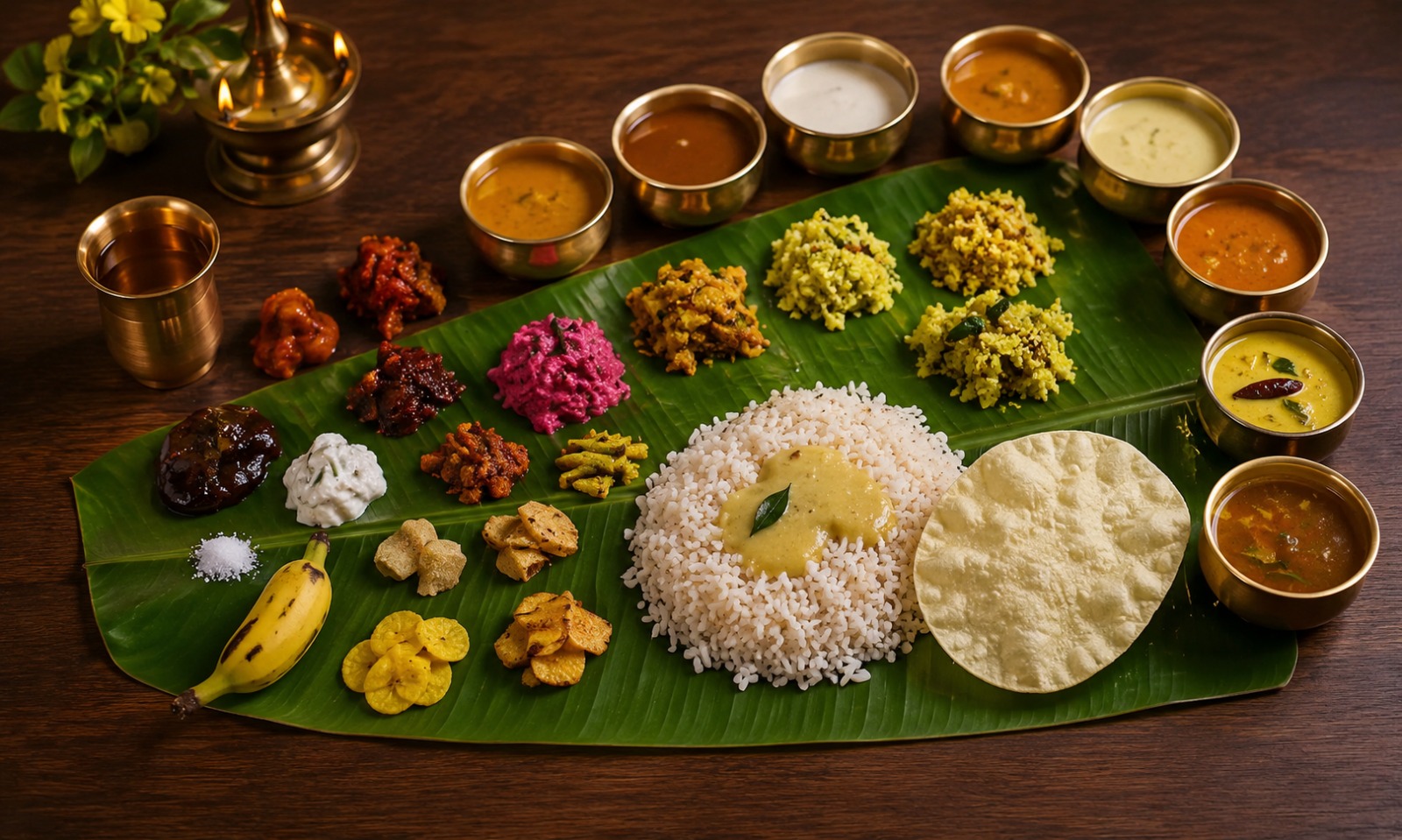
Visually, the leaf transforms the meal into something vibrant and ceremonial. Bright orange pickles, pale olan, green avial, golden banana chips, and dark brown jaggery payasam create a striking contrast against the glossy green background.
Traditionally, guests sit on mats or long benches while Sadya is served in rows known as panthi. Eating together this way reinforces the communal spirit of the feast.
The Many Flavors of Sadya
What makes Sadya extraordinary is its balance. No single dish dominates. Instead, the meal unfolds through carefully layered contrasts of flavor, texture, and temperature.
A traditional Sadya may contain twenty to thirty preparations, each contributing something essential. Avial brings richness through coconut and mixed vegetables. Olan feels delicate with ash gourd and coconut milk. Thoran offers texture through finely chopped vegetables stir-fried with grated coconut. Kaalan introduces sourness and spice through curd and yam, while pachadi and kichadi add sweetness and tang through pineapple, beetroot, or cucumber.
Then come the larger anchors of the meal, parippu with ghee, sambar thick with lentils and vegetables, followed later by rasam’s peppery warmth. Banana chips and pappadam provide crunch between softer dishes while pickles sharpen the palate.
And finally, payasam arrives.
Served warm across the banana leaf or in cups, varieties like palada, parippu payasam, and ada pradhaman complete the meal with jaggery, coconut milk, and slow-cooked sweetness.
Sadya’s brilliance lies not in extravagance alone, but in orchestration. Every dish is placed and eaten in a sequence designed to create harmony.
The Art of Preparation
Preparing Sadya is itself a ritual of cooperation.
In traditional households, cooking begins before sunrise. Relatives gather to chop vegetables, grind coconut, roast spices, and stir giant pots over wood fires. Timing becomes critical because dozens of dishes must reach the leaf at perfect consistency and temperature simultaneously.
Temple-style Sadya cooking often uses large bronze vessels and firewood kitchens where experienced cooks manage enormous quantities with astonishing precision. The process requires not just culinary skill, but coordination and memory passed down through generations.
For many families, these hours spent preparing Sadya together become as meaningful as the meal itself.
Today, Sadya has traveled far beyond Kerala. Restaurants in Mumbai, Bengaluru, Dubai, London, and New York now organize elaborate Onam Sadya festivals each year for Malayali communities and curious diners alike.
Catering businesses have modernized preparation methods while luxury resorts present curated Sadya experiences for tourists. Some chefs experiment with fusion versions, though traditionalists often argue that authenticity lies in simplicity and balance rather than reinvention.
Even younger generations raised outside Kerala continue seeking Sadya during festivals because it connects them to memory and belonging in ways few dishes can.
Perhaps that is Sadya’s greatest strength. It evolves without losing its soul.
Because Sadya is not merely food arranged on a banana leaf. It is harvest and history served together. It is the sound of crowded kitchens before festivals, the aroma of coconut oil rising with steam, and the sight of families seated side by side sharing the same meal without hierarchy. In an increasingly hurried world, this outstanding feast continues to remind Kerala of something essential, that food is not only nourishment, but also memory, generosity, and the enduring comfort of togetherness.