Ottan Thullal
Solo dance-drama performance
Ottan Thullal is considered one of Kerala’s top 10 traditional art forms and is celebrated for its lively storytelling, humour, and expressive performance style. Created by Kunchan Nambiar, Ottan Thullal combines satire, dance, music, and literature in a way that entertains audiences while also reflecting social themes and everyday life with wit and energy.
Place of Origin: Kerala, India
Art Form: Solo dance-drama performance
Core Elements: Satire, storytelling, expressive acting, dance, and humor
Language: Malayalam
Themes: Social criticism, mythology, and everyday life
Cultural Importance: Known for blending humor with sharp social commentary
During temple festivals in Kerala, the atmosphere often becomes alive with drums, laughter, music, and storytelling. Among the many traditional performances that draw crowds together, few are as energetic and entertaining as Ottan Thullal. A performer dressed in a brightly coloured costume steps onto the stage with painted facial makeup, expressive eyes, and rhythmic movements. As the drums begin, stories from mythology unfold with humour, satire, poetry, and lively dance.
Ottan Thullal is one of Kerala’s most unique traditional performing arts. It combines dance, storytelling, acting, poetry, satire, and music into a performance that is both deeply cultural and highly entertaining. Unlike some classical art forms that were traditionally meant for royal courts or scholars, Ottan Thullal connected directly with ordinary people through simple language, humour, and social criticism.
Created in the 18th century by the legendary poet and performer Kunchan Nambiar, the art form remains one of Kerala’s most beloved cultural traditions. Even today, audiences continue to enjoy its lively storytelling and sharp observations about society and human nature.
What is Ottan Thullal?
The word “Thullal” in Malayalam roughly means “jumping” or “dancing rhythmically.” True to its name, Ottan Thullal is an energetic solo performance art that combines rhythmic dance movements with storytelling and recitation.
Unlike heavily ritualistic classical arts, Ottan Thullal is lively, direct, and easy for ordinary audiences to understand. A single performer narrates stories using expressive gestures, dance steps, facial expressions, and humorous dialogue, while musicians provide rhythm and support.
The performance blends several elements together:
- Dance
- Acting
- Singing
- Poetry
- Satire
- Audience interaction
The artist often speaks directly to the audience, making the performance feel personal and engaging. Humour plays a major role, and the stories are designed not just to entertain, but also to make people think about society, pride, greed, and human behavior.
Because of this connection with ordinary people, Ottan Thullal became known as one of Kerala’s most accessible and popular traditional art forms.
History and Origin
Ottan Thullal was created during the 18th century by Kunchan Nambiar, one of the famous poets of Kerala’s Prachina Kavithrayam, the trio of early Malayalam literary masters.
According to a well-known story from Kerala folklore, the birth of Ottan Thullal happened after an embarrassing incident during a Chakyar Koothu performance. Kunchan Nambiar was playing the mizhavu drum during a temple performance but reportedly became tired and fell asleep. The Chakyar performer publicly mocked him before the audience.
Humiliated but inspired, Kunchan Nambiar decided to create a completely new performance art that ordinary people could enjoy more easily. Instead of using highly complex Sanskrit language and elite humour, he used simple Malayalam filled with folk expressions, wit, and satire.
The result was Ottan Thullal, a performance style that boldly criticized social inequality, caste arrogance, hypocrisy, and human foolishness through humour and storytelling.
This new art form quickly became popular because people could finally see mythology and social life presented in a language they understood and enjoyed.
Performance Style
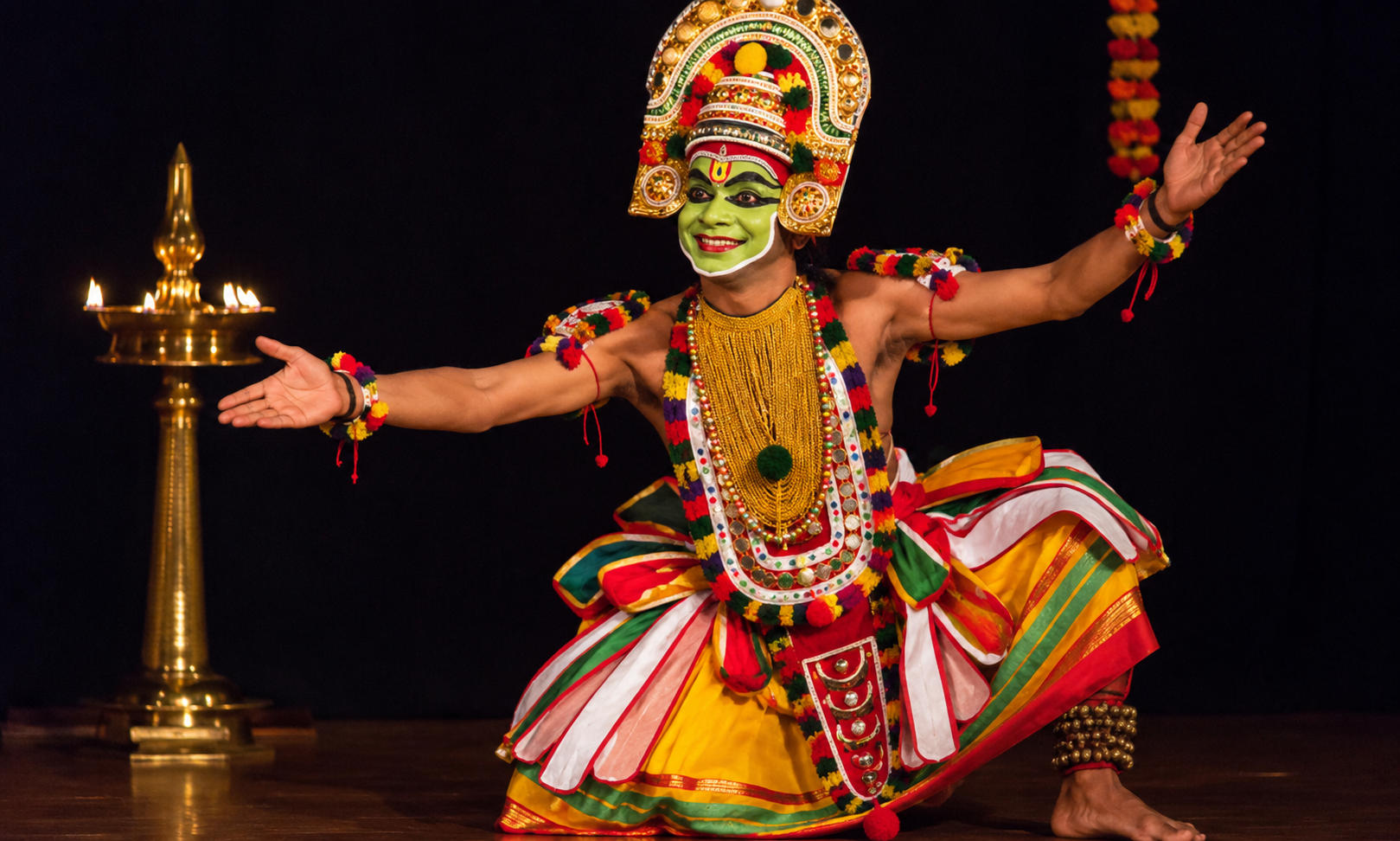
An Ottan Thullal performance is colourful, energetic, and visually striking.
The performer wears elaborate costumes decorated with red-and-white patterns, painted wooden ornaments, waist decorations, and bright accessories. The facial makeup is usually green, similar to certain Kerala classical art traditions, helping emphasize expressions under stage lighting.
The costume is designed to immediately capture attention and create a festive atmosphere.
Body movements are rhythmic and expressive rather than heavily classical. The performer moves dynamically across the stage while narrating stories with humour and emotion.
Music plays an important role in maintaining rhythm and energy. Instruments commonly used include:
- Mridangam
- Idakka
- Ilathalam cymbals
A singer or supporting chorus usually accompanies the main performer by repeating lines and maintaining the musical flow.
The performance atmosphere is lively and interactive. Audiences laugh, react, and engage directly with the artist’s jokes and commentary.
Watching Ottan Thullal feels less like watching a distant classical performance and more like participating in a shared cultural celebration.
Themes and Stories
Ottan Thullal performances are usually based on stories from Hindu epics and mythology, but they are presented in humorous and relatable ways.
Popular stories include:
- Kallyana Sougandhikam
- Kiratham
- Rukmini Swayamvaram
- Keechakavadham
- Santhanagopalam
- Ghoshayathra
Characters from the Mahabharata and Ramayana are often portrayed with human weaknesses, humour, and everyday emotions. Even mighty heroes like Bhima may appear impatient, greedy, emotional, or funny during the performance.
This approach makes mythology feel more relatable to ordinary audiences.
At the same time, Ottan Thullal uses satire to criticize social inequality, arrogance, corruption, and hypocrisy. Through laughter, the performer encourages audiences to reflect on human behavior and society.
The art form proves that humour can be both entertaining and deeply meaningful.
Language and Connection with Common People
One of the biggest reasons for Ottan Thullal’s popularity was its use of simple Malayalam language.
Unlike many traditional performance arts that relied heavily on Sanskrit, Ottan Thullal used everyday speech, local sayings, folk humour, and familiar expressions. This made the stories easy to understand even for common villagers and ordinary audiences.
People saw their own lives reflected in the humour and social commentary of the performances.
Because of this strong connection with everyday life, Ottan Thullal became known as “the people’s performance art.” It crossed barriers of class and education, allowing everyone to enjoy and understand the stories.
The language remains one of the art form’s greatest strengths even today.
Places Where Ottan Thullal is Performed
Ottan Thullal is commonly performed during temple festivals, cultural programs, heritage tourism events, and traditional art festivals across Kerala.
Several regions are strongly associated with the art form, especially:
- Ambalapuzha
- Thrissur
- Palakkad
Temple festivals in central Kerala often feature Ottan Thullal performances late into the evening, creating an atmosphere filled with music, laughter, lamps, and storytelling.
Cultural organizations and tourism programs also regularly organize performances for visitors interested in Kerala’s traditional arts.
For tourists, watching Ottan Thullal offers an opportunity to experience Kerala’s humour, literature, mythology, and folk culture all at once.
Ottan Thullal in Modern Kerala
Today, many artists and cultural institutions continue to work hard to preserve Ottan Thullal for future generations.
The art form remains active through:
- Temple festivals
- School arts competitions
- Cultural academies
- Heritage festivals
- Tourism programs
Modern performers sometimes use Ottan Thullal to spread awareness about social issues, environmental protection, public health, and education, continuing the tradition of social commentary started by Kunchan Nambiar centuries ago.
Artists such as Mathur Panikkar played important roles in preserving and popularizing the art form during the modern era.
Despite challenges from changing entertainment habits, Ottan Thullal continues to survive because of its humour, accessibility, and deep cultural connection with Kerala society.
Cultural Importance
Ottan Thullal remains one of Kerala’s most important cultural traditions because it successfully combines literature, humour, music, rhythm, dance, and social awareness into a single performance art.
It preserves Malayalam storytelling traditions while also reflecting the social realities and human emotions of ordinary people.
Unlike art forms meant only for elite audiences, Ottan Thullal belongs deeply to Kerala’s public cultural life. It speaks in the language of the people, laughs with them, and sometimes gently criticizes them too.
The art form represents Kerala’s long tradition of using creativity and humour to discuss society, politics, morality, and human nature.
Even centuries after its creation, Ottan Thullal continues to feel alive, relevant, and deeply human.
Conclusion
Ottan Thullal is not just a traditional performance. It is a living conversation between Kerala’s culture, humour, literature, mythology, and ordinary people.
Through rhythmic movement, witty storytelling, colourful costumes, and sharp satire, the art form transforms ancient stories into something joyful, relatable, and meaningful for every generation.
For visitors exploring Kerala’s cultural heritage, watching a live Ottan Thullal performance is an unforgettable experience filled with laughter, rhythm, wisdom, and storytelling.
In every drumbeat, every gesture, and every joke, Ottan Thullal continues to carry the vibrant spirit of Kerala’s artistic soul.