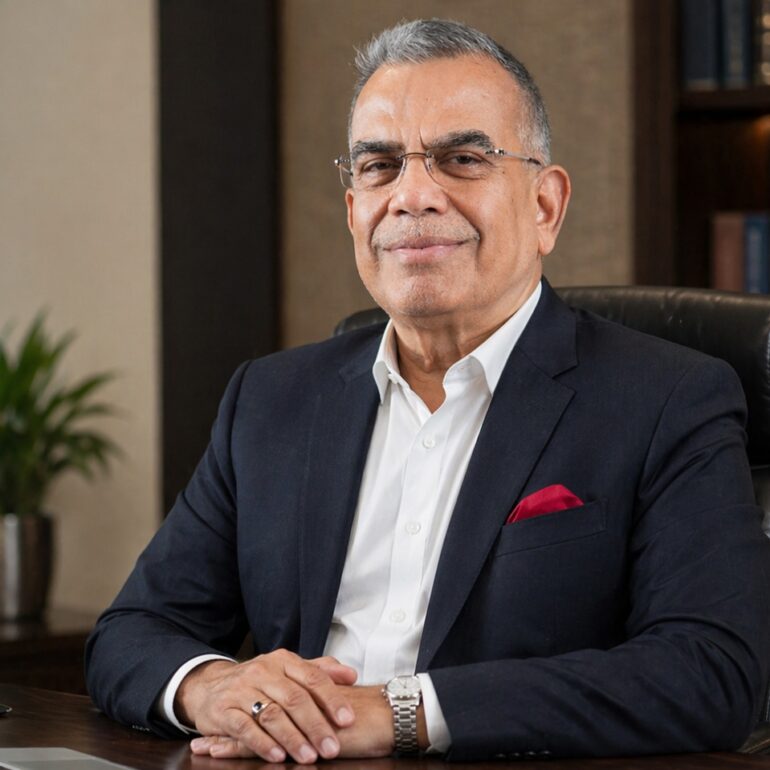

P.M Bava
Founder of Saina Video Vision & Saina Play
PM Bava is the founder of Saina Video Vision, a pioneering South Indian film distribution company established in 1985 in Chennai. He transitioned the business from physical cassette rentals to a digital OTT platform, Saina Play, in 2018, focusing on Malayalam cinema. Originally from Kalady, Kochi, Bava established his reputation in the film distribution industry in Chennai. Saina Play launched in 2018 by his son Aashiq Bava to move beyond physical VCDs/DVDs, the platform streams Malayalam movies, web series, and short films. He has been a significant figure in distributing Malayalam movies for decades, evolving from audio tapes and cassettes to digital content.
Key Factors
Name: PM Bava
Place: Kalady, Kochi, Kerala
Title: Founder of Saina Video Vision & Saina Play
Known For: Malayalam film distribution, home video revolution, regional OTT platform development, preserving Malayalam cinema accessibility across changing media eras
There was a time when Malayalam cinema travelled not through algorithms or streaming platforms, but through plastic cassette boxes stacked inside crowded video libraries, bus-stand shops, and Gulf-bound luggage. In that analogue era, long before OTT transformed viewing habits, a generation of Malayalis encountered films through distributors who quietly connected cinema to ordinary homes. Among the most outstanding figures to emerge from that world was PM Bava, the founder of Saina Video Vision and the driving force behind one of Malayalam entertainment’s most fascinating technological evolutions.
From a modest beginning in Kalady near Kochi to the bustling film corridors of Chennai, PM Bava built a career that mirrored the transformation of media itself. He navigated the transitions from audio tapes to VHS, from VCDs to DVDs, and eventually from physical shelves to digital streaming platforms. Through Saina Play, launched in 2018 alongside his son Aashiq Bava, he helped carry Malayalam cinema into the OTT era while preserving its regional identity. His story is not simply about business survival. It is about adaptation, instinct, and a lifelong relationship with cinema across changing generations of technology.
A Malayali Dream Inside Chennai’s Film Streets
The story of PM Bava begins far away from the polished interfaces of modern streaming platforms. It begins in Kalady, near Kochi, in a Kerala that still consumed cinema collectively, emotionally, and physically.
For many Malayali families during the late twentieth century, films were events rather than background entertainment. Theatres dominated public culture, but home viewing was beginning to emerge as a powerful parallel industry. VHS players slowly entered middle-class homes. Audio cassettes carried film songs into tea shops, buses, and wedding halls. Gulf migration accelerated the circulation of Malayalam films beyond Kerala itself.
It was during this changing media landscape that PM Bava entered the South Indian entertainment industry through an unconventional route.
In 1985, he established Saina Audio & Video in Chennai, then one of the most influential centers of South Indian film production and distribution. Chennai at the time functioned as a nerve center for Malayalam, Tamil, Telugu, and Kannada cinema businesses. Production offices, editing studios, distributors, audio companies, and dubbing facilities operated within a dense cinematic ecosystem.
For an entrepreneur from Kerala, Chennai offered possibility, but also intense competition.
PM Bava entered that world not as a filmmaker or actor, but as a distributor and media entrepreneur, a role often less visible publicly but deeply important within the entertainment economy. Distribution determines how cinema travels, survives, and reaches audiences. It is the invisible infrastructure behind film culture.
Over time, Saina became a trusted name among Malayalam film viewers and industry insiders alike.
The Era of Cassettes, Video Libraries, and Gulf Malayalis
To understand PM Bava’s significance, one must understand the emotional role physical media once played in Kerala society.
Before streaming platforms and instant digital access, Malayalam cinema survived through networks of physical circulation. Audio cassettes carried iconic soundtracks into homes. VHS tapes connected expatriate Malayalis to Kerala culture. Small rental stores became social spaces where cinema discussions unfolded alongside tea and politics.
Saina Audio & Video emerged during exactly that period.
The company distributed films through formats that today feel almost archaeological, VHS tapes, audio cassettes, VCDs, and DVDs. Yet these formats shaped how an entire generation consumed cinema.
For Gulf Malayalis especially, video distribution became culturally essential. Families living abroad depended heavily on cassettes and CDs to maintain emotional connection with Kerala. Malayalam cinema functioned as memory, nostalgia, and identity.
PM Bava understood this audience instinctively.
Unlike larger national distributors focused primarily on scale, regional distributors like Saina operated through trust and cultural familiarity. They knew which films mattered to Malayali audiences, which stars drove demand, and how quickly viewing technologies were changing.
That instinct would later become crucial.
Surviving the Technological Earthquakes
Most media businesses built during the cassette era disappeared with technological change.
The arrival of satellite television disrupted video rentals. Piracy damaged physical distribution economics. CDs replaced VHS. DVDs replaced CDs. Then came broadband internet, YouTube, smartphones, and finally the OTT revolution.
Each transition destroyed parts of the previous business model.
Many distributors failed because they treated technology as temporary disruption rather than permanent transformation. PM Bava approached it differently. Across decades, Saina repeatedly adapted to changing consumption habits instead of resisting them.
That adaptability became the company’s defining strength.
The evolution of media distribution is often discussed in abstract technological language, but for businesses like Saina, each transition carried enormous financial and operational risk. Warehouses became obsolete. Inventory lost value overnight. Consumer habits changed unpredictably.
Yet Saina survived because it continuously moved forward with the audience.
From physical rentals to digital accessibility, the company evolved step by step alongside Malayalam cinema itself.
The Birth of Saina Play
By the late 2010s, it had become clear that streaming platforms were no longer experimental. They were rapidly becoming the future of entertainment consumption.
Global players like Netflix and Amazon Prime Video were expanding aggressively. Indian platforms were multiplying. Younger audiences increasingly preferred mobile viewing over television or physical media.
For Malayalam cinema, however, the OTT landscape remained fragmented.
Larger platforms focused primarily on high-profile acquisitions and mainstream releases. Smaller Malayalam films, independent productions, short films, and regional creators often struggled for digital visibility.
This created an opportunity.
In 2018, Saina Play was launched under the leadership of Aashiq Bava, continuing PM Bava’s legacy while modernizing its infrastructure for the streaming era.
The launch represented more than a business expansion. Symbolically, it marked the complete transformation of a company born in the cassette era into a digital platform competing within contemporary OTT culture.
That transition carried emotional weight.
Saina was no longer simply distributing films physically. It was now curating and streaming Malayalam content directly to viewers worldwide.
Building a Malayalam OTT Identity
What made Saina Play particularly interesting within India’s OTT ecosystem was its regional specificity.
Instead of attempting to compete broadly against multinational platforms, Saina Play focused heavily on Malayalam-language content and niche regional storytelling.
That strategy aligned with larger shifts occurring in Indian entertainment. Audiences were increasingly seeking language-specific content with cultural authenticity rather than generic mass-market programming.
Over time, the platform built an extensive content library including more than 500 films, 150 short films, over 10 web series, and hundreds of songs.
Its growth reflected the changing dynamics of Malayalam entertainment itself.
Malayalam cinema had already developed a strong reputation nationally for realistic storytelling, experimental filmmaking, and strong writing. OTT platforms further accelerated the visibility of Malayalam content beyond Kerala.
Saina Play positioned itself within this environment not as a massive pan-Indian streaming giant, but as a focused Malayalam entertainment destination.
The platform reportedly crossed 1.7 million downloads across devices, reflecting steady audience engagement within a highly competitive digital landscape.
Its release strategy also remained consistent, averaging multiple releases monthly while gradually expanding content diversity.
Challenging Giants in the Streaming Era
Running a regional OTT platform in India is extraordinarily difficult.
Unlike global corporations with massive budgets, regional platforms must survive through targeted audiences, efficient licensing, and strong cultural positioning. Competition extends not only from international streamers but from piracy, YouTube consumption habits, and shifting viewer attention spans.
For Saina Play, the challenge was even more specific.
Malayalam cinema audiences are among India’s most digitally aware and content-sensitive viewers. They quickly compare quality, user experience, and catalog strength across platforms.
Yet Saina survived by understanding something many larger companies overlooked, regional loyalty matters deeply when combined with cultural familiarity.
The platform became particularly important for smaller Malayalam films and independent creators seeking accessible OTT distribution. In many ways, Saina Play reflected the democratization of Malayalam digital content culture.
Its success also demonstrated that regional OTT ecosystems could coexist alongside larger streaming giants rather than simply being absorbed by them.
The Emotional Side of Media Evolution
What makes PM Bava’s journey compelling is not merely entrepreneurship, but continuity across generations of media change.
Very few individuals remain relevant through every major entertainment format shift over four decades.
He witnessed Malayalam cinema move from theatre-dominated culture to home video, from television broadcasting to smartphone streaming. He experienced the rise and collapse of multiple distribution models.
Yet through all these transitions, one thing remained constant, the audience’s emotional relationship with Malayalam cinema.
In many ways, PM Bava’s career represents the evolution of how Malayalis consumed stories.
Older audiences remember cassette stores and video libraries. Younger viewers discover films through mobile apps and smart TVs. Saina existed across both worlds.
That continuity gives his story unusual cultural significance.
A Legacy Beyond Business
Today, discussions around OTT platforms often revolve around algorithms, valuations, and subscriber numbers. But regional entertainment industries are built equally on memory, trust, and persistence.
PM Bava’s contribution to Malayalam cinema distribution extends beyond commerce. He helped preserve accessibility during periods when regional cinema risked being overshadowed by larger national entertainment systems.
From physical tapes carried across continents to digital streaming libraries accessed instantly worldwide, his work quietly shaped how Malayalam films travelled through generations.
Saina Play itself represents something larger than a streaming app. It symbolizes survival through adaptation, a regional company evolving without abandoning its cultural roots.
And perhaps that is the most remarkable part of PM Bava’s journey. He did not simply survive the technological revolutions that destroyed much of the old entertainment business. He moved with them, carrying Malayalam cinema from shelves of cassettes into the age of streaming while preserving the emotional bond audiences always had with their stories.
In an industry defined by constant disruption, that kind of endurance remains rare, and undeniably outstanding.