
Grand Pavilion
Kerala’s Forgotten Vegetarian Sophistication
Grand Pavilion is a well-known dining destination in Kochi for traditional Kerala vegetarian cuisine. Best known for its Sadya and classic regional dishes, the restaurant focuses on authentic flavours, seasonal ingredients, and traditional preparation.
Contact: 04842382061
Location: https://maps.app.goo.gl/X2PMdruFCsnx5VGc9
website: http://www.grandhotelkerala.com/
By noon, the dining halls of Grand Pavilion begin moving with the rhythm of ritual. Fresh banana leaves are placed across long tables in quick succession. Small portions of pickle, thoran, pachadi, and kalan appear methodically, each occupying a precise corner of the leaf according to an unwritten culinary grammar familiar to generations of Malayalis. Steam rises from red rice. Sambar arrives next, followed by rasam, moru, and finally the slow sweetness of palada payasam poured carefully into waiting spaces cleared by diners who understand the choreography instinctively.
In Kerala, conversations about food often drift toward seafood, Malabar biryani, or Syrian Christian meat traditions. Yet beneath those globally recognizable cuisines exists another culinary world built on restraint, balance, seasonality, and ritual precision. The sadya, Kerala’s traditional vegetarian feast, remains one of India’s most sophisticated dining traditions, both gastronomically and culturally. Grand Pavilion has preserved that heritage with outstanding consistency for decades. The restaurant is not fashionable in the contemporary sense, nor does it attempt culinary reinvention for social media visibility. Its importance lies elsewhere, in continuity, discipline, and the quiet confidence of serving vegetarian Kerala cuisine exactly as generations remember it.
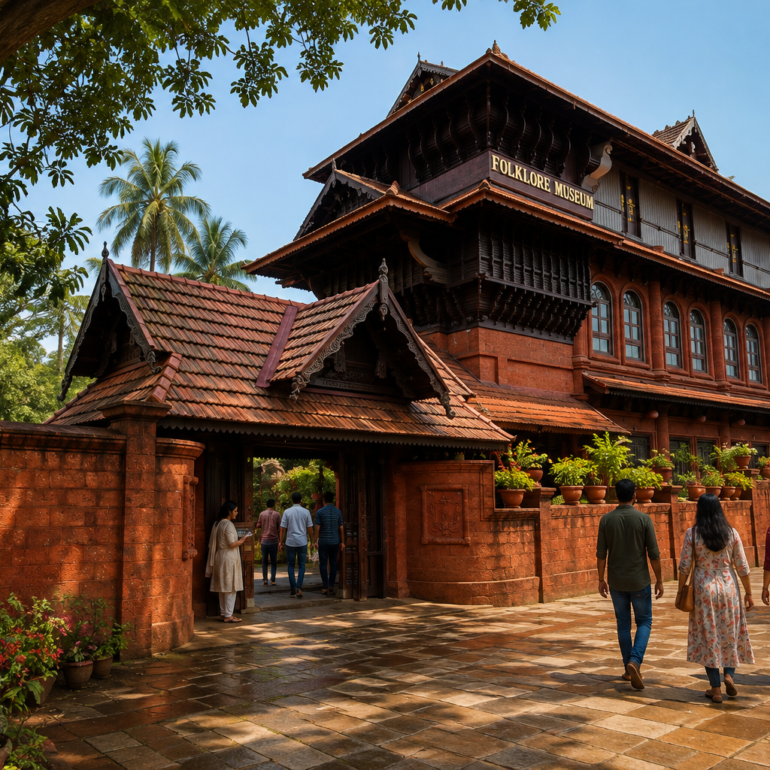
Inside Grand Pavilion
Kerala’s food identity is often misunderstood from the outside.
Travel writing and tourism narratives frequently reduce the state’s cuisine to seafood curries, toddy shop meat dishes, or fragrant Malabar biryanis. These foods deserve their reputation, but they represent only one part of Kerala’s culinary history. Equally important, though less internationally celebrated, is the vegetarian tradition that evolved through temple cultures, agrarian rhythms, Ayurveda, seasonal farming, and ritual dining practices across the state.
At the centre of that tradition stands the sadya.
More than a meal, the sadya functions as cultural performance, social ritual, agricultural memory, and culinary philosophy combined into a single dining experience. It is built not around excess, but around proportion. Every dish exists in conversation with another. Sourness balances sweetness. Coconut richness meets spice. Crunch interrupts softness. Fermentation cuts through heaviness. The structure itself demands patience and attention.
Restaurants like Grand Pavilion matter because they continue protecting this culinary intelligence at a time when food culture increasingly prioritizes speed, novelty, and visual spectacle.
Walking into Grand Pavilion during festival season reveals immediately why the restaurant occupies such a distinctive place within Kochi’s dining landscape. The atmosphere is crowded but controlled. Families wait patiently despite long queues. Elderly diners discuss politics and temple festivals between courses. Business groups arrive after meetings. Temple visitors stop in after ceremonies. Servers move rapidly carrying steel buckets filled with curries and payasam.
Nothing about the restaurant feels performative.
And that authenticity is precisely its strength.
Kerala’s Forgotten Vegetarian Sophistication
The irony of Kerala cuisine is that some of its most complex culinary traditions remain its least internationally recognized.
The sadya requires extraordinary coordination, technical knowledge, and ingredient balance. A complete sadya can involve more than twenty separate preparations, many of which appear deceptively simple to outsiders unfamiliar with Kerala cooking traditions. Yet behind every dish lies highly specific culinary discipline.
Avial, for example, depends entirely on restraint.
Vegetables must retain individual texture while absorbing coconut, cumin, yoghurt, and curry leaf flavours harmoniously. Overcooking destroys the dish immediately. Olan achieves complexity through minimalism, balancing ash gourd, cowpeas, coconut milk, and green chilli with remarkable subtlety. Thoran transforms ordinary vegetables through texture and seasoning precision. Pachadi introduces sweetness and acidity in carefully measured proportion.
Grand Pavilion understands these distinctions deeply.
The restaurant’s food avoids the common problem faced by many large vegetarian establishments, excessive standardization that flattens flavour into predictability. Instead, dishes maintain individual character while still functioning collectively within the broader sadya structure.
This is important because Kerala vegetarian cuisine was never designed around isolated dishes.
Its sophistication emerges through sequencing.
The Ritual of the Sadya
At Grand Pavilion, the sadya unfolds gradually, almost ceremonially.
The banana leaf itself establishes the experience psychologically. It changes the pace of eating. Diners become more attentive to placement, texture, and sequence. Servers move systematically around the room distributing dishes in traditional order. Pickles arrive first, sharp and intense enough to awaken appetite immediately. Banana chips add crunch. Sharkara upperi introduces sweetness. Pachadi cools the palate while thoran contributes earthy texture.
Then comes the rice.
Sambar follows generously, aromatic with lentils, tamarind, and vegetables softened into deep comfort rather than aggressive spice. Rasam arrives later, lighter and sharper, almost cleansing after the density of earlier courses. Moru softens the experience again, introducing cooling acidity before dessert transitions begin.
And then comes payasam.
At Grand Pavilion, palada payasam remains among the restaurant’s defining pleasures. Thick without becoming heavy, sweet but not cloying, the dessert carries the emotional familiarity associated with Kerala celebrations, weddings, temple festivals, and Onam lunches.
One of the remarkable aspects of sadya dining is how it transforms eating into collective rhythm.
Entire dining halls move through courses simultaneously. Servers anticipate progression instinctively. Diners understand when to mix, when to pause, when to leave space for the next dish. Unlike individualized restaurant dining culture, the sadya creates temporary community through shared sequence and sensory timing.
Grand Pavilion preserves that communal atmosphere exceptionally well.
Grand Pavilion’s Place in Kochi
Kochi’s restaurant culture changed dramatically over the last two decades.
Luxury dining expanded. International cuisines entered the city aggressively. Café culture transformed younger urban eating habits. Social media aesthetics increasingly shaped restaurant popularity. Amid these shifts, Grand Pavilion remained remarkably stable.
That stability created trust.
For many older Malayali diners, the restaurant represents continuity in a rapidly changing city. Families return because flavours remain recognizable across years. Politicians and business leaders dine there not because it is fashionable, but because the food offers reliability and cultural familiarity. Temple visitors often include meals at Grand Pavilion within ritual journeys across Kochi.
Importantly, the restaurant never attempted to reinvent itself into “modern Kerala cuisine.”
There are no unnecessary fusion experiments designed for trend visibility. Presentation remains practical rather than theatrical. Interiors prioritize functionality over curated heritage aesthetics.
This refusal to chase contemporary dining fashions gives Grand Pavilion unusual credibility.
The restaurant understands that its role is preservation rather than disruption.
And in modern food culture, preservation itself becomes a radical act.
Discipline Over Reinvention
One of the most striking aspects of Grand Pavilion is its commitment to culinary discipline.
The restaurant’s vegetarian cuisine depends on precision rather than dramatic flavour impact. Kerala vegetarian cooking, when done properly, requires restraint. Coconut should support vegetables rather than dominate them. Tamarind must sharpen without overwhelming. Chilli heat remains controlled. Texture matters as much as seasoning.
Grand Pavilion succeeds because it respects these balances consistently.
Even dishes considered simple reveal careful technique. Olan retains delicate softness without becoming bland. Avial carries richness while preserving vegetable individuality. Sambar avoids excessive thickness. Rasam remains aromatic and light rather than aggressively spicy.
This culinary philosophy reflects older Kerala dining values where sophistication emerged through moderation rather than abundance.
Modern restaurant culture often rewards intensity, oversized flavours, visual excess, or novelty combinations. Grand Pavilion operates according to an entirely different logic. Its food trusts memory, familiarity, and cumulative harmony.
That approach requires confidence.
Because the restaurant is not selling surprise. It is selling continuity.
And continuity only works when execution remains disciplined across decades.
The Emotional Geography of Vegetarian Dining
There is also something emotionally specific about vegetarian heritage restaurants in Kerala.
Unlike celebratory seafood destinations or occasional fine-dining spaces, places like Grand Pavilion become integrated into ordinary family life. People associate these meals with temple visits, post-wedding lunches, religious observances, Onam gatherings, and intergenerational dining routines.
The emotional connection therefore becomes layered and personal.
A spoonful of olan can trigger childhood memory more powerfully than elaborate contemporary cuisine. The smell of warm banana leaf and sambar recalls school vacations, family functions, or ancestral homes. Palada payasam carries ceremonial associations difficult to separate from Kerala identity itself.
Grand Pavilion preserves access to those memories.
Its dining halls function almost like public extensions of Kerala’s domestic culinary culture, especially for urban diners increasingly disconnected from traditional sadya preparation at home.
This role becomes increasingly important as Kerala’s social structure changes.
Joint families declined. Urban lifestyles accelerated. Time-intensive cooking traditions weakened under modern work rhythms. Heritage restaurants therefore began carrying cultural responsibilities once maintained primarily inside homes and temple kitchens.
Grand Pavilion quietly became part of that preservation ecosystem.
Why Restaurants Like Grand Pavilion Matter
The survival of restaurants like Grand Pavilion matters for reasons extending far beyond nostalgia.
Regional cuisines survive not only through recipes, but through environments that sustain culinary values. Kerala vegetarian food traditions depend on patience, sequencing, balance, and collective dining practices. If those values disappear from public dining culture, the cuisine itself gradually changes.
Grand Pavilion resists that erosion.
The restaurant reminds diners that Kerala’s culinary greatness does not depend solely on spectacle or richness. It can also emerge through subtlety, rhythm, restraint, and vegetable intelligence. In a food culture increasingly dominated by speed and reinvention, Grand Pavilion preserves slower forms of culinary attention.
Its significance therefore feels both gastronomic and cultural.
The restaurant protects an understanding of food as ritual rather than product. Dining there still feels ceremonial in the truest sense, not because of luxury, but because of continuity and care.
And perhaps that explains why generations continue returning.
Not simply for avial or payasam, but for the reassurance that certain flavours, sequences, and cultural rhythms still remain intact somewhere inside modern Kerala.
Conclusion
Late afternoon at Grand Pavilion carries a quieter mood after the lunch rush fades. Banana leaves disappear from tables. The aroma of sambar and coconut lingers softly in the air. Elderly regulars finish slow conversations over final glasses of buttermilk while servers prepare for the next service with practiced calm. Outside, Kochi continues changing rapidly, absorbing new restaurant trends, global cuisines, and evolving urban tastes. Inside Grand Pavilion, however, Kerala’s vegetarian culinary memory remains remarkably steady.
That continuity is what gives the restaurant lasting cultural importance. Grand Pavilion is not merely preserving recipes. It preserves a way of eating, a philosophy of balance, and a dining tradition rooted in ritual, hospitality, patience, and collective memory. In doing so, it reminds diners that Kerala’s food heritage extends far beyond its globally famous seafood and biryani culture. The quiet sophistication of the sadya, served with discipline and emotional honesty, remains one of the state’s most outstanding culinary achievements.