Sujatha Mohan
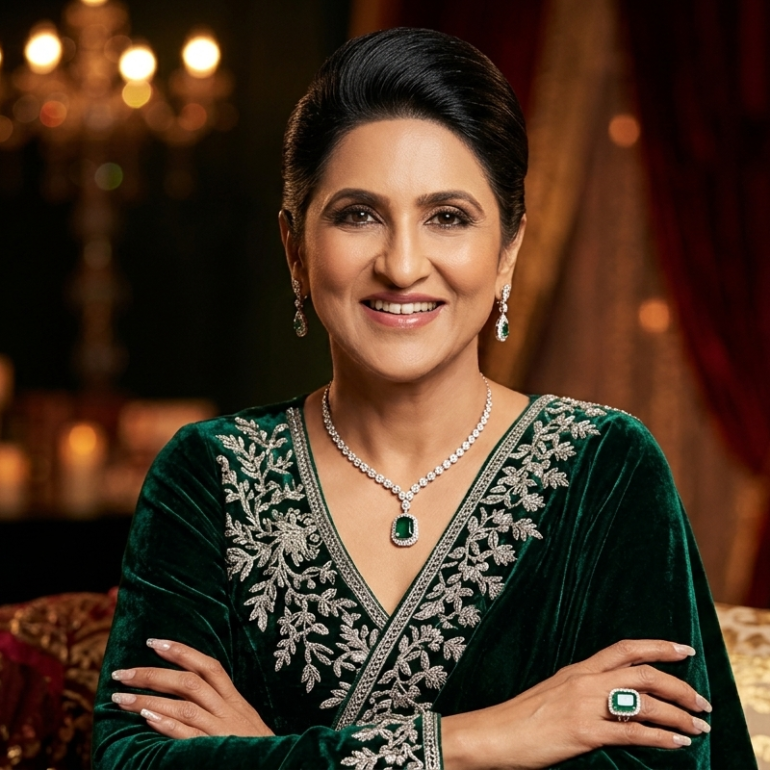
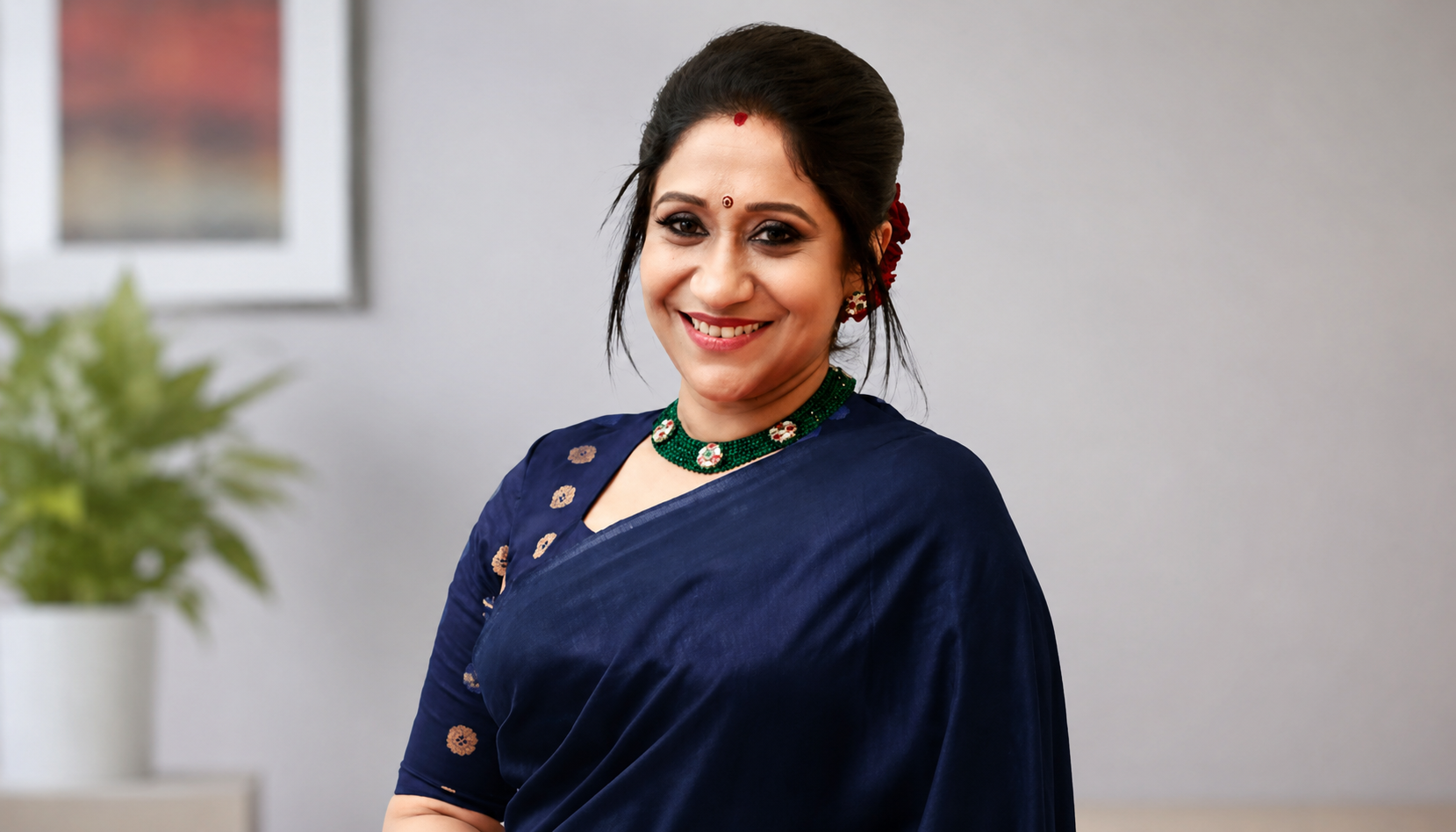
Sujatha Mohan (born 31 March 1963) is a renowned Indian playback singer known for her contributions to a wide range of Indian film industries, particularly in Malayalam, Tamil, and Telugu cinema. Over her decades-long career, she has also recorded songs in other languages including Kannada, Badaga, Hindi, and Marathi, among others. As of 2025, she had sung more than 12000 songs. Sujatha is affectionately called Bhava Gayika in Kerala for her emotive singing, and Innisai Kuyil (Nightingale of Music) in Tamil Nadu, reflecting her sweet and expressive vocal style.
Key Facts
Full Name: Sujatha Mohan
Born: 31 March 1963
Place: Kochi, Kerala, India
Occupation: Playback Singer
Titles: Bhava Gayika (Kerala), Innisai Kuyil (Tamil Nadu)
Known As: One of the most expressive and versatile voices in Indian playback singing
Songs Recorded: 12,000+ (as of 2025)
Family: Daughter of late Dr. Vijayendran; granddaughter of Paravoor T. K. Narayana Pillai
Children: Shweta Mohan (playback singer)
Relatives: G. Venugopal, Radhika Thilak
A Voice That Arrives Before Memory
A stage somewhere in the late 1970s. The lights are soft, the audience expectant. A young girl walks beside K. J. Yesudas, her voice still carrying the innocence of childhood but already hinting at something deeper. When she begins to sing, there is a brief pause in the air, that moment when listeners recognize something rare.
That girl was Sujatha, then known as Baby Sujatha. For many in Kerala, her voice did not arrive as a debut, it arrived as a presence. One that would stay.
There are voices that accompany a generation, and then there are voices that quietly shape its emotional memory. Sujatha Mohan belongs to the latter. For decades, her singing has moved seamlessly across languages, composers, and moods, carrying with it a rare emotional clarity that listeners instantly recognize. From intimate Malayalam melodies to sweeping Tamil compositions, her voice has remained both familiar and evolving. In Kerala, she is celebrated as Bhava Gayika, a singer of feeling, while across South India she is revered for her adaptability and tonal richness. In every sense, she stands as an outstanding Malayali artist whose voice has echoed across time, cinema, and cultural memory.
Roots in Kerala: Where Music Finds Its First Shape
Sujatha Mohan was born into a family that carried both cultural and political resonance. Her grandfather, Paravoor T. K. Narayana Pillai, was the first Chief Minister of Travancore–Cochin, a reminder that public life and legacy were not distant ideas.
But her childhood was marked by both privilege and loss. She lost her father, Dr. Vijayendran, at the age of two. Music, in many ways, became both anchor and expression.
Growing up in Kochi, she was immersed in Kerala’s deeply musical environment, a culture where classical traditions, devotional songs, and film music coexist. Her early exposure was not formalized in the way many classical musicians describe, it was organic, shaped by listening, performing, and absorbing.
Her entry into music was almost instinctive.
The Early Breakthrough: A Child Who Became a Voice
Her first recorded song, “Kannezhuthy Pottuthottu” from Tourist Bungalow (1975), composed by M. K. Arjunan, marked the beginning of a professional journey that would span decades.
Soon, she was working with composers like Salil Chowdhury and Shyam, recording songs that revealed not just technical ability but emotional nuance.
Parallel to film music, she built a strong presence in stage performances, especially alongside Yesudas. These performances were more than exposure, they were training grounds. They shaped her control, adaptability, and connection with live audiences.
By her late teens, she was no longer just a promising singer. She was becoming a voice people remembered.
Across Languages, Across Worlds
What defines Sujatha’s career is not just longevity, but range.
She moved fluidly between Malayalam, Tamil, and Telugu cinema, each with its own musical grammar. In Tamil, her association with Ilaiyaraaja opened new dimensions. Songs like those in Johnny and Ilamai Kolangal revealed her ability to navigate complex compositions with ease.
But her career was never confined to one industry. Telugu cinema, with composers like Mani Sharma, gave her another space to explore. Kannada, Hindi, and even less mainstream languages added further layers.
This multilingual presence was not just about reach. It was about adaptation. Each language required a shift in pronunciation, emotion, and tonal quality.
Few singers managed that transition as naturally as she did.
The Roja Moment: When a Voice Became National
In 1992, Indian film music underwent a quiet revolution with the arrival of A. R. Rahman. And with Roja, Sujatha Mohan found herself at the center of that shift.
“Pudhu Vellai Mazhai” was not just a song. It was an atmosphere, layered, modern, and deeply evocative. Sujatha’s voice, soft yet textured, became integral to its impact.
The song did something rare. It introduced her to a pan-Indian audience, not as a regional singer crossing over, but as a voice that belonged everywhere.
Her collaborations with Rahman continued in films like Gentleman, Jeans, and Minsara Kanavu. Each track carried a distinct sonic identity, yet her voice adapted without losing its core.
This phase redefined her career.
Pause, Return, Reinvention
In 1981, after her marriage to Dr. V. Krishna Mohan, Sujatha stepped away from playback singing. The break was significant, not just professionally but personally.
When she returned in the late 1980s, beginning with films like Kadathanadan Ambadi and later Chithram, the industry had changed. New composers, new sounds, new expectations.
But her comeback was not tentative. It was assured.
By the mid-1990s, she had re-established herself, especially in Malayalam cinema, where her collaborations with composers like Vidyasagar produced some of her most memorable work.
This phase was less about proving herself and more about evolving with the industry.
The Voice Itself: Texture, Emotion, Identity
To understand Sujatha Mohan is to understand her voice.
It is often described as husky yet melodious, but that description only scratches the surface. What truly defines her singing is emotional precision. She does not merely render a tune; she inhabits it.
This is why she is called Bhava Gayika in Kerala, a singer who conveys feeling. Her songs often carry a quiet intensity, whether in romantic duets or introspective melodies.
Unlike singers who dominate a composition, Sujatha integrates herself into it. She becomes part of the song’s emotional architecture.
That ability has allowed her to remain relevant across generations.
Family, Continuity, and Musical Lineage
Music, for Sujatha, is not just a profession. It is a legacy.
Her daughter, Shweta Mohan, has emerged as a prominent playback singer in her own right. Their collaborations are not just performances, they are conversations across generations.
The presence of cousins like G. Venugopal and the late Radhika Thilak further underscores a family deeply embedded in music.
Yet Sujatha’s identity has always stood independently. Her journey is distinctly her own.
The Silent Struggle: Losing the Voice
In the late 2010s, Sujatha faced one of the most difficult phases of her life, a severe vocal crisis that left her unable to sing, and at times, even speak.
For a singer whose identity is inseparable from her voice, this was more than a professional setback. It was existential.
She stepped away from recordings, from performances, from the very space that had defined her for decades. But what followed was not resignation.
It was persistence.
Through sustained effort and recovery, she gradually regained her voice. Her return to singing was not marked by spectacle, but by quiet resilience.
A Cultural Presence That Endures
Sujatha Mohan’s influence cannot be measured only in numbers, though the figure of 14,000 songs speaks for itself. Her impact lies in how deeply her voice is woven into everyday life. In Kerala, her songs are part of memory, weddings, radio mornings, film nostalgia. In Tamil Nadu, she is remembered as Innisai Kuyil, a nightingale whose voice carries sweetness without excess.
She belongs to a generation of singers who bridged eras, analog to digital, orchestral to electronic, regional to national.
And she did so without losing her essence.
A Voice That Stays
Some voices fade with time, shaped by changing trends and shifting tastes. Others remain, not because they resist change, but because they adapt without losing identity.
Sujatha Mohan’s voice is one such presence. It carries decades of music, emotion, and evolution, yet continues to feel immediate and intimate. For listeners across India, her songs are not just recordings, they are experiences tied to memory, place, and feeling. In that sense, she is not merely a playback singer but a custodian of emotion in sound, an outstanding Malayali artist whose voice will continue to resonate long after the music stops.
Awards and recognitions
Kerala State Film Awards
1996: Best Female Playback Singer – Azhakiya Ravanan (Pranayamani Thooval)
1998: Best Female Playback Singer – Pranayavarnangal (Varamanjaladiya)
2006: Best Female Playback Singer – Rathri Mazha (Baasuri)
Tamil Nadu State Film Awards
1993: Best Female Playback Singer – Pudhiya Mugam, Gentleman (Netru Illatha Mathram, En Veetil Thottathil)
1996: Best Female Playback Singer – Minsara Kanavu, Avvai Shanmugi (Poo Pookum Osai, Rukku Rukku)
2001: Best Female Playback Singer – Dhill (Un Samayil Arayil)
Kerala Film Critics Association Awards
1988: Best Female Playback Singer – Chithram
1989: Best Female Playback Singer – Vandanam
1990: Best Female Playback Singer – Malootty
1991: Best Female Playback Singer – Kizhakkunarum Pakshi, Kankettu
1992: Best Female Playback Singer – Ulsavamelam
1993: Best Female Playback Singer – Meleparambil Anveedu, Dhruvam, Chenkol
1995: Best Female Playback Singer – Oru Abhibhashakante Case Diary
1996: Best Female Playback Singer – Azhakiya Ravanan, Desadanam, Ee Puzhayum Kadannu
1997: Best Female Playback Singer – Rishyasringan, Superman, Shibiram
1998: Best Female Playback Singer – Pranayavarnangal, Janani
1999: Best Female Playback Singer – Chandranudikkunna Dikkil, Saaphalyam
2001: Best Female Playback Singer – Soothradharan, Pularvettam
2003: Best Female Playback Singer – Vellithira, Kasthooriman
2004: Best Female Playback Singer – Thudakkam
2005: Best Female Playback Singer – Paranju Theeratha Visheshangal
South Indian International Movie Awards
2022: Best Female Playback Singer – The Priest
Other prominent awards and nominations
1997 – Dinakaran Cinema Awards for Best Female Playback Singer – Surya Vamsam
1997 – Cinema Express Awards for Best Female Playback Singer – Surya Vamsam
1998 – Dinakaran Cinema Awards for Best Female Playback Singer – Unnidathil Ennai Koduthen
2015 – Asiavision Awards for Best Female Playback Singer – Ottamandaram
2014 – Thikkurishi Award (shared with Shewta) for movie Ottamandaram
2013 – JFW magazine Women Achievers Award
2009 – Swaralaya Yesudas Award
2008 – Best female singer award in GMMA (Gulf Malayalam Music Awards)
The Film Critics award 11 times
Raju Pilakkad Film Award
South Indian Bank women’s achiever’s award 2017
Mirchi Music Awards 2018: Lifetime achievement
Kamukara Purushothaman Kamukara Award 2019: Lifetime achievement (award from P. Susheela)
Kalaimamani 2019