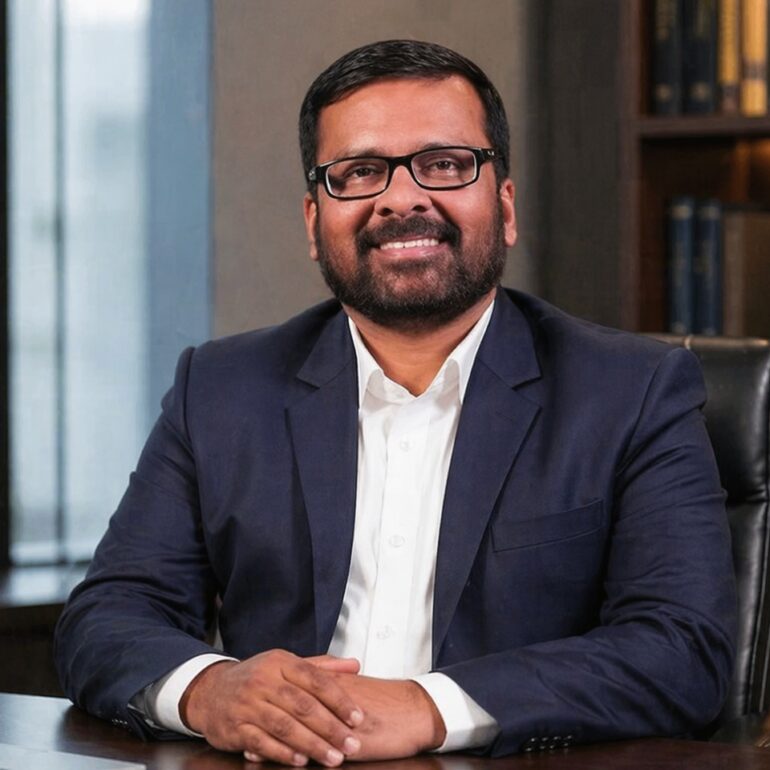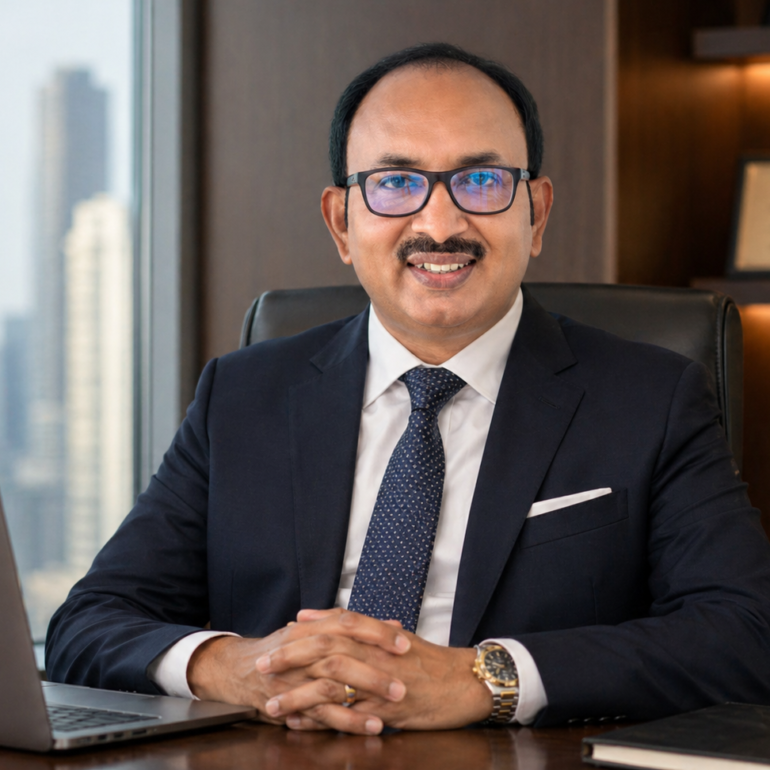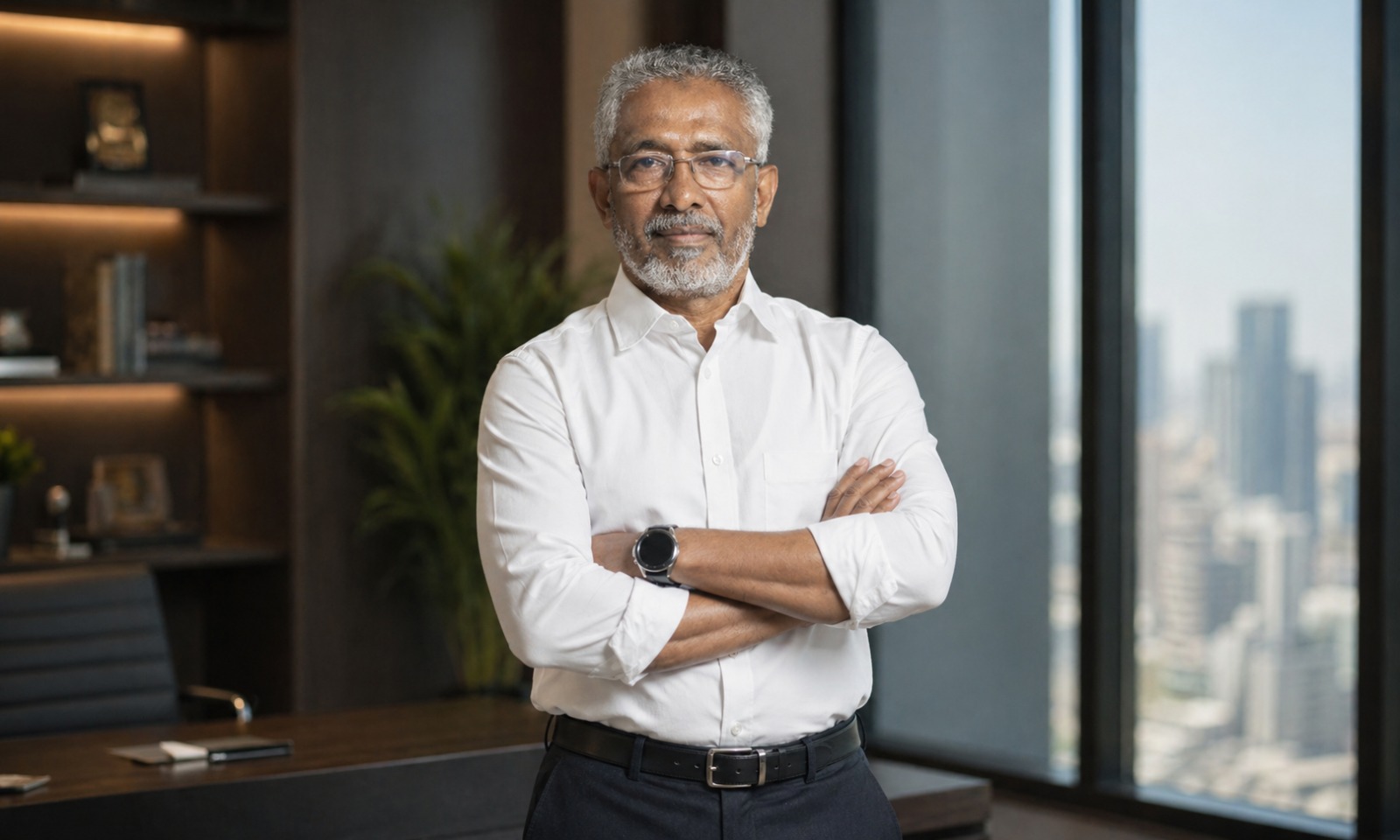
Noor Muhammed Noorsha Kalliyath
Chairman of Kalliyath Group
Noor Muhammed Noorsha Kalliyath is the Chairman of Kalliyath Group. As Chairman of the Kalliyath Group, he transformed a legacy trading business into one of South India’s most influential steel and construction ecosystem players. His journey reflects a rare combination of generational continuity and strategic reinvention, anchored in deep market understanding and industrial foresight. At a time when Kerala was not widely associated with large-scale steel manufacturing, his leadership helped position the state on the map, shaping an outstanding trajectory for Kalliyath as a benchmark in quality, innovation, and scale.
Key Facts
Full Name: Noor Muhammed Noorsha Kalliyath
Place: Tirur / Kochi, Kerala, India
Title: Chairman, Kalliyath Group
Occupation: Industrialist, Business Leader
Known For: Pioneering TMT steel manufacturing in Kerala and scaling Kalliyath Group into a leading industrial brand
Steel Beneath the Skyline
On a humid morning at a construction site in Kochi, the skeletal frame of a rising building stands exposed, a lattice of steel bars defining its future. These bars, embedded into foundations and pillars, are rarely noticed once the structure is complete. Yet they determine everything, strength, longevity, and safety.
Among the many brands feeding Kerala’s construction boom, Kalliyath steel has become a silent constant. From residential homes to landmark infrastructure, its presence is structural rather than symbolic. Behind this transformation lies Noor Muhammed Noorsha Kalliyath, a businessman who saw beyond trading margins and into industrial scale.
Legacy and Origins
The story of Kalliyath begins in 1929, when Kalliyath Abdul Khader Haji established a trading enterprise in Tirur, Malappuram. The early business focused on clothing and hardware, reflecting the mercantile roots of Kerala’s coastal economy.
By 1940, the second generation, led by Khalid Haji and Muhammad Haji, expanded into hardware distribution, dealing in steel bars, cement, and sanitaryware. This shift, subtle at the time, would later define the company’s trajectory.
The business, at this stage, was still fundamentally a trading operation. It relied on relationships, supply chains, and regional demand cycles. Industrial ambition had not yet entered the picture.
Noor Muhammed Noorsha’s Early Journey
Noor Muhammed Noorsha entered this evolving business landscape in 1970, joining the family’s steel trade operations in Tirur. His early years were shaped by the rhythms of distribution, understanding demand patterns, supplier relationships, and pricing dynamics.
But what distinguished him was not just operational familiarity. It was a willingness to think beyond the constraints of a local market.
At a time when many family businesses remained regionally anchored, Noorsha began to view steel not merely as a traded commodity but as a sector with industrial potential. This mindset would later define his leadership.
The Kochi Shift: A Strategic Inflection Point
The first major strategic pivot came in 1986, when Noor Muhammed Noorsha moved operations to Kochi. This decision marked a turning point, not just geographically but structurally.
Kochi, with its port access, urban expansion, and emerging infrastructure needs, offered a scale that Tirur could not. Within a short span, Kalliyath transitioned from a retailer to a wholesaler, expanding its footprint across Kerala.
This shift demonstrated a key aspect of Noorsha’s approach, the ability to identify and act on structural opportunities rather than incremental growth.
By the early 1990s, Kalliyath had already begun laying the groundwork for something larger than trading.
Building an Industrial Powerhouse
The decisive move into manufacturing came in 2000, when Noor Muhammed Noorsha, along with his brother KM Abdul Gafoor, established steel manufacturing units in Palakkad. This marked the company’s transition from a trading enterprise to an industrial manufacturer.
The most significant milestone followed in 2008, when Kalliyath became the first company in Kerala to manufacture Thermo-Mechanically Treated (TMT) steel bars.
This was not just a product launch. It represented a structural shift in Kerala’s steel industry, reducing dependence on external suppliers and introducing locally manufactured, high-quality steel products.
Over time, Kalliyath introduced a series of innovations that reinforced its market position. It became the first in the state to secure BIS certification for steel bars, ensuring compliance with national quality standards.
The company also pioneered the manufacturing of cut-and-bend steel bars in India, an innovation that improved construction efficiency and reduced on-site labor requirements.
Automation became another defining feature. From PLC-controlled rolling mills to fully automated furnaces, Kalliyath invested in technology at a time when many regional players remained manually driven.
Its involvement in major infrastructure projects, including Kochi Metro and Cochin International Airport, further cemented its industrial credibility.
Leadership Style and Vision
Noor Muhammed Noorsha’s leadership is marked by a blend of caution and ambition. Unlike aggressive expansion models seen in many industrial groups, his approach has been iterative but decisive.
He has consistently focused on three pillars: quality, innovation, and scale.
Quality, in a sector where failure can have structural consequences, is non-negotiable. Innovation, whether through new products or manufacturing processes, has allowed Kalliyath to stay ahead of competitors. Scale, achieved through manufacturing capacity and distribution networks, has ensured market relevance.
Equally important is his ability to balance legacy with modernization. While the business retains its family-driven ethos, it operates with systems and processes characteristic of modern industrial enterprises.
Industry Impact and Market Position
Kalliyath’s influence extends beyond its own growth. It has played a role in shaping Kerala’s construction ecosystem, particularly in setting benchmarks for steel quality and manufacturing standards.
With an annual production capacity reaching approximately 2 lakh metric tonnes, the company has emerged as a significant player in South India’s steel market.
Its ambitions are equally clear, expanding market share from around 15 percent to 40 percent and scaling operations across India.
In a state where industrialization often faces logistical and policy constraints, Kalliyath’s growth represents a rare example of sustained manufacturing success.
Social Responsibility and Ecosystem Building
Parallel to its industrial expansion, Kalliyath has invested in social initiatives, particularly in education and entrepreneurship.
The company supports financially disadvantaged students through scholarships, school kits, and infrastructure such as smart classrooms.
It has also initiated business incubation efforts, encouraging young entrepreneurs to develop and scale their ideas. This reflects a broader vision, not just of corporate growth, but of ecosystem development.
For Noor Muhammed Noorsha, infrastructure is not limited to steel and buildings. It includes human capital and opportunity creation.
The Consistency of Reinvention
One of the most striking aspects of Kalliyath’s journey is its ability to reinvent itself across generations.
From clothing and hardware trading in 1929, to steel distribution in the mid-20th century, to manufacturing and industrial innovation in the 21st century, the company has continuously adapted to changing market realities.
This adaptability is not accidental. It reflects a leadership philosophy that prioritizes relevance over tradition, without discarding the latter.
Future Outlook
As Kalliyath approaches its centenary, its ambitions are both industrial and strategic. Plans include expanding production capacity, increasing market share, and introducing advanced products such as anti-corrosive steel.
The company is also focusing on automation and energy sustainability, evidenced by initiatives like wind farm installations to address energy challenges.
In the broader context of India’s infrastructure growth, Kalliyath is positioning itself as a key contributor, not just within Kerala but across the national market.
A Legacy in Steel
Noor Muhammed Noorsha Kalliyath’s journey is not defined by a single breakthrough moment, but by a series of calculated shifts, each building on the last. From trading floors in Tirur to automated steel plants in Palakkad, his leadership reflects an understanding that industries are built, not inherited.
In Kerala’s business landscape, where industrial success stories are fewer compared to services and migration-led growth, Kalliyath stands as a rare example of sustained manufacturing excellence.
It is, ultimately, a story about seeing beyond the present, about turning steel into strategy, and about building not just products, but enduring systems, an outstanding reminder that legacy is not what you inherit, but what you choose to build forward.