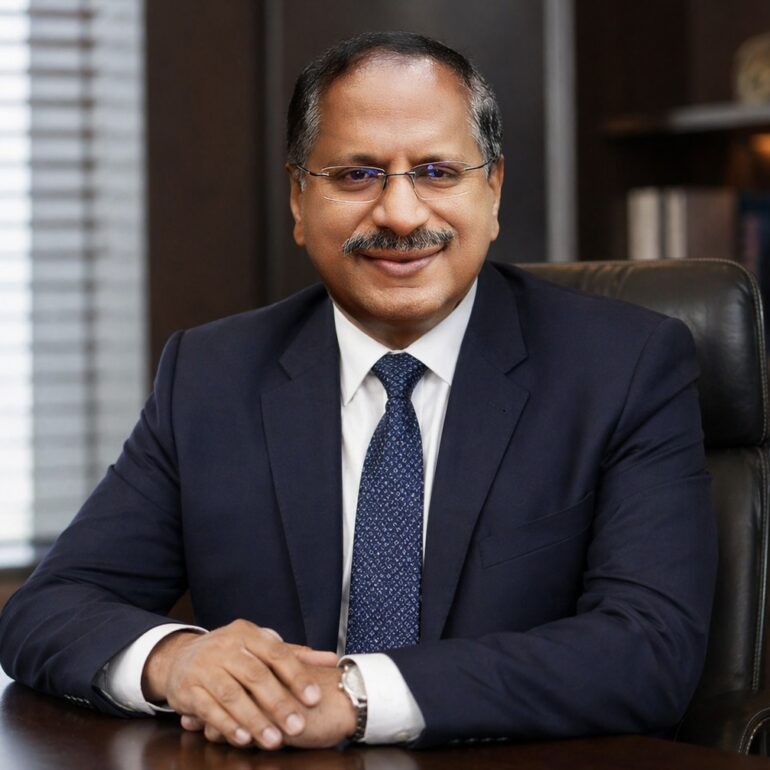
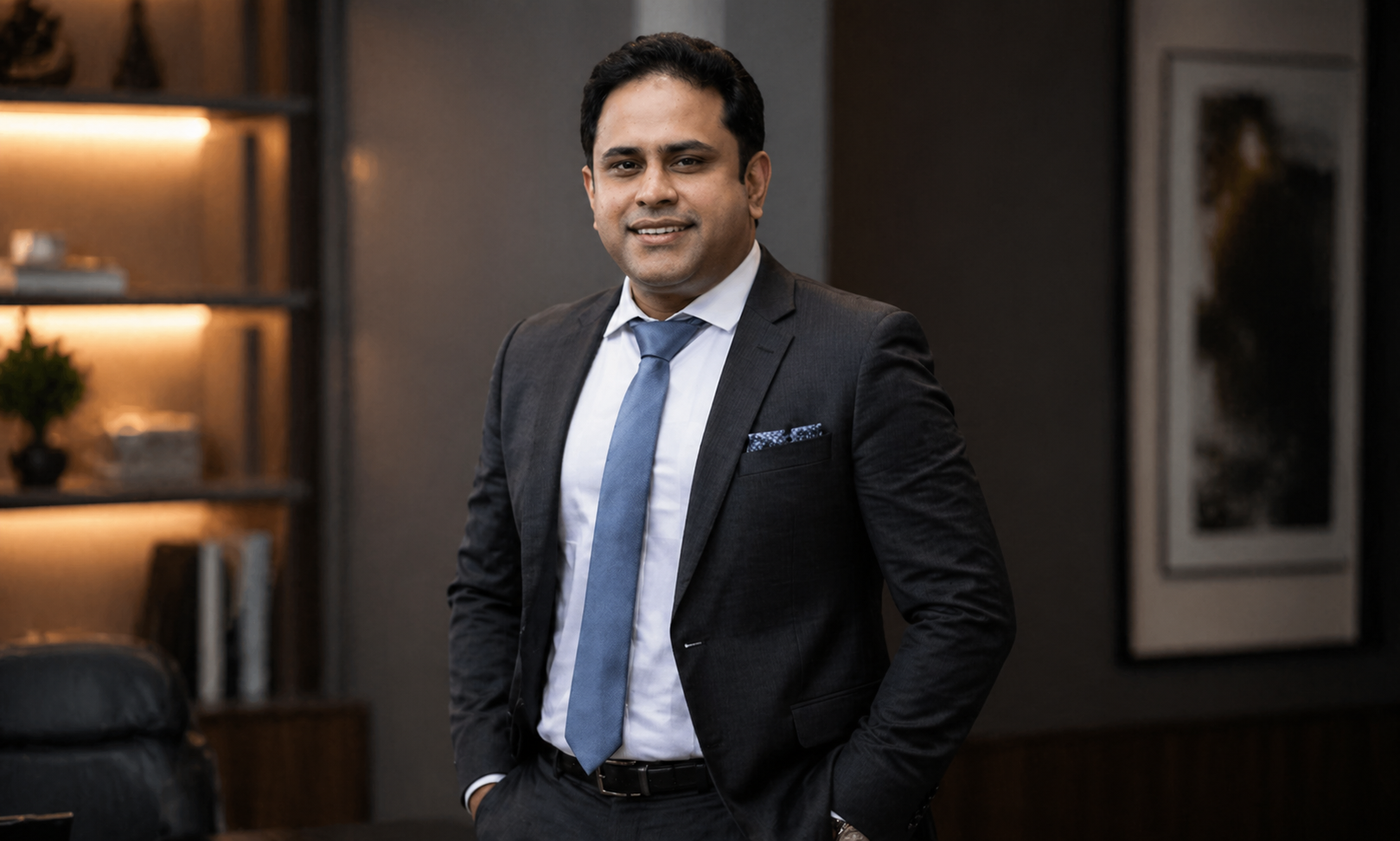
Iflu Rahman
Founder and Managing Director of Crietor Group
Iflu Rahman is the Founder and Managing Director of Crietor Group, a company focused on strategic investments and real estate, known for projects like “The Skye”. He has over 14 years of experience, with the company operating under the philosophy “Future Holds Good”. Their focus areas are Real estate, retail, and general trading, specifically luxury, intent-based residential developments. The company is known for its focus on creating, investing in, and managing projects that aim to elevate lifestyles and provide high-value returns.
Key Factors
Full Name: Iflu Rahman
Place: Kerala, India
Title: Founder & Managing Director, Crietor Group
Occupation: Entrepreneur, Investor, Real Estate Developer
Known For: Strategic investments, luxury residential projects, developments such as The Skye
At the conceptual stage of a premium residential project, long before the first excavation begins, there is a moment where abstraction meets ambition. For Iflu Rahman, that moment is less about architecture and more about intent. Projects like The Skye are not framed simply as buildings, but as propositions, how space, privacy, and lifestyle converge in a market that is rapidly redefining luxury.
This is where Crietor Group positions itself, not at the crowded center of conventional real estate, but slightly adjacent, where investment strategy meets design thinking.
Early Journey and Entrepreneurial Foundation
Publicly available information about Iflu Rahman’s early life remains limited, and he has maintained a relatively low personal profile. What is clearer, however, is the trajectory of his professional instincts. His entry into business appears to have been shaped less by legacy structures and more by an investment-oriented mindset, one that evaluates opportunity through long-term value rather than immediate returns.
This distinction matters. In sectors like real estate, where speculative cycles often dominate, an investment-first approach changes both pacing and priorities. It influences how land is acquired, how projects are conceptualized, and how capital is deployed.
The formation of Crietor Group emerged from this perspective. Rather than positioning itself purely as a developer, the company framed its identity around strategic investments, a broader canvas that includes real estate, retail, and general trading. This multi-sector foundation allowed flexibility, enabling the business to respond to market shifts without being constrained by a single vertical.
Building Crietor Group
Over more than 14 years, Crietor Group has evolved from a foundational enterprise into a diversified business entity with a distinct positioning. Its operations span real estate development, retail initiatives, and general trading, but the unifying thread is strategic capital deployment.
In real estate, the company has chosen to focus on premium and luxury segments, particularly projects that emphasize intent-based living. This is a nuanced but important distinction. Intent-based housing suggests a departure from generic apartment layouts toward spaces designed around specific lifestyles, whether that means privacy, community, or integrated amenities.
In retail and trading, the approach remains aligned with this broader philosophy, selective, opportunity-driven, and integrated with long-term growth objectives.
Unlike large-scale developers that prioritize rapid expansion across multiple geographies, Crietor’s growth appears more measured. This controlled scaling allows for tighter quality control and more deliberate project selection, both critical in the premium segment where brand perception is closely tied to execution.
Signature Projects and Vision
Projects like The Skye serve as a lens into the company’s design and development philosophy. While detailed public specifications are limited, the positioning of such developments emphasizes exclusivity, elevated living experiences, and architectural distinction.
What differentiates Crietor’s projects is not necessarily scale, but curation. In an increasingly crowded luxury market, where the term itself is often diluted, differentiation comes from specificity. This includes location selection, spatial planning, and amenity integration that reflects contemporary urban aspirations.
Luxury, in this context, is less about opulence and more about experience. It is about how residents interact with their environment, how privacy is maintained without isolation, and how design anticipates future needs rather than responding to past templates.
This approach aligns with a broader shift in Indian real estate, particularly in markets influenced by Gulf-based capital and diaspora expectations. Buyers are no longer just investing in property; they are investing in lifestyle, identity, and long-term value retention.
Philosophy: “Future Holds Good”
At the core of Crietor Group’s identity is its stated philosophy: “Future Holds Good.” While such phrases can often remain rhetorical, in this case, it appears to function as a guiding principle for business decisions.
In practical terms, this philosophy translates into a forward-looking approach to investments. It suggests confidence in long-term growth, but also a commitment to building assets that remain relevant over time.
For real estate, this means designing projects that can adapt to evolving lifestyles. For investments, it implies a preference for sectors and opportunities with sustained potential rather than short-term volatility.
The phrase also reflects a certain optimism, not blind, but calibrated. It acknowledges the uncertainties inherent in markets while maintaining a belief in structured growth.
Leadership Style and Strategy
Iflu Rahman’s leadership style, as inferred from the company’s trajectory, leans toward strategic restraint rather than aggressive expansion. This is evident in the company’s selective project pipeline and its emphasis on quality over quantity.
Decision-making appears to be anchored in long-term value creation. In real estate, this involves balancing land acquisition costs, construction timelines, and market demand. In investments, it requires assessing risk across multiple sectors.
A notable aspect of this approach is adaptability. Operating within a Gulf-linked ecosystem, where capital flows and market expectations can shift rapidly, demands a flexible strategy. Crietor’s multi-sector presence provides this flexibility, allowing it to recalibrate focus depending on market conditions.
At the same time, maintaining brand consistency across sectors requires disciplined execution. This is where leadership plays a critical role, ensuring that diversification does not dilute core identity.
Market Position and Impact
Crietor Group occupies a specific niche within the broader real estate landscape, premium, design-driven, and investment-conscious. It is not positioned as a mass-market developer, nor as a purely speculative player.
This positioning aligns with changing consumer expectations, particularly among buyers who are increasingly discerning. Factors such as design quality, location, and long-term value are gaining prominence over sheer size or price competitiveness.
In Kerala and similar markets influenced by diaspora investments, this shift is particularly evident. Buyers with global exposure often bring different expectations, seeking developments that match international standards in both design and execution.
Crietor’s focus on intent-based housing places it within this evolving segment, contributing to a gradual redefinition of what premium real estate means in regional markets.
Challenges and Growth
Operating in the premium real estate segment comes with its own set of challenges. Market volatility, regulatory changes, and rising input costs can significantly impact project viability.
Additionally, building a brand in a competitive landscape requires consistent delivery. A single delayed or underperforming project can affect perception disproportionately in the luxury segment.
Scaling while maintaining quality is another critical challenge. As companies grow, operational complexity increases, making it harder to maintain the same level of oversight across projects.
For Crietor Group, navigating these challenges involves balancing ambition with discipline. Controlled expansion, strategic partnerships, and a focus on core competencies are likely to remain key components of its growth strategy.
Future Outlook
Looking ahead, the trajectory for Crietor Group appears to be one of calibrated expansion. Rather than pursuing rapid geographic spread, the focus may remain on deepening presence within selected markets while exploring opportunities aligned with its investment philosophy.
The next phase of growth is likely to involve greater integration of technology, both in project design and customer engagement. As digital tools become more central to real estate, from virtual walkthroughs to smart home integration, developers will need to adapt accordingly.
For Iflu Rahman, the broader vision seems to extend beyond individual projects. It is about building a brand that is recognized for its consistency, strategic clarity, and ability to anticipate market shifts.
Legacy, in this context, is not just about scale, but about relevance.
Reflection
In a sector often driven by immediacy, quick sales, rapid launches, aggressive expansion, Iflu Rahman’s approach stands apart for its measured pace and strategic intent. By aligning investment thinking with real estate development, he has positioned Crietor Group within a space that values both design and discipline.
The buildings may rise slowly, the portfolio may expand selectively, but the underlying framework remains consistent. It is this consistency, grounded in a belief that thoughtful development outlasts speculative growth, that defines his journey.
And in that quiet conviction, the idea that the future can indeed be shaped, not just predicted, his work begins to feel not just relevant, but outstanding.