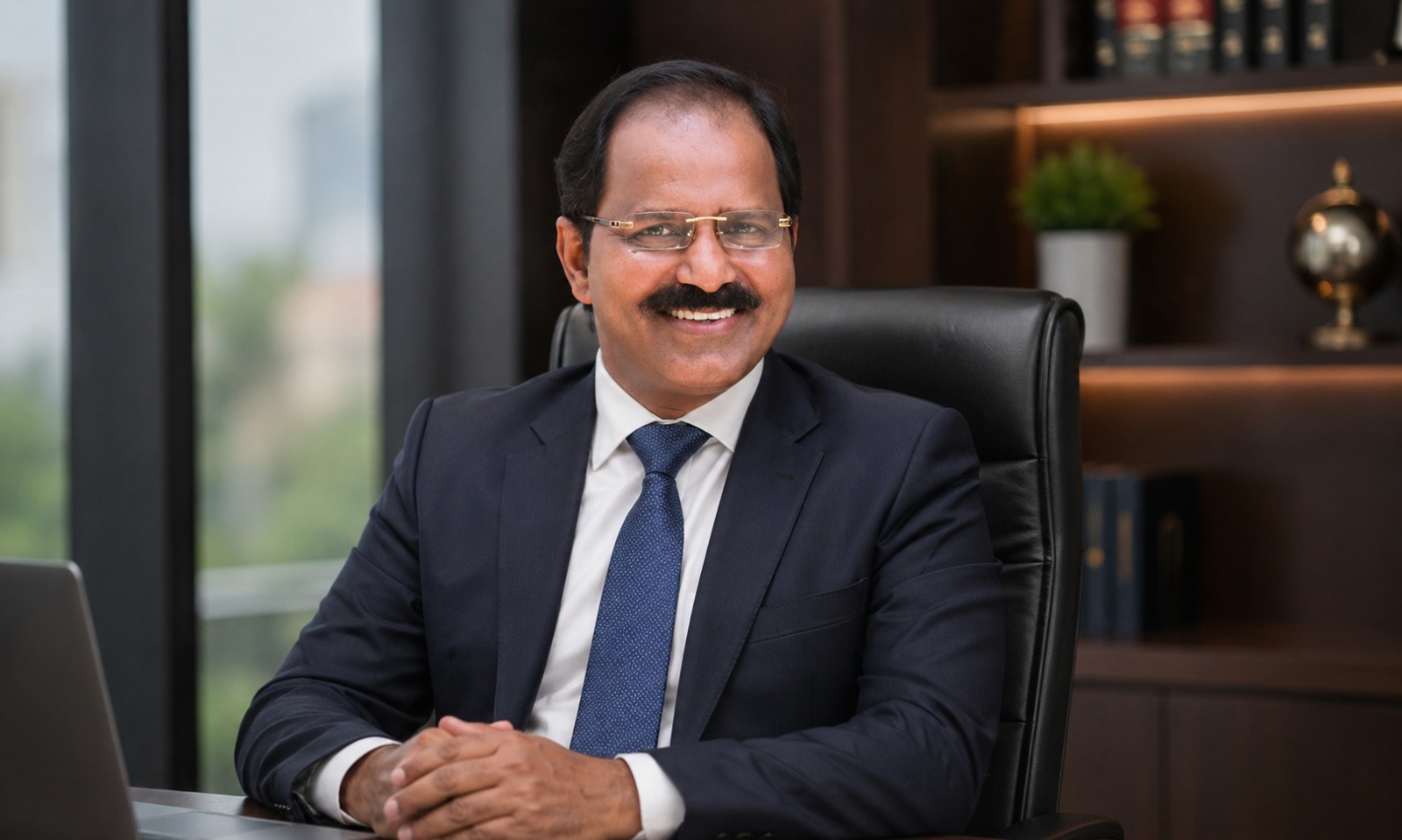
Mathew Joseph
COO and Co-founder of FreshToHom
Mathew Joseph, is COO and Co-founder of FreshToHome. Mathew is a native of Cherthala in Alappuzha. He has been working in seafood exporting field since 1990. Currently, he is the CEO of online fish and meat sales company ‘Fresh to Home’ which was started in 2012. It is the largest e-commerce platform for fish and meat sale. His journey, marked by risk, collapse, and reinvention, is an outstanding example of how deep industry knowledge, rather than just technology, can power disruptive businesses.
Key Facts
Full Name: Mathew Joseph
Place of Origin: Cherthala, Alappuzha, Kerala
Current Role: COO & Co-founder, FreshToHome
Industry: Seafood export, D2C meat & fish e-commerce
Known For: Building India’s first online fish marketplace and scaling FreshToHome into a leading D2C brand
Before algorithms and cold chains, there were boats.
In Cherthala, near the still waters of Kaithapuzha, mornings began with fishermen returning from the lake, their nets heavy, their conversations louder than the engines. Young Mathew Joseph watched closely, not just the catch, but the transaction. Who got paid first. Who waited. Who decided the price.
Years later, he would recall another image, a black Ambassador car passing through his village, a symbol of arrival. At the time, it was just a fleeting moment. But it planted a quiet idea, that business could change the trajectory of a life.
Roots and Early Influences
Joseph grew up in a lower middle-class household in Cherthala, a region where livelihoods are closely tied to water. Fishing was not just an occupation around him; it was an ecosystem, one that included middlemen, traders, processors, and exporters.
Unlike formal business education, his early learning came through observation. He saw inefficiencies firsthand, how fishermen often had little control over pricing, how intermediaries dominated transactions, and how value moved away from the source.
This exposure did not immediately translate into entrepreneurship. But it created a mental map of an industry, one that would later prove invaluable.
Entry into the Seafood Industry
Joseph’s formal entry into the seafood business was almost accidental. He began as an accountant in a seafood company, a role that offered limited authority but unlimited access to information.
Instead of staying confined to numbers, he moved into operations. He spent time in processing units, learned grading standards, and understood export requirements. More importantly, he began building relationships, with fishermen, agents, and harbour operators.
This shift from accounting to procurement was critical. It placed him at the heart of the supply chain, where decisions were made in real time, often under pressure.
Over time, he developed a network across India’s fishing hubs, from Kerala to Gujarat, relationships built not on contracts, but on trust and consistency.
Entrepreneurial Leap and Global Exposure
Like many first-generation entrepreneurs, Joseph’s early ambition was shaped by stories of industrial success. He reportedly attempted to meet Dhirubhai Ambani, not for funding, but for inspiration.
His first venture began in Aroor, where he started a seafood supply business. The model was straightforward, source quality fish, process efficiently, and sell to exporters or directly to international buyers.
This eventually evolved into Atelier Exports, a company that tapped into global demand for Indian seafood. The business grew quickly, driven by consistent quality and strong relationships.
For a time, Joseph had built what many entrepreneurs aspire to, a profitable, export-driven enterprise with international exposure.
Collapse and Crisis
Then came 2008.
The global financial crisis hit export markets hard. Demand dropped, payments slowed, and credit lines tightened. For businesses like Joseph’s, which depended on international buyers, the impact was immediate and severe.
The result was financial distress. Losses mounted. The business, once growing, began to shrink.
For Joseph, this was not just a financial setback. It was a structural realization, that dependence on external markets, without control over demand, creates vulnerability.
The export model that had powered his growth also exposed him to risks he could not control.
The Turning Point: A Question That Changed Everything
In the aftermath of the crisis, the pivot did not come from a market report or investor insight. It came from a conversation at home.
His wife, Lillamma Mathew, posed a simple question, why not focus on the Indian market?
At first, it seemed counterintuitive. Domestic seafood markets were fragmented, unorganized, and dominated by local vendors. Margins were unclear. Logistics were complex.
But the question lingered.
Joseph began to see the gap. India had supply. It had demand. What it lacked was structure, quality assurance, and transparency.
Birth of India’s First Online Fish Marketplace
In 2012, Joseph launched SeaToHome, an online platform aimed at connecting consumers directly with fresh fish suppliers.
It was, by most accounts, ahead of its time.
The concept gained early traction. Media attention followed. There was recognition that this might be India’s first attempt at an online fish marketplace.
But the ecosystem was not ready. Logistics were underdeveloped. Consumer trust in online fresh food was low. Technology infrastructure was limited.
By 2014, SeaToHome was shut down.
For many entrepreneurs, this would have been the end of the experiment. For Joseph, it was a prototype.
Reinvention: SeaToHome to FreshToHome
The second attempt came with a partner, Shan Kadavil.
Kadavil brought technology and product leadership experience, including scaling operations at Zynga India. Joseph brought deep supply chain expertise.
Together, they reimagined the business.
SeaToHome became FreshToHome, a platform not just for fish, but also for meat. The expansion was strategic. Meat offered higher margins, broader appeal, and year-round demand.
More importantly, the new venture was built with stronger technological and operational foundations.
Building a D2C Supply Chain Powerhouse
FreshToHome’s core innovation is not the app or the brand. It is the supply chain.
The company sources directly from fishermen and farmers, bypassing intermediaries. At the harbour level, teams work with local partners to procure fresh catch, which is then processed and shipped through a controlled logistics network.
A proprietary app, reportedly developed for fishermen, allows for real-time coordination and pricing visibility. The company has also pursued patents related to supply chain processes, reflecting its focus on operational differentiation.
Today, FreshToHome operates multiple collection centres and manages daily procurement across several fishing hubs.
This level of integration is rare in the Indian food-tech space, where many startups rely on aggregators rather than direct sourcing.
Growth, Funding, and Market Position
FreshToHome has grown into a significant player in the D2C meat and seafood category.
The company has crossed revenue milestones reportedly exceeding ₹1,000 crore, with operations across major Indian cities and the UAE. It has attracted investment from global players, including Amazon’s investment arm and Abu Dhabi’s ADQ.
Its positioning is distinct from competitors like Licious and TenderCuts, which focus primarily on meat.
FreshToHome’s strength lies in its dual-category approach and its deep integration with the supply side.
Profitability, often elusive in this sector, has reportedly been achieved in select cities, though scaling profitably remains an ongoing challenge.
Industry Insight: Why D2C Meat is Hard
The D2C meat and seafood business is structurally complex.
Unlike packaged goods, fresh products require cold chain logistics, strict quality control, and rapid delivery. Margins are thin. Customer acquisition costs are high.
Many startups in this space have struggled with unit economics. The cost of maintaining freshness often outweighs the revenue per order.
Joseph’s approach has been to focus on operational efficiency. By controlling sourcing and minimizing intermediaries, FreshToHome attempts to improve margins at the supply end.
It is a model that prioritizes backend strength over front-end marketing.
Scaling Beyond Core Business
FreshToHome has begun expanding beyond its core categories.
The launch of FTH Daily and the acquisition of Doodhwala signal a move into broader grocery and daily essentials. This reflects a common strategy in D2C, increasing customer lifetime value by expanding basket size.
At the same time, international expansion, particularly in the UAE, provides access to higher-value markets and a familiar customer base.
Leadership Philosophy and Ownership Mindset
Joseph’s leadership style is shaped by his journey.
Having experienced both growth and collapse, he approaches expansion with caution. He has spoken about the importance of ownership, referencing how founders in companies like Flipkart diluted equity early.
His philosophy leans toward collaboration without losing control. Investors are partners, but the core business remains founder-driven.
This balance is critical in a capital-intensive sector where external funding is often necessary.
Future Outlook
FreshToHome’s future will depend on its ability to scale without compromising efficiency.
IPO ambitions have been discussed, though timelines remain uncertain. Expansion into new geographies, both within India and internationally, will test the robustness of its supply chain.
At a broader level, the company is positioned within a larger trend, the formalization of India’s food supply chain.
Reflection
The black Ambassador car that once passed through Cherthala was a symbol of arrival. Today, Mathew Joseph’s journey reflects something more complex.
He did not just reach that destination. He redefined the road itself.
From watching fishermen negotiate prices on the banks of a lake to building a system that connects them directly to urban consumers, his work has altered how value moves through the seafood economy.
In an industry where many tried and failed to digitize freshness, Joseph’s persistence stands out.
Not because it was easy. But because he understood something others missed, that technology alone cannot fix a broken supply chain.
Only someone who has lived it can. And that is what makes his journey truly outstanding.