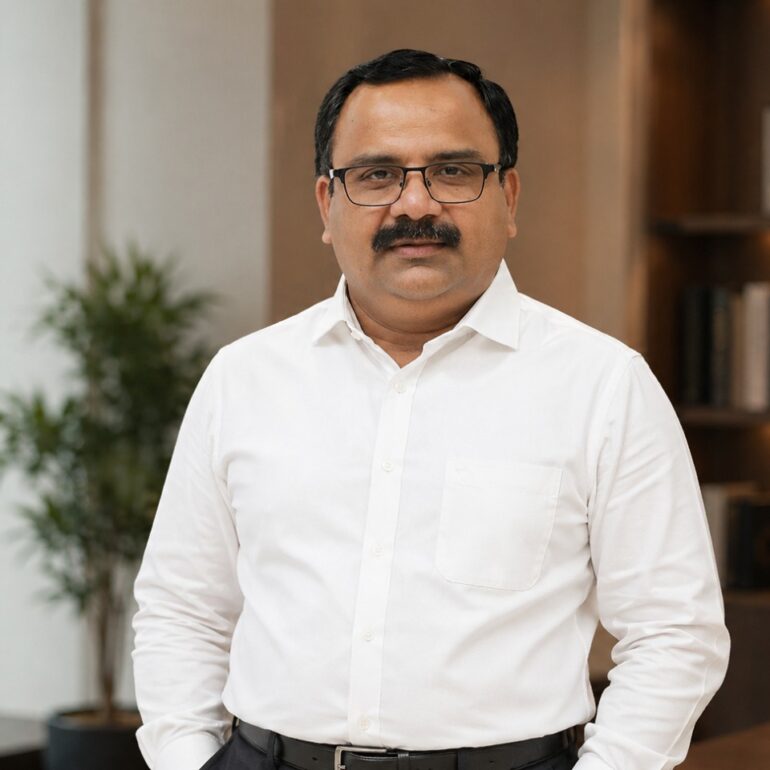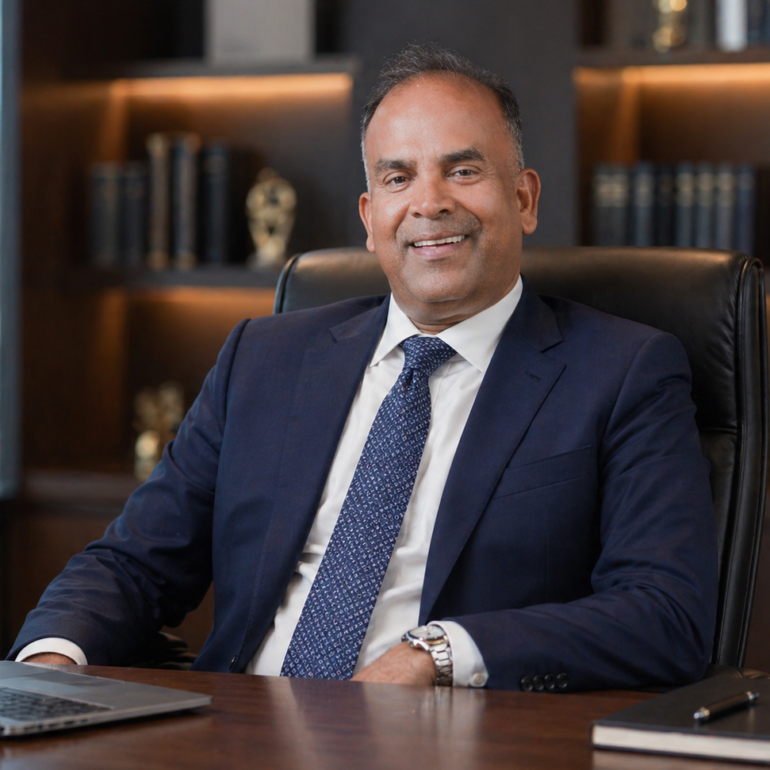
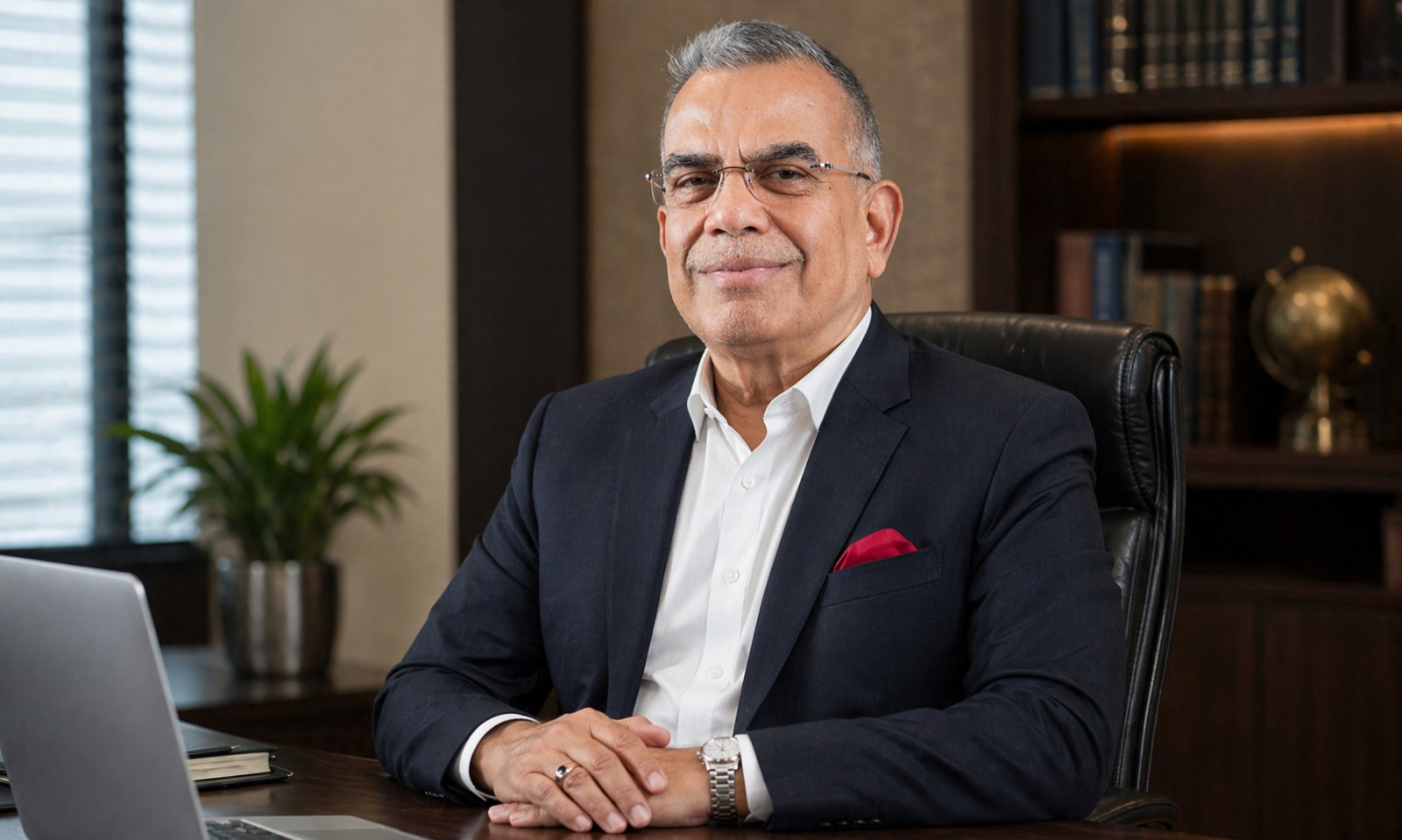
P. N. C. Menon
Founder of Sobha Group
P. N. C. Menon (Puthan Naduvakkatt Chenthamaraksha Menon) is an Indian-born Omani billionaire real estate tycoon and founder of the Sobha Group, known for developing luxury real estate in India and the Middle East. He built his empire after moving to Oman in 1976 with just ₹50, and as of 2026, he has an estimated net worth of $3.4 billion.
Key Facts
Born: 17 November 1948 (age 77)
Place: Palakkad, Kerala
Education: Sree Kerala Varma College, Thrissur
Title: Founder of Sobha Ltd.
The Discipline of a Construction Site
At first light, before the noise begins, a construction site reveals its truth. Lines are measured, surfaces checked, margins corrected. There is no romance here, only precision. It is in this quiet discipline that P. N. C. Menon built his empire, not through spectacle, but through an uncompromising insistence on quality. From modest beginnings in Kerala to founding Sobha Ltd., Menon’s journey is often framed as a classic entrepreneurial rise. But that reading misses something essential. His story is less about ambition alone and more about control, over process, over standards, over outcomes. It is an outstanding narrative shaped as much by dissatisfaction as by success, where building is not just a business, but a lifelong discipline.
Childhood and Early Struggles
Menon’s early life in Palakkad did not resemble the trajectory of a future billionaire. Born into a modest family, he faced instability early on, particularly after the loss of his father. Financial pressure was not abstract, it was immediate and persistent.
Formal education became secondary to survival. He left school early, a decision often romanticised in hindsight but, in reality, born out of necessity rather than rebellion.
What these years did provide was clarity. Work was not optional. Responsibility came early. And perhaps most importantly, Menon developed an instinctive understanding of value, not in theoretical terms, but in the tangible sense of effort, cost, and return.
This grounding would later define his approach to business.
The Oman Leap
In his twenties, Menon left India for Oman, not with a structured plan, but with a willingness to try.
Migration, especially in that era, carried uncertainty. There was no guaranteed path, no established network waiting to absorb him.
He began in interior decoration, a field that allowed him to engage directly with materials, craftsmanship, and clients. It was here that his defining trait began to emerge.
He was not willing to compromise on quality. This stance, initially a risk, soon became an advantage. In markets where speed and cost often override precision, Menon’s insistence on detail stood out.
The breakthrough came through high-profile projects, including work for members of the Omani royal family. These assignments did more than elevate his business. They validated his philosophy.
Quality, when executed consistently, becomes its own currency.
Crafting Excellence in the Gulf
Operating in the Gulf exposed Menon to a different scale of expectation.
Clients demanded not just functionality, but excellence. Materials had to meet global standards. Execution had to be flawless. This environment sharpened his approach.
He began to think in systems rather than projects. Quality was no longer a feature of individual assignments, it became a process embedded across operations.
The idea that would later define Sobha, backward integration, control over every stage of construction, has its roots here. Menon understood something many developers overlook.
If you do not control the process, you cannot guarantee the outcome.
Birth of Sobha Ltd.
When Menon returned to India in the mid-1990s to enter the real estate sector, the landscape was fragmented.
Developers relied heavily on contractors. Quality varied widely. Timelines were unpredictable. Trust was limited.
In 1995, he founded Sobha Ltd., naming it after his wife, a personal decision that also reflected a deeper sense of ownership.
From the beginning, Sobha positioned itself differently. Instead of outsourcing critical functions, the company adopted a backward integration model. It brought construction, design, and material production under its own control.
This approach was capital-intensive and operationally complex. But it addressed a fundamental issue in Indian real estate, inconsistency.
Sobha’s early projects began to stand out, not for their scale, but for their finish.
In a market driven by speed, Menon chose precision.
The Discipline of Detail
Menon’s philosophy is deceptively simple. Do not compromise on quality.
But in practice, this principle demands structural commitment.
Backward integration is not just a strategy, it is a discipline. It requires investment in manufacturing units, training systems, and operational oversight that many competitors avoid.
It also slows expansion. Sobha has often grown more cautiously than peers. But that pace is deliberate.
Menon has repeatedly emphasized that a project is only as good as its weakest detail. This mindset extends to customer relationships as well.
Transparency, timely delivery, and consistency are not marketing claims, they are operational outcomes.
Yet there is an interesting tension. Menon is known for his refusal to feel satisfied. Projects completed successfully are not endpoints. They are benchmarks for improvement.
In his framework, perfection is not achievable, but it is always the target.
Wealth, Scale, and Global Expansion
Over time, Sobha evolved from a niche developer into a major player.
Its footprint expanded across Indian cities such as Bengaluru, where it established a strong presence, and into international markets including the UAE and Oman.
Projects became larger, more complex, and more visible. Financially, the company achieved scale, reflected in revenues, land banks, and market positioning among India’s leading real estate firms.
But scale did not fundamentally alter Menon’s approach. Even as the company grew, the emphasis on integration and control remained intact.
This consistency is both a strength and a limitation. It ensures quality but can constrain rapid expansion in a market that often rewards speed.
Philanthropy as Core Identity
Menon’s story does not end with business.
Through the Sri Kurumba Educational & Charitable Trust, he has invested significantly in social initiatives, particularly in Kerala.
His approach to philanthropy mirrors his business philosophy. It is structured, long-term, and focused on measurable impact. Education, healthcare, and rural development form the core areas of intervention.
The adoption of villages and investment in infrastructure reflects a model that goes beyond symbolic giving. His decision to join the Giving Pledge further formalized this commitment, positioning philanthropy not as an adjunct, but as a central pillar of his identity.
In this sense, wealth becomes a tool rather than an endpoint.
Personality and Leadership
Menon’s public persona is understated.
He avoids the visibility often associated with business leaders of similar scale. Interviews are measured. Statements are precise.
Internally, however, he is known for high standards. Expectations are clear. Execution is closely monitored. There is little tolerance for compromise.
This leadership style has shaped Sobha’s culture. It attracts professionals aligned with discipline but can also create pressure within teams.
His influence extends to the next generation, particularly his son, Ravi Menon, who plays a key role in the company’s leadership.
The transition from founder-led control to institutional management is ongoing, and it will likely define Sobha’s next phase.
Legacy and Future
P. N. C. Menon’s impact on Indian real estate is not just about buildings.
It is about standards. In an industry often criticized for inconsistency, Sobha introduced a model that prioritizes control, quality, and accountability. Yet the future presents new challenges.
Digital transformation, sustainability requirements, and changing consumer expectations are reshaping the sector. Competitors are evolving. Capital dynamics are shifting.
For Sobha, the question is whether its model can adapt without losing its core identity.
For Menon, the question is different.
Success, in his framework, is not measured solely by wealth or scale. It is measured by whether the work meets his own standards. And by that measure, the journey remains unfinished.
His legacy, therefore, is not just the empire he built, but the mindset he institutionalized, one where excellence is pursued relentlessly, and satisfaction is always deferred.
In that sense, P. N. C. Menon’s story is outstanding not because it reaches a conclusion, but because it refuses to.
Awards and honours
2015: Arabian Indian Czar Award from News Channel Times Now
2015: Management Leadership Excellence Award from Calicut Management Association
2014: Golden Peacock Lifetime Achievement Award for Business Leadership from Golden Peacock Awards
2014: Dhanam Lifetime Achievement Award from Business Magazine Dhanam
2014: Featured among top businessmen on Faces of UAE PNC Menon (formerly Faces of Dubai)
2014: Excellence in Business Award for corporate Social Responsibility by The Times of India
2013: Business Man of the Year from State Forum of Bankers Clubs Kerala
2013: 4th Rank in Top 100 Indians in UAE by Forbes
2013: Lifetime Achievement Award, from NDTV
2012: Special Recognition for “Dedicated Service to Civil Engineering and the Construction Industry” – Civil-Aid Techno Clinic Pvt. Ltd.
2009: Pravasi Bharatiya Samman, by the Government of India