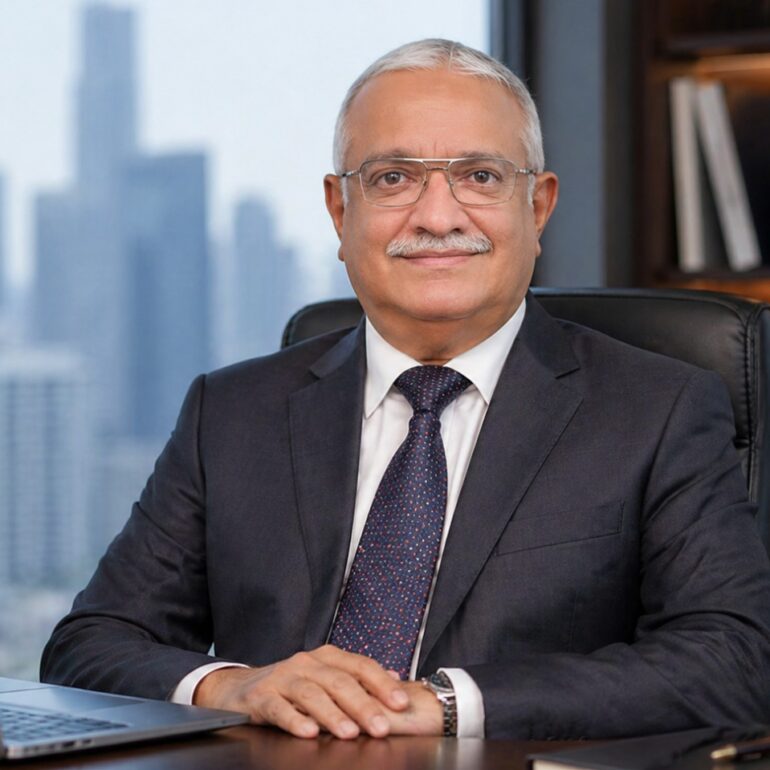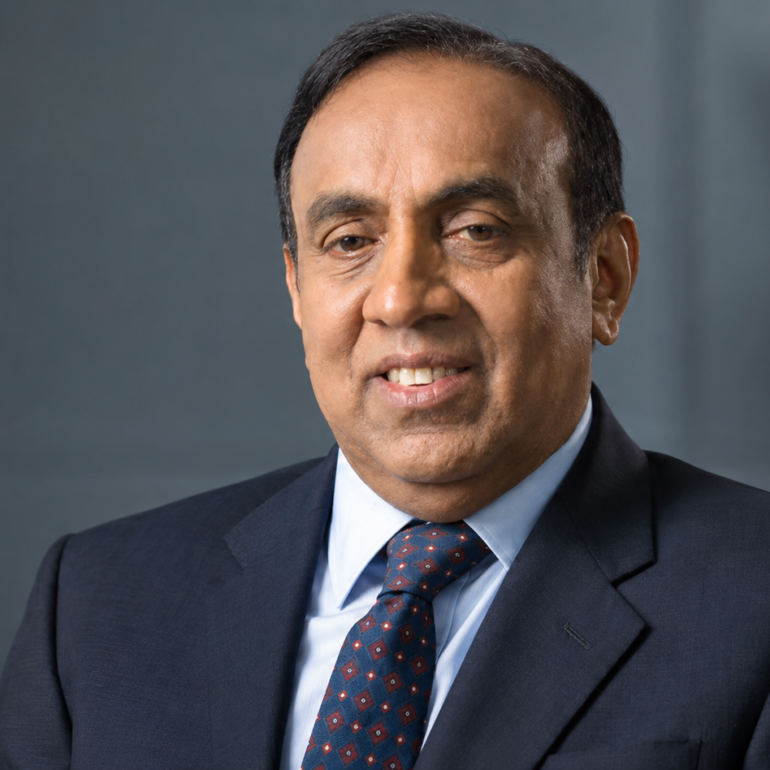

Rajmohan Pillai
Chairman of Beta Group
J. Rajmohan Pillai is an Indian businessman, and is currently the chairman of Beta Group. Rajmohan Pillai was born in Kerala, India, and educated in the state capital Trivandrum. He gained management experience with his family’s business in 1981.
Key Facts
Born: 12 May 1964 (age 61)
Title: Businessman, Chairman of Beta Group
A Deal That Defined an Era
In the 1990s, as India’s economy opened to the world, commodities once confined to domestic markets began their journey across oceans. Among them, basmati rice, fragrant, premium, and culturally anchored, became a global export story. At the center of this transformation was Rajmohan Pillai, a businessman who built an international trading empire around a grain that had long been underestimated. Through the Beta Group, he positioned basmati as a high-value global commodity. Yet his story is not linear. It is marked by expansion, controversy, and reinvention, an outstanding case of ambition colliding with the structural realities of global trade.
From Kerala to Global Markets
Rajmohan Pillai was born in Kerala, a state with a long tradition of outward migration and global commerce. Unlike industrial hubs in northern India, Kerala’s entrepreneurial pathways often extended beyond regional boundaries.
His early education and formative years are less documented than his later business career, but his trajectory suggests a shift toward trade-oriented thinking early on. Pillai’s entry into business did not follow the path of manufacturing or domestic enterprise.
He moved into trading. This distinction matters.
Trading businesses operate on margins, timing, and networks. Success depends less on ownership of assets and more on control of supply chains and relationships.
Pillai recognized this early.
The Rise of Beta Group: Building a Global Trading Network
The Beta Group emerged as Pillai’s primary vehicle for expansion. The company focused on food commodities, particularly basmati rice, at a time when global demand for premium rice varieties was beginning to grow.
Pillai’s strategy was clear. Control distribution rather than production.
Instead of building large-scale milling infrastructure, Beta positioned itself as a trader and exporter, sourcing from producers and supplying international markets.
Key markets included the Middle East, Europe, and parts of North America, regions with significant South Asian diaspora populations and growing demand for premium food products.
The company’s growth was driven by network building. Relationships with suppliers, logistics providers, and international buyers created a supply chain that could move large volumes efficiently.
By the late 1990s, Pillai had established himself as a major player in basmati exports.
The Basmati Trade: From Regional Staple to Global Commodity
Basmati rice occupies a unique position in global agriculture. It is geographically specific, largely grown in the Indo-Gangetic plains, and carries premium pricing due to its aroma, grain length, and cultural significance.
In the 1990s and early 2000s, global demand for basmati began to rise. Diaspora consumption played a role, but so did broader culinary adoption.
Pillai’s contribution was in scaling this demand. He positioned basmati not just as an ethnic product, but as a premium commodity.
This required consistency in quality, branding, and supply. The trade, however, is complex.
Price volatility, crop variability, export regulations, and currency fluctuations all affect margins. Unlike industrial products, agricultural commodities are subject to environmental and policy risks.
Pillai’s success lay in navigating these variables. At least in the early phase.
Aggression and Expansion
Pillai’s leadership style can be characterized by risk-taking and expansion. He pursued growth across geographies, building a presence in international markets rather than consolidating domestically.
This approach aligns with trading logic.
Scale increases bargaining power. It also increases exposure.
Pillai engaged in partnerships and acquisitions, attempting to integrate parts of the supply chain and expand Beta’s footprint.
However, his strategy often leaned toward aggressive expansion. This created both opportunities and vulnerabilities. In commodity trading, leverage and exposure can amplify gains, but also magnify losses.
Controversies and Legal Challenges: The Inflection Point
Rajmohan Pillai’s career cannot be understood without addressing the controversies that defined its turning point.
In the late 1990s and early 2000s, Beta Group became embroiled in financial and legal disputes, particularly involving allegations of financial irregularities and disputes with lenders and partners.
One of the most prominent cases involved a dispute with a Singapore-based company, leading to legal proceedings and allegations related to financial conduct.
Pillai was arrested and faced extradition proceedings linked to these cases. These events significantly impacted his reputation.
Media coverage at the time was intense, framing the narrative as a rise-and-fall story. It is important to distinguish between allegations, legal processes, and outcomes.
While Pillai faced serious charges and legal battles, the broader picture includes complex commercial disputes typical of high-risk trading environments.
The controversies highlighted structural risks in the business model. High leverage, cross-border operations, and dependence on volatile markets created vulnerabilities.
Returning After Crisis
Following the legal and financial setbacks, Pillai attempted to rebuild. This phase is less documented but critical.
Reinvention in business is rarely about returning to previous scale. It is about repositioning. Pillai shifted focus toward stabilizing operations and rebuilding networks.
The ability to re-enter markets after reputational damage reflects both persistence and the fluid nature of commodity trading, where relationships can be renegotiated over time.
However, the scale of his earlier operations was not fully regained. The crisis left a lasting impact.
Shaping a Commodity Narrative
Rajmohan Pillai’s legacy lies in his role in elevating basmati rice within global trade. He was among the early entrepreneurs to recognize its potential as a premium export product.
His work contributed to:
- Expanding international awareness of basmati
- Building distribution networks beyond traditional markets
- Positioning Indian rice as a branded commodity
Today, India is one of the largest exporters of basmati rice globally, with billions of dollars in annual exports.
While this growth cannot be attributed to a single individual, Pillai’s role in the early expansion phase is significant.
Within the business community, his reputation is mixed. He is seen as both a pioneer and a cautionary example.
A Changing Trade Landscape
The global basmati trade has evolved. Today, it is more structured, with stronger regulatory oversight, better financing mechanisms, and more integrated supply chains.
Large players dominate the market, combining production, processing, and branding. The environment that enabled rapid expansion in the 1990s is no longer the same.
For entrepreneurs like Pillai, relevance depends on adaptation. The shift toward branded products, digital supply chains, and tighter compliance frameworks requires different capabilities.
Beta Group’s current operations are less visible than during its peak. This reflects both the impact of past challenges and the transformation of the industry.
Ambition, Risk, and the Nature of Trade
Rajmohan Pillai’s story resists simple categorization. It is neither a straightforward success narrative nor a cautionary tale alone. It is a study in ambition.
In the ability to identify opportunity in a traditional commodity and scale it globally. It is also a study in risk.
In how aggressive expansion, combined with complex financial structures, can lead to instability. In the broader context of Indian entrepreneurship, his journey reflects a particular era.
The early years of liberalization, when global markets opened and regulatory frameworks were still evolving.
His legacy is therefore dual. A pioneer who helped shape a global commodity narrative. And a reminder of the structural risks inherent in trading businesses.
An outstanding example of how vision can create opportunity, and how the same ambition, if not balanced by discipline, can reshape the trajectory of that success.
Awards and recognition
2019 – Vayalar Ramavarma Samskarika Vedi award for his book Siddharthan
2023 – Export Excellence award for being the best Indian exporter to the USA in the cashew sector at the Kerala-America partnership summit 2023 in Kochi
2024 – Elected as President of Sport Climbing Federation of India (SCFI)