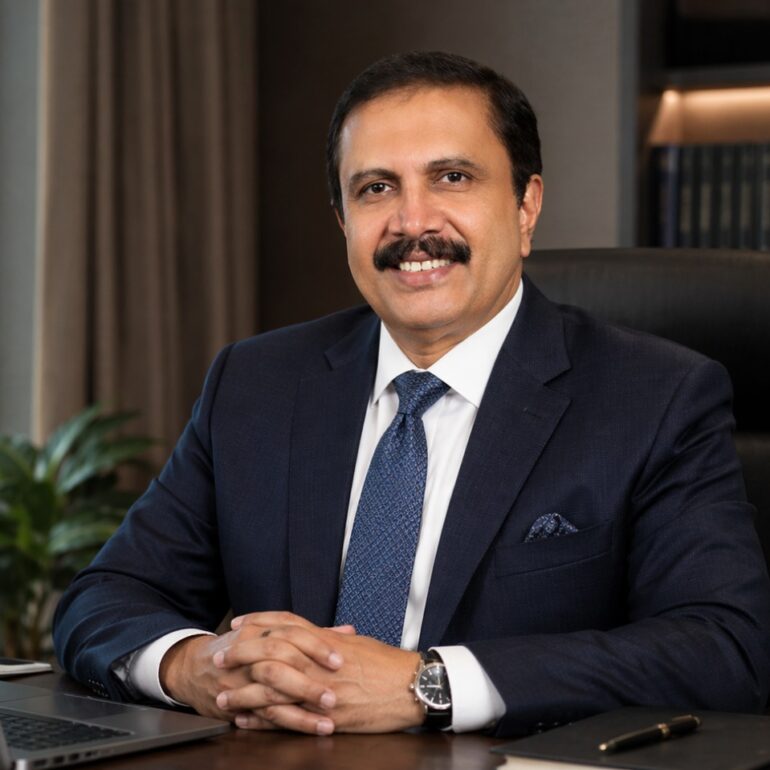
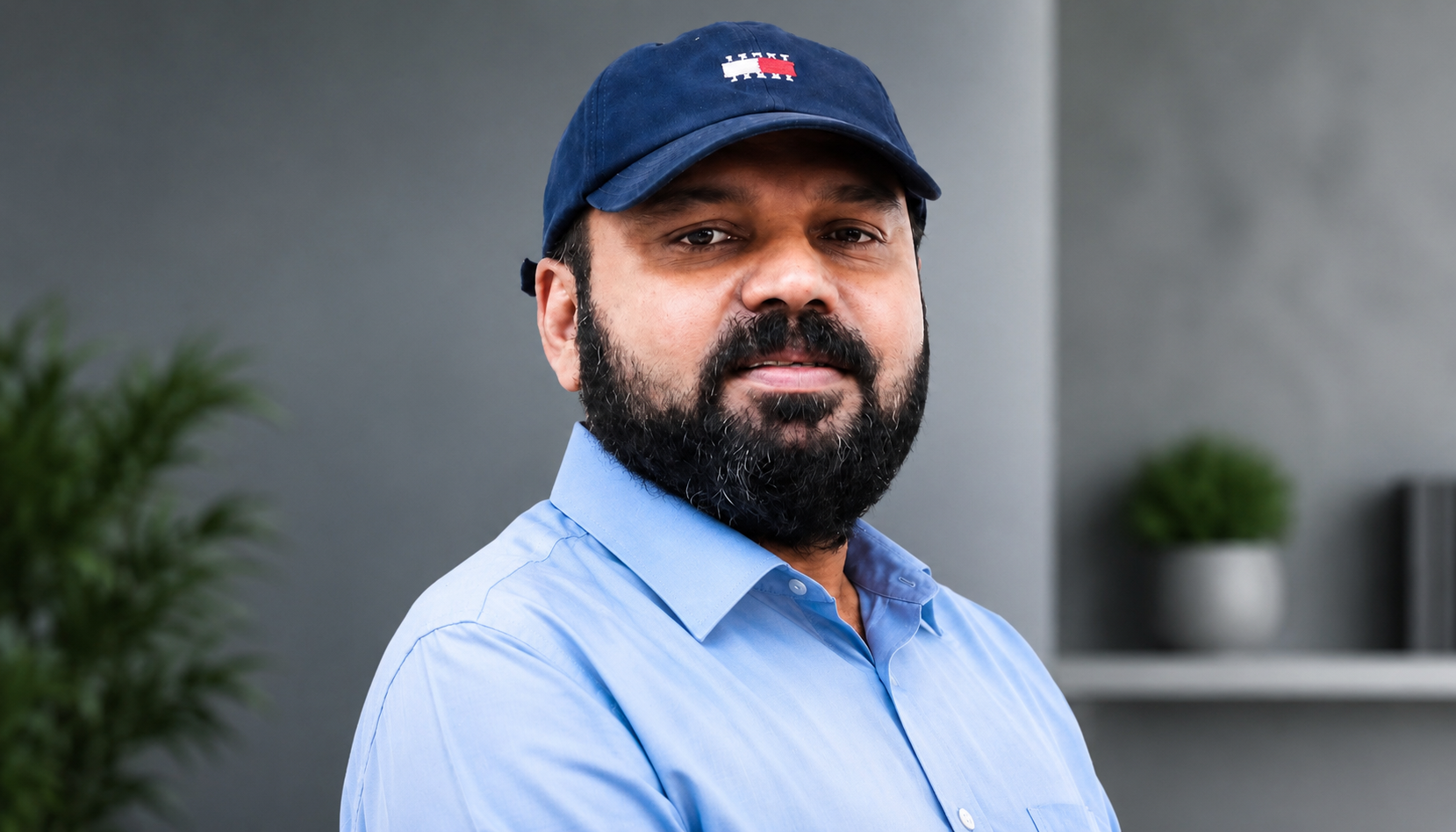
Santhosh George Kulangara
Indian traveller, television producer, director, broadcaster, editor, and publisher
Born: 25 December 1971 (age 54)
Place: Marangattupilly, Kottayam district, Kerala, India
Education: Madurai Kamaraj University
Title: Traveller, Producer, Director, Broadcaster, Editor, Publisher
Years active: 1992 – present (TV)
Known for: Travel documentaries
The Journey Through a Screen
The aircraft window frames a city most viewers will never visit, at least not immediately. Streets below move with unfamiliar rhythms, languages dissolve into ambient noise, and yet the narration remains calm, measured, almost conversational. Santhosh George Kulangara does not sell the place. He explains it. For a generation of Malayali viewers, this was not just travel television, it was orientation. Watching Safari TV felt less like escapism and more like instruction, how the world works, how systems differ, how people live elsewhere. It is an outstanding shift in perspective, where travel stops being fantasy and becomes literacy.
Curiosity as Structure
Santhosh George Kulangara was born in Kerala, in a socio-cultural environment where mobility was both aspiration and limitation. Like many Malayalis, his early world was shaped by stories of migration, the Gulf, the West, distant places that existed more in imagination than experience.
His education and early career did not immediately position him as a travel filmmaker. He studied commerce and later engaged with entrepreneurship, particularly through the family business, Labour India Publications, a well-known educational publishing house in Kerala.
This background is crucial.
Unlike many travel presenters who emerge from media or performance industries, Kulangara’s orientation was pedagogical. He approached information as something to be structured, explained, and disseminated.
Travel, for him, was not initially about storytelling. It was about understanding.
The Birth of a Traveller: From Movement to Documentation
Kulangara’s early travels abroad marked a turning point.
What began as personal exploration gradually evolved into documentation. At a time when international travel was still relatively inaccessible to large sections of Kerala’s population, his journeys carried a secondary function, they became a visual bridge.
The tools were modest. Early recordings were often made with basic equipment, handheld cameras, minimal crew. The aesthetic was not cinematic in a conventional sense. It was observational.
This mattered.
Instead of constructing polished travel fantasies, he recorded streets, public systems, everyday life. Airports, buses, markets, infrastructure, these became subjects.
The transition from traveller to documentarian was not dramatic. It was iterative. Each journey added to an archive that would later define his work.
Safari TV: A Media Disruption
The launch of Safari TV marked a structural shift in Malayalam television.
In an industry dominated by entertainment, serials, and advertising-driven programming, Kulangara introduced a channel that positioned itself differently. It was knowledge-centric, travel-driven, and notably, operated without conventional commercial advertising.
This model was unconventional and risky.
Without advertising revenue, sustainability depended on alternative financial structures, including subscription models and integration with existing business ecosystems.
Editorially, the channel rejected sensationalism. Programs focused on travel, history, science, and real-world systems.
In doing so, Safari TV created a distinct identity. It did not compete directly with mainstream channels. It carved out a separate space.
Content Philosophy and Storytelling Style: Explanation Over Excitement
Kulangara’s storytelling style is defined by restraint.
He does not rely on dramatic music, rapid cuts, or exaggerated reactions. Instead, his narration is steady, often reflective, focused on explaining rather than impressing.
This approach has several implications.
First, it positions the viewer as a learner rather than a consumer. The emphasis is on understanding systems, how public transport works, how cities are planned, how governance differs.
Second, it removes the spectacle often associated with travel media. There is little attempt to romanticize destinations. Places are shown as they are, functional, complex, sometimes flawed.
This places his work in contrast with global travel media figures like Anthony Bourdain, whose narratives often centered on cultural immersion through personality and experience. Kulangara’s approach is less personal, more instructional.
It is travel as education.
Democratizing Travel for Malayalis: Imagination as Access
Perhaps Kulangara’s most significant contribution lies in how he reshaped the imagination of travel in Kerala.
For decades, international travel was associated with migration or elite tourism. Safari TV introduced a different possibility, travel as curiosity-driven exploration.
By showing:
- Affordable travel methods
- Public systems in other countries
- Everyday life rather than luxury
He made global travel seem more accessible, at least conceptually. This had a cultural impact.
Younger audiences began to view travel not as distant aspiration but as achievable experience. The rise of independent travel among Malayalis, particularly budget travel and backpacking, cannot be entirely attributed to his work, but it exists within the ecosystem he helped shape.
He did not just show places. He normalized the idea of going.
Criticism and Controversies: The Cost of Being Opinionated
Kulangara is not a neutral public figure.
He has been vocal on issues ranging from governance and infrastructure to public behavior and policy. These opinions have generated both support and criticism.
Some view his commentary as necessary, grounded in comparative experience from global travel. Others see it as overly direct, occasionally lacking nuance.
This tension is central to his public persona.
As a media figure who positions himself as an observer of systems, his critiques often extend beyond travel into broader socio-political commentary.
The reception reflects a divided audience, those who value his clarity, and those who question his conclusions.
Entrepreneurial Vision: Media Without Advertising
Safari TV’s business model is as significant as its content.
Operating without traditional advertising challenges the dominant revenue structure of television. It requires Cost control, Niche audience targeting and Integration with broader business ventures.
Kulangara’s entrepreneurial background plays a role here. The channel is not an isolated venture but part of a larger ecosystem that includes publishing and educational initiatives.
This allows for a degree of editorial independence.
However, the model also raises questions about scalability. Can such a format expand beyond a specific audience? Can it compete in a digital-first media environment?
These questions remain open.
Legacy and Influence: Redefining Travel Media in Kerala
Santhosh George Kulangara occupies a distinctive position in Indian travel media.
He is not part of the influencer-driven digital ecosystem, nor does he align with traditional television entertainment formats. His work exists at an intersection, documentary, education, and cultural commentary.
His influence is visible in emerging travel creators from Kerala, many of whom adopt a more informative, grounded approach to content.
At the same time, his format contrasts sharply with the rapid, personality-driven content of social media platforms. This contrast highlights a broader shift in media consumption.
Kulangara represents a slower, more deliberate form of storytelling.
Future Outlook: Relevance in a Changing Media Landscape
The media landscape is changing rapidly.
Travel content today is dominated by short-form videos, algorithm-driven visibility, and personality-centric storytelling. In this environment, long-form, explanation-driven content faces structural challenges.
The question is not whether Kulangara’s model will dominate, but whether it will endure.
There is evidence that it will.
As audiences become saturated with fast content, there is a parallel demand for depth, context, and reliability. Safari TV occupies this space.
Kulangara’s challenge will be to adapt distribution without altering core philosophy.
Travel as Knowledge
Santhosh George Kulangara’s work resists easy categorization.
He is not merely a travel presenter, nor solely a media entrepreneur. He operates as an interpreter of the world, translating systems, cultures, and experiences for a specific audience.
His contribution lies not in showing destinations, but in explaining them.
In doing so, he has reshaped how travel is understood in Kerala, moving it from aspiration to awareness.
It is an outstanding legacy, not because it expands the map, but because it changes how people read it.