Top Tourist Places in Kerala
- Munnar
- Alleppey (Alappuzha)
- Wayanad
- Thekkady (Periyar Wildlife Sanctuary)
- Kochi (Cochin)
- Kovalam
- Varkala
- Kumarakom
- Athirappilly Waterfalls
- Bekal Fort
Outstanding Tourist Places in Kerala
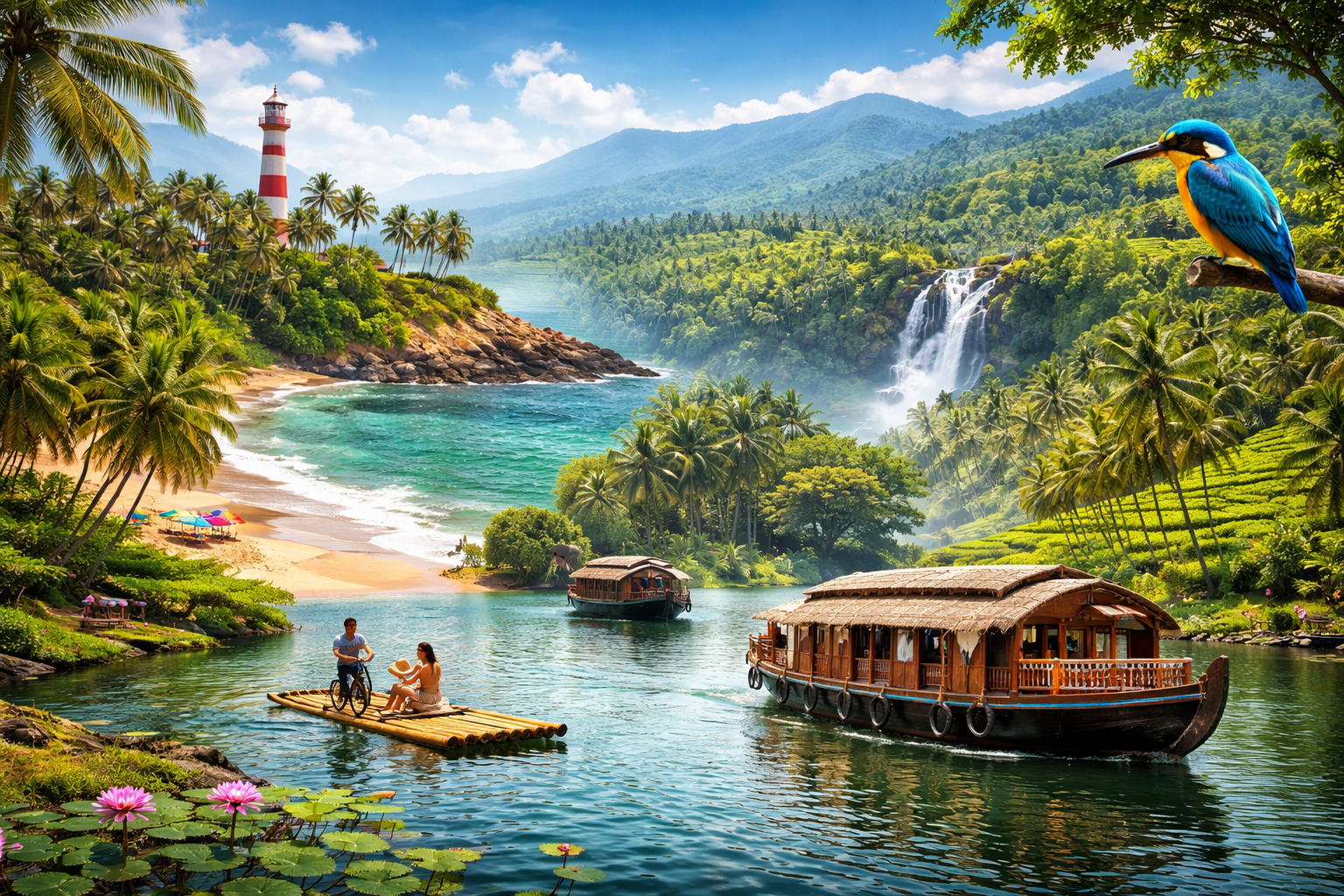
Kerala does not try to impress you loudly. It unfolds slowly. Mist rolling over tea hills, houseboats drifting through silent backwaters, waves breaking against cliffside beaches, forests breathing quietly in the background. This is a place where travel feels less like movement and more like immersion.
What makes Kerala stand out is range. Within a few hours, you can move from mountains to beaches, from wildlife reserves to colonial towns. This list brings together the most searched, widely reviewed, and culturally significant destinations that define Kerala tourism today. From postcard-famous locations to deeply experiential spaces, these are the places that shape the idea of “God’s Own Country.”
1. Munnar
Munnar is the visual identity of Kerala. Endless tea plantations stretch across rolling hills, wrapped in mist that moves like a slow curtain. Located in the Western Ghats, this hill station sits at around 5,000 to 8,000 feet above sea level, offering a climate and landscape that feel almost unreal in South India.
What makes Munnar unforgettable is its layered experience. At first glance, it is all about the tea estates, vast green carpets shaped by decades of plantation culture. But beyond that, it opens into viewpoints, waterfalls, and national parks. Eravikulam National Park, home to the endangered Nilgiri Tahr, adds a rare ecological dimension to the destination.
Munnar is also a place for stillness. You wake up to fog, walk through narrow estate roads, and watch clouds drift below you. Trekking, boating at Mattupetty Dam, and exploring Echo Point are common activities, but the real appeal is slower, more personal.
It has long been a favorite for honeymooners and nature lovers, but it never feels overcrowded if you move beyond the obvious spots. Munnar is not just a destination, it is a mood. A quiet, green, almost cinematic escape that defines Kerala’s hill station culture.
How to reach Munnar
Location: https://maps.app.goo.gl/dV58ks1PysDg178E7
2. Alleppey (Alappuzha)
Alleppey is where Kerala slows down completely. Known as the “Venice of the East,” it is defined by its network of canals, lagoons, and backwaters that stretch endlessly through coconut-lined landscapes.
The core experience here is the houseboat. You step onto a kettuvallam and drift through villages, paddy fields, and quiet waterways where life unfolds at its own rhythm. Fishermen casting nets, children waving from narrow banks, birds moving across the sky, everything feels intimate.
Alleppey is not just scenic, it is deeply cultural. The backwaters are not a tourist construct, they are a living ecosystem. People live, work, and travel through these waters daily.
Beyond houseboats, Alleppey offers beaches, temples, and events like the Nehru Trophy Boat Race, which turns the calm waters into a high-energy spectacle.
It is one of the most searched destinations in Kerala because it offers something rare, a complete disconnect from urgency. Time stretches here. And that is exactly why people come.
How to reach Alleppey
Location: https://maps.app.goo.gl/zBDFMJzX9NgLVLuj6
3. Wayanad
Wayanad feels untouched. Located in the northern part of Kerala, it is a landscape of dense forests, waterfalls, caves, and high-altitude viewpoints. It is part of the Nilgiri Biosphere Reserve, making it one of the most ecologically rich regions in South India.
This is where you go if you want to disconnect. There are no overwhelming crowds, no constant noise. Just forests, mist, and long stretches of green.
Wayanad offers a mix of adventure and history. Trek to Chembra Peak, explore the prehistoric Edakkal Caves, or walk through spice plantations that define the region’s economy. Waterfalls like Soochipara and Meenmutty add to the raw beauty.
It is also culturally layered. Indigenous tribal communities live here, and their traditions still shape the region’s identity.
Wayanad is not flashy. It is quiet, grounded, and deeply immersive. For many travelers, it becomes the most memorable part of Kerala, precisely because it feels less curated.
How to reach Wayanad
Location: https://maps.app.goo.gl/FUKCGVMZ1xwzF3Tu5
4. Thekkady (Periyar Wildlife Sanctuary)
Thekkady is Kerala’s wild side. Built around the Periyar Wildlife Sanctuary, it offers one of the most unique wildlife experiences in India, observing animals from a boat on a vast lake surrounded by forest.
The sanctuary spans over 700 square kilometers of dense greenery, home to elephants, tigers, deer, and rare species. The sight of elephant herds near the water is one of the defining images of Thekkady.
What makes it different is accessibility. You do not need to trek deep into the forest to experience wildlife. The lake itself becomes a viewing platform.
Beyond wildlife, Thekkady is also known for spice plantations. Guided tours take you through cardamom, pepper, and cinnamon farms, offering insight into Kerala’s spice trade history.
It is a destination that blends nature, education, and adventure. Whether it is boating, trekking, or simply observing, Thekkady offers a more active, engaging travel experience.
How to reach Thekkady
Location: https://maps.app.goo.gl/WRoe6PhncY5EZEbM7
5. Kochi (Cochin)
Kochi is Kerala’s cultural crossroads. It is where history, trade, and modernity intersect. Unlike other destinations, Kochi is less about nature and more about narrative.
Fort Kochi tells the story. Colonial buildings, Chinese fishing nets, old churches, and spice markets create a layered urban experience. You can walk through streets that carry Portuguese, Dutch, and British influences all at once.
The city also has a strong art and café culture. Galleries, boutique stays, and local eateries make it one of the most dynamic places in Kerala.
Kochi is not overwhelming like big cities. It moves at a softer pace, allowing you to absorb its character slowly.
If Kerala had a cultural capital, this would be it.
How to reach Kochi
Location: https://maps.app.goo.gl/ta5TWc4G9BNngoTPA
6. Kovalam
Kovalam is Kerala’s most famous beach destination. Known for its crescent-shaped coastline, it combines scenic beauty with accessibility and tourism infrastructure.
The Lighthouse Beach is the highlight, offering panoramic views and vibrant activity. Water sports, sunbathing, and beachside cafés define the experience.
Kovalam is also known for Ayurveda. Many resorts here focus on wellness, offering traditional treatments that attract international travelers.
It is lively, but not chaotic. You get both relaxation and activity, depending on what you want.
How to reach Kovalam
Location: https://maps.app.goo.gl/edh9Bju1nkZcDNCu6
7. Varkala
Varkala is different. It is the only place in Kerala where cliffs meet the sea. This creates a dramatic landscape that feels almost cinematic.
The cliffside is lined with cafés, shops, and viewpoints. Sunsets here are a daily ritual. Travelers gather, sit quietly, and watch the sky change.
Varkala is also spiritual. The nearby temple and the belief that its waters have healing properties add a deeper dimension.
It attracts a mix of backpackers, solo travelers, and seekers. The vibe is relaxed, slightly bohemian, and very personal.
How to reach Varkala
Location: https://maps.app.goo.gl/QjJXbZEUM4Vh5gnh7
8. Kumarakom
Kumarakom is the quieter, more refined version of Alleppey. Located along Vembanad Lake, it offers backwater experiences with more privacy and luxury.
It is known for its resorts, bird sanctuary, and peaceful atmosphere. Unlike Alleppey’s busier canals, Kumarakom feels more open and expansive.
Birdwatching is a major attraction here, especially for migratory species.
It is ideal for travelers who want the backwater experience without the crowds.
How to reach Kumarakom
Location: https://maps.app.goo.gl/rDjv1LG9Gqy6eX266
9. Athirappilly Waterfalls
Athirappilly is often called the “Niagara of India,” and for good reason. It is the largest waterfall in Kerala, set within dense forest.
During monsoon, the waterfall becomes massive, powerful, and almost overwhelming. The sound, the mist, the sheer force of water, it is an experience, not just a sight.
It has also become a favorite filming location, adding to its popularity.
Athirappilly is raw nature at its peak. No filters, no distractions.
How to reach Athirappilly
Location: https://maps.app.goo.gl/xhacNp9KnQhjAGFC8
10. Bekal Fort
Bekal Fort is where history meets the sea. Located in North Kerala, it is one of the largest and best-preserved forts in the state.
The structure overlooks the Arabian Sea, offering panoramic views that make it visually striking. Built in the 17th century, it reflects layers of history, from local rulers to colonial influences.
Walking through the fort feels like stepping into a different time. The architecture, pathways, and watchtowers all tell stories.
It is less crowded compared to other major spots, which adds to its appeal.
How to reach Bekal Fort
Location: https://maps.app.goo.gl/Z5BuBphafSes8TUW6
Final Destination
Kerala is not a single experience. It is ten different moods stitched together. Mountains, backwaters, forests, beaches, cities, each offering a different rhythm.
If you want to truly understand Kerala, you do not just visit one place. You move through it. Slowly.
And that is where the magic happens.