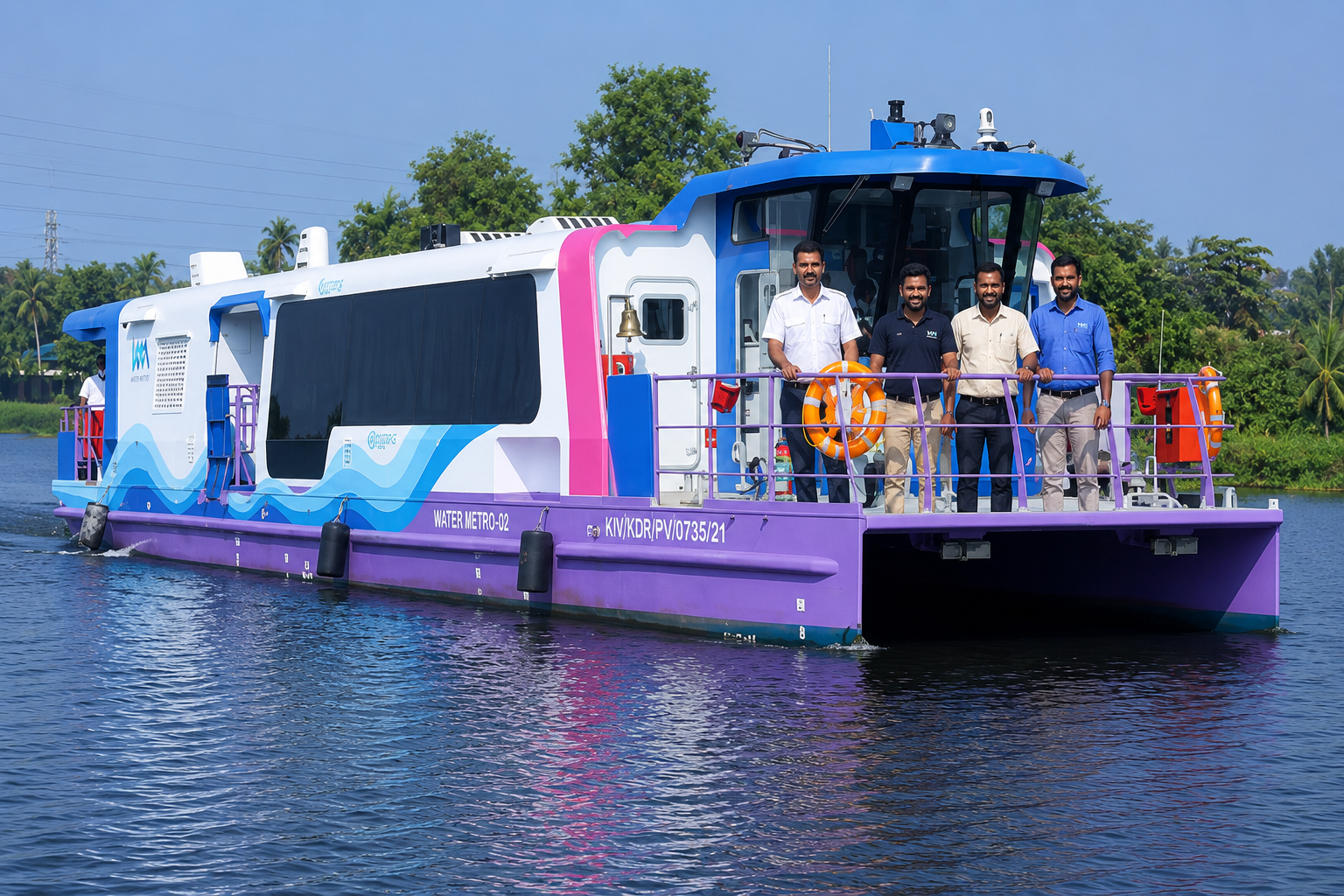
Kerala’s successful Water Metro project is preparing for its next phase of growth, with plans to extend the service beyond Kochi to the southern districts of Alappuzha and Kollam. The proposed expansion aims to transform the region’s extensive network of lakes, canals and waterways into a modern, eco-friendly transport system, offering faster travel while reducing dependence on congested roads.
The initiative is expected to strengthen public transportation, improve cargo movement, and create new opportunities for tourism and real estate development across South Kerala.
Feasibility Study Already Completed
Kochi Metro Rail Limited (KMRL) has already conducted a feasibility study covering 21 cities across India to assess the potential for Water Metro services. A detailed project report has been submitted to the Inland Waterways Authority of India (IWAI), with Alappuzha and Kollam emerging as two of the key locations for future expansion.
The project will focus on integrating the waterways of Ashtamudi Lake, the T.S. Canal and the Kuttanad region into a seamless transport network.
A Fully Green Transportation Model
Sustainability remains at the heart of the expansion. The proposed routes will be served by next-generation electric boats supported by solar-powered charging docks, making the system almost entirely dependent on clean energy.
Several new boat terminals are expected to be developed across Alappuzha’s canal network and around Kollam’s Ashtamudi Lake. Authorities aim to transition the fleet to boats charged entirely through solar power stations by 2031, reinforcing Kerala’s commitment to environmentally friendly public transport.
Faster Travel and Better Cargo Connectivity
The expanded Water Metro is expected to significantly reduce travel times by allowing commuters to bypass heavily congested highways. At the same time, the project could improve inland cargo transportation, providing a more efficient alternative to road freight.
With more goods moving through waterways, heavy truck traffic on highways could also decline, helping ease congestion and lower fuel consumption.
Major Boost for Tourism and Real Estate
The project is also expected to strengthen Kerala’s tourism economy. Alappuzha’s famous houseboat sector and Kollam’s Ashtamudi Lake tourism are likely to benefit from improved connectivity. Popular destinations such as Munroe Island could become more accessible through direct Water Metro links.
The proposed terminals are already generating interest in nearby property markets. Waterfront locations in areas including Kureepuzha and Kavanad are witnessing growing demand, as improved transport infrastructure often increases real estate value.
Water Metro Moves Closer to Break-Even
Kochi Water Metro, which began operations in April 2023, has already carried more than 6.5 million passengers within its first three years. Although the project has not yet become profitable, its financial performance has shown steady improvement.
The company’s net loss declined from ₹30.26 lakh in FY2023-24 to ₹19.22 lakh in FY2024-25. Following the launch of the Mattancherry route, daily revenue has crossed ₹2.5 lakh, while average daily ridership has reached around 7,000 passengers.
Officials estimate that the project could reach its break-even point once daily passenger numbers increase to approximately 8,000.
Looking Ahead
The proposed expansion into Alappuzha and Kollam marks another important milestone in Kerala’s vision of building a sustainable and integrated transport network. By combining clean energy, efficient water transport and improved regional connectivity, the project has the potential to reshape mobility in southern Kerala while supporting tourism, trade and long-term economic growth.