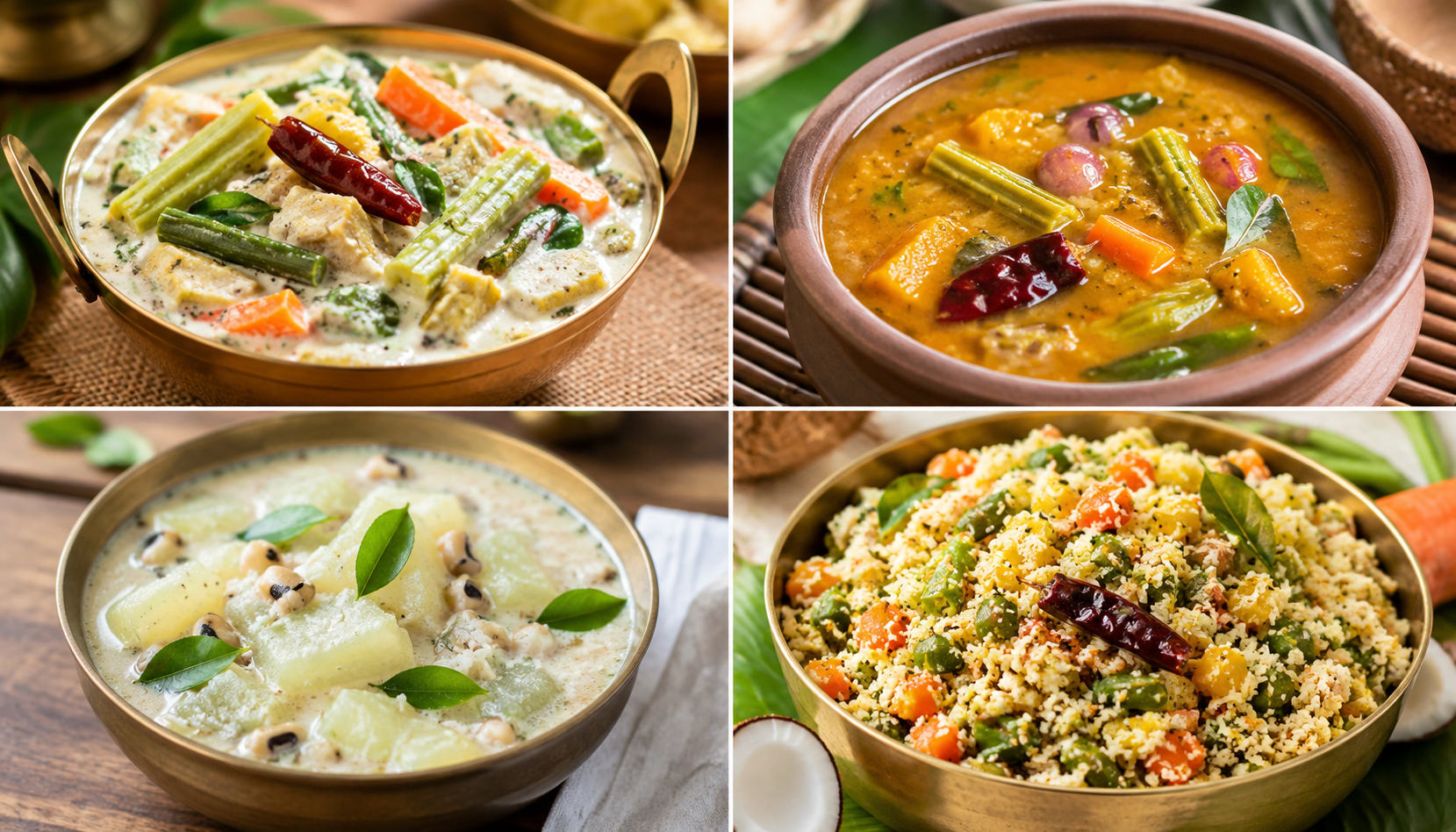
Top 10 Traditional Kerala Dishes
- Avial
- Sambar
- Olan
- Kaalan
- Thoran
- Erissery
- Pachadi
- Kichadi
- Parippu Curry
- Payasam
Introduction
Onam is one of Kerala’s most cherished celebrations, and no Onam gathering feels complete without the traditional Sadya. Served on a banana leaf, the feast brings together an impressive variety of vegetarian dishes, each with its own flavour, texture and cultural significance.
What makes Sadya truly special is not just the number of dishes on the leaf, but the way they complement one another. From mildly spiced vegetable preparations to tangy curries and rich desserts, every item has a role to play. Here are ten traditional Kerala dishes that add their own unique character to an authentic Onam Sadya.
1. Avial
Avial is one of the most iconic dishes associated with Kerala cuisine. It is made with a combination of vegetables such as raw banana, elephant yam, drumstick, carrot, beans and ash gourd, cooked with coconut and seasoned with curry leaves.
The subtle sourness from curd or raw mango, depending on the recipe, gives avial its distinctive taste. Thick, creamy and packed with vegetables, it is an essential part of a traditional Sadya.
2. Sambar
A Sadya is hard to imagine without a generous serving of sambar. This lentil-based curry combines vegetables with tamarind, spices and a roasted coconut-based masala, creating a hearty and aromatic dish.
Sambar is usually enjoyed with rice and provides a stronger, spicier flavour that balances the milder dishes on the banana leaf.
3. Olan
Olan is a simple yet elegant Sadya dish. Traditionally prepared with ash gourd and cowpeas, it is cooked in coconut milk and finished with coconut oil and curry leaves.
Unlike heavily spiced curries, olan relies on the natural flavours of its ingredients. Its gentle, creamy taste makes it an excellent contrast to more intensely flavoured dishes.
4. Kaalan
Kaalan is known for its thick consistency and pleasantly sour flavour. Raw banana or yam is cooked with a mixture of yoghurt, coconut and spices to create this traditional Kerala preparation.
The combination of tanginess and mild spice gives kaalan a distinctive place in the Sadya. A small serving can add a surprisingly rich flavour to a plate of rice.
5. Thoran
Thoran is a dry vegetable preparation made with finely chopped vegetables, grated coconut, green chillies and curry leaves. Cabbage, beans, carrot and other seasonal vegetables are commonly used.
The dish is lightly seasoned, allowing the vegetables and coconut to retain their natural character. Its dry texture also provides a welcome contrast to the curries and gravies served alongside it.
6. Erissery
Erissery is another traditional favourite, often prepared using pumpkin and red beans along with coconut. The mildly sweet taste of pumpkin blends beautifully with the savoury coconut mixture and aromatic tempering.
The dish is particularly popular during festive meals because of its comforting flavour and creamy texture.
7. Pachadi
Pachadi adds a refreshing and slightly sweet or tangy element to the Sadya. Depending on the recipe, ingredients such as pineapple, cucumber or beetroot can be combined with yoghurt and coconut.
The cooling quality of pachadi makes it especially enjoyable alongside spicy curries and rice. Its bright colour also adds visual appeal to the traditional banana-leaf spread.
8. Kichadi
Kichadi is a yoghurt-based preparation with a mildly tangy flavour. Cucumber, bitter gourd and other vegetables can be used, depending on the regional and family recipe.
Although simple in appearance, kichadi plays an important role in balancing the richer and spicier dishes of the Sadya.
9. Parippu Curry
Parippu curry is traditionally one of the first major curries enjoyed with rice during a Sadya. Made with cooked lentils, coconut and spices, it is usually topped with a drizzle of fragrant coconut oil.
A spoonful of parippu mixed with hot rice and ghee is a favourite combination for many Sadya lovers. Its comforting, earthy flavour sets the tone for the rest of the feast.
10. Payasam
No Sadya is complete without payasam. Kerala has several varieties, including palada payasam, ada pradhaman and parippu payasam.
Made with ingredients such as rice ada, jaggery, coconut milk, milk or lentils, payasam brings the feast to a sweet and memorable finish. It is often served toward the end of the meal, although many Sadya enthusiasts happily make room for more than one variety.
Conclusion
The beauty of an Onam Sadya lies in its variety and balance. Every dish, from the humble parippu curry to the indulgent payasam, contributes something different to the meal. The flavours move from mild and creamy to tangy, spicy and sweet, creating a dining experience that is much more than an ordinary festive lunch.
More importantly, Sadya represents Kerala’s tradition of bringing people together around food. Served on a banana leaf and enjoyed with family and friends, these dishes turn the Onam celebration into a feast of flavour, culture and togetherness.