
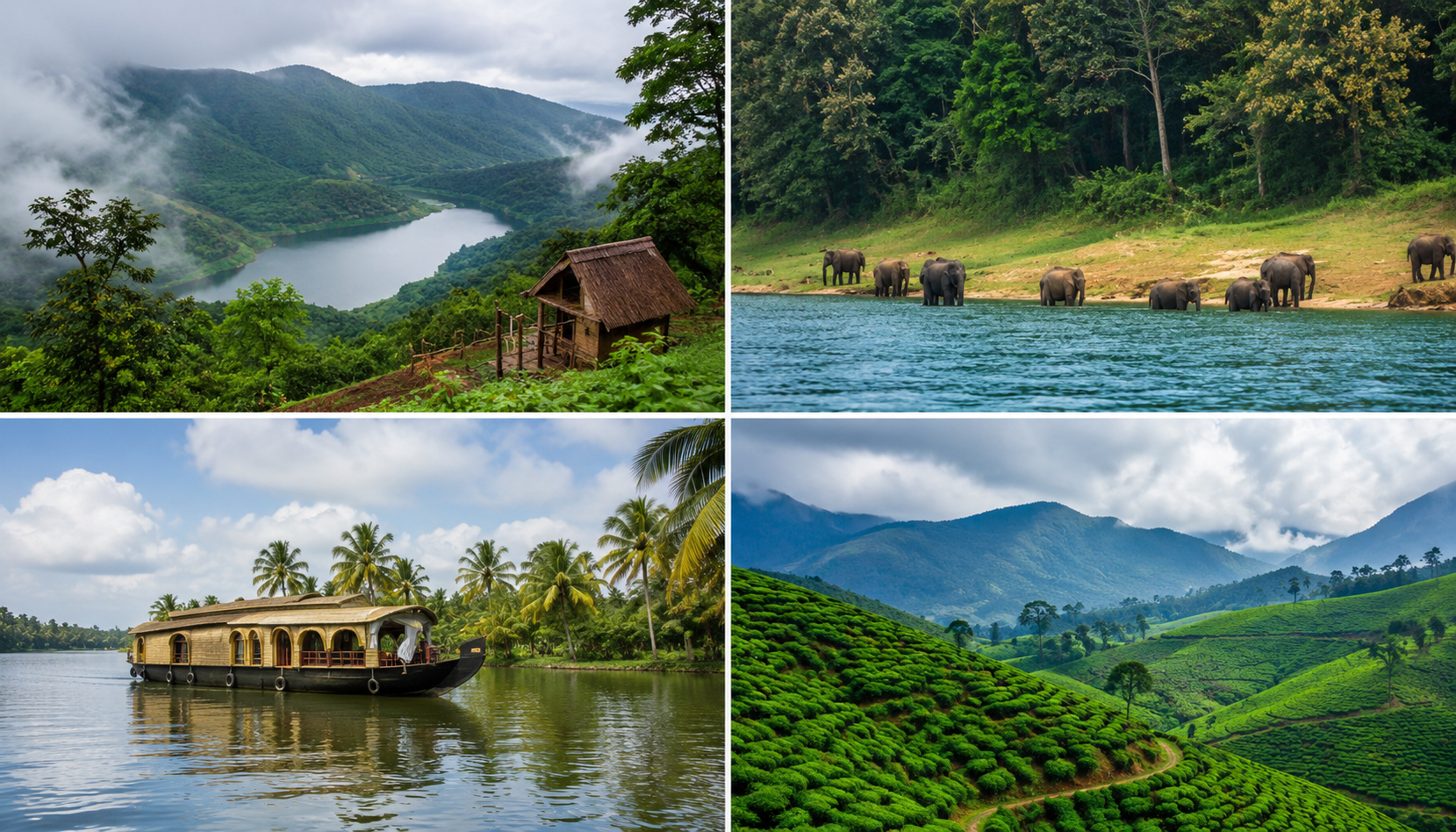
Top Eco-Tourism Destinations in Kerala
1. Thenmala
2. Gavi
3. Wayanad
4. Periyar Tiger Reserve, Thekkady
5. Silent Valley National Park
6. Kumarakom Bird Sanctuary
7. Agasthyakoodam
8. Parambikulam Tiger Reserve
9. Vagamon
10. Munnar
Kerala’s reputation as “God’s Own Country” is built not only on its scenic beauty but also on its commitment to preserving nature. Over the years, the state has emerged as one of India’s leading eco-tourism destinations, offering travelers an opportunity to experience forests, wildlife, mountains, wetlands, and rural life while promoting environmental conservation.
Unlike conventional tourism, eco-tourism focuses on responsible travel that minimizes environmental impact and benefits local communities. Kerala’s diverse landscapes make it an ideal destination for travelers seeking authentic experiences close to nature. From dense rainforests and wildlife sanctuaries to mist-covered hills and tranquil backwaters, the state offers countless opportunities for sustainable exploration.
1. Thenmala
Often recognized as India’s first planned eco-tourism destination, Thenmala has become a model for sustainable tourism. Located in the foothills of the Western Ghats, the destination combines adventure, conservation, and education in a unique way.
Visitors can enjoy nature trails, mountain biking, boating, and canopy walks while learning about the region’s rich biodiversity. The carefully managed tourism activities ensure that visitors can enjoy the natural environment without disturbing the delicate ecosystem.
2. Gavi
Hidden deep within the forests of Pathanamthitta district, Gavi remains one of Kerala’s most rewarding eco-tourism experiences. Surrounded by lush greenery, grasslands, and wildlife habitats, the destination offers a rare sense of wilderness.
Travelers often visit Gavi for guided forest treks, birdwatching, and jeep safaris. The possibility of spotting elephants, gaur, deer, and a wide variety of bird species makes every visit memorable. The destination’s limited visitor numbers help preserve its untouched character.
3. Wayanad
Wayanad has successfully balanced tourism growth with environmental conservation. Its rolling hills, spice plantations, forests, waterfalls, and tribal heritage make it one of Kerala’s most popular eco-tourism destinations.
Nature lovers can explore locations such as Chembra Peak, Banasura Sagar Dam, and the Wayanad Wildlife Sanctuary. The district also provides opportunities to learn about indigenous communities whose lifestyles remain closely connected to the surrounding environment.
4. Periyar Tiger Reserve, Thekkady
Thekkady’s Periyar Tiger Reserve is one of India’s most respected wildlife conservation areas. While tigers remain the reserve’s most iconic residents, the protected forest is also home to elephants, sambar deer, wild boar, and numerous bird species.
Boat cruises on Periyar Lake offer visitors a unique perspective of wildlife gathering along the shoreline. Eco-tourism initiatives involving local communities have helped create sustainable livelihood opportunities while supporting conservation efforts.
5. Silent Valley National Park
Silent Valley stands as one of the last remaining stretches of untouched tropical rainforest in India. Located in Palakkad district, the park is famous for its exceptional biodiversity and ecological significance.
The absence of large-scale tourism infrastructure is part of its appeal. Guided visits allow travelers to experience pristine forests, rare wildlife, and unique plant species while understanding the importance of preserving fragile ecosystems for future generations.
6. Kumarakom Bird Sanctuary
Situated along the shores of Vembanad Lake, Kumarakom Bird Sanctuary offers a different eco-tourism experience centered around wetlands and birdlife.
Migratory birds from various parts of the world visit the sanctuary during certain seasons, making it a paradise for birdwatchers and photographers. The surrounding backwaters further enhance the destination’s natural charm, creating a peaceful environment for nature enthusiasts.
7. Agasthyakoodam
Agasthyakoodam is one of the most biodiverse regions in the Western Ghats and a dream destination for trekkers. Access is carefully regulated to protect the area’s ecological sensitivity.
The challenging trek takes visitors through dense forests rich in medicinal plants, rare species, and stunning landscapes. The journey itself becomes an educational experience, highlighting the importance of biodiversity conservation.
8. Parambikulam Tiger Reserve
Located on the Kerala-Tamil Nadu border, Parambikulam is often regarded as one of India’s best-managed wildlife reserves. Conservation remains the primary focus here, with tourism designed to support rather than disrupt the environment.
Visitors can participate in guided safaris, bamboo rafting, and nature camps. The reserve’s successful involvement of tribal communities in conservation activities has become a model for sustainable eco-tourism management.
9. Vagamon
Vagamon offers a quieter alternative to some of Kerala’s busier hill stations. Rolling meadows, pine forests, tea plantations, and cool weather create an atmosphere of relaxation and natural beauty.
The destination attracts travelers looking for soft adventure activities such as trekking, paragliding, and nature walks. Despite growing popularity, Vagamon continues to retain much of its peaceful charm.
10. Munnar
While Munnar is one of Kerala’s most visited tourist destinations, it also offers several eco-tourism experiences. Beyond its famous tea plantations, the region contains protected forests, grasslands, and wildlife habitats that support rich biodiversity.
Destinations such as Eravikulam National Park and the surrounding mountain ecosystems provide opportunities to witness conservation efforts while enjoying some of the state’s most spectacular scenery.
Final Take
Kerala’s eco-tourism destinations demonstrate that tourism and conservation can coexist when managed responsibly. Whether exploring the rainforests of Silent Valley, trekking through Agasthyakoodam, watching birds in Kumarakom, or spotting wildlife in Thekkady, travelers are offered experiences that go beyond sightseeing.
As sustainable travel gains importance worldwide, Kerala continues to set an example by protecting its natural heritage while creating meaningful opportunities for local communities. For visitors seeking authentic encounters with nature, the state’s eco-tourism destinations remain among the finest experiences India has to offer.