Top 10 Traditional Kerala Jewellery Styles
- Palakka Mala
- Kasu Mala
- Mullamottu Mala
- Manga Mala
- Nagapadam Mala
- Poothali Mala
- Cheruthali
- Lakshmi Mala
- Thalappali
- Jhimki and Kerala-style Earrings
Kerala’s jewellery tradition is deeply connected to its culture, festivals, weddings and everyday heritage. Known for its intricate craftsmanship and distinctive designs, traditional Kerala jewellery often draws inspiration from nature, temples, flowers, coins and other elements of the state’s rich cultural history.
Gold has always held a special place in Kerala households, and traditional ornaments are often treasured across generations. From the iconic Kasu Mala worn with a Kerala saree to the delicate Palakka Mala inspired by green palakka stones, each design carries its own character and history.
Here are 10 traditional Kerala jewellery styles that continue to remain popular and culturally significant.
- Palakka Mala
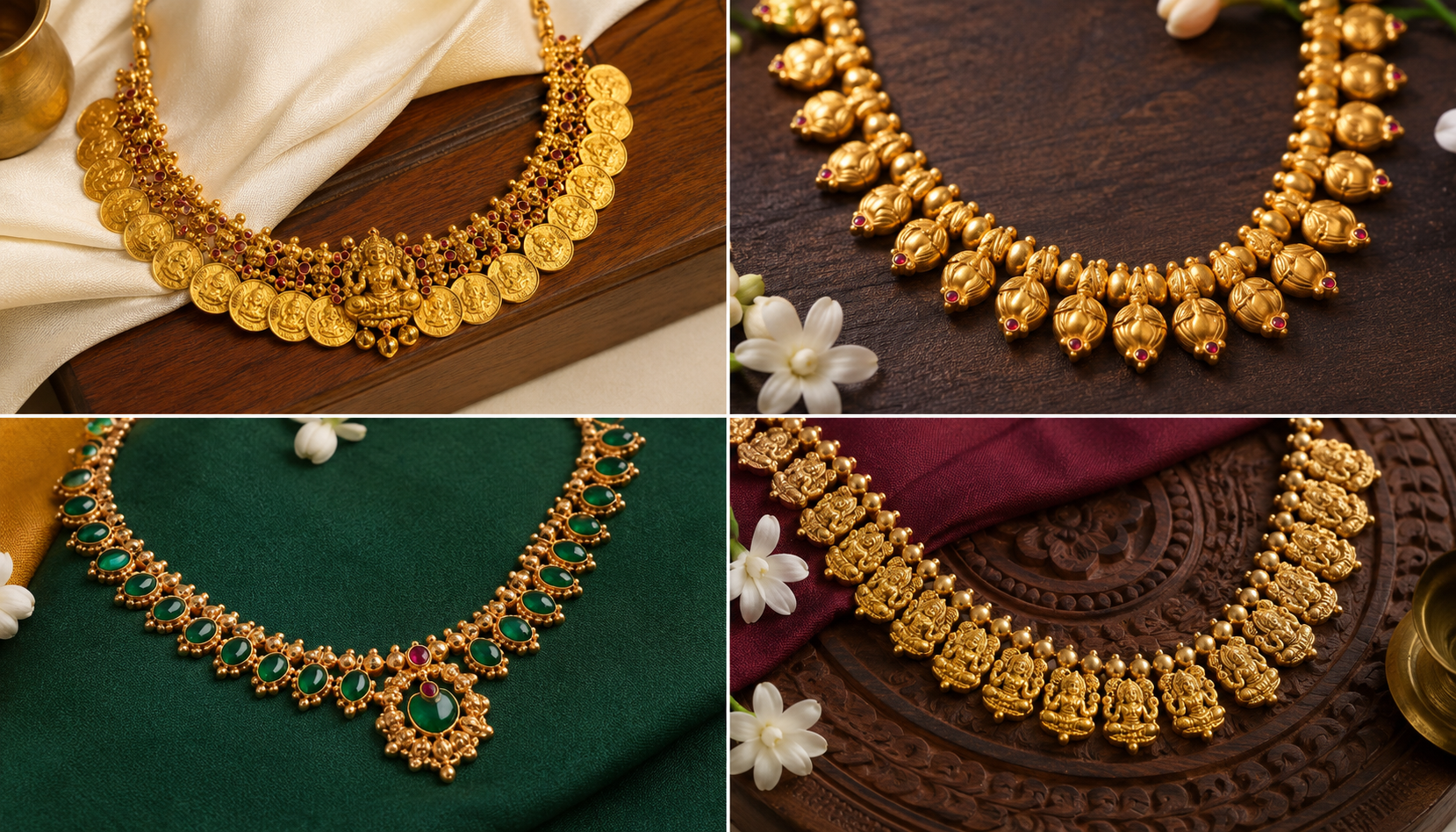
The Palakka Mala is one of the most recognisable traditional jewellery styles in Kerala. It features small green stones, traditionally associated with palakka, arranged in a necklace design with gold detailing.
The striking combination of green and gold gives the ornament a distinctive appearance. Palakka Malas are especially popular as part of traditional bridal jewellery and are often paired with Kerala sarees and kasavu sarees.
- Kasu Mala
Kasu Mala is perhaps one of the most iconic ornaments associated with Kerala. The necklace is made using a series of small gold coins, known as kasu, linked closely together.
Many traditional designs feature motifs inspired by Goddess Lakshmi, making the ornament both decorative and symbolic. Its classic appearance makes Kasu Mala a popular choice for brides and for women attending traditional celebrations.
- Mullamottu Mala
Inspired by the shape of jasmine buds, the Mullamottu Mala has a delicate and elegant appearance. The name comes from “mullamottu”, meaning jasmine bud.
The closely arranged gold elements create a graceful texture across the necklace. Its understated design makes it suitable for both traditional occasions and contemporary Kerala-style looks.
- Manga Mala
The Manga Mala gets its name from the mango-shaped motifs used throughout the necklace. Mango-inspired patterns have long been popular in Indian jewellery, and Kerala has its own distinctive interpretation of the design.
The motifs are usually arranged in a repeated pattern, sometimes combined with gemstones or enamel detailing. Manga Malas are commonly seen in bridal jewellery collections and festive ensembles.
- Nagapadam Mala
Nagapadam Mala is another traditional Kerala ornament known for its distinctive shape. The design is inspired by the hood of a serpent, giving the necklace its characteristic appearance.
Traditionally associated with Kerala’s jewellery heritage, the Nagapadam design can be found in necklaces as well as other ornaments. Its bold motifs give it a strong traditional character while still looking elegant when worn with a saree.
- Poothali Mala
Poothali Mala is a traditional necklace featuring small floral-inspired gold elements arranged closely together. The name and design reflect the importance of flowers and nature in Kerala’s cultural traditions.
The intricate arrangement gives the necklace a rich, detailed appearance without making it excessively heavy. It is often chosen for weddings and other important family occasions.
- Cheruthali
Cheruthali is a traditional Kerala necklace known for its simple yet elegant design. Compared with some elaborate bridal necklaces, it has a more restrained appearance.
It is often worn as part of a layered jewellery look, particularly with traditional sarees and Kerala bridal attire. Its versatility has helped the design remain popular across generations.
- Lakshmi Mala
Lakshmi Mala is distinguished by repeated images of Goddess Lakshmi, the Hindu goddess associated with prosperity and abundance. The motifs are usually crafted in gold and arranged along the length of the necklace.
Beyond its visual appeal, the ornament carries cultural and symbolic significance. It is particularly popular during weddings, festivals and other auspicious occasions.
- Thalappali
Thalappali is a traditional Kerala ornament associated with bridal and ceremonial jewellery. Its design is typically detailed and may feature rows of gold elements, decorative motifs and traditional patterns.
Like many Kerala ornaments, Thalappali can be worn as part of a layered jewellery combination. It adds richness to traditional bridal attire while maintaining the characteristic look of Kerala gold jewellery.
- Jhimki and Kerala-style Earrings
Kerala’s traditional jewellery collection is not limited to necklaces. Earrings such as Jhimkis and other Kerala-style gold earrings are an important part of the traditional look.
Jhimkis usually feature a bell-shaped lower section that moves gently while worn. Kerala jewellery designs often combine these traditional shapes with floral, temple and geometric motifs. They are commonly paired with traditional necklaces and hair ornaments during weddings and festivals.
Conclusion
Traditional Kerala jewellery is more than a collection of beautiful gold ornaments. Each design reflects a combination of craftsmanship, symbolism, family traditions and Kerala’s distinctive cultural identity.
From the coin-covered Kasu Mala and green Palakka Mala to the floral Mullamottu Mala and ornate Lakshmi Mala, these styles continue to evolve while retaining their traditional charm. Modern brides may experiment with lighter versions, layered combinations and contemporary finishes, but the essence of Kerala’s jewellery heritage remains firmly rooted in these timeless designs.
For many families, these ornaments are also treasured as heirlooms, passed from mothers and grandmothers to the next generation. That connection between jewellery, memory and tradition is what continues to make Kerala’s classic jewellery styles special even today.