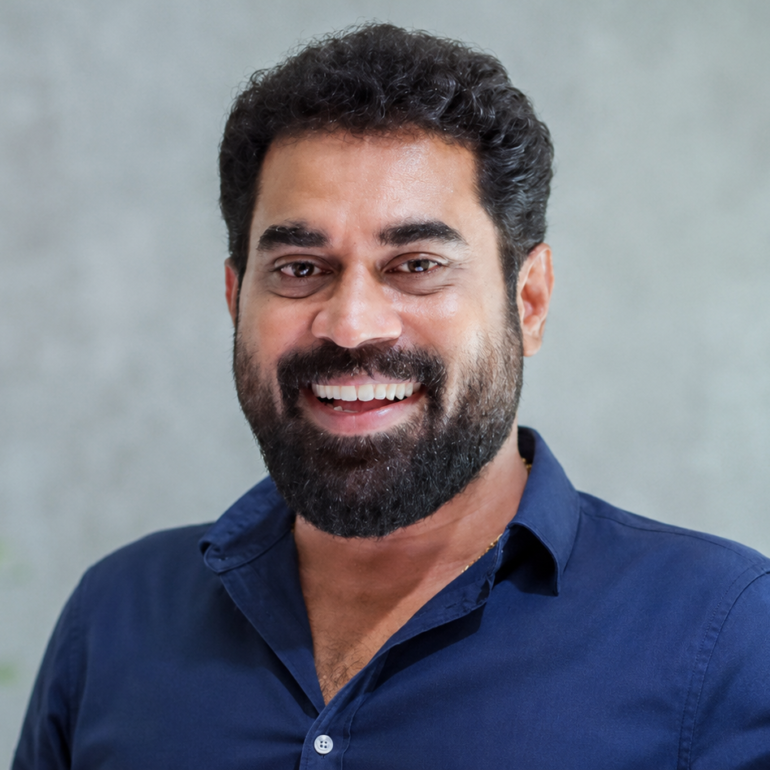
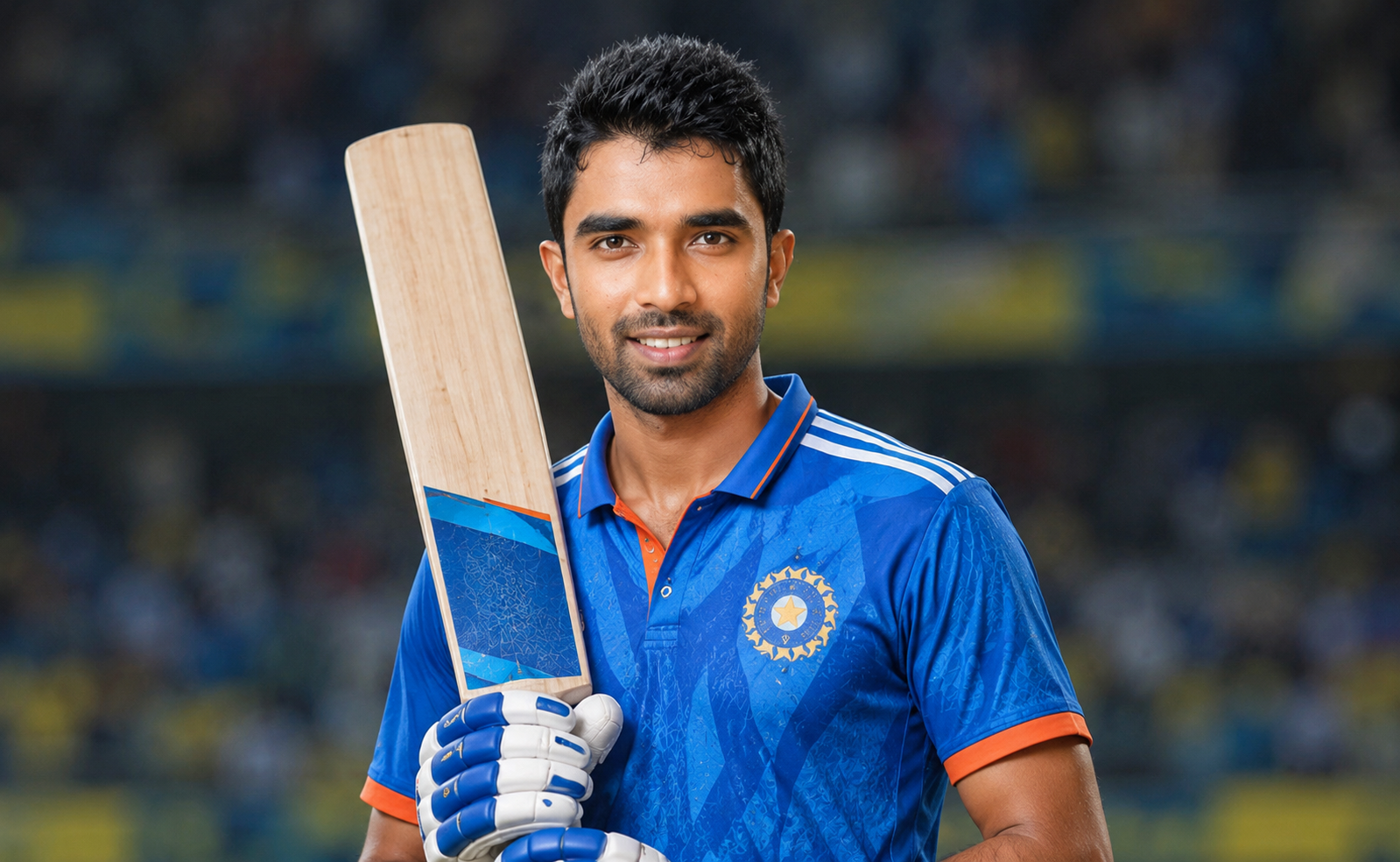
Sachin Baby
Indian Cricketer
Sachin Baby is an Indian cricketer who plays for Kerala in domestic cricket. He is a left-handed middle-order batsman and occasional right-arm off spinner. Sachin was born on 18 December 1988 at Thodupuzha in Idukki district of Kerala. He was named after Sachin Tendulkar by his parents. He completed his early education from Vishwadeepthi Public School and SNDP School, Adimali.
Key Factors
Full Name: Sachin Baby
Date of Birth: 18 December 1988
Birthplace: Thodupuzha, Idukki, Kerala, India
Occupation: Professional Cricketer
Batting Style: Left-handed batter
Bowling Style: Right-arm off-break
Sachin Baby occupies a unique place in Kerala cricket history. He was not merely a dependable middle-order batter or a calm domestic captain. He became one of the defining figures in Kerala’s transformation from an overlooked cricketing state into a serious force in Indian domestic cricket. Elegant at the crease, composed under pressure, and respected deeply inside dressing rooms, Sachin Baby built his career through patience rather than hype.
Named after Sachin Tendulkar during the rise of Indian cricket’s greatest icon, he grew into a cricketer who carried expectations of a different kind, not superstardom, but stability, leadership, and belief for Kerala cricket. Across Ranji Trophy campaigns, IPL benches, record partnerships, and emotionally charged victories, Sachin became one of the quiet architects of Kerala’s cricketing rise.
The Captain
How Sachin Baby became the calm, resilient backbone behind Kerala’s transformation in Indian domestic cricket
The scoreboard at the St Xavier’s College Ground in Thumba carried more than numbers that afternoon. It carried history.
Kerala cricket, long dismissed as peripheral within India’s domestic structure, was suddenly standing at the edge of something extraordinary. In the dressing room sat players who had grown up watching stronger states dominate the Ranji Trophy, Mumbai, Karnataka, Tamil Nadu, Delhi. Kerala had talent, passion, and fan culture, but rarely the belief that it truly belonged among India’s elite domestic sides.
At the centre of that transition stood Sachin Baby, quiet, composed, rarely dramatic.
He was not Kerala cricket’s loudest personality. He did not arrive with national hype or constant television attention. Yet over the years, through disciplined batting, patient leadership, and emotional steadiness, Sachin became one of the most important figures in the history of Kerala cricket.
Before him, Kerala often fought merely to compete.
With him, Kerala began to believe it could win.
A Boy Named After a Legend
Sachin Baby was born on 18 December 1988 in Thodupuzha, nestled within Kerala’s lush hill district of Idukki. The region was known more for plantations, mist-covered roads, and football passion than cricketing infrastructure.
His parents named him after Sachin Tendulkar, whose rise had already captured India’s imagination. For young cricketers of the 1990s, Tendulkar represented possibility itself.
But growing up in Kerala at that time meant cricket dreams carried limitations.
Unlike Mumbai or Bangalore, Kerala lacked deep domestic systems, elite academies, and established cricketing pathways. Talented players often developed through determination rather than infrastructure.
Sachin studied at Vishwadeepthi Public School and later SNDP School in Adimali, where cricket slowly became more than a hobby. The environment of Idukki shaped him in subtle ways, the patience of small-town life, the absence of glamour, and the understanding that progress came slowly.
That temperament would later define his batting.
The Hardest Climb in Indian Cricket
Indian domestic cricket can be brutally unforgiving.
Every season produces hundreds of talented players competing for a handful of opportunities. Careers often disappear quietly before they truly begin. For cricketers from smaller states, the challenge becomes even harder because visibility itself is limited.
Sachin Baby entered Kerala’s first-class side in 2009.
The early years were not dramatic. There were no instant headlines or explosive breakthroughs. Instead, his growth happened gradually through disciplined domestic performances, long innings, and technical maturity.
His left-handed batting stood out for its elegance rather than aggression. He preferred constructing innings patiently, reading conditions carefully, and stabilising pressure situations. That style rarely generated viral attention but earned immense respect within domestic cricket circles.
One of his earliest major milestones came in List A cricket, where he scored his maiden century in the Vijay Hazare Trophy. Those performances eventually led to selection for India A, a recognition that confirmed his growing reputation beyond Kerala.
Yet the journey remained difficult.
Domestic cricket rewards consistency over glamour. Players spend years travelling across India, surviving uncertain contracts and fluctuating form, often without public recognition. Sachin learned early that survival in the system required emotional resilience as much as skill.
The Making of Kerala’s Leader
Over time, Sachin Baby evolved into far more than a batter.
He became Kerala cricket’s emotional centre.
When he took over leadership responsibilities, Kerala cricket itself was entering a transitional phase. The state possessed emerging talent, players like Sanju Samson, Basil Thampi, Jalaj Saxena, Sandeep Warrier, and others, but lacked a sustained winning culture.
Sachin’s leadership changed dressing-room belief.
He led quietly. Teammates often described him as calm under pressure, tactically patient, and emotionally balanced. He rarely chased attention. Instead, he created stability.
That stability became crucial during Kerala’s breakthrough Ranji Trophy years.
As a batter, he continued producing defining innings. His maiden first-class double century announced a new level of maturity, but perhaps no innings captured his endurance better than the monumental 250 against Services, the highest individual first-class score by a Kerala batter at the time.
The innings reflected everything associated with him, patience, concentration, and understated authority.
Young Kerala cricketers increasingly looked at him not simply as a captain but as proof that long-term domestic excellence mattered.
When Kerala Began Believing
For decades, Kerala remained one of Indian domestic cricket’s underdogs.
The Ranji Trophy narrative usually belonged elsewhere. Kerala occasionally produced talented individuals but rarely threatened consistently as a team. That perception began changing dramatically during Sachin Baby’s captaincy years.
Under his leadership, Kerala reached the Ranji Trophy quarter-finals for the first time in history.
The achievement carried enormous emotional significance inside the state. Suddenly, Kerala cricket was no longer participating merely for respectability. It was competing seriously against India’s established domestic powers.
Then came the historic semi-final run.
The journey transformed how Kerala cricket viewed itself. Dressing-room culture shifted from survival mentality to competitive ambition. Players began believing that Kerala could challenge anybody.
Sachin’s influence during this period extended beyond tactics or batting contributions. He became the emotional bridge between experienced professionals and emerging youngsters.
The semi-final run also altered public perception. Cricket in Kerala had long existed in the shadow of football and athletics. Now, for the first time, domestic cricket commanded widespread emotional investment.
And Sachin Baby stood at the centre of that transformation.
The Partnership That Became Symbolic
Among the defining moments of his career, few remain as iconic as the massive 338-run partnership with Sanju Samson.
The innings was more than statistical brilliance. It symbolised Kerala cricket’s evolution.
Sanju represented flair, attacking strokeplay, and national-level visibility. Sachin represented calm structure and composure. Together, their contrasting styles created one of Kerala’s greatest batting performances.
The partnership demonstrated that Kerala cricket no longer lacked batting depth or psychological confidence. It showed a team capable of dominating domestic attacks over long periods.
For fans, the innings felt historic because it reflected possibility.
Kerala cricket was finally producing performances worthy of national attention.
The IPL Reality
Sachin Baby’s IPL journey tells another important story about Indian cricket.
He represented Rajasthan Royals, Royal Challengers Bangalore, and Sunrisers Hyderabad during different phases of his career.
Yet opportunities remained limited.
This happens often in Indian cricket. Strong domestic players become trapped between reputation and visibility. IPL franchises frequently prioritise explosive profiles, while dependable domestic professionals quietly continue performing without sustained opportunities.
Sachin rarely complained publicly.
Instead, he continued returning to domestic cricket, continuing to score runs, mentor players, and lead Kerala through difficult campaigns. That quiet professionalism became central to how teammates viewed him.
His career became a reminder that Indian cricket’s ecosystem contains many valuable cricketers whose importance cannot be measured purely through IPL fame.
Still Leading, Still Performing
Even after years in professional cricket, Sachin Baby continues remaining relevant within Kerala’s cricket ecosystem.
His role as captain and icon player for Aries Kollam Sailors in the Kerala Cricket League highlighted that longevity. During the KCL final, he produced another emotionally significant century, an innings that reminded younger audiences why he remained respected for so long.
Veteran players often struggle to adapt to changing formats and younger dressing rooms. Sachin instead embraced mentorship naturally.
His value now extends beyond runs.
He represents continuity, professionalism, and cricketing culture for Kerala’s next generation.
Understanding Sachin Baby the Batter
Technically, Sachin Baby belongs to a tradition of elegant left-handed domestic batters who build innings through patience rather than spectacle.
He thrives under pressure. His batting rhythm relies on timing, balance, and reading situations carefully. While not naturally explosive, he possesses the ability to anchor innings over long durations, especially in first-class cricket.
That temperament made him ideal for Kerala’s evolving cricket identity.
He also contributed occasional off-spin, though his primary value always remained his batting intelligence and leadership.
In many ways, Sachin represents the classic Indian domestic professional, highly skilled, deeply respected, sometimes underrated nationally, but indispensable within his state system.
More Than Statistics
Statistics alone cannot explain Sachin Baby’s importance.
His real contribution lies in changing Kerala cricket’s mentality.
Before his era, Kerala often approached stronger teams hoping to compete honourably. During and after his leadership, Kerala began approaching matches expecting to challenge and win.
That psychological shift matters enormously in domestic sport.
Today, Kerala cricket possesses stronger structures, greater visibility, and more confident younger players. Many factors contributed to that transformation, but Sachin Baby remains one of its central architects.
He built belief quietly.
And sometimes, in sport, that matters more than headlines.
Conclusion
In Indian cricket, attention usually belongs to international stars, IPL icons, and viral performances. But the deeper history of the sport is often written by players like Sachin Baby, cricketers who strengthen teams patiently, lead without drama, and transform systems through consistency rather than spectacle.
From Thodupuzha’s hill-town atmosphere to Kerala’s historic Ranji Trophy campaigns, his journey became inseparable from the rise of Kerala cricket itself. He may never have enjoyed the visibility of India’s biggest stars, but within Kerala cricketing culture, his influence runs far deeper than numbers on a scoreboard.
Because before Kerala learned how to dream bigger in domestic cricket, it first learned how to believe. And Sachin Baby was one of the players who taught it how.