Oppana
Traditional wedding dance form of the Malabar Muslim community
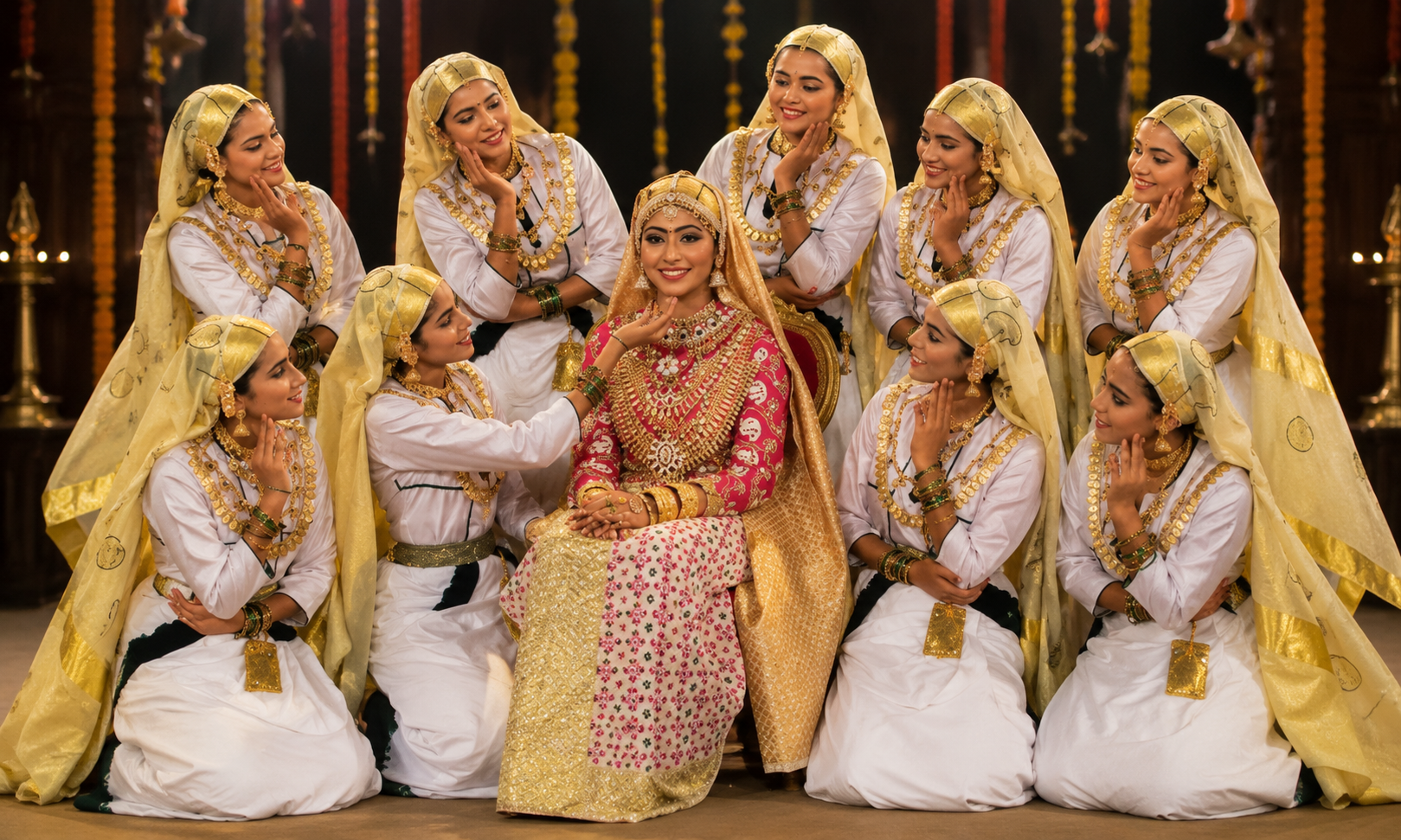
As evening lights glow softly across a traditional Muslim wedding house in Kerala’s Malabar region, laughter, music, and rhythmic clapping begin to fill the air. At the center of the room sits the bride, beautifully dressed in traditional attire, adorned with gold ornaments and intricate mylanchi designs on her hands. Around her, women dressed in colorful outfits move gracefully in circles, singing joyful Mappilappattu songs while clapping in rhythm.
This is Oppana, one of the most beautiful and emotionally vibrant traditional art forms of Kerala’s Mappila Muslim community. Deeply connected to weddings, celebration, music, and togetherness, Oppana is much more than a performance. It is a living cultural tradition that reflects the warmth, elegance, and community spirit of Kerala’s Muslim heritage.
Known for its graceful movements, rhythmic clapping, poetic songs, and festive atmosphere, Oppana remains one of the most recognizable cultural symbols of the Malabar region. Even today, it continues to bring families and communities together during weddings, festivals, and cultural events across Kerala.
Origin and Meaning of Oppana
The word “Oppana” is believed to have originated from the Arabic word “Affna,” which is associated with rhythmic movement, clapping, and entertainment. This connection reflects the long historical relationship between Kerala’s Malabar coast and Arab traders who travelled to the region centuries ago.
Kerala’s coastal trade routes brought strong cultural exchanges between Arab communities and local society. Over time, these influences blended with Kerala traditions and helped shape the unique cultural identity of the Mappila Muslim community.
Oppana gradually evolved as a wedding-centered performance tradition within Kerala’s Muslim households. It became closely associated with joy, love, marriage, and community celebration.
Unlike highly formal classical dance forms, Oppana developed naturally within social and family settings. It carried the warmth of home celebrations, emotional bonding, and festive gatherings.
Today, Oppana remains one of the strongest symbols of Kerala’s Mappila cultural heritage and continues to be celebrated across generations.
Where Oppana is Popular in Kerala
Oppana is especially popular in the Malabar region of Kerala, where the Mappila Muslim community has deep cultural roots.
The art form is widely performed in districts such as:
- Malappuram
- Kozhikode
- Kannur
- Kasaragod
In these regions, Oppana is an important part of traditional Muslim weddings and social celebrations.
Over time, the art form expanded beyond wedding ceremonies and became popular in Kerala’s school and college youth festivals. Students across communities now perform Oppana during cultural competitions and stage programs, helping introduce the tradition to younger generations.
This wider popularity has helped Oppana remain active and culturally relevant even in modern Kerala.
How Oppana is Performed
An Oppana performance is filled with colour, rhythm, emotion, and celebration.
Traditionally, the bride sits at the center while women gather around her in a circle. The performers sing Mappilappattu songs while moving gracefully with rhythmic clapping and gentle dance steps.
The atmosphere feels joyful and intimate. Family members, relatives, and friends participate together, creating a strong sense of community and celebration.
The bride herself becomes the emotional focus of the performance. Dressed in beautiful traditional attire with gold ornaments, she is surrounded by music, blessings, laughter, and affection.
Mylanchi, or henna designs, decorate the bride’s hands and feet with intricate floral patterns, adding to the visual beauty of the occasion.
As the performance progresses, the singers and dancers often interact playfully with the bride, creating moments of happiness, teasing, and emotional warmth.
Unlike formal stage performances, traditional Oppana feels deeply personal. It transforms the wedding space into a celebration of love, family, womanhood, and togetherness.
For many Malayali Muslims, Oppana remains one of the most emotional and memorable parts of a wedding ceremony.
Musical Instruments and Songs
Music is the heart of Oppana.
The performance is built around traditional Mappilappattu songs, a rich musical tradition of Kerala’s Mappila community. These songs combine Malayalam lyrics with Arabic influences and often express themes of love, celebration, devotion, and happiness.
The rhythm of Oppana is supported by instruments such as:
- Harmonium
- Tabla
- Ganjira
- Elathaalam
The clapping patterns created by the performers themselves also become an important rhythmic element of the performance.
Together, the music and movement create an atmosphere that feels festive, emotional, and deeply cultural.
The energy of the songs gradually builds during the performance, encouraging audience participation and creating a joyful wedding environment filled with rhythm and excitement.
Types of Oppana
Oppana has different performance styles, with two important forms being:
- Oppana Chayal
Oppana Chayal focuses more on graceful movement, gentle rhythm, and elegant presentation. The clapping patterns are softer, and the performance flows smoothly around the seated bride.
- Oppana Murukkam
Oppana Murukkam is more energetic and rhythmic. The hand-clapping patterns become faster and more dynamic, creating a lively festive atmosphere.
While both styles celebrate joy and togetherness, they differ mainly in rhythm, movement intensity, and performance structure.
These variations add richness and diversity to the tradition while preserving its cultural essence.
Oppana in Modern Kerala
Even today, Oppana continues to remain highly popular across Kerala.
The art form is regularly performed at:
- Traditional weddings
- School arts festivals
- College competitions
- Cultural programs
- Heritage tourism events
Young performers across Kerala actively learn and present Oppana, helping preserve the tradition for future generations.
Modern stage presentations sometimes include choreographed lighting, larger musical arrangements, and contemporary styling, but the emotional spirit of the art form remains deeply rooted in Mappila wedding culture.
Social media and digital platforms have also helped introduce Oppana to audiences beyond Kerala, increasing appreciation for the art form among international viewers and younger audiences.
Despite changing lifestyles and wedding trends, Oppana continues to survive because of its emotional warmth and strong cultural identity.
Cultural Importance of Oppana
Oppana is far more than entertainment. It is an important cultural expression of Kerala’s Mappila Muslim identity and community life.
The art form celebrates:
- Marriage and family bonding
- Womanhood and togetherness
- Music and storytelling
- Community participation
- Cultural continuity
Through Oppana, generations of women pass down songs, traditions, movements, and emotions connected to weddings and social celebrations.
The performance also reflects Kerala’s cultural diversity, showing how local traditions and Arab influences blended beautifully over centuries to create unique artistic expressions.
For many families, Oppana represents memory, emotion, nostalgia, and cultural belonging.
Conclusion
Oppana is not simply a wedding performance. It is a joyful celebration of music, tradition, love, womanhood, and community spirit.
Through rhythmic clapping, graceful movement, Mappilappattu songs, and warm social interaction, Oppana continues to keep Kerala’s Mappila cultural heritage alive across generations.
In every wedding house filled with song and laughter, Oppana creates moments of togetherness that remain unforgettable for families and communities alike.
For visitors exploring Kerala’s rich cultural traditions, witnessing an Oppana performance offers a beautiful glimpse into the warmth, elegance, and emotional richness of Kerala’s diverse heritage.