Muhammed Anas Yahiya
Indian olympic athlete
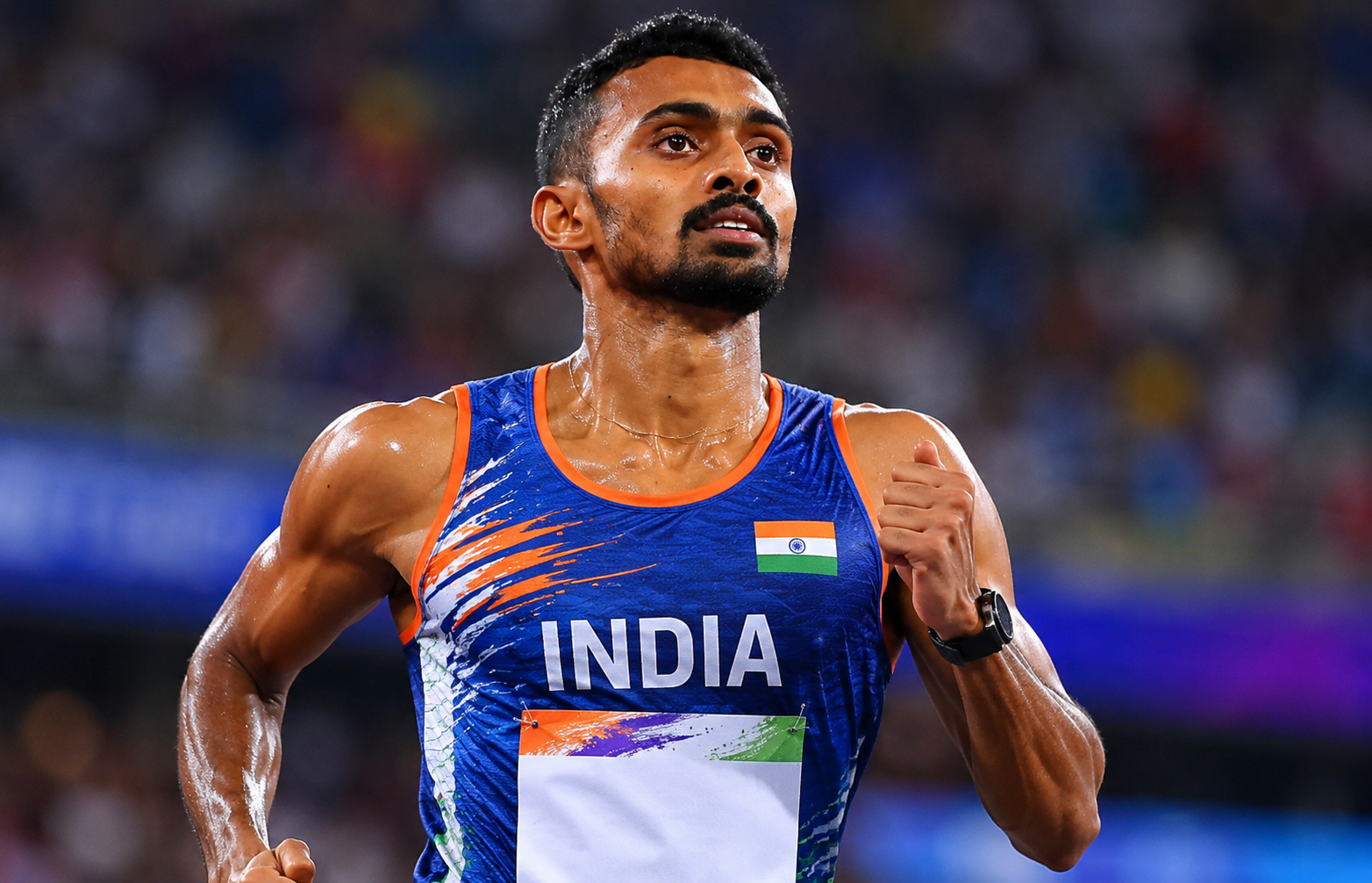
Muhammed Anas Yahiya is an Indian sprinter who specializes in 400 m events. Anas has represented India in the 4×400 m events at the 2016, 2020 and 2024 Olympic Games. He was born in Nilamel. Anas took up athletics at the Style Sports Academy in Nilamel. He initially trained in the long jump, and changed to 400 m by chance, when his school team was looking for a last-minute replacement for a 400 m competition. He studied at Sree Krishna College, which is affiliated to the Calicut University, and represented the university at national level athletics.
Key Factors
Full Name: Muhammed Anas Yahiya
Date of Birth: 17 September 1994
Birthplace: Nilamel, Kerala, India
Sport: Athletics
Specialization: 400 metres, 4×400 m relay
Major Achievements: National record holder in 400m, Asian Games medalist, multiple Asian Championships medals
Olympic Appearances: Rio 2016, Tokyo 2020, Paris 2024
Awards and Honours: Arjuna Award
Muhammed Anas Yahiya occupies a rare place in Indian athletics history. At a time when Indian track and field was searching for consistent global competitiveness in sprint events, Anas emerged as one of the country’s fastest and most resilient quarter-milers. From the small town of Nilamel in Kerala to the Olympic tracks of Rio, Tokyo, and Paris, his journey became a story of endurance, discipline, and silent persistence.
Known for his explosive finishing speed and calm composure under pressure, Anas helped redefine India’s ambitions in the 400 metres and the 4×400 m relay. His national-record run of 45.40 seconds in 2016 marked one of the most significant moments in Indian sprinting history, while his relay performances helped India become increasingly competitive on the global stage. Beyond medals and records, however, Anas represents something deeper within Kerala’s sporting culture, the belief that extraordinary athletes can emerge from modest towns through relentless work and collective support systems.
One Brutal Lap
How Muhammed Anas Yahiya carried India’s sprinting hopes from Kerala’s tracks to the Olympic stage
By the time the final bend arrives in a 400-metre race, the body begins to revolt.
The lungs burn first. Then the legs start filling with lactic acid. Rhythm disappears. Vision narrows. Sprinters often describe the final hundred metres as a negotiation between pain and willpower, a moment when technique collapses and instinct takes over.
Inside packed stadiums, crowds see speed.
Athletes feel survival.
For years, Muhammed Anas Yahiya lived inside that brutal final stretch, carrying not just his own ambition but the hopes of Indian athletics. He became one of the defining faces of India’s quarter-mile revolution, an athlete who helped transform the country from an occasional participant in global sprinting into a serious relay contender.
Yet long before Olympic stadiums and Asian Games podiums, there was simply a boy from Nilamel running on dusty grounds in Kerala, unaware that one day he would become one of India’s fastest men.
Growing Up in Kerala’s Athletics Belt
Anas was born on 17 September 1994 in Nilamel, a town in Kerala’s Kollam district. Kerala has long occupied a special place in Indian athletics. Across decades, the state produced runners, jumpers, and relay specialists who repeatedly carried India’s track-and-field ambitions.
In many parts of Kerala, athletics is not viewed as distant elite sport. It exists close to everyday life, through school competitions, district meets, sports hostels, and local grounds where children dream quietly beneath monsoon skies.
Anas grew up inside that ecosystem.
His entry into athletics came through the Style Sports Academy in Nilamel, a grassroots institution that helped identify and nurture young talent. Interestingly, sprinting was not his original path.
He began as a long jumper.
Like many young athletes, he experimented across events before coaches noticed something unusual in his running mechanics, the combination of stride rhythm, endurance, and raw speed that hinted at quarter-mile potential.
That accidental shift toward the 400 metres would eventually redefine his life.
The Most Cruel Sprint in Athletics
The 400 metres occupies a strange space in track and field.
Too long to sprint freely. Too short to conserve energy.
Elite quarter-milers must combine explosive acceleration with endurance usually associated with middle-distance runners. Races demand tactical intelligence, pacing discipline, and extraordinary pain tolerance.
For Anas, learning the event required complete physical transformation.
Training sessions became punishing. Athletes in the 400 metres repeat endless intervals, strength routines, and sprint endurance drills designed to prepare the body for extreme fatigue. Coaches often describe the event as psychological warfare because races are decided not only by speed but by who can endure suffering longest without breaking rhythm.
Anas adapted remarkably.
Coaches quickly realised he possessed an important quality for elite 400m running, composure under exhaustion. Even when physically strained, he maintained efficient movement and tactical awareness.
That calmness later became central to his relay performances as well.
The Race That Changed Indian Sprinting
In July 2016, at the Polish Athletics Championships in Bydgoszcz, Anas delivered the race that permanently changed his career.
Clocking 45.40 seconds in the men’s 400 metres, he broke the long-standing Indian national record and matched the Olympic qualification standard. The performance immediately entered Indian athletics history.
The significance extended beyond timing alone.
Before Anas, only Milkha Singh and K. M. Binu had achieved Olympic qualification in the men’s 400 metres. India traditionally struggled to produce world-class quarter-milers because the event demands both elite sprinting infrastructure and sophisticated conditioning systems.
Anas suddenly changed the conversation.
For Indian athletics, the run symbolised possibility. Breaking 45.50 seconds placed him closer to international competitiveness than most Indian sprinters before him. More importantly, it showed that Indian athletes could approach global standards in one of athletics’ toughest events.
For Kerala, the achievement became another chapter in the state’s rich sprinting legacy.
Building India’s Relay Revolution
If individual sprinting tests personal endurance, relay racing demands collective trust.
India’s men’s 4×400 m relay team slowly evolved into one of Asia’s strongest units during Anas’s peak years. Alongside athletes like Kunhu Muhammed, Ayyasamy Dharun, and Arokia Rajiv, Anas became central to India’s relay ambitions.
One of the defining moments came in Bangalore during the relay qualification race for the Olympics. The team broke the national record, securing qualification and announcing India’s growing competitiveness.
Relay racing often appears straightforward to casual viewers.
In reality, it is built on precision. Baton exchanges occur at enormous speed. One mistimed movement can destroy years of preparation. Teams also rely heavily on chemistry because runners must understand one another’s pacing instincts and race temperament.
India’s relay team developed that chemistry gradually.
Anas frequently served as a stabilising presence, especially during pressure situations. His ability to maintain composure in high-stakes races helped India become more tactically disciplined against stronger international teams.
For the first time in decades, India’s men’s relay squad no longer entered championships merely to participate.
It entered to compete.
The Asian Games and Continental Recognition
Anas’s performances at the 2018 Asian Games in Jakarta represented another defining phase of his career.
He won silver in the individual 400 metres, proving that his national-record performance was not an isolated achievement. He also played a major role in India’s relay success, winning gold in the mixed relay and silver in the men’s relay.
The mixed relay victory carried symbolic importance because it highlighted India’s growing depth in sprint events across both men’s and women’s athletics.
Continental success, however, differs enormously from global competition.
At Asian events, Indian athletes increasingly compete for medals. At the Olympics and World Championships, they confront athletes shaped by far deeper sprinting traditions and scientific support systems.
Anas understood that difference intimately.
His Olympic appearances in Rio 2016, Tokyo 2020, and Paris 2024 exposed him repeatedly to the brutal standards of elite global sprinting. Every fraction of a second mattered. Every technical weakness became magnified.
Yet merely reaching those stages consistently represented extraordinary achievement within Indian athletics.
The Hidden Cost of Speed
Sprint careers are fragile.
A slight injury can disrupt rhythm completely. Hamstring strains, fatigue, ankle instability, and recovery issues constantly threaten athletes whose bodies operate at maximum intensity.
Anas experienced those struggles repeatedly.
Maintaining elite 400m performance demands not only physical preparation but emotional resilience. Indian athletes often compete within systems carrying limited resources compared to global sprinting powers. They face expectations from federations, media, and fans while navigating injuries and inconsistent support structures.
For Anas, sustaining peak form over multiple Olympic cycles became as much a mental challenge as a physical one.
The public usually remembers medals and records.
Athletes remember rehabilitation sessions, failed races, and mornings when the body refuses to cooperate.
Yet Anas continued returning.
That persistence became one of the defining characteristics of his career.
Kerala’s Endless Relationship With Athletics
To understand Anas fully, one must understand Kerala’s relationship with sport.
Few Indian states have contributed more consistently to athletics. From P. T. Usha to relay specialists and middle-distance runners, Kerala built a culture where athletics remained aspirational even without enormous financial rewards.
Schools, sports hostels, and local competitions created pathways for talented athletes from modest backgrounds. Community support often replaced sophisticated infrastructure.
Anas emerged directly from that ecosystem.
His rise reinforced Kerala’s identity as India’s athletics powerhouse, especially in track events requiring discipline and endurance.
Young athletes across the state increasingly saw in him a familiar story, not privilege, but persistence.
Recognition Beyond Medals
As his achievements accumulated, Anas received national recognition, including the prestigious Arjuna Award.
Another symbolic honour came when the athletics stadium at INS Chilka was named after him, recognition reflecting his contribution to Indian sprinting.
Yet Anas’s legacy cannot be measured only through awards.
He helped normalise ambition within Indian men’s sprinting.
Before his era, Olympic-level quarter-mile performances felt distant. During his peak years, Indian relay teams began believing they could compete seriously at global events.
That psychological transformation matters enormously in sport.
Conclusion
In a country where cricket dominates public imagination, athletes like Muhammed Anas Yahiya spend years chasing excellence in relative silence. Their victories arrive through repetition, pain, discipline, and lonely training sessions far from headlines.
The 400 metres offers no hiding place. Every weakness gets exposed during that final stretch when the body begins shutting down and only determination keeps the athlete moving forward. For nearly a decade, Anas ran through that pain carrying both personal ambition and national expectation.
From Nilamel’s modest sporting grounds to Olympic stadiums across the world, his journey became larger than medals or records. It became part of Kerala’s enduring athletics story and part of India’s slow, difficult progress toward global competitiveness in sprinting.
And perhaps that is why his career continues to resonate, because behind every lap he ran existed something deeply human: the refusal to stop, even when the race hurt the most.