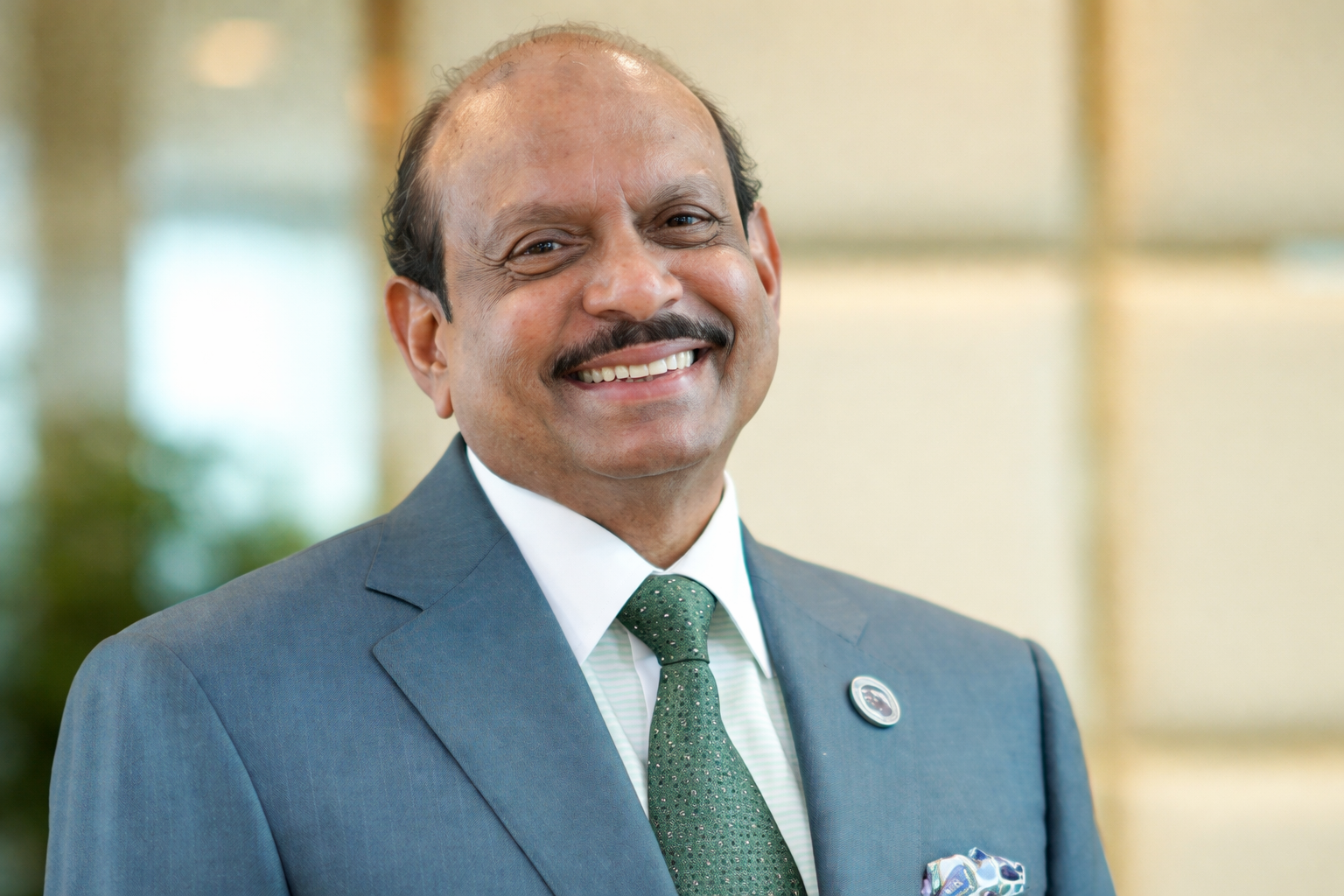
M. A. Yusuff Ali
Chairman and Managing Director of LuLu Group International
M.A. Yusuff Ali is an Indian-born billionaire businessman and philanthropist based in the UAE. He is the Chairman and Managing Director of LuLu Group International, which operates over 240+ hypermarkets and malls across 22+ countries, primarily in the Middle East, with a massive annual turnover. As of early 2026, he is ranked among the top Indian billionaires with a net worth estimated around $6.9 billion to $7.8 billion.
Born: 15 November 1955 (age 70)
Full name: Yusuff Ali Musaliam Veettil Abdul Kader
Place: Nattika, State of Travancore–Cochin (present day Thrissur, Kerala), India
Occupation: Chairman and managing director of Lulu Group International, Y International and
LuLu International Shopping Mall
Office: Y Tower, Abu Dhabi
Website: https://www.yusuffali.com/
M. A. Yusuff Ali: The Relentless Journey from Nattika to Global Retail Powerhouse
In the quiet coastal village of Nattika in Kerala, a young boy grew up watching trade in its most organic form, small shops, human trust, and daily survival. That boy, M. A. Yusuff Ali, would go on to redefine retail not just in the Middle East, but across continents. His story is not built on sudden success or inherited wealth. It is a slow, deliberate climb shaped by instinct, risk, and an unshakable belief in scale.
Today, as the Chairman and Managing Director of LuLu Group International, Yusuff Ali stands as one of the most influential Indian-origin entrepreneurs globally. But to understand the magnitude of his success, you have to go back to where it all began.
Early Life: Roots in Kerala
Born on November 15, 1955, in Nattika, a coastal village in Thrissur district, Yusuff Ali grew up in a modest household with strong business exposure. His family ran a small retail store, which became his first classroom.
Unlike many business magnates, his early education was not shaped by elite institutions. Instead, it was shaped by observation, how customers behave, how margins work, and how relationships matter more than transactions.
After completing his schooling and pursuing business studies, he made a decision that would define his life: moving to the Gulf.
The Gulf Leap: A Defining Risk
In the early 1970s, Yusuff Ali moved to Abu Dhabi, joining his uncle’s small distribution business. The Gulf at that time was on the brink of transformation due to oil wealth, but the retail sector was still fragmented and underdeveloped.
This is where his entrepreneurial instinct kicked in.
He recognised something others missed: the future of retail in the Gulf would not be small shops, but organised, large-scale supermarkets that catered to a growing expatriate population.
He didn’t just join a business. He reimagined it.
Building LuLu: Vision Meets Execution
In the 1990s, Yusuff Ali laid the foundation of what would become LuLu Group International. His model was simple but powerful:
- Large-format hypermarkets
- Global sourcing of products
- Competitive pricing
- A shopping experience tailored to multicultural audiences
LuLu was not just a supermarket. It became a cultural space where Indian, Arab, and international communities converged.
What truly set him apart was scale and timing. As the Gulf urbanised rapidly, LuLu expanded aggressively, opening stores across the UAE and eventually across the Middle East, Asia, Europe, and the United States.
Today, LuLu operates hundreds of stores worldwide and is among the largest retail chains in the region.
Leadership Style: Grounded, Yet Global
Yusuff Ali’s leadership style blends humility with sharp strategic thinking.
He is known for:
- Staying deeply involved in operations
- Prioritising employee welfare
- Maintaining strong government and diplomatic relationships
- Thinking long-term rather than chasing short-term gains
Despite his billionaire status, he continues to project the image of a grounded businessman, often crediting his roots for his discipline and decision-making.
Global Expansion and Influence
Under his leadership, LuLu expanded beyond the Middle East into:
- India, with landmark projects like LuLu Mall in Kochi
- The United Kingdom
- Southeast Asia
- North America
His investments have also extended into hospitality, real estate, and food processing.
Beyond business, Yusuff Ali has played a crucial role in strengthening India–UAE relations, acting as an informal bridge between governments, businesses, and expatriate communities.
Challenges and Resilience
Like any large-scale entrepreneur, his journey has not been without challenges.
- Economic downturns in the Gulf
- Supply chain disruptions
- Increasing competition in organised retail
- The global impact of COVID-19
Yet, his ability to adapt, diversify, and maintain operational efficiency has kept LuLu resilient. During crises, his focus has consistently been on continuity, ensuring supply chains remain stable and employees are supported.
Philanthropy and Social Impact
Yusuff Ali’s influence extends far beyond business.
He has actively contributed to:
- Disaster relief efforts, especially during the Kerala floods
- Healthcare and education initiatives
- Support for expatriate workers in distress
His philanthropy reflects a consistent theme: giving back to both his homeland and the communities that supported his rise.
Recognition and Honours
Over the years, Yusuff Ali has received numerous prestigious awards, including:
- Padma Shri from the Government of India
- High civilian honours from the UAE
- Recognition among the world’s richest Indians
These honours are not just a reflection of wealth, but of impact, economic, social, and cultural.
A Story Larger Than Business
M. A. Yusuff Ali’s journey is not just about building a retail empire. It is about understanding people, spotting opportunity before it becomes obvious, and executing with relentless consistency.
From a small village in Kerala to boardrooms across the world, his life is a reminder that scale is not born overnight. It is built, step by step, decision by decision.
In many ways, his story mirrors the aspirations of millions of Indians who left home in search of opportunity. The difference is, he didn’t just find opportunity. He created it.