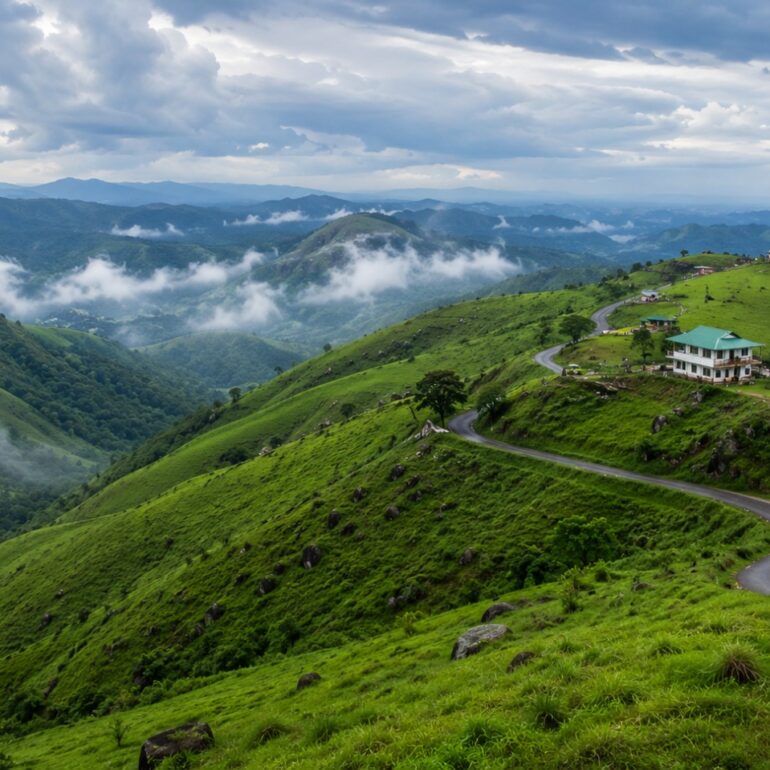
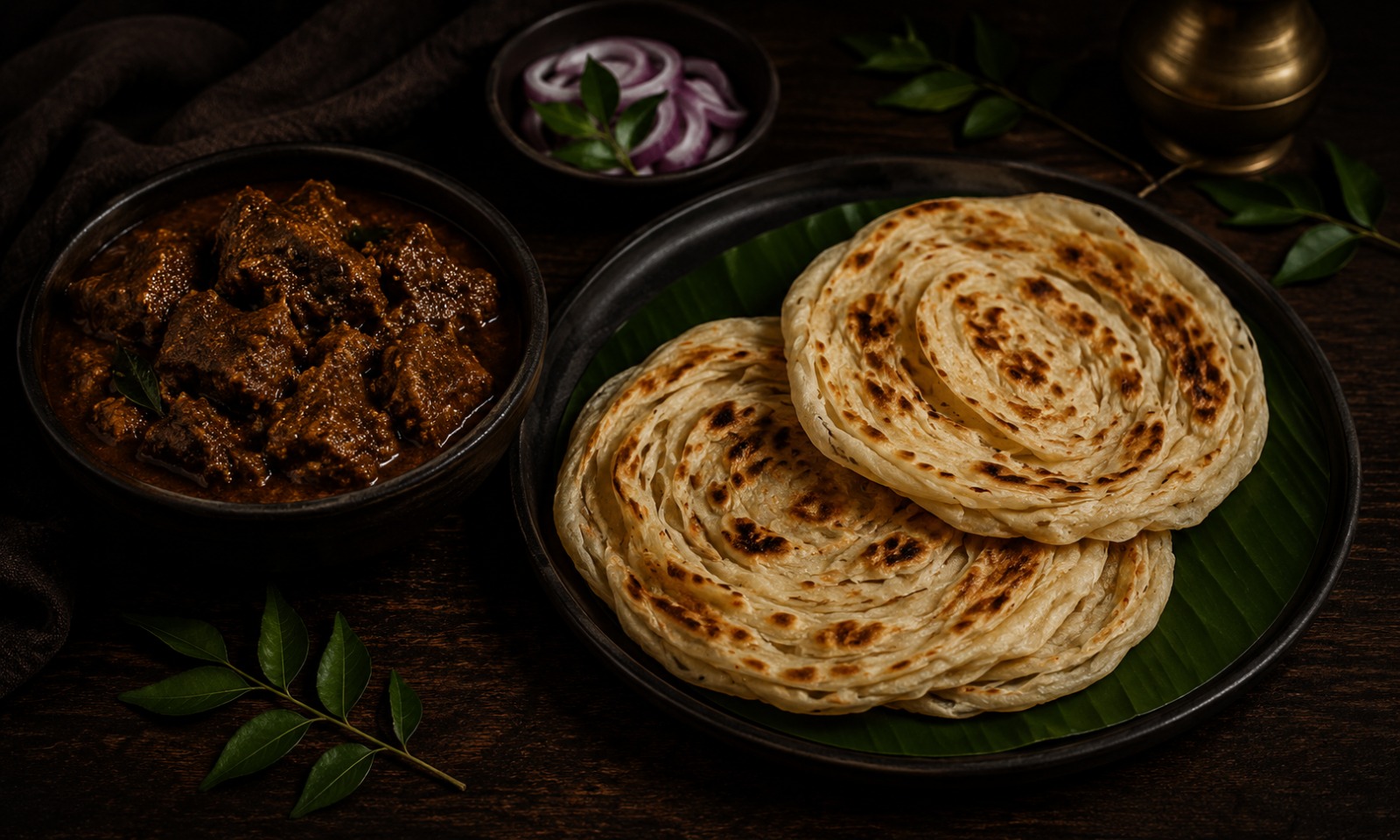
Malabar Parotta and Beef Curry is a popular combination deeply connected to the food culture of northern Kerala, especially Malappuram, Kozhikode, and Kannur. The flaky, layered parotta pairs perfectly with rich beef curry made with roasted spices, black pepper, onions, curry leaves, and coconut oil. Commonly enjoyed in homes, roadside eateries, and late-night restaurants, this hearty dish remains a favourite part of Malabar’s culinary identity.
The Flavours of Malabar
Across northern Kerala, especially in Kozhikode, Kannur, and Malappuram, **Malabar Parotta & Beef Curry** is more than food. It is late-night comfort after long journeys, the centerpiece of roadside dinners, and the unmistakable taste of Kerala Muslim cuisine. Every flaky layer soaked in spicy gravy carries something deeper than flavor, memory, labor, migration, and the spice-laden history of the Malabar coast itself.
The magic begins with ingredients that appear simple but demand patience and skill. Malabar parotta relies on refined flour, or maida, kneaded with oil, water, and salt until the dough becomes elastic enough to stretch paper-thin. The dough is folded repeatedly, layered, and rested before it touches the hot tawa. That resting process matters. It allows the gluten to relax, giving the parotta its famous flaky texture.
The beef curry, meanwhile, builds its identity slowly. Chunks of beef are simmered with onions, ginger, garlic, curry leaves, black pepper, fennel, coriander, and dried spices roasted until aromatic and smoky. Coconut oil forms the backbone of the flavor, lending richness and a deeply Kerala character to the curry. Unlike lighter gravies, Malabar beef curry is thick, dark, and intense, built to cling to every torn piece of parotta.
The Fiery Soul of Malabar
To understand this dish is to understand Malabar itself.
Northern Kerala’s cuisine evolved through centuries of trade across the Arabian Sea. Arab merchants who arrived on the Malabar coast brought not only commerce, but culinary influences that slowly merged with local ingredients and Kerala’s spice wealth. Muslim communities across Kozhikode and nearby regions developed a food culture rich in meat dishes, slow cooking, layered breads, and fragrant spice blends.
Parotta became central to this culinary identity. Though related to layered flatbreads found elsewhere in South Asia, the Malabar version developed its own unmistakable texture and personality. The preparation is almost theatrical. Skilled cooks flatten the dough into translucent sheets before folding and coiling them into tight rounds. On the tawa, the layers puff and separate beautifully under high heat.
Then comes the final gesture, one familiar to anyone who has stood near a Kerala roadside eatery. Freshly cooked parottas are lightly crushed between the hands to loosen the layers. That moment transforms them from bread into something almost feathery, ready to absorb curry.
Texture is everything. A good Malabar parotta should feel crisp on the outside, stretchy within, and layered enough to trap gravy between folds.
The curry demands equal respect.
In traditional Malabar kitchens, beef curry is rarely rushed. The meat is slow-cooked until tender, allowing spices to deepen gradually. Black pepper often dominates rather than chilli alone, giving the curry a warm, earthy heat distinctive to northern Kerala. Roasted coriander, fennel, cinnamon, cloves, and curry leaves create layers of aroma that feel smoky rather than sharp.
The onions are cooked patiently until dark and sweet, thickening the gravy naturally. Coconut oil binds everything together, carrying the scent of roasted spices through the kitchen long before the dish reaches the table.
This is why the combination works so powerfully. The parotta offers softness and layered chewiness while the curry delivers heat, fat, spice, and depth. The flaky bread absorbs the thick gravy slowly, becoming richer with every bite. Few dishes balance texture and flavor with such precision.
But the emotional hold of parotta and beef curry goes beyond technique.
Across Kerala, especially in Malabar towns, the dish lives inside memories of travel, friendship, and ordinary nights. Small *thattukadas* glow under fluorescent lights beside highways. Railway station hotels serve parotta late into the night for tired passengers. Students gather after evening cinema shows, tearing apart steaming parottas while curry stains fingertips and plates alike.
For Gulf Malayalis, the dish carries even deeper nostalgia. Restaurants across Dubai, Doha, and Muscat recreate Malabar parotta and beef curry for migrant workers longing for the taste of home. The smell alone can transport someone back to Kozhikode streets or crowded family kitchens during Ramadan evenings.
Today, social media and food tourism have expanded its reach far beyond Kerala. Videos of flaky parottas being stretched and flipped attract millions online. Travelers arrive searching specifically for authentic Malabar eateries after hearing about the dish from food bloggers and cinema references.
Yet despite global attention, its soul remains rooted in local kitchens and roadside cafés where recipes are still passed quietly through generations.
Because Malabar Parotta & Beef Curry was never designed as luxury cuisine. Its greatness comes from warmth, craft, and honesty. It belongs to bustling tea shops, late-night conversations, monsoon evenings, and hands tearing through layers softened by spice-rich gravy.
And perhaps that is why the dish endures so powerfully.
In every flaky fold of parotta and every spoonful of peppery beef curry lives the story of the Malabar coast, its spice routes, Muslim culinary traditions, migrant histories, and everyday people. More than a famous Kerala dish, it remains an outstanding edible memory, smoky, fiery, deeply comforting, and forever tied to the heart of Malabar itself.