
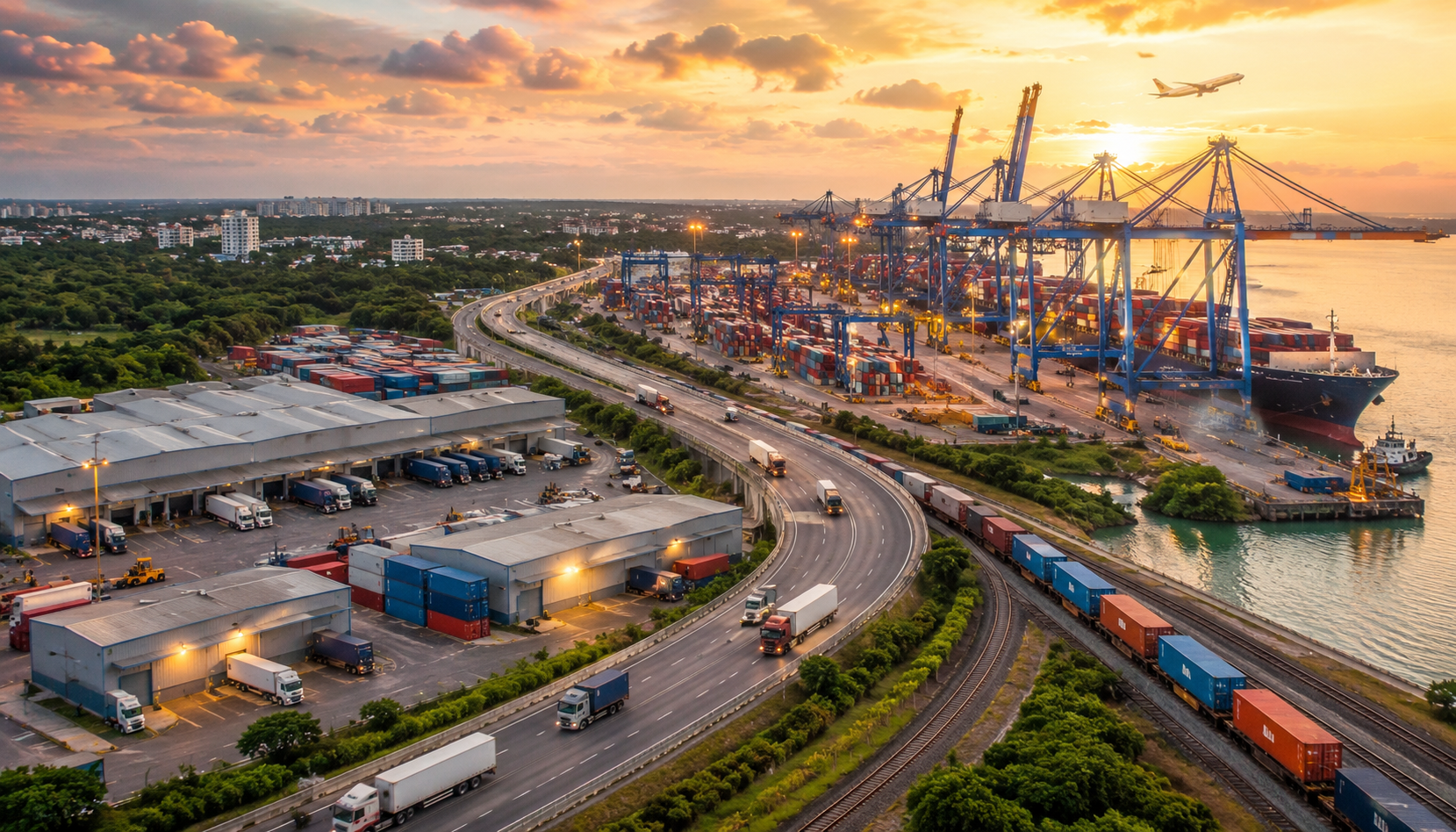
For decades, Kerala’s businesses faced a common challenge. While the state produced world-class spices, seafood, rubber products, coir, garments, and engineering goods, transporting these products efficiently to domestic and international markets was often expensive and time-consuming. Limited industrial land, dependence on road transport, and congestion at ports and highways affected supply chains and increased logistics costs.
Today, that narrative is changing. Kerala is witnessing a significant transformation in its logistics sector, driven by major infrastructure projects, modern warehouses, digital technologies, and stronger multimodal transport networks. As connectivity improves, businesses across manufacturing, retail, agriculture, e-commerce, and exports are beginning to experience the benefits of faster and more efficient movement of goods.
One of the biggest catalysts behind this transformation is the commissioning of the Vizhinjam International Seaport. Designed to handle some of the world’s largest container vessels, the port has the potential to reduce India’s dependence on foreign transshipment hubs. For Kerala exporters, this means shorter transit times, lower shipping costs, and improved access to global markets. Industries involved in seafood exports, spices, rubber products, and value-added food products are expected to benefit significantly from this enhanced maritime connectivity.
At the same time, Kochi continues to strengthen its position as one of South India’s leading logistics hubs. The city’s strategic location, combined with the presence of Cochin Port, Cochin International Airport, and an expanding road network, has attracted investments in warehousing, cold storage, and distribution centres. Businesses serving both domestic and export markets are increasingly choosing Kochi as a base for regional operations.
Kerala’s logistics landscape is also being reshaped by the rapid growth of e-commerce. Online shopping has created demand for faster deliveries, prompting logistics companies to establish fulfilment centres and last-mile delivery networks across the state. Consumers who once waited several days for deliveries now expect products to arrive within a day or two. This shift has encouraged companies to invest in automation, inventory management systems, and technology-driven logistics solutions.
Cold-chain infrastructure is another area experiencing steady growth. Kerala’s agriculture, fisheries, dairy, and pharmaceutical sectors depend heavily on temperature-controlled transportation and storage. Modern refrigerated warehouses and specialised transport vehicles are helping businesses reduce wastage while maintaining product quality. This is particularly important for seafood exports, one of Kerala’s key foreign exchange earners.
Technology has become an equally important driver of change. GPS-enabled vehicle tracking, warehouse management software, digital freight platforms, and AI-powered route optimisation are helping logistics companies improve efficiency while reducing operational costs. Businesses can now monitor shipments in real time, predict delivery schedules more accurately, and optimise inventory management through digital systems.
Government initiatives have also played a significant role in accelerating logistics development. Investments in national highways, industrial corridors, logistics parks, inland waterways, and port connectivity are creating stronger links between production centres and markets. Improved transportation infrastructure not only reduces travel time but also increases the competitiveness of Kerala-based businesses in national and international markets.
The state’s inland waterways, once primarily associated with tourism, are gradually emerging as an alternative mode of freight transport. Moving cargo through waterways can reduce road congestion, lower fuel consumption, and offer a more environmentally sustainable logistics solution. As investments continue, water transport could become an increasingly valuable component of Kerala’s integrated logistics network.
Small and medium enterprises are among the biggest beneficiaries of these improvements. Earlier, many MSMEs struggled with high transportation costs and limited market access. Better logistics infrastructure now enables them to reach customers across India more efficiently while also expanding export opportunities. Faster deliveries and lower supply chain costs improve competitiveness, allowing smaller businesses to compete alongside larger companies.
Despite these positive developments, challenges remain. Traffic congestion in urban areas, limited availability of industrial land, rising transportation costs, and the need for additional warehousing capacity continue to affect the sector. Industry experts also point to the importance of greater coordination between road, rail, sea, and air transport to fully realise Kerala’s logistics potential.
Looking ahead, the future appears promising. As infrastructure projects continue to progress and digital technologies become more deeply integrated into supply chains, Kerala is steadily positioning itself as a major logistics gateway for southern India. Improved connectivity will not only support existing industries but also attract new investments in manufacturing, distribution, and export-oriented businesses.
The logistics revolution taking place in Kerala is about much more than moving goods from one place to another. It is creating new business opportunities, strengthening supply chains, supporting entrepreneurs, and improving the state’s competitiveness in the global economy. As transportation networks become smarter, faster, and more integrated, logistics is emerging as one of the key pillars of Kerala’s next phase of economic growth.