Long before technology parks and startup hubs became part of Kerala’s identity, the state’s reputation was built on something far more aromatic. Pepper, cardamom, ginger, turmeric and cinnamon once attracted traders from across the world, transforming the Malabar Coast into one of history’s busiest trading regions. Centuries later, spices continue to define Kerala’s place in global commerce, although the industry now faces a very different set of opportunities and challenges.
In 2026, Kerala’s spice sector remains one of the state’s most valuable export industries. While traditional buyers in Europe, the Middle East and North America continue to import premium Indian spices, demand is also rising from emerging markets in Southeast Asia and Africa. Consumers across the world are increasingly looking for natural ingredients, clean-label food products and authentic flavours, creating fresh opportunities for Kerala’s exporters.
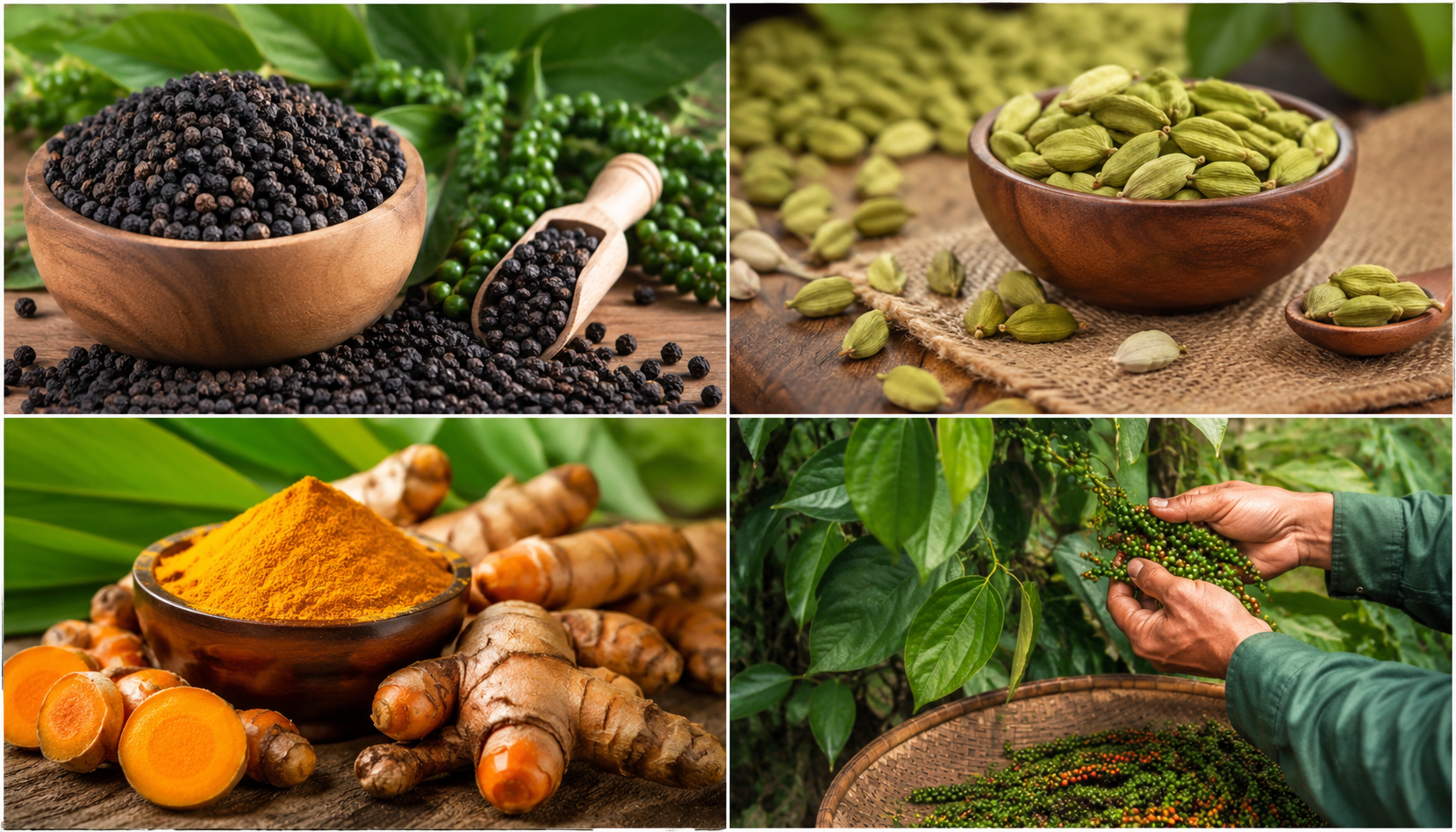
Black pepper remains one of Kerala’s signature products despite increasing competition from countries such as Vietnam and Brazil. Although those nations often produce larger volumes at lower prices, Kerala has retained a strong reputation for premium-quality pepper. Buyers seeking superior flavour and strict quality standards continue to pay a premium for well-processed produce from the state.
Cardamom has also maintained its position as a high-value export. Grown mainly in the high ranges of Idukki, the spice enjoys strong demand in Gulf countries, Europe and premium food markets. However, changing weather patterns, fluctuating prices and rising cultivation costs have made production more challenging for growers. Many farmers are now investing in improved farming methods, better irrigation systems and scientific cultivation practices to protect yields.
Turmeric and ginger have gained fresh momentum in recent years, driven largely by global interest in health and wellness products. Their growing use in nutritional supplements, herbal beverages and natural healthcare products has opened new business avenues for Kerala exporters. Instead of exporting only raw spices, several companies are now focusing on value-added products such as essential oils, spice extracts, ready-to-cook blends and organic seasonings, allowing them to earn higher margins.
Technology is quietly transforming the industry. Digital quality monitoring, modern processing facilities and advanced packaging have improved product consistency while extending shelf life. Exporters are also making greater use of online trade platforms to connect directly with international buyers, reducing dependence on traditional intermediaries.
Sustainability has become another important factor influencing global purchasing decisions. Overseas buyers increasingly expect products that are ethically sourced, environmentally responsible and fully traceable. As a result, more plantations in Kerala are adopting sustainable farming methods, while exporters are pursuing international certifications that strengthen their credibility in competitive markets.
Despite these positive developments, the sector is not without obstacles. Climate change continues to affect harvests, particularly in the Western Ghats, where unpredictable rainfall and rising temperatures have altered growing conditions. Labour shortages, higher transportation costs and intense global competition also put pressure on exporters. Maintaining quality while controlling production costs has become a delicate balancing act.
Government agencies, research institutions and industry bodies are working alongside farmers and exporters to improve productivity and strengthen Kerala’s position in global spice markets. Training programmes, improved post-harvest management and support for value-added processing are helping businesses adapt to changing international demand.
Looking ahead, the future of Kerala’s spice industry may depend less on producing larger quantities and more on delivering greater value. Premium branding, geographical identity, organic cultivation and innovative food products are becoming increasingly important as global consumers seek authenticity over volume.
The story of Kerala’s spices has always been about more than agriculture. It is a story of culture, trade and entrepreneurship that has connected the state with the world for centuries. In 2026, that legacy continues to evolve. While the marketplace has changed dramatically, the distinctive aroma of Kerala’s spices still carries weight in kitchens, food industries and retail shelves across the globe.
For Kerala, spices remain more than an export commodity. They are one of the state’s strongest global brands, proving that tradition and innovation can thrive together in an increasingly competitive international market.