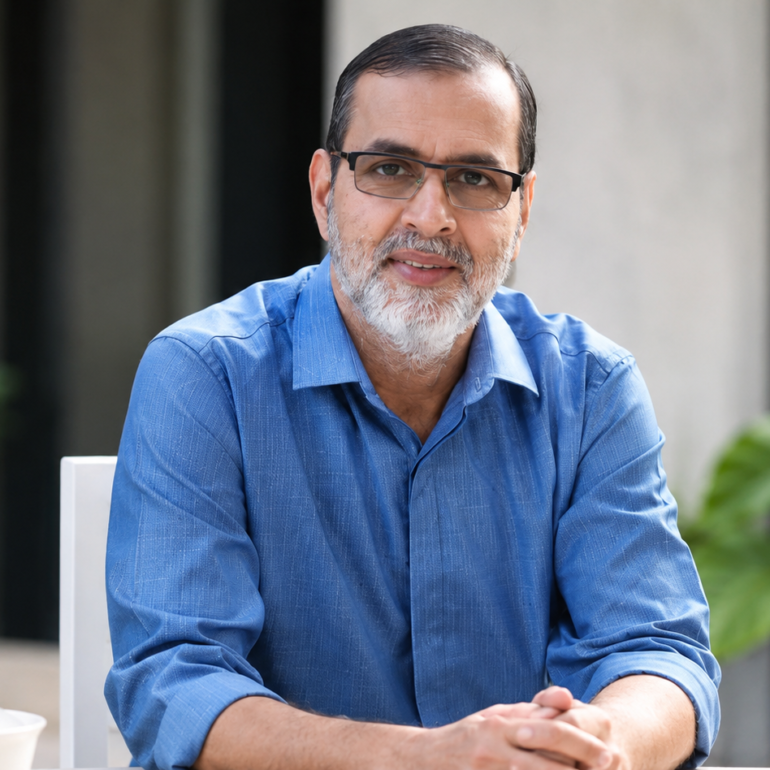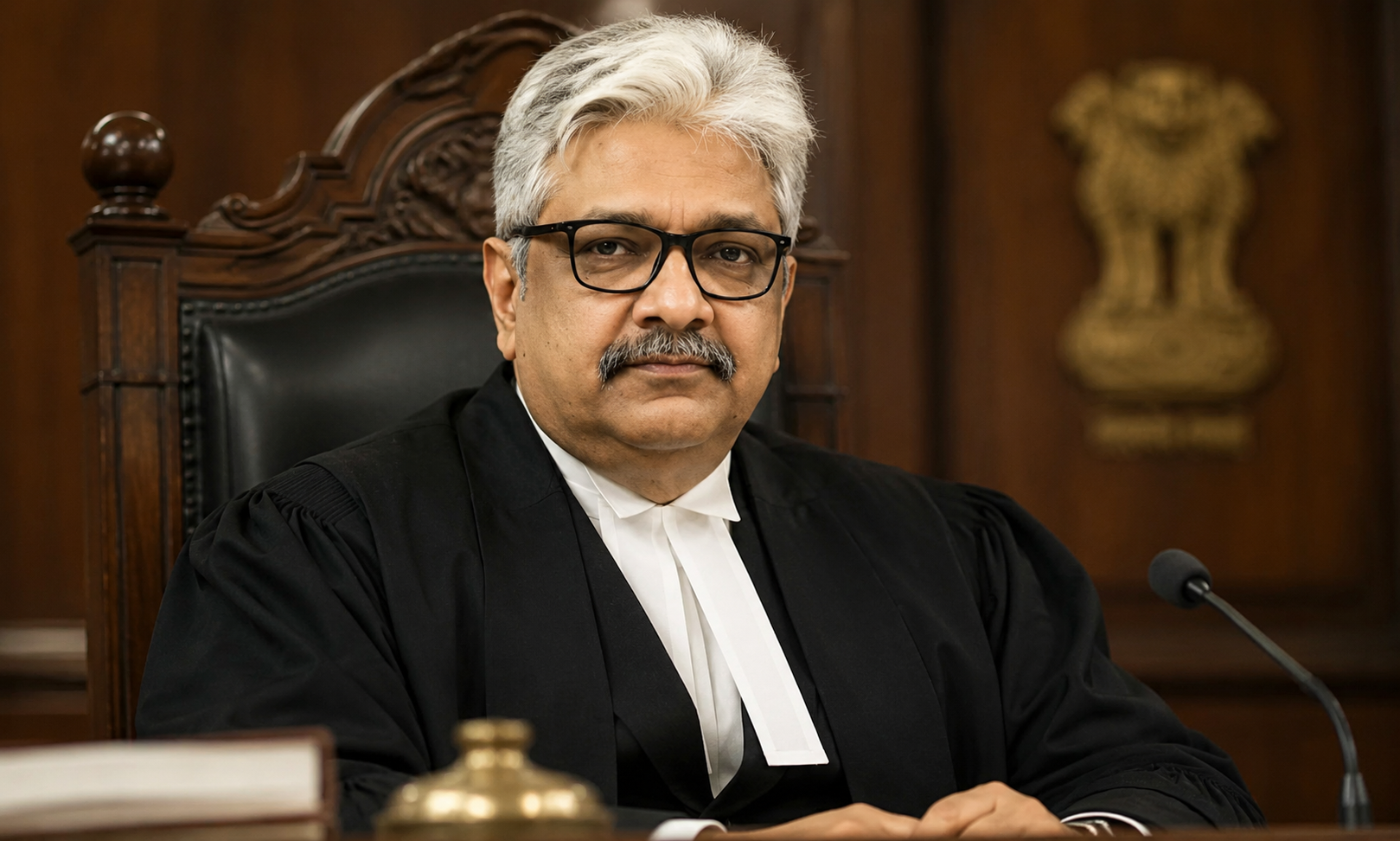
Justice K. M. Joseph
Former Judge of the Supreme Court of India
K.M Joseph is a former judge of the Supreme Court of India; he retired on 16 June 2023. He is a former chief justice of the Uttarakhand High Court, previously serving as a judge of the Kerala High Court for more than nine years. Joseph was born in Kottayam, Kerala, India. His father, K. K. Mathew, was a judge of the Supreme Court of India, and chairman of the tenth Law Commission. He completed his secondary education from Kendriya Vidyalaya, Kochi and New Delhi. Later he joined Loyola College, Chennai, and Government Law College, Ernakulam for graduation and further studies.
Key Factors
Full Name: Justice Kuttiyil Mathew Joseph
Born: 17 June 1958
Place: Kottayam, Kerala, India
Occupation: Jurist, Former Supreme Court Judge
Title: Former Judge of the Supreme Court of India; Former Chief Justice of Uttarakhand High Court
Known For: Constitutional integrity, Uttarakhand President’s Rule verdict, judicial independence, landmark constitutional judgments
In the often turbulent landscape of Indian constitutional politics, where courtrooms become arenas for battles over power, federalism, and democratic morality, few judges earned respect through quiet firmness quite like K. M. Joseph. He was never a headline-seeking jurist. His authority came instead from restraint, clarity, and a visible commitment to constitutional principle over public spectacle. Yet some of the defining legal moments of contemporary India, especially the 2016 Uttarakhand President’s Rule judgment and the controversy surrounding his elevation to the Supreme Court, transformed him into a national symbol of judicial independence. Lawyers across ideological divides frequently described him as a judge of integrity, balance, and uncommon constitutional conviction. That reputation, built steadily over decades from Kerala High Court corridors to the Supreme Court of India, established him as an outstanding Malayali jurist whose career reflected the deeper values of Indian constitutional democracy itself.
Early Life and Influences
Justice K. M. Joseph was born on 17 June 1958 in Kottayam, Kerala, into a family where law, public service, and intellectual inquiry were deeply woven into everyday life. His father, K. K. Mathew, was among the most respected judges in post-independence India, remembered not merely for legal brilliance but for his expansive constitutional thinking. He later chaired the Tenth Law Commission and became widely regarded as one of the intellectual architects of modern Indian constitutional jurisprudence.
Growing up in such an environment inevitably shaped the younger Joseph’s worldview.
Yet those who later interacted with him often noted that he did not inherit entitlement so much as seriousness. The household appears to have valued discipline, reading, constitutional awareness, and ethical clarity more than public prestige.
His schooling at Kendriya Vidyalaya in Kochi and New Delhi exposed him early to India’s institutional culture beyond Kerala. Later, he studied at Loyola College Chennai before pursuing legal education at Government Law College Ernakulam.
Kerala during the 1970s and early 1980s occupied a unique intellectual position within India. Political literacy was unusually high, public debate was vibrant, and legal consciousness intersected with social reform traditions. The state produced not only judges and lawyers, but public intellectuals who viewed constitutional values as living civic instruments rather than abstract legal doctrine.
Justice K. M. Joseph emerged from that cultural ecosystem.
Rise in the Legal Profession
Joseph enrolled as an advocate on 12 January 1982 and initially began practice in the Delhi High Court. For a young lawyer, Delhi offered proximity to the constitutional heart of the country, exposure to national legal developments, and immersion in high-stakes litigation.
But in 1983, he shifted his practice to the Kerala High Court in Ernakulam.
At the time, the Kerala High Court possessed a particularly rigorous legal culture. Constitutional matters, public interest litigation, civil disputes, and administrative law questions were argued intensely, often before judges known for demanding preparation and doctrinal precision.
In 1986, Joseph began independent practice.
He gradually developed expertise in civil, constitutional, and writ matters, areas requiring not only procedural skill but deeper understanding of state power, rights, and administrative accountability. Colleagues frequently described him as methodical rather than flamboyant, a lawyer more interested in clarity than courtroom theatrics.
One detail from his pre-judicial career often receives attention: he served as amicus curiae in a case concerning whether a Christian father had a legal obligation to maintain his minor child. The matter reflected themes that would later recur throughout his judicial career, questions involving dignity, legal obligation, constitutional interpretation, and social fairness.
Long before elevation to the bench, he had already earned a reputation for seriousness and professional integrity.
Judicial Career and Reputation
On 14 October 2004, Justice K. M. Joseph was appointed a permanent judge of the Kerala High Court.
Judges often develop identifiable judicial personalities over time. Some become known for aggressive courtroom intervention, others for scholarly judgments or procedural strictness. Joseph gradually became associated with restraint, constitutional discipline, and balanced reasoning.
His judgments were rarely rhetorical performances. Instead, they reflected careful legal construction and concern for institutional propriety.
Lawyers practicing before him frequently noted his attentiveness to detail and his reluctance to reduce constitutional questions into political binaries. He appeared less interested in judicial spectacle than in preserving coherence within constitutional structures.
This approach earned him respect steadily rather than dramatically.
During his years at the Kerala High Court, he also participated in environmentally significant matters, including the order directing demolition of the Kapico Resorts project on Nediathuruthu Island in Alappuzha district for violating environmental norms.
The judgment reflected an important aspect of his jurisprudence: constitutional governance could not be separated from accountability.
Uttarakhand High Court and Constitutional Courage
In July 2014, then Chief Justice of India Rajendra Mal Lodha recommended Joseph’s appointment as Chief Justice of the Uttarakhand High Court. He was sworn in on 31 July 2014 as the ninth Chief Justice of the court in Nainital.
Two years later, he would become central to one of the most consequential constitutional confrontations of contemporary India.
In 2016, the Union government led by Prime Minister Narendra Modi imposed President’s Rule in Uttarakhand amid political instability and legislative conflict. The move immediately triggered constitutional controversy, raising questions about federalism, gubernatorial power, and misuse of Article 356.
The case reached the Uttarakhand High Court.
A bench headed by Justice K. M. Joseph quashed the imposition of President’s Rule, delivering a judgment that resonated far beyond Uttarakhand itself. The verdict emphasized constitutional limitations on executive power and reaffirmed judicial oversight in moments of political crisis.
The language of the judgment drew national attention because of its moral clarity. At a time of intense political polarization, the court effectively asserted that democratic processes could not be suspended casually through executive intervention.
The ruling carried enormous symbolic weight.
For many constitutional scholars, it represented one of the strongest judicial affirmations of federal democracy in recent years. For supporters of judicial independence, it established Justice Joseph as a judge willing to uphold constitutional principle regardless of political consequence.
The case transformed him from a respected judge into a nationally recognized constitutional figure.
Environmental and Public Interest Judgments
Although the Uttarakhand case overshadowed much of his judicial legacy in public memory, Justice Joseph’s broader jurisprudence also reflected concern for institutional accountability and public interest.
The Kapico Resorts demolition order during his Kerala High Court tenure illustrated his willingness to address environmental violations despite economic or political sensitivities. Kerala’s fragile ecological geography has often collided with aggressive development practices, making judicial intervention particularly significant.
Such judgments suggested that for Justice Joseph, the rule of law was not selective. Constitutional governance required consistency, whether the issue involved political power, environmental accountability, or administrative conduct.
Controversy Over Elevation to the Supreme Court
Few judicial elevation controversies in recent Indian history generated as much debate as Justice K. M. Joseph’s delayed appointment to the Supreme Court.
In January 2018, the Supreme Court Collegium unanimously recommended his elevation. The collegium explicitly stated that he was “more deserving and suitable in all respects” than several other High Court chief justices and senior judges.
Yet the Union government delayed acceptance.
The official explanation centered on seniority concerns. Justice Joseph was reportedly placed at number 42 in the all-India seniority list of High Court judges, while several chief justices ranked above him remained unelevated.
However, within the legal fraternity, many viewed the delay differently.
The controversy unfolded against the backdrop of the Uttarakhand President’s Rule judgment. Critics argued that the resistance reflected discomfort within the executive over judges perceived as assertively independent.
The debate intensified after Justice Jasti Chelameswar recorded a strongly worded dissent note praising Joseph as “an outstanding judge with impeccable integrity.” Chelameswar warned that bypassing such a judge would set an unhealthy precedent.
The issue soon escalated into a larger constitutional debate about judicial independence and executive influence over judicial appointments.
The Supreme Court Bar Association protested. Opposition parties raised concerns publicly. Legal commentators described the episode as a stress test for the collegium system itself.
Eventually, on 16 July 2018, the collegium reiterated Justice Joseph’s name. Under constitutional convention, reiteration effectively obligated the government to proceed with the appointment.
He was finally elevated to the Supreme Court.
The episode significantly shaped public perception of him. Even before delivering major Supreme Court judgments, he had already become associated symbolically with judicial autonomy.
Supreme Court Years
Justice K. M. Joseph served on the Supreme Court until his retirement on 16 June 2023.
During his tenure, he participated in several constitutionally important matters concerning civil liberties, democratic institutions, electoral processes, and executive accountability.
Observers frequently noted his careful courtroom conduct. Unlike some judges who dominated proceedings theatrically, Joseph generally maintained measured engagement while focusing intensely on constitutional substance.
His jurisprudence reflected recurring themes: institutional balance, fairness, procedural integrity, and constitutional morality.
Lawyers often described him as intellectually rigorous without being ideologically performative. His interventions suggested deep concern about preserving democratic institutions through constitutional discipline rather than judicial populism.
Personality and Judicial Philosophy
Among many senior advocates, Justice K. M. Joseph earned the reputation of being a “judge’s judge,” a phrase often used for jurists respected deeply within legal circles even if they avoid public celebrity.
Part of this reputation came from temperament.
He was widely perceived as courteous, restrained, and personally humble. Yet beneath that calm demeanor lay strong constitutional convictions. His career repeatedly reflected resistance to arbitrary exercise of power, whether political or administrative.
He appeared to view judicial office not as personal authority, but as constitutional trusteeship.
That philosophy also shaped his courtroom style. He rarely reduced complex constitutional matters into ideological rhetoric. Instead, he approached them as institutional questions demanding legal clarity and democratic balance.
In India’s increasingly polarized public environment, such restraint itself became significant.
Legacy
Justice K. M. Joseph’s career occupies an important place in contemporary Indian judicial history because it coincided with a period when constitutional institutions faced intense scrutiny and political pressure.
From Kerala High Court corridors to the Supreme Court bench, he built a reputation grounded less in visibility than credibility. His judgments, especially in the Uttarakhand President’s Rule case, reinforced the judiciary’s role as guardian of constitutional structure during moments of political instability.
Equally important was the symbolism surrounding his elevation controversy. For many within India’s legal community, the episode became larger than one judge. It reflected broader anxieties about institutional independence and constitutional balance.
Today, law students, constitutional scholars, and younger lawyers continue to study his career not merely for individual judgments, but for what it represented: integrity without spectacle, courage without aggression, and constitutional fidelity without ideological theatrics.
That is why Justice K. M. Joseph remains one of the truly outstanding Malayali jurists of modern India, a judge whose quiet firmness strengthened public faith in the constitutional promise itself.