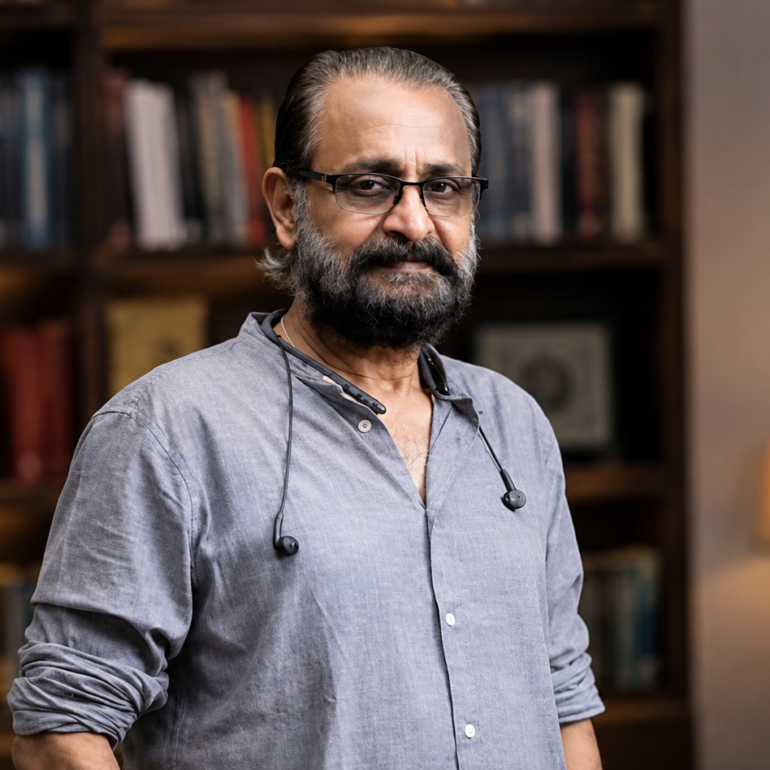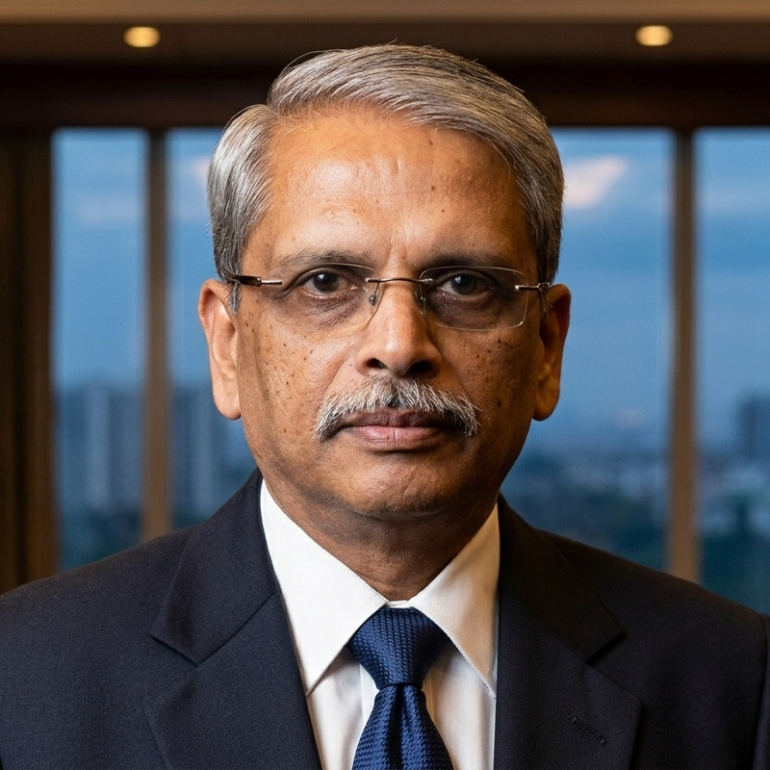
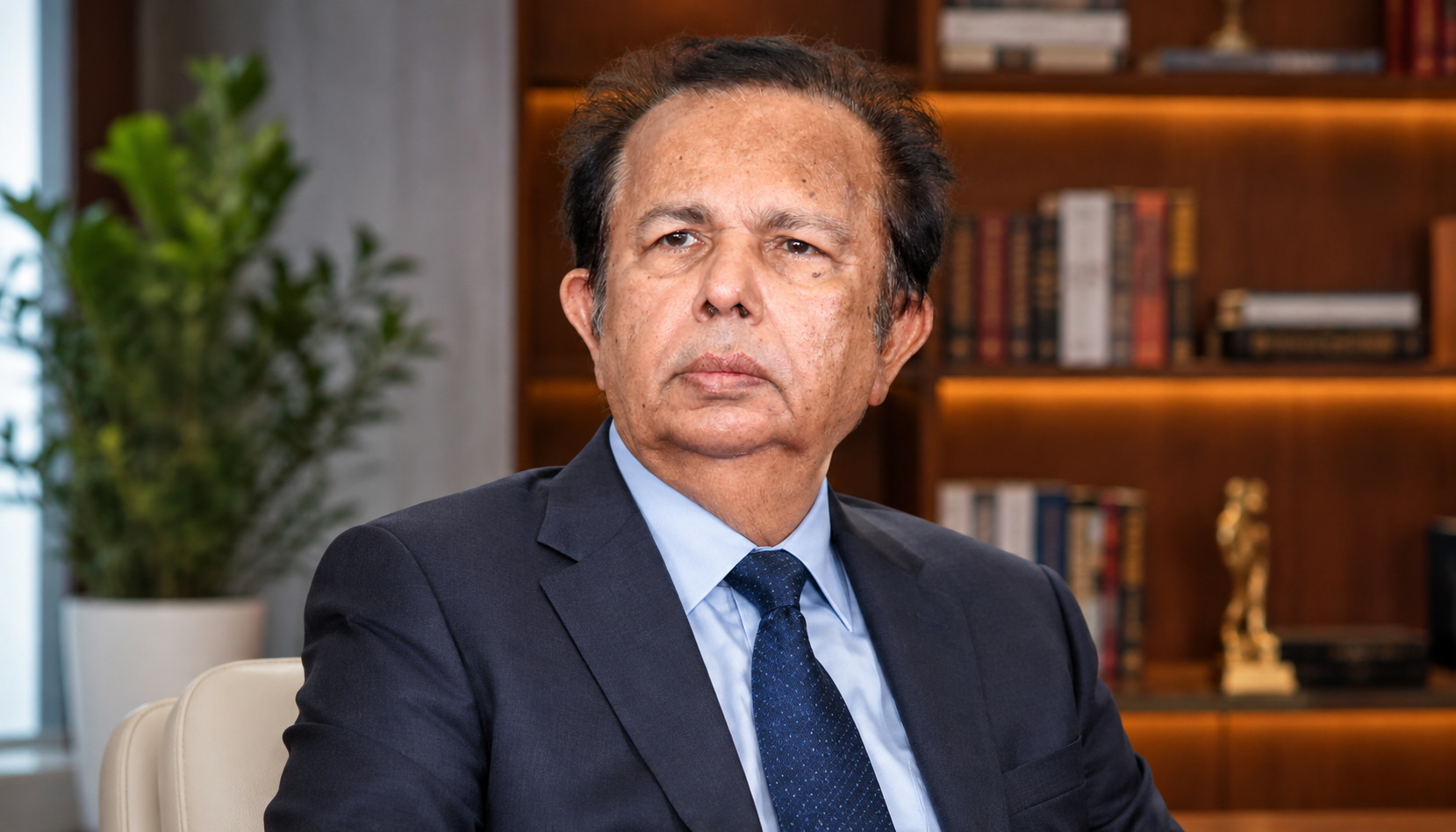
G. Madhavan Nair
Space Scientist, Rocket Technologist
G. Madhavan Nair is one of the important figures in the development of India’s indigenous space programme. A rocket technologist who spent more than four decades at ISRO, he played a major role in the development of launch vehicles and later led the organisation as its Chairman. His career is closely connected with the evolution of India’s capabilities in satellite launch technology, propulsion and space applications.
As Chairman of ISRO and Secretary of the Department of Space from 2003 to 2009, Nair oversaw a period that included major achievements such as the development and operationalisation of important launch and satellite missions, as well as the launch of Chandrayaan-1, India’s first mission to the Moon. He was also a strong advocate of using space technology for areas such as telemedicine, tele-education and services benefiting rural communities.
Key Facts
Born: 31 October 1943
Place: Thiruvananthapuram, Kerala, India
Profession: Space Scientist, Rocket Technologist
Specialisation: Electronics and Communication Engineering
Joined ISRO: 1967
Former Chairman: ISRO and Space Commission
Tenure as ISRO Chairman: 2003–2009
Major Contribution: PSLV and launch vehicle technology
Major Mission: Chandrayaan-1
From Thiruvananthapuram to Thumba
Nair was born on 31 October 1943 and completed his engineering education at the University of Kerala in 1966, specialising in Electrical and Communication Engineering. After graduating, he underwent training at the Bhabha Atomic Research Centre in Mumbai.
His professional journey with India’s space programme began in 1967 when he joined the Thumba Equatorial Rocket Launching Station, or TERLS, in Thiruvananthapuram. That was a formative period for India’s young space programme, and Nair gradually moved into increasingly important technical and leadership positions.
Over the years, he worked across several areas of launch vehicle development, electronics, propulsion and systems integration. His career eventually took him to some of the most important positions within ISRO.
Building India’s Launch Vehicle Capability
One of Nair’s most significant contributions came through India’s launch vehicle programme.
He was closely associated with the development of SLV-3 and later served as Project Director for the Polar Satellite Launch Vehicle, or PSLV. Under his leadership, the PSLV programme developed into one of ISRO’s most important launch systems and eventually became the workhorse for launching India’s remote-sensing satellites.
His work was not limited to the PSLV. As Director of the Liquid Propulsion Systems Centre from 1995 to 1999, Nair was involved in the development of indigenous liquid propulsion technologies and India’s efforts to develop cryogenic technology.
He subsequently became Director of the Vikram Sarabhai Space Centre. During this period, he led work associated with the Geosynchronous Satellite Launch Vehicle, or GSLV. The successful GSLV development represented another important step in India’s effort to build independent access to space.
Leading ISRO
Nair became Chairman of ISRO and Secretary of the Department of Space in 2003, succeeding K. Kasturirangan. He remained in the position until 2009.
His six-year tenure was marked by a series of successful missions involving communication, remote sensing, navigation and scientific exploration. ISRO records 25 successful missions during his tenure, including Resourcesat-1, Cartosat missions, INSAT satellites, PSLV launches and Oceansat-2.
One of the defining achievements of this period was Chandrayaan-1.
Chandrayaan-1 and a New Chapter
Chandrayaan-1 was India’s first mission to the Moon and became one of the most important milestones of Nair’s tenure.
The spacecraft was launched aboard the PSLV-C11 in October 2008. The mission significantly expanded India’s role in planetary exploration and produced important scientific findings, including evidence of water molecules on the lunar surface.
For Nair, the mission represented more than a single successful launch. It was part of a wider effort to move India’s space programme beyond communication and remote sensing and towards scientific exploration of the solar system.
Space Technology for Society
Nair’s vision of space technology extended beyond rockets and satellites.
During his leadership, ISRO placed considerable emphasis on applications that could directly benefit society. Telemedicine and tele-education were among the areas that received attention, while satellite connectivity was also used to develop Village Resource Centres aimed at improving access to information and services in rural areas.
His approach was built around a broader idea: advanced space technology should not remain limited to scientific institutions. It should eventually find practical applications in everyday life and contribute to national development.
An International Voice for Indian Space Science
Nair also represented India in international space cooperation.
He led Indian delegations in discussions with several space agencies and countries and played a role in international cooperation involving nations including France, Russia and Brazil. He also led India’s delegation to the scientific and technical subcommittee of the United Nations Committee on the Peaceful Uses of Outer Space.
In 2009, he became President of the International Academy of Astronautics, becoming the first Indian to hold the position and the first non-American president of the organisation.
Recognition and Honours
Nair’s contribution to Indian space technology has been recognised with several national and professional honours.
The Government of India awarded him the Padma Bhushan in 1998 and the Padma Vibhushan in 2009. The latter is India’s second-highest civilian honour.
He has also received honours including the Om Prakash Bhasin Award, Swadeshi Sastra Puraskar, FIE Foundation Award and the Vikram Sarabhai Memorial Gold Medal of the Indian Science Congress, among others.
His contribution has also been recognised through numerous honorary degrees from universities and institutions across India.
A Life Documented Through His Own Words
Nair later turned to writing to document his experiences in India’s space programme.
His autobiography, Agnipareekshakal, was published in 2017. An English edition, Rocketing Through the Skies: An Eventful Life at ISRO, was published in 2023. The memoir looks back at his journey from the early years of India’s space programme to his time as ISRO Chairman, including the development of SLV-3, PSLV, indigenous cryogenic technology and Chandrayaan-1.
The book offers a personal account of the challenges, failures and breakthroughs that shaped his career and the wider Indian space programme.
A Lasting Contribution to Indian Space Science
G. Madhavan Nair’s career reflects the transformation of Indian space technology from a developing programme into a globally recognised capability.
From his early days at Thumba to leading the development of PSLV and working on cryogenic technology, and later guiding ISRO through the Chandrayaan-1 era, his professional journey spans some of the most important chapters in India’s space history.
His contribution is not limited to individual missions. He was part of the generation of scientists who helped establish indigenous expertise in launch vehicles and propulsion, while also pushing for the practical use of space technology in education, healthcare, disaster management and rural development.
For Kerala, his journey carries an additional significance. A scientist who began his career at Thumba went on to occupy the highest leadership position in India’s space programme and became one of the country’s most recognised rocket technologists.
His legacy ultimately lies in the larger goal he consistently pursued: building India’s ability to reach space independently while ensuring that the benefits of that technology reach people on the ground.