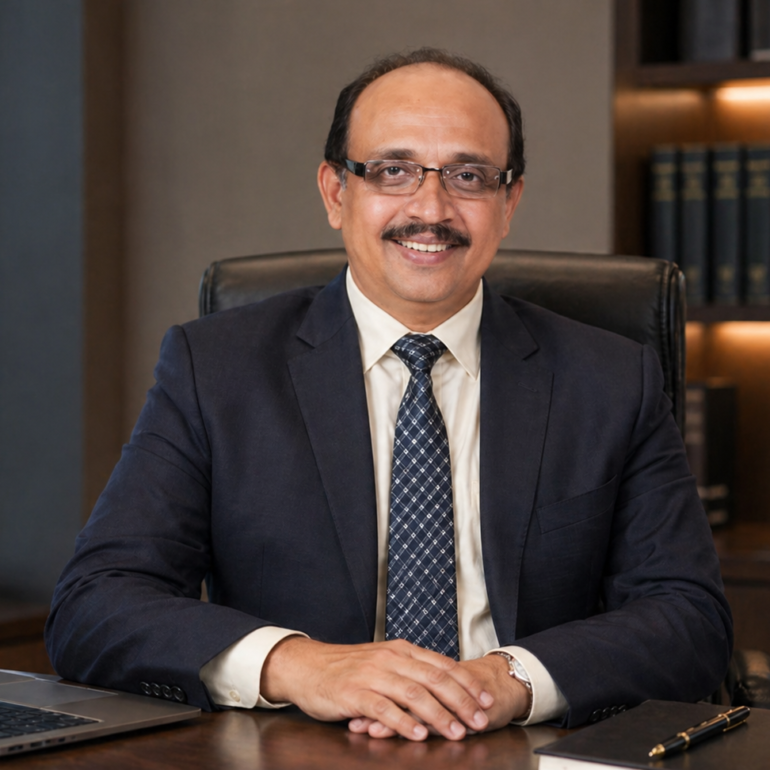
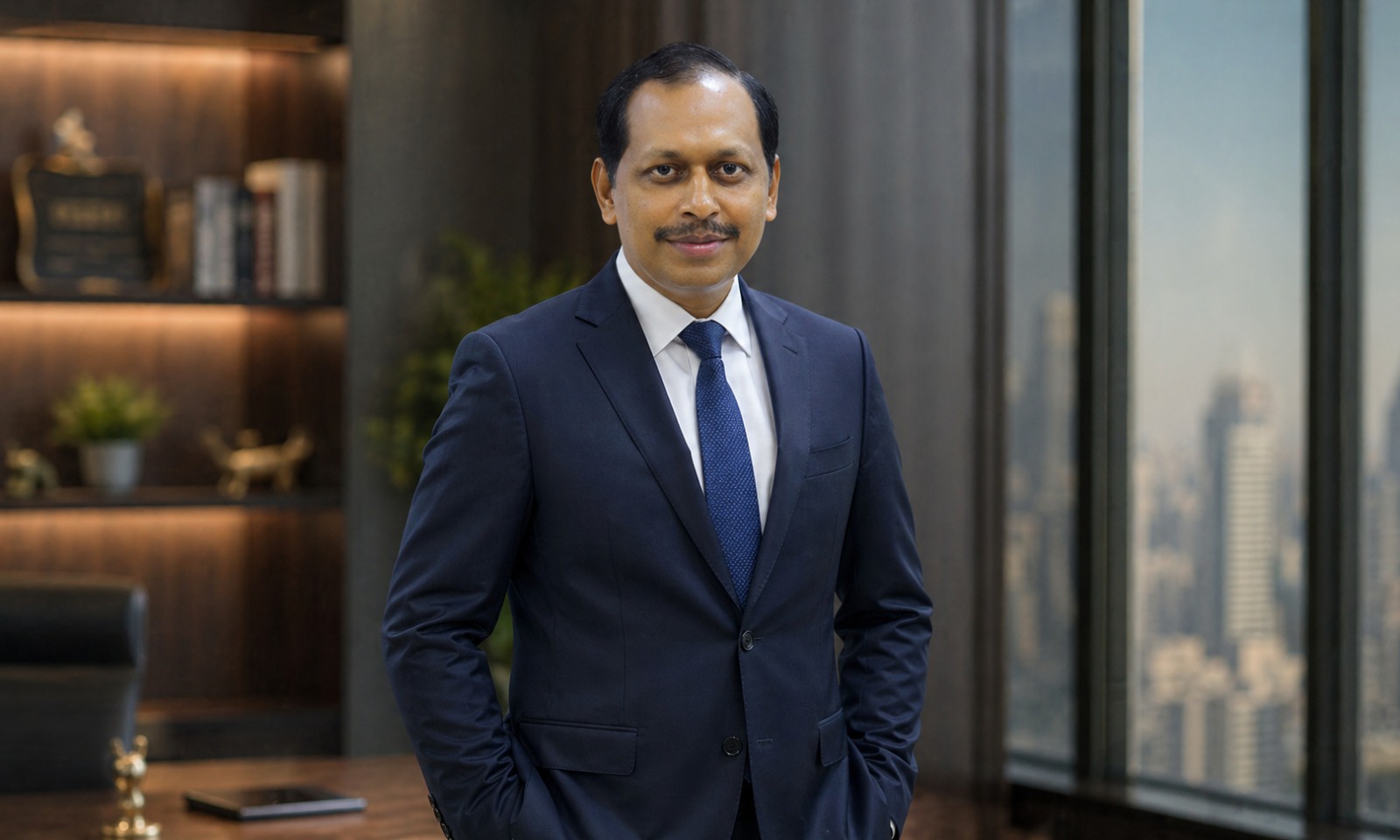
Denny Thomas Vattakunnel
Chairman and Managing Director of Santa Monica Study Abroad Pvt. Ltd.
Denny Thomas Vattakunnel is the Chairman and Managing Director of Santa Monica Study Abroad Pvt. Ltd. He is an astute and visionary entrepreneur, gifted education thinker, illustrious author, blogger, philanthropist, social worker, sports administrator and a globetrotter who has visited 100+ countries. He steered Santamonica Group to create several path breaking initiatives that aided the organization’s emergence as one of the most prestigious business groups in South India in overseas education facilitation, Tours & Travels, English language proficiency test training to name a few. He supports several charity initiatives in partnership with many Trusts, NGO’s, and individuals. In recognition of his remarkable contribution in business and his commitment for social causes, he has received several honors and accolades.
Key Factors
Full Name: Denny Thomas Vattakunnel
Place: Mandapam East Eleri Village in Kasaragod District, Kerala
Title: Entrepreneur, Education thinker, Illustrious author, Blogger, Philanthropist, Social worker, Sports Administrator, Globetrotter
Known For: Founding Santa Monica Study Abroad Pvt. Ltd. and facilitating global education opportunities for Indian students
Early Life and Social Roots
Before he entered the world of business, Denny Thomas Vattakunnel was defined by a different kind of engagement, one rooted in community, culture, and social participation. His early years were shaped by active involvement in social and cultural initiatives, spaces where leadership is less about hierarchy and more about influence and connection.
This background is critical to understanding his later choices. Unlike entrepreneurs driven purely by market opportunity, Vattakunnel’s orientation was initially outward-looking, concerned with societal issues rather than personal enterprise. These experiences appear to have built a sensitivity to community needs, an instinct that would later inform his entrepreneurial decisions.
Yet, like many in Kerala navigating adulthood, idealism eventually met practical necessity.
Turning Point: The Need for Stability
As his personal responsibilities grew, particularly with the expansion of his family, the limitations of a socially driven but financially uncertain path became evident. The shift from social engagement to business was not abrupt, but it was inevitable.
This transition reflects a common tension in Kerala’s middle-class narrative, the balancing act between passion and financial security. For Vattakunnel, the challenge was not simply to start a business, but to find one that aligned with his values.
The question he faced was fundamental: could a venture exist that was both economically viable and socially meaningful?
Identifying the Problem
The answer began to take shape through observation. In the late 1990s and early 2000s, Kerala was grappling with a growing unemployment crisis. The paradox was stark. The state produced a large number of educated graduates, many with strong academic records, yet struggled to absorb them into meaningful employment.
The outcomes were predictable but troubling. Some graduates accepted jobs unrelated to their qualifications. Others turned to self-employment with limited success. A significant number migrated to Gulf countries, often taking up physically demanding or high-risk work for modest wages.
The situation worsened when economic downturns in Gulf economies forced many expatriates to return home, intensifying competition for already scarce opportunities.
This was not just an economic issue. It carried emotional weight, anxiety, frustration, and a sense of stagnation among young people.
For Vattakunnel, this was more than a statistic. It was a structural failure that demanded a response.
The Idea That Changed Everything
The breakthrough came through conversations, not market reports. His discussions with a close associate, Denny Thomas Chempazha, who shared similar social concerns, gradually moved from abstract problem-solving to concrete opportunity identification.
Together, they began examining education systems beyond India. What stood out was the alignment between academic programs and industry requirements in many developed and emerging economies. Institutions abroad were not just offering degrees, they were creating pathways to employment.
This insight reframed the problem. The issue was not merely unemployment, but a mismatch between education and employability.
The opportunity, then, was not to create jobs directly, but to enable access to education systems that were better aligned with global labour markets.
Founding Santa Monica (2002)
In 2002, this idea materialized as Santa Monica Study Abroad Pvt. Ltd., headquartered in Kochi. At the time, the overseas education consultancy space in Kerala was still evolving, often fragmented and driven by informal networks.
Building credibility in such an environment was not easy. The business dealt with high-stakes decisions, families investing significant financial resources in their children’s future, and the emotional weight of migration.
Initial skepticism was inevitable. The idea of sending students abroad for education, especially outside traditional destinations, required trust.
Vattakunnel and his co-founder approached this challenge with a long-term perspective. Instead of focusing on rapid expansion, they prioritized transparency, consistent communication, and relationship-building.
In a sector where credibility can take years to build and seconds to lose, this approach proved foundational.
Growth and Expansion
Over time, Santa Monica evolved from a single consultancy into a multi-vertical enterprise with several subsidiaries operating under the same brand umbrella. While exact figures vary across sources, the company’s growth trajectory reflects steady scaling rather than sudden spikes.
The business expanded its geographic reach, diversified its service offerings, and built partnerships with educational institutions across multiple countries. More importantly, it established a reputation for reliability, a critical differentiator in an industry often scrutinized for misinformation and unrealistic promises.
Thousands of students, according to company narratives and public profiles, have been guided through international education pathways, moving into universities across Europe, North America, Australia, and emerging study destinations.
Each successful student outcome reinforced the brand’s credibility, creating a feedback loop that supported further growth.
Leadership and Business Philosophy
At the core of Vattakunnel’s approach is a philosophy shaped by caution as much as ambition. His public statements and reflections consistently emphasize three principles: research, restraint, and realism.
He advocates for rigorous market understanding before committing to a business idea. In his own journey, the decision to enter overseas education was preceded by a detailed study of global education systems and employment outcomes.
Equally notable is his stance on capital deployment. He cautions against large upfront investments, arguing that early-stage ventures are inherently uncertain and should be approached with financial discipline.
Perhaps most striking is his perspective on success. Rejecting the popular narrative of rapid success, he frames it as a slow, iterative process. The visible success stories, he notes, represent only a fraction of attempts, with many failures remaining undocumented.
This grounded view reflects an entrepreneur shaped more by observation than by myth.
Impact on Kerala’s Education and Migration Ecosystem
Santa Monica’s growth coincided with a broader shift in Kerala’s migration patterns. While the Gulf remained a dominant destination, there was a noticeable increase in students seeking education in Western countries.
Consultancies like Santa Monica played a role in facilitating this transition. By providing structured guidance, they reduced the uncertainty associated with international education, making it accessible to a wider demographic.
The impact extends beyond individual success stories. Each student who transitions into a global workforce contributes to remittance flows, knowledge transfer, and the diversification of Kerala’s migration economy.
In this sense, Vattakunnel’s work sits within a larger ecosystem, one that connects education, migration, and economic mobility.
Challenges and Industry Realities
The overseas education consultancy sector is not without its challenges. Regulatory scrutiny, changing visa policies, and increasing competition have reshaped the landscape in recent years.
Moreover, the rise of digital platforms and direct university outreach has altered how students access information. Traditional consultancies must now adapt to a more informed and digitally connected audience.
Maintaining trust remains the central challenge. In a business where outcomes depend on multiple external variables, from admission decisions to immigration policies, managing expectations is as important as delivering results.
For companies like Santa Monica, the task is to balance growth with credibility, a balance that becomes harder as scale increases.
Legacy and Continuing Relevance
Two decades after its founding, Santa Monica stands as one of Kerala’s recognizable names in the overseas education space. For Vattakunnel, the journey represents more than business success.
It reflects a shift in perspective, from viewing unemployment as a local problem to addressing it through global pathways. By aligning education with international opportunities, he effectively repositioned the solution space.
His identity as a management consultant emerges from this broader understanding of systems, the ability to identify gaps, design interventions, and scale them sustainably.
A Measured Conclusion
Denny Thomas Vattakunnel’s story does not fit neatly into the archetype of the disruptive startup founder. It is quieter, more incremental, and rooted in observation rather than disruption.
He did not invent a new industry, but he understood an existing one better than most. He did not chase rapid expansion, but built trust over time. And he did not separate business from social context, but allowed one to inform the other.
In a landscape often dominated by narratives of speed and scale, his journey offers a different template, one where success is built patiently, grounded in reality, and sustained through consistency, an outstanding reminder that sometimes, the most durable enterprises are those that grow in step with the society they serve.