Top 10 Outstanding Restaurants That Capture the Soul of the State
- Paragon Restaurant
- Kashi Art Café
- Villa Maya
- Dhe Puttu
- The Rice Boat
- Kayees Rahmathulla Hotel
- Grand Pavilion
- Hotel Rahmath
- Cassia Restaurant
- Brothers Hotel
Where Kerala Truly Eats
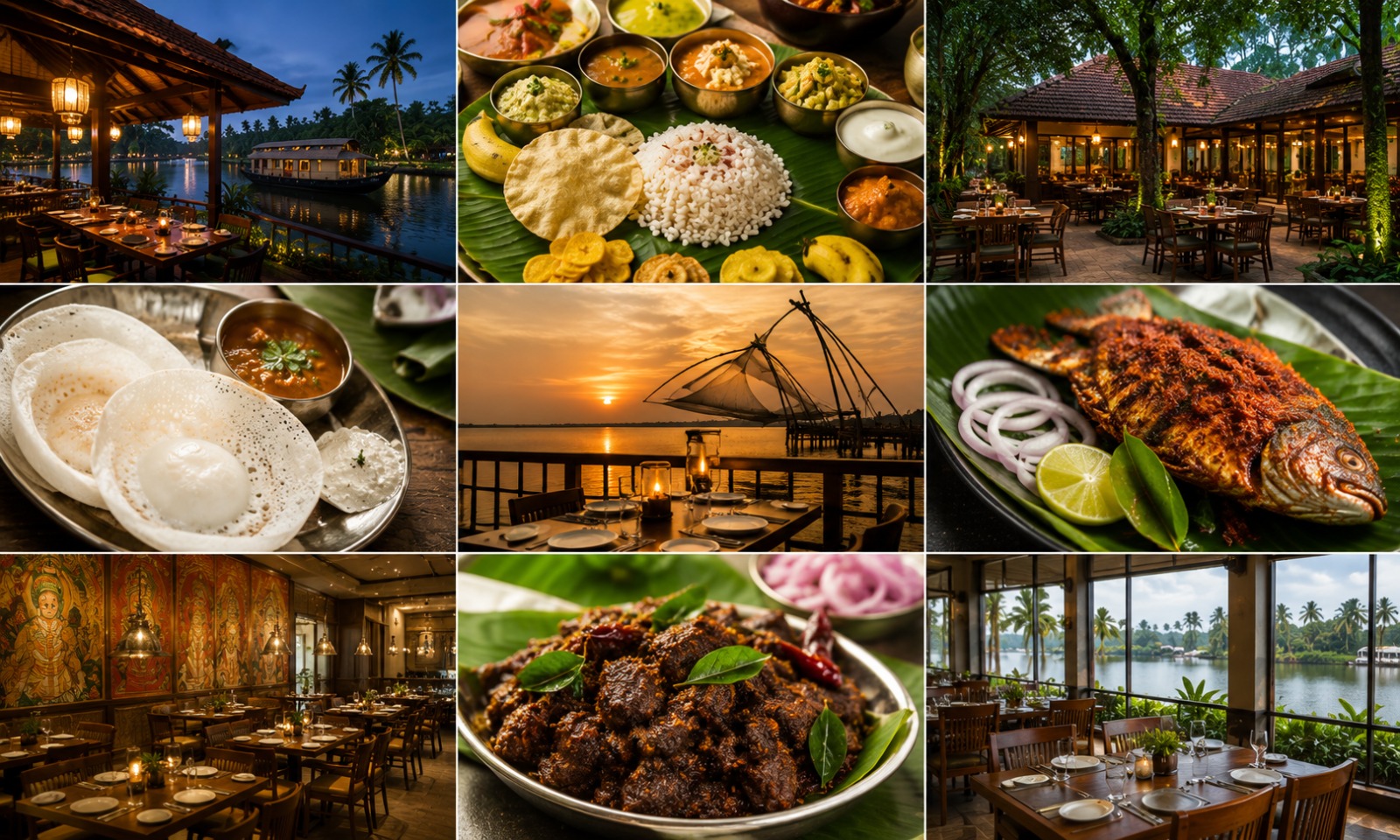
Kerala’s food culture has never belonged to a single kitchen. It lives in toddy shops beside backwaters, in Syrian Christian homes where duck roast simmers for hours, in Malabar biryani cauldrons perfumed with ghee and fried onions, and in luxury coastal restaurants where pearl spot fish arrives plated like sculpture.
Over the last two decades, Kerala’s restaurant culture has undergone a quiet but outstanding transformation. Heritage eateries continue to thrive beside contemporary cafés and luxury dining rooms. Young chefs are rediscovering forgotten regional recipes while older establishments preserve flavours that generations grew up with. The restaurants on this list are not merely popular places to eat. They are cultural landmarks, culinary storytellers, and emotional spaces that reveal how Kerala tastes, remembers, and evolves.
1. Paragon Restaurant
Location: Kozhikode
Cuisine Type: Malabar cuisine, seafood, biryani
Signature Dishes: Malabar biryani, fish mango curry, pathiri, grilled seafood
Dining Experience: Legendary culinary institution
In Kerala, discussions about great food inevitably arrive at Paragon.
The restaurant has evolved from a respected Kozhikode eatery into one of India’s most celebrated regional restaurants. Yet despite international recognition and national awards, Paragon still carries the emotional energy of a bustling Malabar food house.
The dining hall is perpetually alive. Families wait patiently for tables. Servers move rapidly with plates of steaming biryani and gleaming seafood fry. The aromas of ghee rice, roasted spices, and curry leaves dominate the air.
Paragon’s greatness lies in balance. Its food is deeply rooted in Malabar culinary traditions while maintaining consistency at a scale few restaurants achieve. The biryani, lighter and more fragrant than many North Indian variants, reflects the Arab-influenced culinary history of the Malabar coast. Their seafood dishes, particularly fish mango curry and prawns preparations, capture Kerala’s coastal identity with remarkable precision.
Paragon is not simply famous because celebrities dine there or because travel magazines praise it. It matters because it preserved the integrity of Malabar cuisine while turning it into an internationally recognizable culinary language.
2. Kashi Art Café
Location: Fort Kochi
Cuisine Type: Continental, café cuisine, Kerala-inspired brunches
Signature Dishes: French toast with banana, fish steaks, cold coffee, Kerala-style breakfasts
Dining Experience: Artistic café culture, heritage ambience
Few restaurants in Kerala capture the spirit of Fort Kochi as completely as Kashi Art Café. Hidden inside one of the colonial lanes of Fort Kochi, the café feels less like a business and more like a slow-moving conversation between art, food, literature, and travel.
The first thing visitors notice is silence, not emptiness, but the relaxed stillness of old Fort Kochi mornings. White walls display rotating artwork. Sunlight filters through open courtyards. Travelers linger over conversations while local artists work quietly in corners.
Kashi helped define modern café culture in Kerala long before cafés became fashionable social spaces. Its food mirrors the cosmopolitan identity of Kochi itself. The menu moves comfortably between European-style breakfasts and Kerala influences without appearing forced. Fresh seafood, artisan coffee, homemade cakes, and carefully plated brunches attract tourists, filmmakers, writers, and Kochi’s creative crowd.
What makes Kashi culturally significant is not extravagance but atmosphere. It transformed dining into experience. In a state once dominated by functional eateries, Kashi introduced the idea that a restaurant could also be an artistic refuge.
3. Villa Maya
Location: Thiruvananthapuram
Cuisine Type: Luxury fine dining, global-Kerala fusion
Signature Dishes: Seafood platters, duck confit with Kerala spices, lobster dishes
Dining Experience: Luxury heritage dining
Villa Maya feels cinematic from the moment one enters its restored heritage mansion near the old royal quarters of Thiruvananthapuram.
Widely regarded as one of Kerala’s most luxurious dining experiences, the restaurant combines aristocratic architecture with carefully curated global cuisine. Courtyards glow under lantern light. Antique furniture and textured walls preserve echoes of Travancore’s layered history.
But Villa Maya is not merely beautiful. It helped redefine fine dining in Kerala by proving that local ingredients and Kerala flavours could exist within internationally sophisticated culinary presentation.
The seafood here is particularly memorable. Lobster infused with subtle spice notes, slow-cooked meats, and elegant desserts attract diplomats, luxury travelers, business leaders, and discerning local diners.
The restaurant also reflects Kerala’s growing confidence in hospitality design. Instead of imitating generic luxury aesthetics, Villa Maya embraces Kerala’s historical textures while presenting contemporary gastronomy.
4. Dhe Puttu
Location: Kochi
Cuisine Type: Traditional Kerala cuisine
Signature Dishes: Puttu varieties, beef roast, kadala curry, fish curry
Dining Experience: Modern reinterpretation of Kerala comfort food
Puttu has always existed at the heart of Kerala homes. Dhe Puttu transformed it into culinary theatre. The restaurant, which specializes in various types of traditional Kerala puttu, launched its flagship outlet in Kochi.
Owned by Malayalam film actor Dileep in partnership with director and television personality Nadirshah. The restaurant reimagined one of Kerala’s simplest staples through creativity, nostalgia, and presentation. Instead of treating puttu as ordinary breakfast food, Dhe Puttu elevates it into the centerpiece of a contemporary dining experience.
There are dozens of variations, incorporating seafood, meats, fruits, and unconventional ingredients. Yet the restaurant’s appeal goes beyond novelty. It reconnects younger urban diners with traditional Kerala textures and flavours in a modern setting.
The atmosphere remains energetic and distinctly Malayali. Families, tourists, and young professionals crowd the tables, often photographing colourful puttu towers before eating them.
Dhe Puttu represents Kerala’s evolving restaurant culture, where tradition is not abandoned but reinvented.
5. The Rice Boat
Location: Kochi
Cuisine Type: Coastal seafood fine dining
Signature Dishes: Karimeen pollichathu, Alleppey fish curry, jumbo prawns
Dining Experience: Luxury seafood destination
Floating visually above Kochi’s waters, The Rice Boat remains one of Kerala’s defining seafood restaurants.
Operated inside the Taj Malabar Resort & Spa, the restaurant is designed like a traditional kettuvallam, or rice barge, connecting diners directly to Kerala’s maritime history.
The experience is sensory from beginning to end. Arabian Sea winds move through open dining spaces while fishing boats drift across the harbour outside. Inside, chefs focus on refined coastal cooking rooted in Kerala traditions.
Karimeen pollichathu arrives wrapped in banana leaf, fragrant with spices and coconut oil. Crab dishes retain bold coastal flavours without excessive modern manipulation. Unlike many luxury seafood restaurants, The Rice Boat respects simplicity.
It is not merely a hotel restaurant. It is a carefully curated expression of Kerala’s relationship with the sea.
6. Kayees Rahmathulla Hotel
Location: Mattancherry, Kochi
Cuisine Type: Malabar-Muslim cuisine
Signature Dishes: Mutton biryani, beef curry, chicken roast
Dining Experience: Heritage culinary institution
Few restaurants in Kerala carry the emotional loyalty that Kayees commands.
Located in the historic trading quarters of Mattancherry, this modest restaurant has served generations of traders, dock workers, politicians, artists, and travelers. The atmosphere remains stubbornly old-world. Tables turn quickly. Conversations rise loudly. The kitchen moves with relentless rhythm.
The biryani is legendary for good reason. Unlike heavily layered versions elsewhere, Kayees biryani is elegant, restrained, and deeply aromatic. The meat remains tender without collapsing into excess richness.
Kayees matters because it preserves a living culinary history connected to Kochi’s Muslim trading communities and maritime commerce. It reflects a Kerala that emerged through ports, migration, spice trade, and shared food traditions.
7. Grand Pavilion
Location: Kochi
Cuisine Type: Traditional Kerala vegetarian cuisine
Signature Dishes: Sadya, avial, olan, palada payasam
Dining Experience: Classic vegetarian heritage dining
Kerala’s vegetarian traditions often receive less international attention than seafood or biryani culture, yet the state’s sadya remains one of India’s most sophisticated ritual meals.
Grand Pavilion preserves that heritage with remarkable consistency.
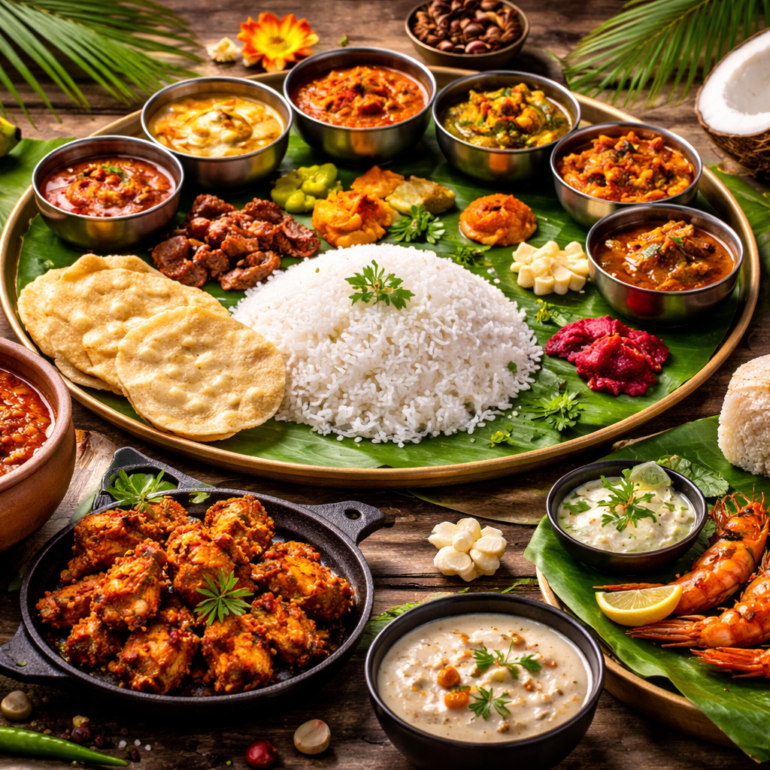
The restaurant is especially famous during festival seasons, when banana leaves arrive layered with intricate combinations of pickles, curries, pachadi, thoran, sambar, rasam, and payasam. Dining here becomes ceremonial rather than transactional.
The restaurant attracts politicians, business families, temple visitors, and older Malayali diners seeking familiar flavours prepared with discipline rather than innovation.
In an era of rapidly changing food culture, Grand Pavilion reminds diners that Kerala’s culinary greatness also lies in restraint, balance, and vegetarian depth.
8. Hotel Rahmath
Location: Kozhikode
Cuisine Type: Malabar biryani and traditional Muslim cuisine
Signature Dishes: Kozhikode biryani, chicken fry, mutton curry
Dining Experience: Historic local favourite
SM Street in Kozhikode has long functioned as one of Kerala’s great food corridors, and Hotel Rahmath remains among its most beloved institutions.
Unlike luxury restaurants that rely on presentation and curated ambience, Rahmath succeeds through authenticity and emotional continuity. Generations have eaten here. Students returning home visit instinctively. Gulf migrants often stop here before reaching their own houses.
The biryani reflects the DNA of Kozhikode itself, layered yet subtle, rich yet balanced. Every plate carries the culinary confidence of Malabar’s Muslim food traditions.
Restaurants like Rahmath survive because they preserve trust. In Kerala’s food culture, that trust matters more than trends.
9. Cassia Restaurant
Location: Fort Kochi
Cuisine Type: Jewish-Kerala fusion, continental, seafood
Signature Dishes: Prawn curry, grilled fish, fusion platters
Dining Experience: Heritage-meets-global dining
Fort Kochi’s layered colonial history appears vividly inside Cassia.
The restaurant sits within the old Jewish quarter, where spice merchants, synagogues, Portuguese influence, Arab traders, and European architecture coexist within narrow streets scented by sea air and history.
Cassia’s menu reflects that layered identity. Kerala spices meet Mediterranean influences. Seafood appears beside continental plates. Tourists mingle with heritage enthusiasts and expatriates.
What makes the restaurant memorable is not just food but historical atmosphere. Dining here feels connected to Kochi’s centuries-old role as one of the Indian Ocean’s most cosmopolitan port cities.
10. Brothers Hotel
Location: Alappuzha
Cuisine Type: Traditional Kerala seafood
Signature Dishes: Karimeen fry, tapioca with fish curry, prawns roast
Dining Experience: Rustic coastal authenticity
In Alappuzha, where canals and backwaters shape everyday life, Brothers Hotel captures Kerala’s relationship with seafood in its purest form.
There is little pretension here. Plastic chairs, quick service, and intensely flavoured fish preparations define the experience. Yet some of Kerala’s finest meals emerge from exactly these kinds of establishments.
Fresh catch dominates the kitchen. Pearl spot fish arrives crisp and fiery. Tapioca absorbs rich fish gravies with earthy perfection. Prawns taste unmistakably coastal, carrying the mineral sharpness of Kerala’s waters.
Brothers represents the emotional center of Kerala dining culture, where flavour outweighs luxury and memory matters more than presentation.
Taste of the State
To understand Kerala, one must understand how the state eats. Food here is never merely functional. It is ritual, hospitality, inheritance, migration history, and emotional memory served on banana leaves, steel plates, clay pots, and elegant porcelain.
These restaurants matter because they preserve different versions of Kerala itself. Some celebrate luxury and global sophistication. Others defend recipes passed through generations of coastal families, traders, temple kitchens, and village homes. Together, they reveal a state where culinary identity continues to evolve without losing its roots.
In Kerala, dining is rarely rushed. Conversations linger. Seafood arrives carrying the smell of rain and salt air. Coconut, pepper, tamarind, curry leaf, and ghee continue to shape the emotional geography of meals. And somewhere between a smoky Kozhikode biryani, a carefully plated Fort Kochi seafood dish, and a traditional sadya served with quiet precision, visitors begin to understand why Kerala remains one of India’s most outstanding culinary destinations.