
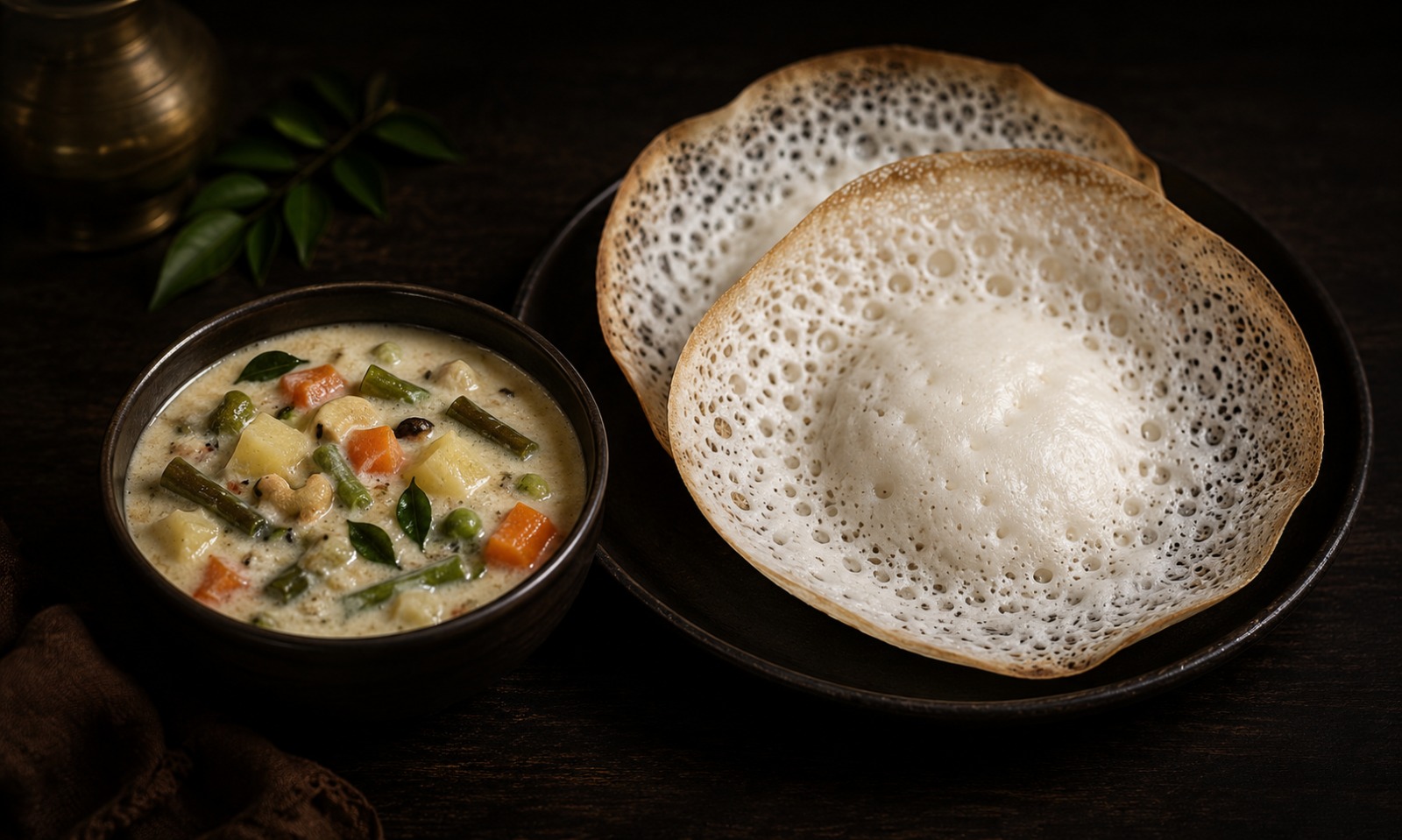
Appam and Vegetable Stew is one of Kerala’s most beloved traditional breakfast combinations, especially popular in central Kerala. Soft, lacy appam is paired with a mild coconut milk-based vegetable stew flavoured with whole spices. Light, aromatic, and comforting, this classic dish is closely associated with Kerala’s home cooking, festive meals, and family gatherings.
A Taste of Kerala’s Comforting Tradition
For many Malayalis, especially in Christian households across central Kerala, this is not simply breakfast. It is memory. It is Christmas morning before church. It is Easter breakfast after long prayers. It is Sunday family gatherings where appams arrive faster than they can be eaten. Few dishes capture Kerala’s emotional warmth with the same quiet elegance as Appam and Vegetable Stew.
At first glance, the pairing appears gentle compared to the fiery curries often associated with South Indian cuisine. Appam is a bowl-shaped fermented rice pancake with crisp, lace-like edges and a soft center. Vegetable stew, meanwhile, is delicate and aromatic, built around coconut milk, vegetables, and whole spices rather than aggressive heat. Yet together, they create one of Kerala’s most balanced and comforting meals.
The textures are what make the pairing unforgettable. The crisp outer rim of the appam breaks softly into the creamy stew, while the pillowy center absorbs coconut milk and spices like a sponge. Every bite carries warmth without heaviness.
The origins of appam run deep through Kerala’s coastal food history. Historians often trace versions of the dish to ancient rice-based culinary traditions across South India and Sri Lanka. In Kerala, however, appam became closely intertwined with Syrian Christian cuisine, particularly in districts like Kottayam, Ernakulam, and Pathanamthitta.
Its rise in Christian households was shaped partly by geography and partly by trade. Kerala’s abundant rice cultivation and coconut-rich landscape naturally encouraged dishes based around fermented rice batter and coconut milk. Over time, appam evolved into an essential part of festive and ceremonial meals. Weddings, baptisms, Christmas feasts, and Easter mornings often centered around large platters of appam served with stew.
The stew itself carries subtle colonial echoes. Culinary historians frequently point toward mild European-influenced cooking techniques entering Kerala through centuries of Portuguese, Dutch, and British contact. Unlike heavily spiced curries, Kerala stew developed around restraint. Whole spices such as cloves, cinnamon, cardamom, and pepper were used for fragrance rather than heat, while coconut milk softened every edge.
The ingredients behind the dish may appear modest, but together they create remarkable complexity. Rice forms the body of the appam, while coconut milk lends richness and softness. Traditionally, fermentation came from toddy, Kerala’s mildly alcoholic palm drink, though yeast is more commonly used today. This fermentation gives appam its subtle tang and airy texture.
Inside the stew, carrots, potatoes, beans, onions, green chillies, and curry leaves simmer slowly in coconut milk. Coconut oil ties everything together with its unmistakable aroma. The use of whole spices rather than powdered masalas allows the flavors to remain layered and delicate.
Making appam, however, is an art that cannot be rushed.
The batter must ferment just enough to create softness without becoming sour. The *appachatti*, a small curved pan unique to the dish, must reach the correct heat before the batter is swirled in circular motion. Experienced cooks tilt the pan instinctively, allowing thin batter to spread along the edges while the thicker center settles naturally. Moments later, the appam emerges with its signature shape, crisp at the borders and cloud-soft at the center.
Watching an experienced hand make appams feels almost rhythmic, batter poured, pan tilted, lid closed, steam rising.
Vegetable stew moves at a slower pace. Unlike bold curries that demand attention through spice, stew builds comfort through aroma. Coconut milk carries the sweetness of vegetables while cloves and cinnamon release warmth gradually. The flavors remain restrained, elegant, and deeply soothing.
For many Malayalis living away from Kerala, appam and stew often become intensely nostalgic foods. The meal represents more than flavor. It represents hospitality. Guests arriving unexpectedly are often welcomed with appam and stew if ingredients are available. Grandmothers pass down batter consistency secrets to younger generations. Children learn to tear appam pieces carefully to scoop up thick coconut gravy.
Even today, despite changing food habits, the dish continues to evolve without losing its identity. Luxury resorts across Kerala now present appam and stew as part of curated heritage dining experiences. Vegan adaptations using coconut cream have gained popularity internationally, while chefs experiment with mushroom stews and contemporary plating styles.
Yet the essence remains unchanged.
Because appam and vegetable stew succeeds not through extravagance, but through gentleness. It is food that comforts rather than overwhelms. Food that invites people to sit longer at the table.
In Kerala’s culinary landscape, where spice often dominates conversation, appam and stew quietly hold their place through softness, warmth, and memory. It is not merely breakfast. It is the sound of rain beyond kitchen windows, the scent of coconut milk rising with steam, and the feeling of home carried through generations. Even today, this outstanding pairing remains one of Kerala’s most graceful expressions of comfort, tradition, and the enduring soul of its cuisine.