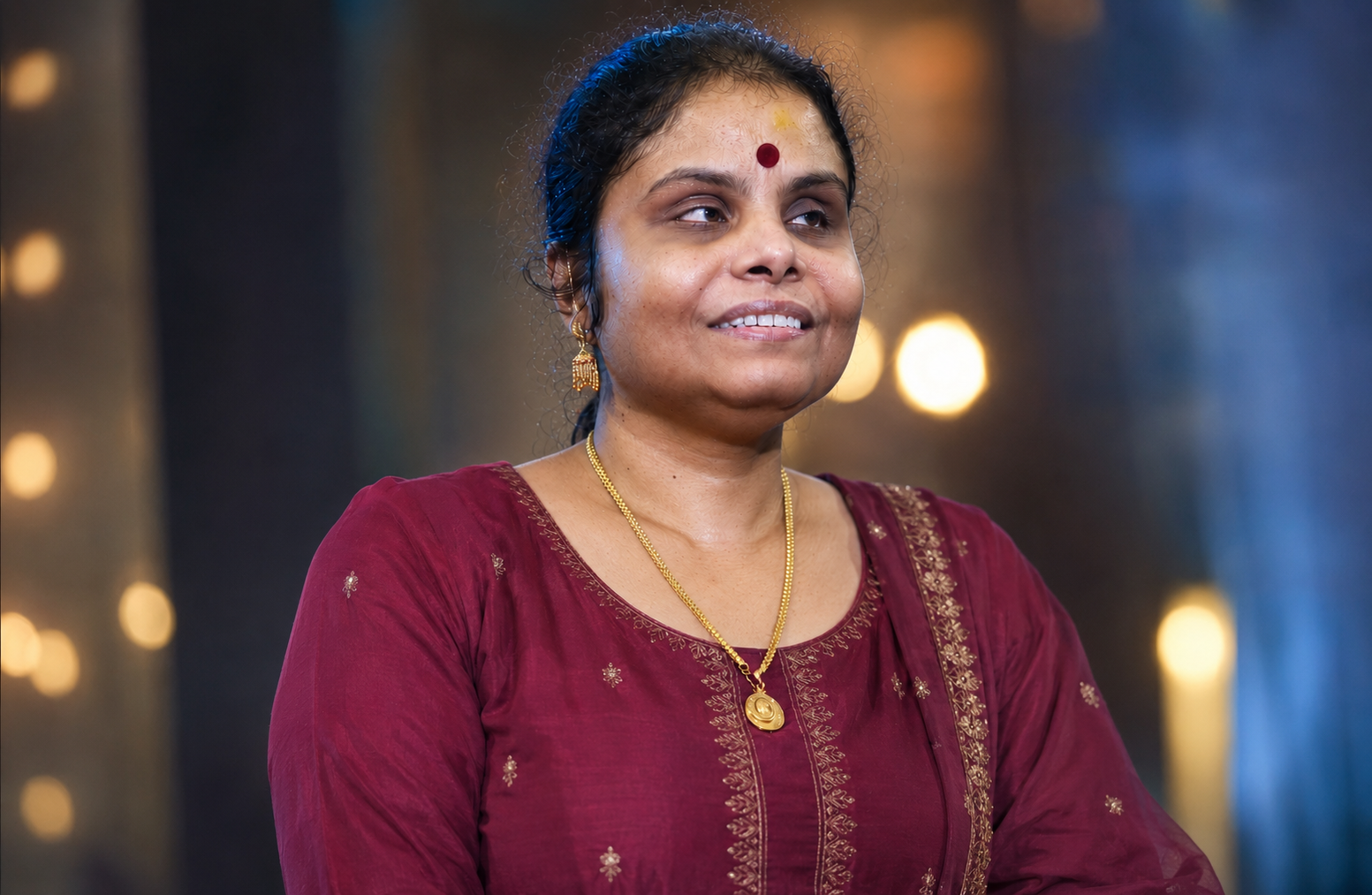
Vaikom Vijayalakshmi
Playback Singer, Carnatic Singer
Vaikom Vijayalakshmi is one of those singers whose voice can be recognised within seconds. There is a distinctive warmth and emotional honesty in the way she sings, and over the years, that quality has made her one of the most loved voices in Malayalam music.
Key Facts
Born: 7 October 1981
Place: Vaikom, Kottayam, Kerala, India
Genres: Carnatic Music, Playback Singing
Instruments: Vocals, Gayathri Veena
Film Debut: Celluloid (2013), with “Katte Kaatte”
Major Recognition: Kerala State Film Award, Kerala Sree Award
Recent Achievement: National Film Award for Best Female Playback Singer (2026)
Her journey has never been a conventional one. From making her mark in Malayalam cinema with Celluloid to becoming a familiar voice across South Indian films, Vijayalakshmi has built her career through talent, persistence and an unmistakable musical identity.
Now, another important chapter has been added to that journey. In July 2026, she won her first National Film Award for Best Female Playback Singer for the song Angu Vaana Konilu from Ajayante Randam Moshanam (ARM). The 72nd National Film Awards recognised her rendition of the song, composed by Dhibu Ninan Thomas with lyrics by Manu Manjith.
A Voice That Stood Out From the Beginning
Vijayalakshmi entered the Malayalam film music scene with Kaatte Kaatte from Kamal’s Celluloid. The song quickly brought attention to her unusual vocal quality and became an important early milestone in her career.
Her performance earned a Special Mention at the Kerala State Film Awards. She later won the Kerala State Film Award for Best Female Playback Singer for Ottaykku Paadunna from Nadan, further establishing her position among Malayalam cinema’s leading playback singers.
What made her different was not simply the range of her voice. There was an emotional directness to her singing. Whether the song demanded tenderness, energy or a deeply rooted folk flavour, she had a way of making it sound personal.
Finding Her Own Place in Malayalam Music
The years that followed brought a steady stream of memorable songs. Kaikottum Kandittilla from Oru Vadakkan Selfie became particularly popular, while songs such as Parudeesa Mariyame from Kattappanayile Rithwik Roshan showed her ability to adapt to very different musical moods.
She also expanded beyond Malayalam, lending her voice to films in other South Indian languages. Her Tamil film credits include projects such as Cuckoo and Veera Sivaji.
Rather than chasing a single style, Vijayalakshmi gradually built a repertoire that reflected the variety of South Indian film music.
The Song That Changed Everything
Her National Award-winning performance came with Angu Vaana Konilu from ARM, the 2024 Malayalam fantasy adventure film directed by Jithin Laal.
The song has the character of a lullaby, and Vijayalakshmi approached it with the intimacy the composition demanded. According to the singer, composer Dhibu Ninan Thomas asked her to sing it with the feeling of a grandmother telling a story to a child.
That emotional approach became one of the song’s defining qualities.
When the 72nd National Film Awards were announced in July 2026, Vijayalakshmi was named Best Female Playback Singer. It was her maiden National Film Award and a major recognition of a career that had already crossed more than a decade in cinema.
Interestingly, the announcement came as a surprise to her. She told reporters that she did not know the award had been announced until a friend called her from Ernakulam with the news.
A Career Built on Persistence
The National Award may be her latest major achievement, but Vijayalakshmi’s career has been built on many smaller victories along the way.
She has received recognition at the Kerala State Film Awards and has also won honours including the Asianet Film Award and the Vanitha Film Award. Her work on ARM had already brought her the Filmfare Award South and SIIMA Award for Best Female Playback Singer before the National honour arrived in 2026.
The sequence of awards tells only part of the story. Her real strength has been her ability to remain relevant in an industry where musical trends change quickly.
More Than Just a Playback Singer
Vijayalakshmi’s public image has always been closely connected with music, but her story has also become one of perseverance.
She has spoken about the strength she draws from music and from the songs she performs. Following her National Award win, she highlighted the personal meaning of ARM’s lyrics, particularly the message of rising above barriers and moving forward.
That sentiment fits naturally with the larger story of her career. She has never allowed the challenges surrounding her life to become the definition of her work. Instead, music has remained at the centre of her identity.
The Recognition She Had Been Waiting For
For many artists, a National Film Award represents the highest point of professional recognition. For Vijayalakshmi, it also feels like the culmination of a long musical journey.
Her first major break came with Celluloid more than a decade ago. Since then, she has performed across languages, explored different genres and created a collection of songs that continue to live with listeners.
The National Award for Angu Vaana Konilu adds a new dimension to that journey. It is not simply another trophy; it places one of Malayalam cinema’s most distinctive contemporary voices among the country’s nationally recognised playback singers.
A Voice With Its Own Identity
There are many technically accomplished singers in Indian cinema. What sets Vaikom Vijayalakshmi apart is the personality in her voice.
Her singing does not disappear behind the composition. It carries her identity.
That is perhaps why her songs have connected with listeners across generations. From the early days of Celluloid to the national recognition for ARM, her journey has been marked by a simple consistency: she sings with feeling.
And now, with a National Film Award added to her list of achievements, Vaikom Vijayalakshmi enters the next phase of her career with one of the most significant honours an Indian playback singer can receive.
Her journey is a reminder that some voices do not need to imitate anyone else to be heard. They simply need to remain true to themselves.