Sandeep Warrier
Indian Cricketer
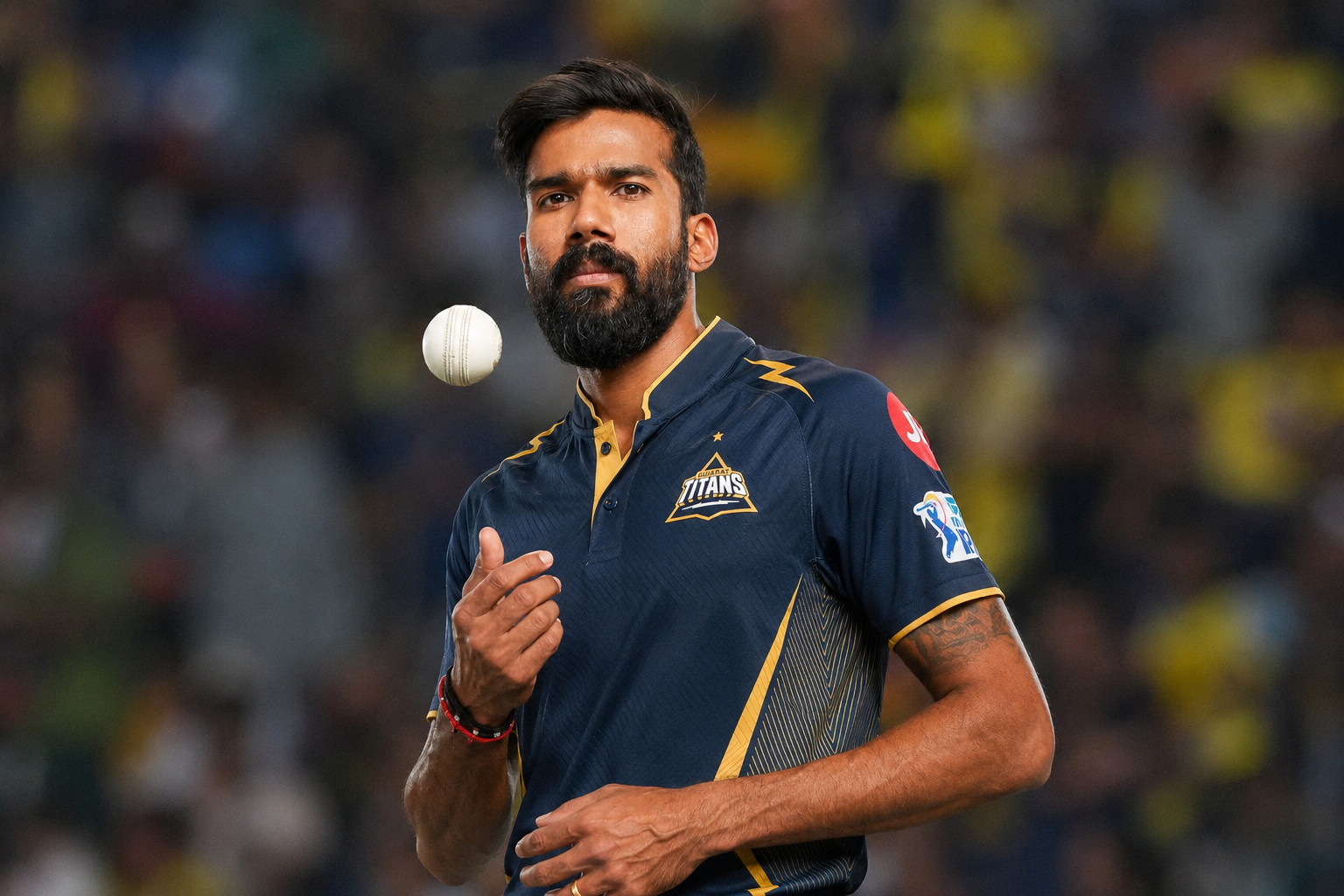
Sandeep Warrier is an Indian international cricketer. He made his international debut for the Indian cricket team in July 2021 against Sri Lanka. He is a right-arm medium-fast bowler who currently plays for Tamil Nadu in domestic cricket and has played for Kerala as well as Kolkata Knight Riders and Gujarat Titans in the Indian Premier League
Key Factors
Full Name: Sandeep Warrier
Date of Birth: 4 April 1991
Birthplace: Thrissur, Kerala, India
Occupation: Professional Cricketer
IPL Teams: Kolkata Knight Riders, Royal Challengers Bangalore, Mumbai Indians, Gujarat Titans
India Debut: T20I vs Sri Lanka, July 2021
Sandeep Warrier represents a side of Indian cricket that rarely receives the spotlight, the long, uncertain grind of domestic professionals who spend years travelling through empty stadiums, state camps, hotel rooms, and bench roles while quietly hoping for one opportunity at the highest level. A disciplined right-arm seamer from Kerala, Sandeep built his career not through instant stardom but through persistence, fitness, and relentless repetition inside India’s unforgiving domestic structure.
For nearly a decade, he remained part of Indian cricket’s invisible workforce, respected within dressing rooms, trusted by coaches, and repeatedly close to bigger recognition without fully arriving there. His eventual India debut in 2021, after years of domestic cricket and IPL waiting rooms, carried emotional weight precisely because it came so late.
His story is not simply about talent. It is about endurance, professional survival, and the psychological resilience required to keep bowling when recognition remains uncertain.
The Fast Bowler
Sandeep Warrier’s long journey through Indian domestic cricket, IPL uncertainty, and the emotional grind behind an India cap
The India cap arrived quietly.
No dramatic build-up. No years of television hype. No carefully marketed “next big thing” narrative.
Inside a dressing room in Sri Lanka in July 2021, Sandeep Warrier finally stood on the edge of something he had spent almost a decade chasing. By then, Indian cricket had already moved through several generations of fast bowlers. Younger players had arrived, debuted, become stars, and sometimes even disappeared while Sandeep continued travelling from one domestic season to another.
For years, his career had unfolded in relative anonymity, long spells in the Ranji Trophy, early morning fitness sessions, bench roles in the IPL, and endless overs bowled on practice grounds where nobody outside domestic cricket circles paid attention.
And yet he kept going.
Perhaps that is why the India debut felt emotional beyond statistics. It represented validation for every cricketer who survives the system without guarantees.
Because Indian cricket produces stars.
But it also produces survivors.
A Childhood Between Cities and Expectations
Born in Thrissur, Kerala, Sandeep spent part of his childhood in Mumbai before eventually moving back south. Like many middle-class Indian families, stability mattered deeply inside the household. His parents, Sankarankutty and Lakshmi, valued education and security, the predictable paths that traditionally define middle-class ambition.
Fast bowling rarely belongs to that category.
Pace bowling in India is physically punishing, professionally uncertain, and psychologically exhausting. Unlike batting prodigies who often receive attention early, medium-fast bowlers can disappear quietly despite years of work.
Sandeep’s early cricketing years unfolded without glamour.
He studied engineering for a period, following a more conventional educational route, before eventually making the difficult decision to pursue cricket seriously. For many Indian families, such choices create emotional tension. Cricket careers can collapse suddenly. Injuries, non-selection, and financial uncertainty remain constant risks.
But somewhere inside those uncertainties, Sandeep chose sport over predictability.
That choice would define the next decade of his life.
Kerala Cricket’s Difficult Landscape
When Sandeep entered Kerala cricket, the state was still searching for consistent national relevance.
Kerala had produced talented players before, but domestic cricket infrastructure and competitive depth lagged behind stronger associations like Mumbai, Karnataka, or Tamil Nadu. Fast bowlers especially faced difficult conditions. Kerala pitches traditionally offered less pace support, meaning seamers had to rely heavily on discipline, movement, and persistence.
Sandeep made his first-class debut for Kerala in 2012.
Almost immediately, teammates and coaches recognised certain qualities in him. He was disciplined. Fit. Relentlessly hardworking. Rarely dramatic. He approached bowling like craft rather than spectacle.
His strengths were subtle but valuable.
Accurate seam positioning.
Control with the new ball.
The ability to bowl long, disciplined spells without losing intensity.
Domestic cricket rewards those qualities deeply, even if television audiences often overlook them.
But Indian domestic cricket can also become emotionally brutal because excellence alone does not guarantee recognition.
Every season, hundreds of seamers compete for a handful of India A tours, IPL contracts, or national call-ups. One bad season can push a player backward instantly.
Sandeep learned quickly that survival mattered as much as talent.
The Invisible Grind of Domestic Cricket
The romantic image of Indian cricket often begins and ends with the IPL or international matches.
But the emotional core of Indian cricket still lives in domestic tournaments, the Ranji Trophy, Vijay Hazare Trophy, and Syed Mushtaq Ali Trophy, where careers are built through repetition rather than spectacle.
Sandeep became one of those dependable domestic professionals every strong team needs.
Season after season, he continued producing disciplined spells across formats. His performances in the Vijay Hazare Trophy and Ranji Trophy repeatedly pushed him toward wider recognition. Selections for India A and the Duleep Trophy followed, signs that national selectors were noticing him even if opportunities remained limited.
Yet domestic cricket often operates invisibly outside hardcore cricket audiences.
A batter may score thousands of runs or a bowler may consistently take wickets for years without becoming widely known. Careers unfold on streamed matches, half-empty grounds, and scorecards most casual fans never read.
Sandeep’s career belonged to that world.
And perhaps that invisibility shaped his personality too. He rarely carried the swagger associated with younger fast bowlers emerging through hype-heavy systems.
Instead, he developed resilience.
The IPL Waiting Room
The IPL changed Indian cricket financially and structurally, but for many uncapped domestic bowlers it also created a strange emotional existence.
They became close to the highest level without fully reaching it.
Sandeep experienced exactly that.
His IPL journey included stints with Kolkata Knight Riders and later Gujarat Titans. Like many Indian seamers outside the superstar category, he often found himself trapped in the difficult space between squad value and playing opportunities.
Bench life in the IPL can be psychologically draining.
Players train beside world-class stars, bowl to elite international batters, absorb tactical knowledge, and improve physically, yet still remain outside the starting XI for entire seasons.
For young cricketers, the IPL offers glamour.
For experienced domestic professionals, it can also become a lesson in patience.
Sandeep used those environments intelligently. Franchise systems exposed him to advanced analytics, workload management, and international bowling cultures. Even without consistent match opportunities, the IPL sharpened his tactical awareness.
But there was frustration too.
India produces an enormous supply of medium-fast bowlers. Franchises constantly rotate combinations based on conditions, overseas balance, and strategic matchups. One poor outing or minor injury can completely alter opportunities.
Sandeep remained close to breakthrough moments repeatedly without fully securing them.
Pressure Inside Domestic Cricket
In 2018, Sandeep found himself involved in controversy during his Kerala cricket phase after a suspension linked to dissent involving captain Sachin Baby.
Domestic dressing rooms are emotionally complicated spaces.
Players compete together while simultaneously competing against each other for limited opportunities. Pressure builds silently through selection uncertainty, career insecurity, and professional frustration.
The incident reflected those tensions more than sensational conflict.
For players who spend years fighting for recognition, emotions can occasionally surface sharply. The professional demands of domestic cricket are immense, especially in systems where careers often depend on tiny margins.
Sandeep eventually moved beyond the episode, but it revealed how psychologically difficult long-term domestic careers can become.
The India Call That Finally Arrived
Sometimes Indian cricket changes careers unexpectedly.
During the pandemic era in 2021, the Sri Lanka tour became chaotic after COVID-19 cases disrupted the original squad structure. Suddenly, reserve players and net bowlers found themselves elevated into national contention.
Sandeep had already experienced life around the Indian setup as a net bowler during the England series earlier that year. Those experiences mattered because they familiarised him with international expectations without fully rewarding him yet.
Then came the call-up.
And finally, the debut.
When Sandeep Warrier represented India in July 2021, the moment carried unusual emotional resonance precisely because it arrived after such a long wait. He was not a teenage prodigy or viral sensation. He was a domestic professional who had spent years surviving the system quietly.
That difference mattered.
The India cap symbolised persistence more than hype.
Reinvention Through Tamil Nadu
Later, Sandeep made another difficult professional decision by moving from Kerala to Tamil Nadu cricket.
Such association changes are increasingly common within Indian domestic cricket, though they are rarely simple emotionally. Players move searching for opportunity, team balance, or career longevity.
Domestic cricket careers are short and fragile. Sometimes reinvention becomes necessary.
Tamil Nadu offered stronger infrastructure, competitive depth, and new professional possibilities. For Sandeep, the move represented adaptation rather than betrayal.
Indian domestic cricket constantly forces players to evolve.
Those unable to adapt often disappear quietly.
Life Beyond Cricket
Sandeep’s personal life offered stability during cricket’s uncertainties.
His marriage to Aarathy Kasturi Raj, herself an athlete, created a relationship built around shared understanding of sporting pressure. Few people outside elite sport truly understand the emotional volatility athletes experience, selection anxiety, injury fears, public scrutiny, and professional unpredictability.
The pandemic period intensified those realities dramatically.
The COVID-19 disruption during IPL 2021 created widespread uncertainty among players. Bio-bubbles, isolation, and tournament suspensions reshaped cricket psychologically. For players already fighting for career stability, the environment became even more mentally exhausting.
Through it all, Sandeep remained notably grounded.
The Bowler He Became
Technically, Sandeep’s bowling identity rested on discipline rather than raw pace.
He relied heavily on seam movement, control, and tactical intelligence. In red-ball cricket, those qualities made him highly dependable with the new ball. In T20 cricket, however, the challenge became sharper because Indian franchise systems increasingly prioritise extreme pace or highly specialised death-bowling skills.
That perhaps explains both his successes and limitations.
He possessed enough quality to remain respected consistently but not always enough dramatic uniqueness to become an automatic star.
And yet cricket teams are often built around players exactly like him, dependable professionals capable of difficult overs without demanding attention.
Conclusion
Sandeep Warrier may never occupy the mythic space reserved for Indian cricket superstars, but perhaps that is precisely why his story matters.
Because Indian cricket is sustained not only by icons but by countless domestic professionals who spend years travelling through uncertain careers sustained largely by discipline and belief. They bowl on quiet mornings, recover from injuries without headlines, survive selection disappointments, and continue preparing as though opportunity might still arrive tomorrow.
Sandeep’s India debut in 2021 did not erase the struggles before it. Instead, it gave meaning to them.
And somewhere across India’s domestic circuit today, another fast bowler is probably running in on an empty ground carrying the same hope, that persistence itself might eventually become enough.