P. U. Chitra
Indian Middle-distance Runner
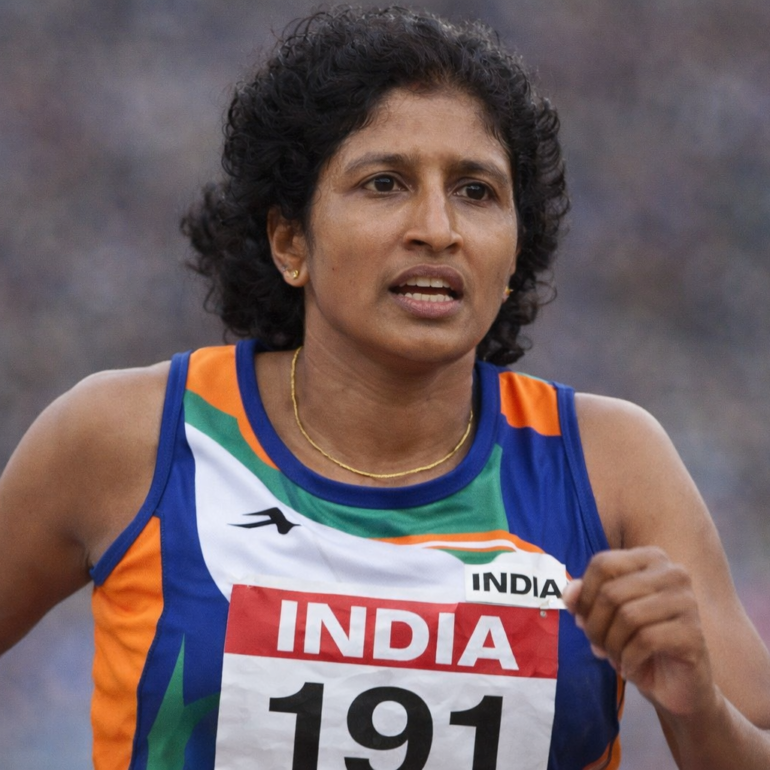
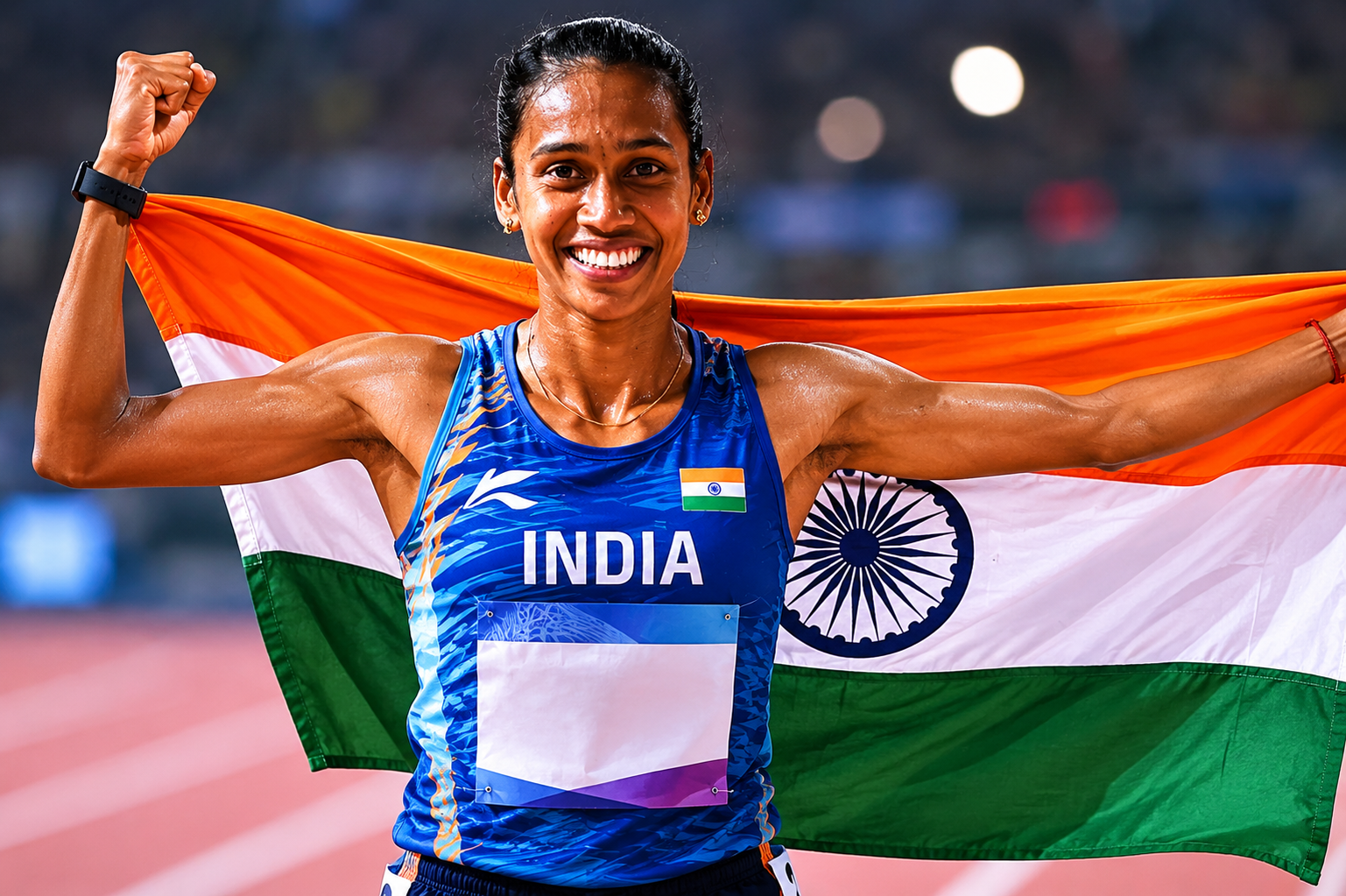
P.U Chitra is an Indian middle-distance runner who specialises in the 1500m distance. She won gold medals at the 2016 South Asian Games and 2017 Asian Championships and a bronze at the 2018 Asian Games. She won gold medal at the 2019 Doha Asian Athletics Championships. Chitra was borboin Mundur in Kerala’s Palakkad District.
Key Factors
Full Name: Palakkeezhil Unnikrishnan Chitra
Date of Birth: 9 June 1995
Birthplace: Mundur, Palakkad, Kerala, India
Occupation: Track and field athlete
Specialisation: 500 metres, middle-distance running
Major Achievements: Gold medal at 2017 Asian Athletics Championships, bronze medal at 2018 Asian Games, multiple South Asian Games medals
P. U. Chitra is one of the most compelling stories in Indian athletics, a middle-distance runner who rose from poverty-stricken rural Kerala to become an Asian champion and one of India’s finest 1500-metre athletes. Specialising in races that demand equal measures of endurance, tactical intelligence, and emotional resilience, Chitra built her career through relentless discipline rather than privilege or institutional comfort.
Born in Palakkad to a family of daily-wage labourers, she emerged from Kerala’s fiercely competitive school athletics culture and slowly transformed into a national icon. Her career has carried moments of glory and heartbreak in equal measure, from winning gold at the Asian Athletics Championships to enduring the deeply controversial exclusion from India’s squad for the 2017 World Championships despite becoming continental champion only weeks earlier.
More than medals, however, Chitra represents something larger within Indian sport, the quiet determination of athletes who continue running despite financial hardship, administrative uncertainty, and enormous psychological pressure. Her story is not merely about speed. It is about survival, resilience, and dignity.
Running Beyond Hardship
How P. U. Chitra carried Kerala’s athletic spirit from dusty school tracks to continental glory
The stadium in Bhubaneswar was loud that evening, but inside the final lap of the women’s 1500 metres, silence often arrives for runners.
Not literal silence. Something stranger.
The body narrows inward. Breathing becomes mechanical. Every stride turns into calculation. Competitors blur into movement and instinct. Middle-distance running, especially the 1500 metres, is not merely a race of speed. It is a race of patience, suffering, and timing.
As P. U. Chitra accelerated into the final stretch at the 2017 Asian Athletics Championships, years of struggle seemed compressed into those last few seconds. The girl from Palakkad, raised inside financial uncertainty and rural hardship, crossed the finish line to become Asian champion.
It should have been the defining celebration of her career.
Instead, within weeks, she found herself excluded from India’s squad for the World Championships.
The contrast felt cruel even by the standards of Indian sport.
But then, Chitra’s career has always existed between triumph and struggle.
A Childhood Built Around Survival
Mundur, in Kerala’s Palakkad district, is not the kind of place from which India usually imagines international athletes emerging.
It is rural, quiet, and shaped by ordinary economic anxieties. Chitra grew up in a financially struggling household where both her parents worked as daily-wage labourers. Money was uncertain. Stability was fragile.
Athletics initially did not appear as a pathway toward glory. It appeared as opportunity.
Like many children in Kerala’s government-school sports ecosystem, Chitra discovered athletics through school competitions. Kerala has long maintained one of India’s strongest school athletics cultures, where district meets and state championships are treated with remarkable seriousness. Teachers, local coaches, and sports councils collectively create a system capable of identifying talent early, especially among children from economically modest backgrounds.
For Chitra, running quickly became both escape and identity.
The family’s financial condition often made even basic sporting requirements difficult. Travel, nutrition, shoes, and training expenses carried enormous weight inside a household struggling for daily survival.
At crucial moments, small financial support from the Kerala Sports Council helped sustain her career. In Indian athletics, especially outside metropolitan centres, even limited institutional support can determine whether a young athlete survives within the system.
Chitra survived because she refused to stop running.
Kerala’s School Athletics Machine
Long before international medals, Chitra became a phenomenon inside Kerala school athletics.
She dominated state meets across multiple distance events, winning races in the 1500m, 3000m, 5000m, and cross-country competitions. Her versatility revealed an athlete with unusual endurance capacity and competitive maturity.
School athletics in Kerala possesses an intensity unfamiliar to many outside the state. Crowds gather in large numbers. Rivalries become deeply emotional. Young athletes often gain local celebrity status long before entering national competition.
Chitra thrived inside that atmosphere.
At National School Games and state meets, she repeatedly emerged as best athlete, even winning Tata Nano cars awarded to standout performers. For a financially struggling family, such moments carried significance beyond symbolism.
They offered proof that athletics could genuinely change lives.
More importantly, they established Chitra as one of the brightest middle-distance prospects in Indian athletics.
Learning the Art of the 1500 Metres
Middle-distance running demands a very specific psychological makeup.
The 1500 metres sits between sprinting and endurance racing. Athletes must possess tactical intelligence, rhythm control, finishing speed, and extraordinary pain tolerance. Unlike pure sprint events, races are rarely won through aggression alone. They are won through patience.
Chitra gradually evolved into a tactically intelligent runner.
Her style depended heavily on endurance strength and measured pacing. Rather than attacking recklessly from the front, she often positioned herself carefully within the pack before accelerating decisively during crucial final laps.
Coaches and observers increasingly noticed her composure under pressure.
Many Indian athletes struggle internationally because tactical racing differs enormously from domestic competition. Chitra adapted well because she learned to race intelligently rather than emotionally.
That maturity later became central to her continental success.
From National Hope to Asian Champion
By the mid-2010s, Chitra’s rise within Indian athletics accelerated rapidly.
She won gold medals at the 2016 South Asian Games and steadily established herself as India’s leading women’s 1500m runner. Her performances reflected not only physical endurance but remarkable consistency, something extremely difficult within middle-distance athletics.
Training for the 1500 metres is physically punishing.
Athletes spend years building aerobic endurance through endless repetitions, interval sessions, strength work, and recovery cycles. Middle-distance runners exist in permanent negotiation with fatigue. Improvement comes slowly and often invisibly.
For Chitra, every improvement carried additional emotional weight because success represented economic mobility and social transformation as much as sporting achievement.
Then came Bhubaneswar in 2017.
At the Asian Athletics Championships, Chitra produced the defining run of her career, winning gold in the women’s 1500 metres. It was a performance built on tactical patience and fearless finishing speed.
India celebrated a new Asian champion.
But the celebration did not last.
The Controversy That Shook Indian Athletics
Weeks after winning Asian gold, Chitra learned she would not be included in India’s squad for the 2017 World Championships in London.
The Athletics Federation of India argued that she had failed to meet the federation’s qualification timing standards despite becoming continental champion.
The decision triggered outrage across Kerala and beyond.
To many observers, excluding an athlete immediately after winning Asian gold felt deeply unfair and emotionally insensitive. Public debate intensified rapidly. Questions emerged about athlete welfare, selection transparency, and the psychological treatment of competitors within Indian sport.
Chitra eventually approached the Kerala High Court in an attempt to challenge the decision.
The controversy became larger than one athlete.
It exposed the uneasy relationship between administrative systems and athlete realities in India. For runners already navigating financial struggles, training pressures, and career uncertainty, such decisions can become emotionally devastating.
For Chitra personally, the episode represented profound heartbreak.
She had reached the greatest moment of her career only to watch it transform into national controversy.
Yet remarkably, she continued running.
Answering Through Competition
Many athletes collapse psychologically after public disappointment.
Chitra responded differently.
Rather than allowing controversy to define her career, she rebuilt herself through performance. She won gold at the Asian Indoor and Martial Arts Games and later secured bronze at the 2018 Asian Games, one of the most significant achievements of her career.
The Asian Games medal carried enormous symbolic importance because it proved her earlier success was not accidental or politically inflated.
She belonged among Asia’s elite middle-distance runners.
In 2019, she defended her continental reputation again at the Asian Athletics Championships in Doha, further establishing herself as one of India’s most reliable performers in middle-distance events.
Her resilience became central to her sporting identity.
The Psychology of Her Running
Watching Chitra race reveals important aspects of her character.
She rarely appears visibly panicked during tactical races. Instead, she relies heavily on rhythm preservation and gradual acceleration. Her strongest quality often emerges during decisive final phases when other runners begin losing composure.
Unlike purely explosive runners, Chitra succeeds through endurance intelligence.
That distinction matters greatly in middle-distance running, where races are frequently determined by psychological timing rather than raw speed alone.
She also developed a reputation for handling pressure effectively despite enormous scrutiny after 2017.
For athletes competing inside Indian systems, emotional resilience becomes almost as important as physical preparation.
Chitra repeatedly demonstrated both.
Kerala’s Endless Production Line of Women Athletes
Kerala’s contribution to Indian athletics, especially women’s athletics, remains extraordinary.
From P. T. Usha onward, the state consistently produced elite runners capable of competing internationally despite limited resources compared to global sporting powers.
Chitra belongs firmly within that tradition.
But her story carries additional importance because it reflects the continuing power of Kerala’s school-sports ecosystem. Athletes from economically weak backgrounds still occasionally find pathways through district competitions, sports hostels, and local coaching structures.
For countless young girls across Kerala, especially those from rural families, Chitra became proof that poverty does not automatically eliminate ambition.
More Than Medals
Elite athletics careers are fragile.
Injuries, competition, selection uncertainty, and financial instability constantly threaten momentum. Middle-distance running, in particular, demands years of sacrifice for achievements that may last only minutes on the track.
Chitra’s career reflects those realities honestly.
She experienced triumph, public sympathy, criticism, administrative conflict, and immense pressure while continuing to compete at elite levels. That persistence matters enormously because Indian women athletes often carry expectations far beyond sport itself.
They become symbols of aspiration, social mobility, and representation.
Chitra never sought that symbolic role deliberately.
It arrived because she kept running.
Conclusion
Long before medals, stadium lights, and national recognition, there was simply a young girl from Palakkad running through uncertainty with little more than endurance and belief.
P. U. Chitra did not emerge from privilege, elite academies, or carefully protected sporting systems. She emerged from rural Kerala’s harsh realities, from school grounds where ambition often existed without guarantees, and from a sporting culture built on resilience more than luxury.
Her career has never followed a smooth trajectory. It has been shaped equally by glory and disappointment, by Asian gold medals and painful exclusion, by public celebration and silent persistence. Yet perhaps that is exactly why her story continues to resonate so deeply within Indian athletics.
Because every time Chitra stepped onto the track, she carried more than personal dreams. She carried the hopes of athletes who come from places where survival itself can feel like competition, and she proved that endurance is sometimes the most powerful talent of all.