Thiruvathira
Traditional women’s dance form of Kerala
Thiruvathira, also known as Thiruvathirai or Arudhra Darisanam, is one of the most culturally significant Hindu festivals celebrated in Kerala and Tamil Nadu. In Kerala, the festival is closely associated with womanhood, devotion, dance, fasting rituals, and family traditions. In Tamil Nadu, it is celebrated mainly as Arudra Darshan, honoring Lord Shiva as Nataraja, the cosmic dancer.
More than a religious observance, the Thiruvathira festival is a celebration of faith, feminine grace, togetherness, and cultural identity. Through music, ritual, dance, and food traditions, the festival continues to connect generations of people to Kerala’s heritage and spiritual traditions.
What is Thiruvathira?
The word “Thiruvathira” refers to the Thiruvathira nakshatra, or star, considered sacred in Hindu tradition. In Tamil tradition, the festival is known as Arudhra or Arudra Darisanam.
The festival is deeply connected to Lord Shiva and his cosmic dance known as the Ananda Tandava, the divine dance of creation, preservation, and destruction. According to mythology, this cosmic dance represents the rhythm of the universe itself.
Thiruvathira is also associated with Goddess Parvati, who is believed to have performed deep penance to win Lord Shiva as her husband. Because of this connection, the festival holds special importance for women.
In Kerala, married women pray for the well-being and long life of their husbands, while unmarried women observe rituals seeking a loving and prosperous married life.
Though celebrated mainly in Kerala and Tamil Nadu, the festival is recognized across South India as an important spiritual and cultural occasion dedicated to Lord Shiva.
Thiruvathira in Kerala
In Kerala, Thiruvathira in Kerala is celebrated with a unique blend of devotion, family tradition, dance, and community participation. The festival usually falls during the Malayalam month of Dhanu or Makaram, corresponding to December or January.
The day begins early with ritual baths, prayers, and fasting. Women wake before sunrise and often gather together to sing devotional songs and perform rituals. Traditional households become lively with lamps, flowers, and festive preparations.
Thiruvathira is especially important for women. Married women pray for marital harmony and family prosperity, while unmarried girls observe rituals seeking blessings for a happy future marriage.
A particularly significant observance is Poothiruvathira, the first Thiruvathira after marriage. Newly married women celebrate the occasion with special prayers, rituals, and family gatherings.
Many Kerala temples dedicated to Lord Shiva conduct special ceremonies during the festival. Places such as Mathira Peedika Devi Temple and traditional Shiva temples across the state become centers of spiritual celebration.
In villages and traditional households, Thiruvathira creates a deeply nostalgic atmosphere where faith, family bonds, and cultural traditions come together beautifully.
Thiruvathirakali – Kerala’s Graceful Dance Tradition
One of the most recognizable parts of the festival is Thiruvathirakali, Kerala’s graceful women’s dance tradition.
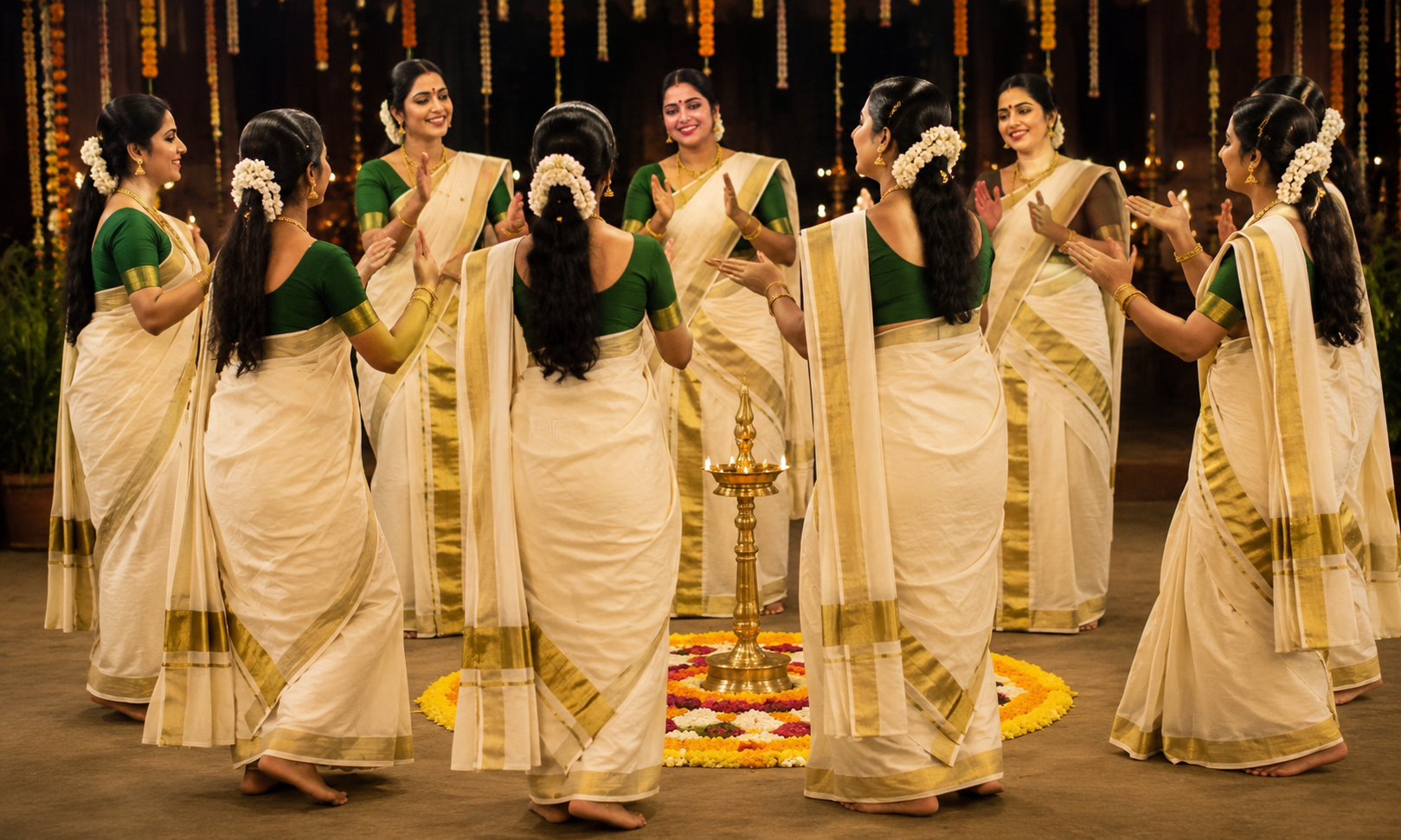
During the performance, women stand in circles around a lit nilavilakku lamp and move rhythmically while clapping their hands in coordination. The dance is elegant, calm, and deeply symbolic, representing joy, devotion, femininity, and togetherness.
Traditional songs known as Thiruvathira paattu accompany the dance. These songs often describe stories of Lord Shiva and Goddess Parvati, along with themes of love, devotion, and celebration.
The visual beauty of Thiruvathirakali is unforgettable:
- White-and-gold kasavu sarees
- Jasmine flowers adorning the hair
- Soft lamp light
- Graceful synchronized movements
The dance is not limited to homes alone. Schools, colleges, cultural organizations, and temple festivals across Kerala organize large Thiruvathirakali performances during the season.
In 2017, Kizhakkambalam in Kerala entered the Guinness World Records with a massive Thiruvathirakali performance involving thousands of women dancing together, highlighting the cultural importance of this traditional art form.
Today, Thiruvathirakali remains one of the strongest visual symbols of Kerala’s cultural identity and women-centered traditions.
Traditional Food of Thiruvathira
Food traditions are an important part of the Thiruvathira festival.
One of the most famous dishes prepared during the festival is Thiruvathira puzhukku, a nutritious dish made using various tubers and vegetables cooked together with coconut. The dish is traditionally eaten with koova payasam, a sweet dessert made from arrowroot powder, coconut milk, and jaggery.
Women observing fasting rituals often avoid rice-based meals during the day and follow traditional dietary practices connected to the festival.
The food reflects Kerala’s traditional wisdom, simplicity, and connection to seasonal ingredients. Beyond nutrition, these dishes also symbolize purity, devotion, and community sharing.
Arudra Darisanam in Tamil Nadu
In Tamil Nadu, the festival is celebrated mainly as Arudra Darshan, dedicated to Lord Shiva in his form as Nataraja, the cosmic dancer.
The most famous celebration takes place at the Chidambaram Nataraja Temple, where thousands of devotees gather to witness the grand Maha Abhishekam and temple processions.
The festival is also associated with the five sacred sabhas of Nataraja worship located at:
- Chidambaram
- Madurai
- Tirunelveli
- Courtallam
- Tiruvalangadu
The celebrations focus on Shiva’s divine dance, spiritual transformation, and cosmic energy.
Mythology and Spiritual Meaning
The mythology behind Thiruvathira is deeply symbolic and spiritual.
According to Hindu belief, Lord Shiva performed the Ananda Tandava, or cosmic dance of bliss, on this sacred day. This dance represents the continuous cycle of creation, preservation, destruction, and rebirth that governs the universe.
Legends also speak of Sage Vyaghrapada and Adishesha, who witnessed Shiva’s cosmic dance and received divine blessings.
Another important concept connected to the festival is Ardhanarishvara, the combined form of Shiva and Parvati represented as one body. This symbolizes balance, unity, and the inseparable connection between masculine and feminine energy.
For devotees, Thiruvathira represents spiritual harmony, devotion, and the balance of life itself.
Cultural Importance Today
Even in modern Kerala, Thiruvathira continues to hold deep emotional and cultural importance.
The festival helps preserve women-centered traditions, community gatherings, devotional music, and classical cultural practices. Schools, colleges, and cultural organizations actively encourage younger generations to participate in Thiruvathirakali and festival celebrations.
For many Malayalis, Thiruvathira is closely connected with memories of family gatherings, traditional food, dance, temple visits, and festive evenings illuminated by lamps.
The celebration also reflects Kerala’s strong connection between spirituality, art, and everyday life.
Conclusion
Thiruvathira is far more than a religious festival. It is a celebration of devotion, womanhood, dance, music, food, tradition, and Kerala’s cultural soul.
From the graceful movements of Thiruvathirakali to the spiritual atmosphere of Shiva temples and the warmth of family rituals, every part of the festival carries beauty, meaning, and emotional depth.
Even as modern life changes rapidly, Thiruvathira continues to connect people with Kerala’s heritage through music, memory, and shared tradition.
For visitors and culture lovers, experiencing the Thiruvathira festival offers a rare glimpse into the elegance, spirituality, and timeless cultural richness of Kerala.