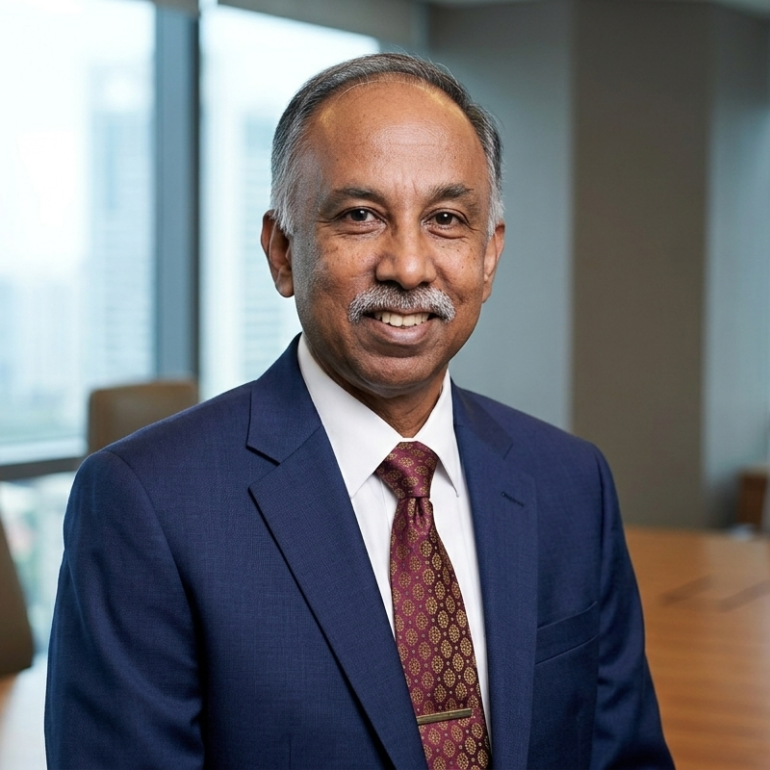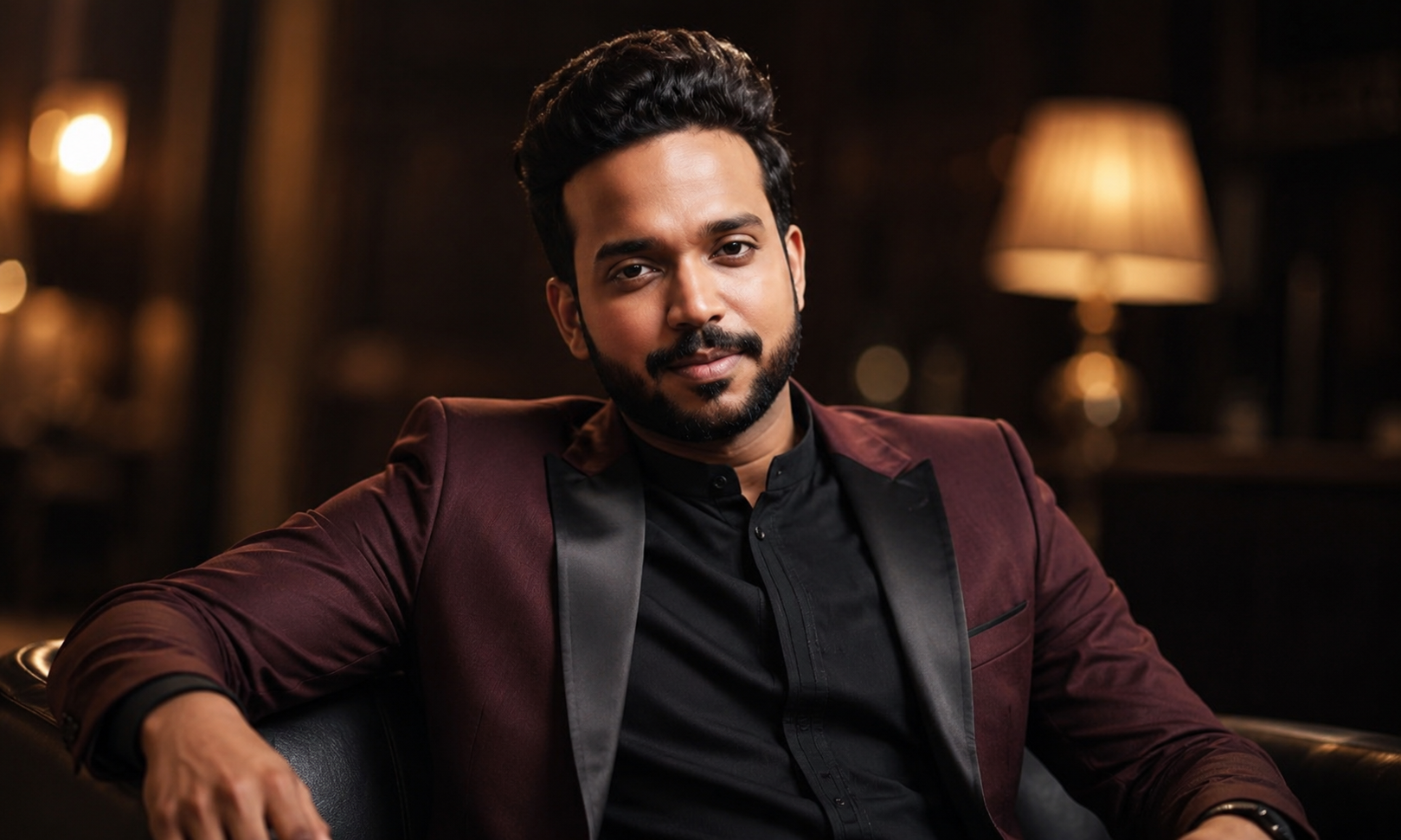
K.S Harishankar
Indian Playback Singer & Musician
K.S Harisankar is a Carnatic musician and Indian playback singer known for his work across South Indian cinema, performing in Malayalam, Tamil, Telugu, and Kannada films. Harisankar was born in Thiruvananthapuram, Kerala, to musicians Alappuzha Sreekumar and Kamala Lakshmi. He is the grandson of Padma Shri Dr. K. Omanakutty, and grandnephew of noted musicians M. G. Radhakrishnan and M. G. Sreekumar.
Key Factors
Full Name: K. S. Harisankar
Date of Birth: 18 November 1993
Birthplace: Thiruvananthapuram, Kerala
Occupation: Playback Singer, Carnatic Vocalist
Languages Worked In: Malayalam, Tamil, Telugu, Kannada
K. S. Harisankar has emerged as one of the most emotionally distinctive voices in contemporary South Indian music, a singer whose artistry flows effortlessly between the rigor of Carnatic tradition and the emotional immediacy of modern cinema. In an era where playback music often shifts rapidly with trends and algorithms, Harisankar’s voice carries something timeless, textured emotion, classical discipline, and an outstanding ability to make listeners feel intimacy even within grand cinematic soundscapes.
Whether through the aching romance of “Jeevamshamayi,” the haunting softness of “Pavizha Mazhaye,” or the spiritual gravitas of his classical concerts, Harisankar has steadily built a reputation as more than just a playback singer. He represents a rare continuity between Kerala’s rich classical music heritage and the evolving emotional language of contemporary South Indian cinema. Rooted deeply in Carnatic music yet unafraid of cinematic experimentation, his journey reflects both artistic discipline and emotional vulnerability, qualities that have made him one of the defining voices of a new musical generation.
The Voice Between Tradition and Emotion
How K. S. Harisankar became one of the defining musical identities of contemporary South Indian cinema while remaining deeply rooted in classical tradition.
The auditorium falls silent just before the opening line of “Jeevamshamayi.”
For a brief second, there is only anticipation, thousands of listeners waiting for a familiar emotional wound to reopen through music. Then comes the voice, restrained, trembling slightly at the edges, carrying romance, longing, and melancholy with astonishing control. In that moment, the crowd is no longer listening merely to a playback singer. They are listening to someone who understands emotional memory itself.
This has become the peculiar power of K. S. Harisankar.
Across cinema halls, streaming platforms, Carnatic stages, and international concerts, his voice has developed a rare emotional immediacy. It sounds technically refined without becoming mechanical, deeply classical without alienating younger audiences. In contemporary South Indian film music, where speed and digital visibility often overshadow musical depth, Harisankar represents something increasingly uncommon, sincerity.
Over the last decade, he has evolved from a classically trained prodigy into one of the most recognisable contemporary playback voices in Malayalam cinema, while also expanding into Tamil, Telugu, and Kannada industries. Yet beneath the growing fame lies the unmistakable imprint of Carnatic discipline, inherited musical lineage, and years of rigorous artistic training.
His story begins not inside recording studios, but within a home where music itself was part of everyday existence.
A Childhood Immersed in Music
Born in Thiruvananthapuram, Harisankar grew up surrounded by one of Kerala’s most respected musical lineages. His father, Alappuzha Sreekumar, is a respected musician, while his mother Kamala Lakshmi nurtured an environment where art and discipline naturally coexisted.
Music was never presented to him merely as performance. It was inheritance, language, and identity.
The family’s artistic roots extended deeply into Kerala’s classical music culture through Padma Shri awardee K. Omanakutty, one of the towering figures of Carnatic music. The influence of musical stalwarts like M. G. Radhakrishnan and M. G. Sreekumar also shaped the atmosphere around him.
For Harisankar, childhood was filled with rehearsals, ragas, devotional compositions, and long hours of listening.
Unlike many playback singers who later enter classical training, his musical instincts were formed fundamentally through Carnatic discipline from an early age. That distinction would later define the emotional architecture of his singing.
Even today, listeners can hear the classical grounding beneath his cinematic melodies, in his breath control, microtonal precision, gamakas, and emotional phrasing.
The Discipline of Classical Music
Long before cinema audiences discovered him, Harisankar had already earned deep respect within classical music circles.
His training in Carnatic music was intense and uncompromising. Like many serious classical musicians, his early years involved relentless practice schedules, varnams repeated endlessly, voice culture exercises, and rigorous concert preparation.
The results came steadily.
Winning the prestigious All India Radio National Classical Music Competition marked him as a serious young talent. Later, becoming a Grade A artiste with All India Radio further established his credibility in India’s classical music ecosystem.
He performed at revered venues including Madras Music Academy, Narada Gana Sabha, Shanmukhananda Sabha, and the legendary Chembai Sangeetholsavam. These were not merely concerts; they were cultural rites of passage for serious Carnatic musicians.
This classical foundation distinguishes Harisankar from many modern playback singers whose training is often shaped more by studio versatility than by concert tradition.
For Harisankar, melody begins with discipline.
Crossing Into Cinema
Transitioning from Carnatic music into playback singing is rarely easy.
Classical musicians often struggle to adapt to the emotional flexibility and conversational realism demanded by cinema music. Playback singing requires technical precision, but also vulnerability, intimacy, and the ability to disappear into cinematic storytelling.
Harisankar entered playback music gradually.
One of his earliest recording experiences came alongside K. J. Yesudas in the film Saphalyam. He also recorded devotional music extensively during his formative years, experiences that strengthened both vocal maturity and emotional control.
Like many singers entering the industry, the initial years involved uncertainty, scattered opportunities, and patient waiting. Yet composers quickly recognized something unique in his voice: emotional transparency.
Composer Ouseppachan became one of the important early figures who helped shape Harisankar’s transition into cinema playback.
Unlike heavily stylized singers, Harisankar possessed a voice that felt emotionally accessible. Listeners could inhabit his singing rather than merely admire it.
That quality slowly became his signature.
The Songs That Changed Everything
Every playback singer eventually finds one song that alters public perception permanently.
For Harisankar, that song was undoubtedly “Jeevamshamayi” from Theevandi.
The song arrived at a moment when Malayalam film music was rediscovering emotionally layered melodies. Harisankar’s rendition transformed the composition into something deeply personal for listeners across Kerala. The softness in his phrasing, the restraint in emotional delivery, and the aching vulnerability in his voice created an instant cultural connection.
Suddenly, audiences were not merely hearing a singer. They were emotionally identifying with him.
Then came songs like “Pavizha Mazhaye,” “Kamini,” “Vennilave,” “Kiliye,” “Vaanam Chaayum,” and “Hatja,” each expanding his emotional range further.
What makes Harisankar particularly compelling is the coexistence of multiple emotional textures within his singing. Romance in his voice often carries melancholy. Devotional undertones appear even in cinematic melodies. Joy feels restrained by introspection.
This emotional layering makes his songs unusually replayable.
Listeners return not merely for melody, but for emotional atmosphere.
A Voice Travels Across Languages
As his popularity expanded, Harisankar gradually entered Tamil, Kannada, and Telugu cinema.
In Tamil music, collaborations with composers like Dhibu Ninan Thomas revealed a slightly different dimension of his voice. Songs like “Pesatha Mozhiye” showcased emotional gentleness and lyrical sensitivity.
His work with G. V. Prakash Kumar further expanded his reach among younger Tamil audiences.
Kannada cinema introduced him to even larger pan-South Indian visibility through projects like 777 Charlie and Sapta Sagaradaache Ello. Collaborations with composers such as B. Ajaneesh Loknath and Charan Raj demonstrated how effectively his emotional style could transcend linguistic boundaries.
Then came the massive cultural reach of RRR through the Malayalam version of “Naatu Naatu,” connecting him to a broader pan-Indian audience.
What remains remarkable is that despite moving across industries, Harisankar never lost his individuality. His voice retains unmistakable emotional identity regardless of language.
The Emotional Grammar of His Singing
Harisankar belongs to a generation of singers shaped equally by classical rigor and digital-era listening culture.
Younger audiences today often discover songs through short-form clips, streaming playlists, and emotional virality. Harisankar’s music thrives within this environment because his singing communicates feeling instantly.
Yet underneath that accessibility lies deep technical sophistication.
His vocal texture carries softness without weakness. He controls high notes with remarkable ease. His transitions between registers are fluid, and his classical grounding allows him to improvise subtly without overwhelming cinematic compositions.
More importantly, he understands emotional pacing.
Many singers perform melody beautifully. Harisankar often performs silence equally well, the pauses, breath breaks, and emotional hesitations inside his singing become part of the storytelling.
That is why filmmakers repeatedly turn to him for emotionally intense compositions.
Recognition That Followed Emotional Impact
Awards arrived gradually, almost organically, following the growing emotional presence of his music in public culture.
Recognition through the Kerala State Film Awards, SIIMA honors, Mazhavil Music Awards, and Vayalar Ramavarma Awards reflected more than popularity. They acknowledged a singer helping reshape contemporary Malayalam playback music toward emotionally richer melodic spaces.
Yet perhaps equally meaningful was the respect he earned from classical and film musicians alike.
Few artists successfully balance Carnatic credibility and mainstream cinematic relevance simultaneously. Harisankar has managed precisely that.
His inauguration performance at the Soorya Festival, a date historically associated with Yesudas, carried symbolic significance within Kerala’s music culture. It quietly acknowledged his emergence as one of the major voices of a new generation.
Beyond Playback: The Classical Musician Remains
Despite cinematic success, Harisankar continues to identify deeply with classical music.
Concert stages remain central to his artistic life. His Carnatic performances reveal a different dimension of his personality, more meditative, exploratory, and spiritually rooted.
This dual identity perhaps explains why his playback singing carries unusual depth. He approaches songs not merely as commercial assignments, but as emotional and musical compositions deserving sincerity.
Within the South Indian music fraternity, he is often described as disciplined, humble, and deeply respectful of tradition.
Those qualities have become increasingly rare in fast-moving celebrity culture.
Conclusion
K. S. Harisankar’s journey is ultimately not just about playback success. It is about continuity, how classical tradition survives and evolves inside contemporary emotional culture.
In an era where music often becomes disposable, his voice still invites listeners to pause, feel, and remember. Whether through the aching intimacy of a Malayalam melody, the devotional resonance of a classical composition, or the cinematic scale of multilingual film music, Harisankar consistently brings emotional truth into every performance.
That may be why audiences across generations connect so deeply with him. He represents a bridge between rigor and accessibility, between Carnatic heritage and modern cinematic storytelling, between technical perfection and emotional vulnerability.
Years from now, when people revisit the emotional soundscape of contemporary South Indian cinema, K. S. Harisankar’s voice will almost certainly remain among its defining echoes, gentle, soulful, deeply human, and undeniably outstanding.
Awards
2008: Raaga Ratnam Juniors Carnatic Music Reality Show by Amrita TV Winner
2015: Radio Mirchi Music Awards – Best Upcoming Singer
2016: Asia Vision Awards – Best Playback Singer
2018: Movie Street Award 2018 – Best Playback Singer
2018: M.S. Subbulakshmi Fellowship in Carnatic Music
2018: All India Radio (AIR) – A Grade Artist in Carnatic Music & Light Music
2019: SIIMA Best Playback Singer Male
2019: Asianet Film Awards – Best Singer
2019: Mazhavil Music Awards – Best Singer
2019: Asiavision Awards – Best Playback Singer
2020: Asianet Film Awards – Nominee in Best Singer
2021: Mazhavil Music Awards – Best Singer
2021: Mazhavil Music Awards – Best Duet
2022: Big Screen Award – Best Playback Singer
2023: Kerala Film Critics Association Awards – Best Singer
2023: Vayalar Ramavarma Film Award – Best Singer
2023: Big Screen Award – Best Playback Singer
2023: IFF Award – Best Playback Singer of The Year
2023: Anand TV Awards – Best Playback Singer
2023: Vayalar Ramavarma Film Award – Best Playback Singer
2023: SIIMA – Best Playback Singer Male, Nominee (Malayalam & Kannada)
2024: SIIMA Best Playback Singer Male
2024: Kerala Film Critics Association Awards – Best Singer
2024: Mazhavil Music Awards – Best Song of the Year (For Kiliye from ARM)
2025: Flowers TV – Most Popular Singer (For Kiliye from ARM)
2025: SIIMA – Best Playback Singer Male (For Kiliye from ARM)
2025: Chettikulangara Puraskaaram
2025: Vayalar Ramavarma Sangeetha Puraskaaram
2025: Honesty Fame Award – Best Playback Singer
2025: Thikkurisi Film Award 2025 – Best Singer Male
2025: Mohammed Rafi Award by Pattukalude Koottukar
2025: P. Jayachandran Memorial Award – Varnam
2025: 55th Kerala State Film Awards – Best Male Singer