
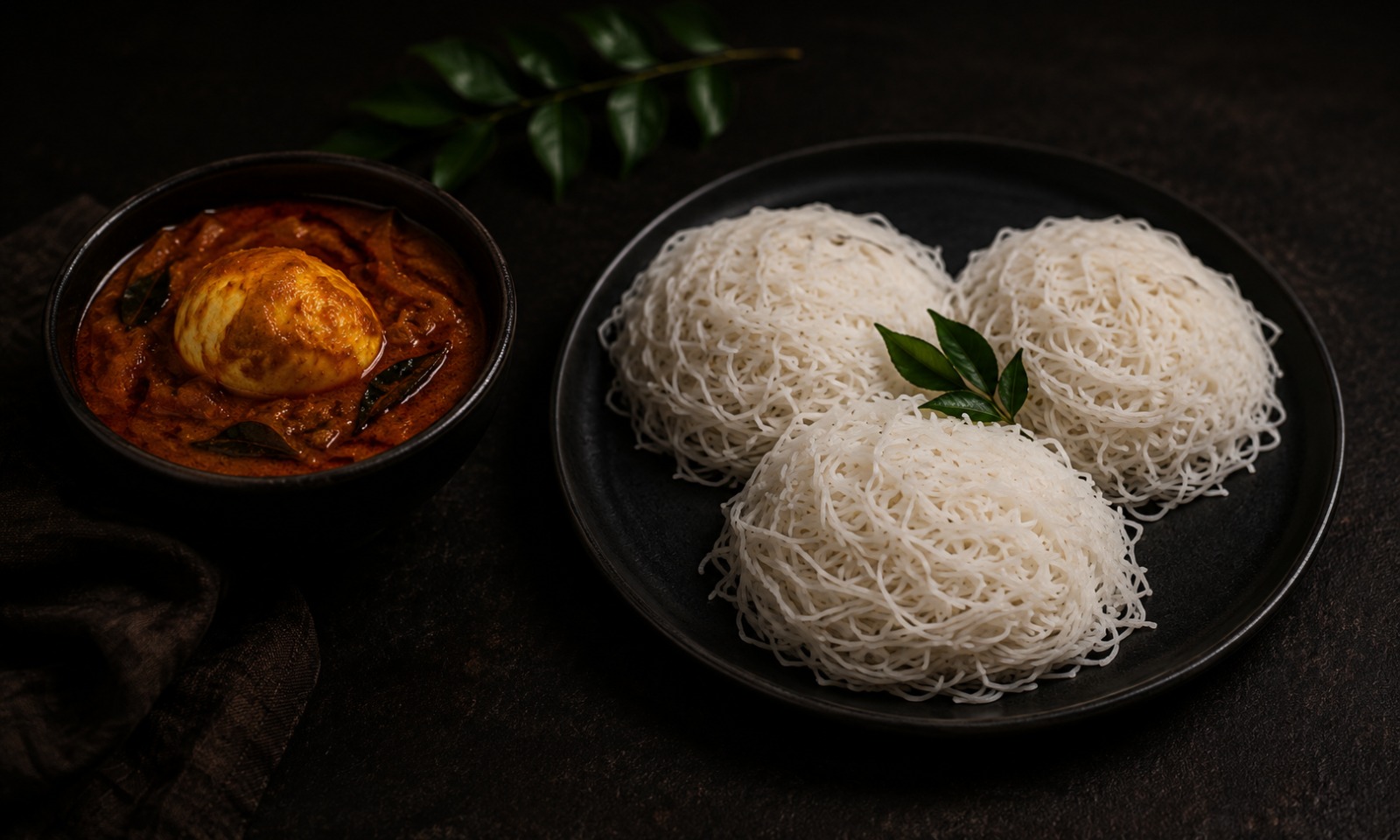
Idiyappam with Egg Curry is one of Kerala’s most loved traditional breakfasts, combining soft steamed rice noodles with a rich, mildly spiced egg curry. Simple, filling, and enjoyed across the state, this classic dish reflects Kerala’s home-style cooking and long-standing food traditions.
The Comforting Classic of Kerala Mornings
Idiyappam, often called string hoppers, appears simple at first glance. Thin strands of rice flour dough are pressed into intricate nests and gently steamed until tender. But in Kerala homes, simplicity is never ordinary. Paired with a rich, mildly spiced egg curry, Idiyappam transforms into a breakfast that balances softness, spice, and warmth with remarkable harmony.
Across the state, from tiled ancestral homes in Thrissur to crowded roadside eateries in Kozhikode, Idiyappam remains a beloved staple. It is a dish that moves effortlessly between generations, carrying the taste of tradition without losing relevance in modern kitchens.
The roots of Idiyappam stretch deep into South Indian and Sri Lankan culinary history. In Kerala, however, it evolved into something uniquely local. The dish became especially popular in regions where rice cultivation shaped everyday food habits. Unlike heavier breakfasts, Idiyappam offered lightness while still being filling, making it ideal for Kerala’s humid climate.
Traditionally, the dish was prepared during early mornings when kitchens came alive before sunrise. In many households, mothers and grandmothers would knead the dough by hand, carefully pressing it through brass or wooden *sevazhi* moulds onto circular bamboo mats before steaming them in batches. The process required patience and rhythm, qualities deeply embedded in Kerala cooking itself.
The ingredients are deceptively minimal. Fine rice flour is mixed with hot water and a touch of salt to form a soft dough. Some homes add freshly grated coconut between layers for added aroma and sweetness. The dough is then pressed into thin noodle-like strands and arranged into small spirals before steaming.
Watching Idiyappam being prepared is almost meditative. The gentle pressure on the mould, the delicate threads falling into shape, the rising steam from the *idli chembu* or steamer, every movement carries the quiet precision of inherited cooking knowledge. Unlike fried breakfasts, Idiyappam feels clean and restrained, allowing the accompanying curry to shine.
And that curry changes everything.
While Idiyappam pairs beautifully with vegetable stew, chicken curry, or sambar, its emotional soulmate in Kerala kitchens is undoubtedly egg curry. Kerala-style egg curry is rich without being overpowering. Hard-boiled eggs rest in a deep reddish-brown gravy made with onions, tomatoes, green chillies, curry leaves, black pepper, and roasted spices, all brought together with coconut oil’s unmistakable aroma.
Some versions lean toward thick coconut milk, especially in central Kerala, while others carry a sharper spice profile in Malabar households. Either way, the magic lies in the contrast. The soft, almost airy texture of Idiyappam absorbs the curry slowly, soaking in the warmth of spices without losing its delicate structure.
There is something profoundly comforting about tearing through a mound of fresh Idiyappam and dragging it through spicy egg gravy on a rainy morning. The heat rises gently from the plate, mingling with the scent of curry leaves crackling in coconut oil.
Imagine a monsoon dawn in Kerala. Rain taps steadily against tiled roofs while the kitchen glows under yellow light. A steel lid lifts, releasing clouds of steam from freshly cooked Idiyappam. Nearby, egg curry simmers quietly in an iron *cheenachatti*, its surface shimmering with coconut oil and crushed pepper. Family members gather slowly around the dining table, still carrying traces of sleep and silence. Someone pours hot chai into glasses. Someone else tears apart the first Idiyappam. For a few minutes, the world outside can wait.
That emotional familiarity is one reason why the dish continues to endure.
People love Idiyappam because it feels light yet deeply satisfying. Unlike oil-heavy breakfasts, it is gentle on the stomach and naturally suited to Kerala’s climate. Its versatility also gives it unusual longevity. It can taste luxurious with mutton stew, homely with egg curry, or simple with sweetened coconut milk.
For older generations, the dish carries nostalgia, memories of childhood kitchens, Sunday breakfasts, and family gatherings. For younger diners, especially in cities, Idiyappam has become part of a renewed appreciation for traditional food over processed convenience.
Today, the dish has moved beyond homes into Kerala’s tourism and restaurant culture. Travelers searching for authentic local breakfasts often encounter Idiyappam served alongside stew or curry in heritage homestays and upscale eateries alike. Health-conscious diners also gravitate toward it because steaming rather than frying keeps the dish comparatively lighter.
Yet despite evolving food trends, Idiyappam has remained remarkably unchanged. Perhaps that is its greatest strength.
In Kerala, Idiyappam with egg curry is not merely breakfast. It is warmth carried through steam, memory folded into rice strands, and tradition served quietly on a plate. Even in an age of fast food and hurried mornings, this outstanding dish continues to remind Malayalis what comfort truly tastes like, soft, fragrant, and deeply rooted in home.