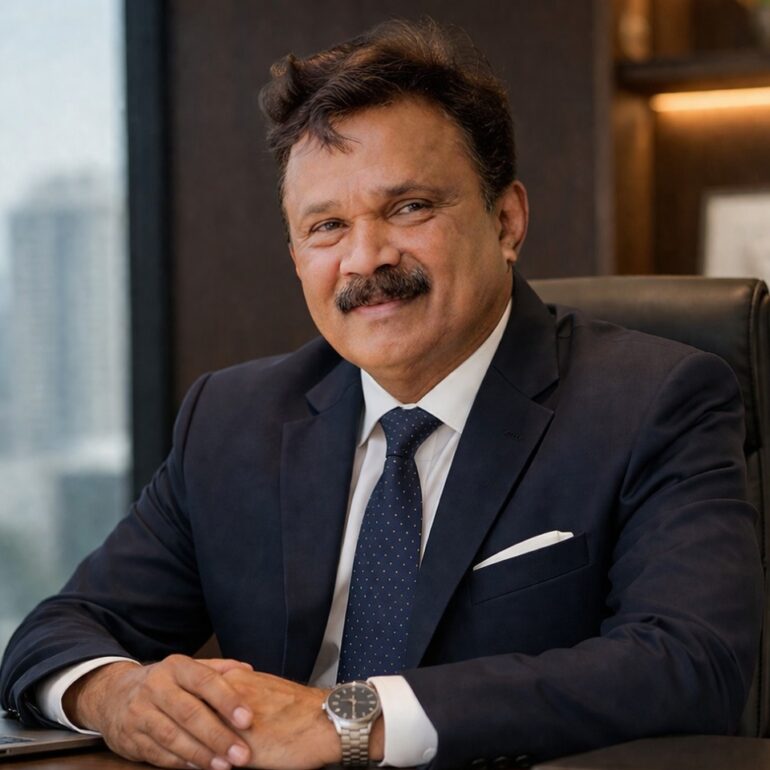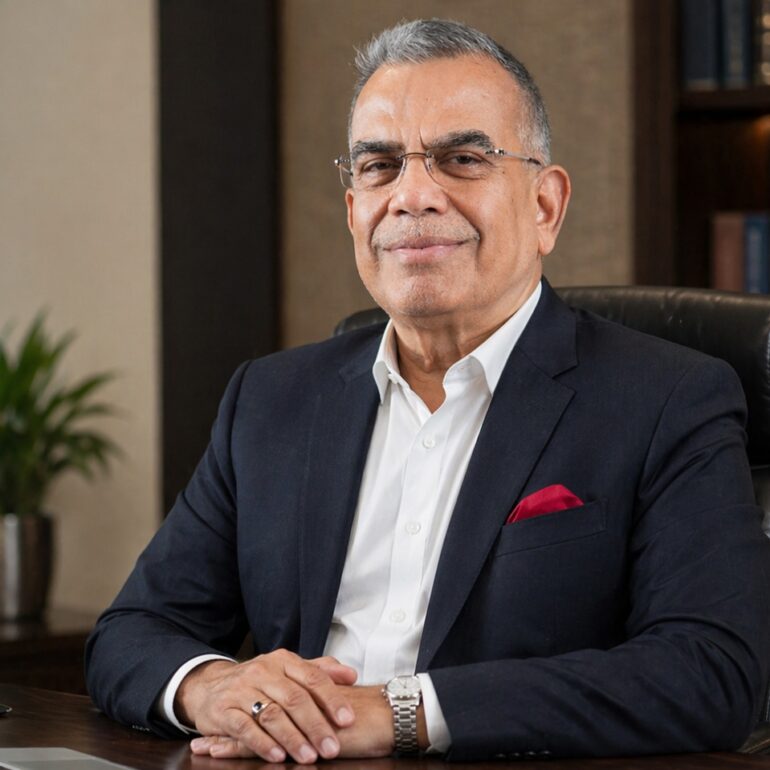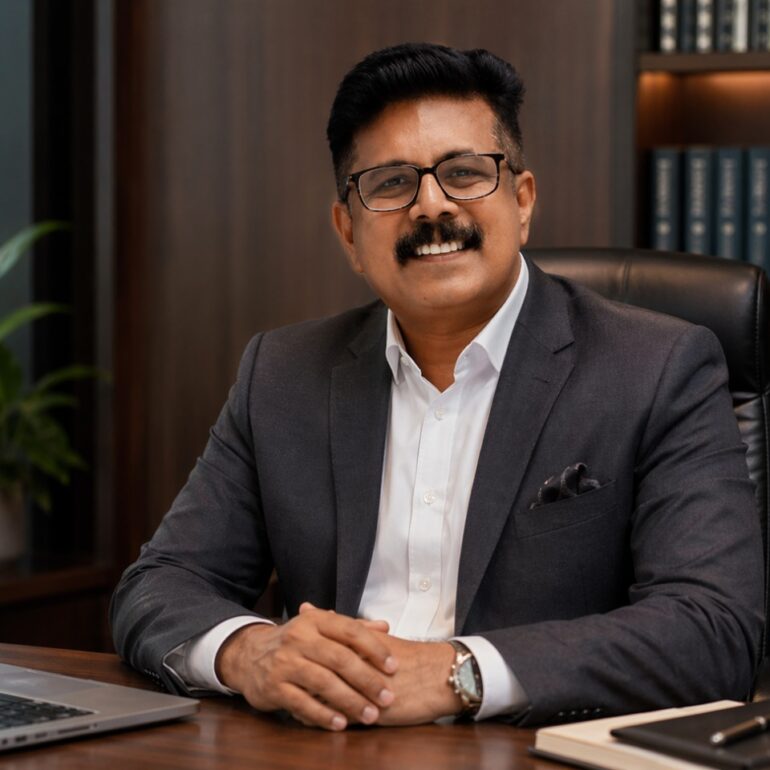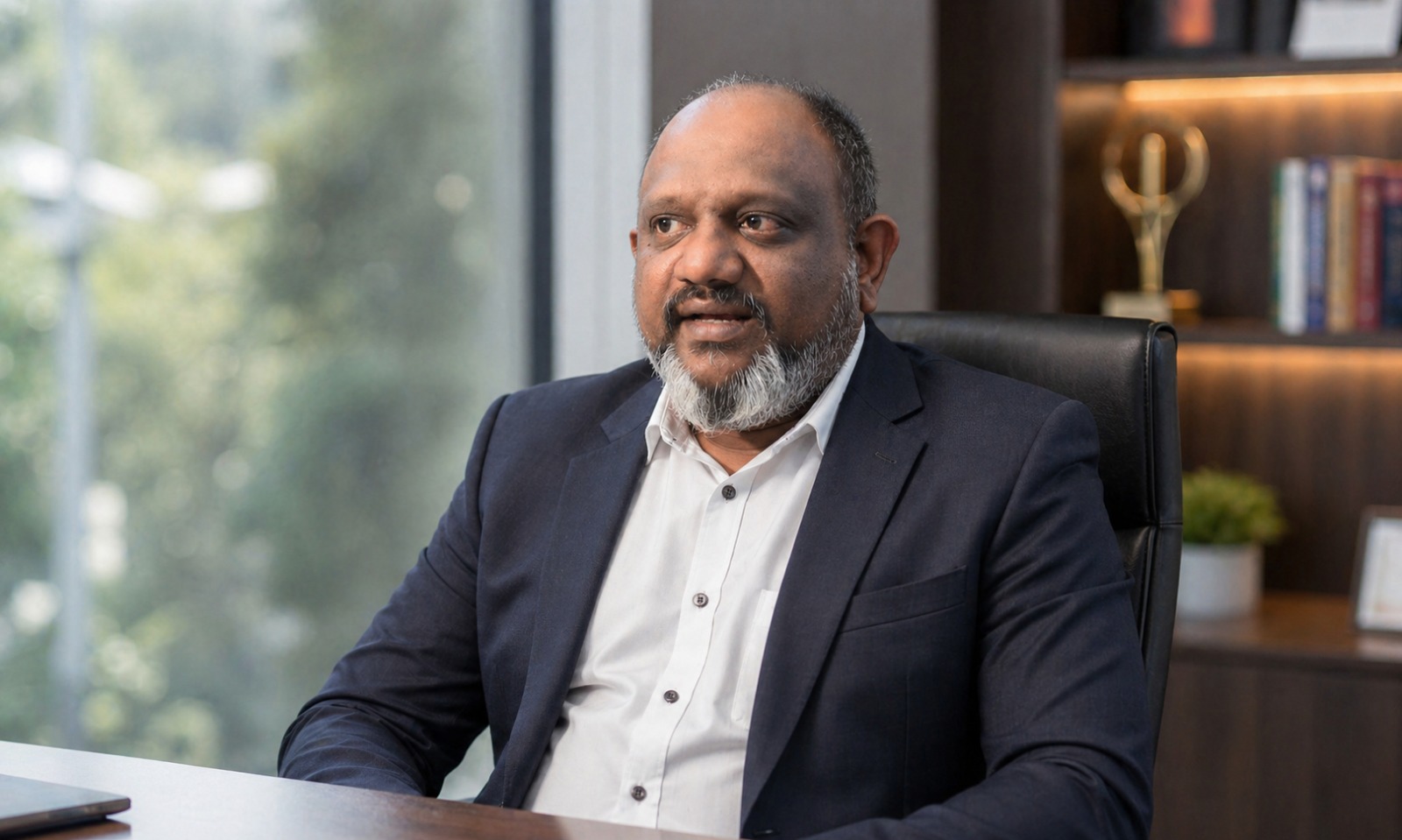
Balachandar Sivagurunathan
Entrepreneur, Business Leader
Balachandar Sivagurunathan is the Managing Director of Repose Mattress. His journey, spanning over three decades in the mattress business before launching Repose in 2013, reflects a quiet but outstanding shift in India’s consumer landscape, from price-driven purchases to wellness-oriented decisions. At the centre of that shift is a simple proposition: better sleep is not indulgence, but infrastructure.
Key Factors
Full Name: Balachandar Sivagurunathan
Title: Managing Director & CEO, Repose Mattress Pvt Ltd
Occupation: Entrepreneur, Business Leader
Known For: Building a premium mattress brand in India, driving innovation in sleep products, scaling Repose as a fast-growing player in the organized mattress segment
Building Comfort
For decades, sleep in India has been negotiated rather than curated. It has been shaped by what is available, affordable, or inherited, coir mattresses passed down, foam beds chosen on price, comfort an afterthought. Against this backdrop, Balachandar Sivagurunathan’s decision to build a premium mattress brand was not just a business move, but a cultural intervention. After nearly 30 years in the industry, he did not set out to sell beds. He set out to change how India thinks about sleep itself.
The Insider Who Saw the Gap
Unlike many first-time founders, Balachandar did not enter the mattress industry as an outsider spotting a trend. He was already embedded in it.
Over three decades, he had observed the evolution, and stagnation, of India’s sleep products market. The sector, estimated at around ₹15,000 crore, remained fragmented, dominated by unorganized players, with limited innovation and an overwhelming focus on affordability. Even as Indian consumers upgraded in categories like smartphones, automobiles, and appliances, mattresses remained a low-involvement purchase.
What stood out to him was not just the lack of premium products, but the absence of awareness. In developed markets, sleep is positioned as a wellness investment. In India, it was still treated as a one-time household expense.
This gap, between what the product could be and what the market perceived it to be, became the foundation for Repose.
Building Repose from the Ground Up
Repose Mattress Pvt Ltd was founded in 2013 in Coimbatore with an initial investment reportedly around ₹1.5 crore. It was not a large-scale launch, nor was it backed by institutional capital. Instead, it was built on industry knowledge and a clear positioning strategy.
From the outset, Balachandar made a deliberate choice, Repose would not compete in the mass segment. It would operate in the premium and luxury space, where differentiation could be driven by product quality, design, and innovation rather than price.
The early challenges were predictable but significant. Convincing Indian consumers to pay more for a mattress required not just better products, but better storytelling. Distribution networks had to be built, dealer relationships established, and brand credibility earned in a market that often defaults to familiarity.
Repose’s early years were therefore less about rapid expansion and more about establishing a foothold in a category that itself was still evolving.
Disrupting a Price-Sensitive Market
India’s mattress market is structurally complex. A large portion of sales still comes from unorganized players, local manufacturers who offer low-cost products with minimal branding.
For a premium brand, this creates a dual challenge. First, competing against significantly lower price points. Second, educating consumers on why the difference matters.
Balachandar’s approach has been rooted in reframing the conversation. Instead of positioning mattresses as products, he positions them as part of a broader wellness ecosystem. This aligns with a gradual shift in Indian consumer behaviour, particularly among urban middle and upper-income groups, where spending on health, fitness, and lifestyle has increased.
Yet, the transition is uneven. Premiumization in mattresses is still in its early stages compared to other categories. Repose’s growth, therefore, reflects both the opportunity and the limitations of this evolving market.
Innovation as Differentiation
If pricing cannot be the differentiator, the product has to be.
Repose has consistently leaned into innovation as a core strategy. Early on, the company moved towards spring mattresses, which offered better support and durability compared to traditional foam or coir products.
Beyond this, it introduced a range of unconventional features, products that blur the line between utility and novelty. These include mattresses with integrated digital lockers, designed for secure storage, and memory foam pillows embedded with audio functionality.
Perhaps more significant is the company’s adoption of SmartGrid technology, a Japanese-patented system designed to enhance comfort and pressure distribution. While such technologies are common in global markets, their introduction in India signals an attempt to align domestic offerings with international standards.
The risk, however, lies in balancing innovation with relevance. Not every feature translates into sustained demand. The challenge is ensuring that innovation enhances user experience rather than becoming a marketing gimmick.
Scaling the Business
Repose’s growth trajectory has been steady rather than explosive. The company reported revenues of around ₹103 crore in FY22, placing it among emerging players in the organized mattress segment.
Its expansion strategy has focused on building manufacturing capabilities across regions, with units in Coimbatore, Pune, and Meerut. This distributed approach is not incidental. It is a response to one of the industry’s structural challenges, logistics.
Transporting mattresses is expensive due to their volume. Unlike compact consumer goods, they occupy significant space, making long-distance distribution costly.
By establishing regional manufacturing hubs, Repose reduces transportation costs, improves delivery timelines, and gains proximity to local markets. The company has articulated ambitions of reaching ₹500 crore in revenue, alongside expanding its manufacturing footprint across additional cities.
Whether this scale can be achieved will depend on both market growth and the company’s ability to maintain margins in a competitive landscape.
Logistics, Operations, and Real-World Constraints
The mattress business is deceptively complex. Beyond manufacturing, it involves inventory management, dealer networks, last-mile delivery, and after-sales service.
Balachandar’s strategy reflects a deep understanding of these operational realities. Localized manufacturing is not just a cost decision, it is a structural necessity. Similarly, building strong dealer relationships remains critical in a market where offline retail still dominates.
At the same time, the rise of e-commerce has introduced new dynamics. Direct-to-consumer brands have entered the market with compressed mattresses and online-first strategies. While Repose operates in a more traditional retail framework, adapting to these shifts will be essential.
Post-Covid Shift: Sleep as Wellness
The Covid-19 pandemic marked a turning point for several consumer categories, including sleep products.
With increased time spent at home, and heightened awareness of health and immunity, consumers began paying more attention to sleep quality. Global exposure, through travel and digital media, further influenced expectations.
This shift has benefited premium brands like Repose, which are positioned around comfort, durability, and wellness. However, it has also intensified competition, as more players enter the premium segment.
The broader trend is clear. Sleep is gradually moving from being an overlooked necessity to a recognized component of overall well-being.
Leadership Style and Vision
Balachandar Sivagurunathan’s leadership style is shaped by experience rather than experimentation.
Having spent decades in the industry before launching his own venture, his approach is grounded in operational discipline and product focus. He is not positioned as a high-visibility startup founder, but as a practitioner who understands the nuances of manufacturing, distribution, and consumer behaviour.
His decisions reflect a preference for long-term value over short-term gains. This is evident in the company’s focus on product development, manufacturing infrastructure, and gradual expansion rather than aggressive scaling.
At the same time, his willingness to introduce unconventional products suggests a certain openness to risk, provided it aligns with the brand’s core positioning.
Future Outlook
The Indian mattress industry is at an inflection point. As incomes rise and consumer preferences evolve, the shift towards organized, branded products is expected to accelerate.
For Repose, the opportunity lies in consolidating its position within the premium segment while expanding its geographic reach. Plans to enter markets such as Surat and Bhubaneswar indicate a continued focus on distributed growth.
At a broader level, the company’s future will depend on how effectively it can integrate technology, both in product innovation and customer engagement. The emergence of sleep-tech, including data-driven solutions and smart bedding systems, could reshape the category in the coming years.
Closing Note
Balachandar Sivagurunathan’s journey is not defined by disruption in the conventional startup sense. It is defined by a slower, more deliberate shift, taking a category that has long been ignored and asking consumers to reconsider its value.
In a market where comfort was once compromised for cost, he has built a brand that argues for a different equation. And perhaps that is why his message, simple and direct, resonates beyond the product itself.
“Call me, if you want to have good sleep.”
In a country just beginning to understand the economics of rest, that proposition feels not just relevant, but quietly outstanding.