Lekha Balachandran
Pioneer woman entrepreneur in Kerala’s heavy engineering sector
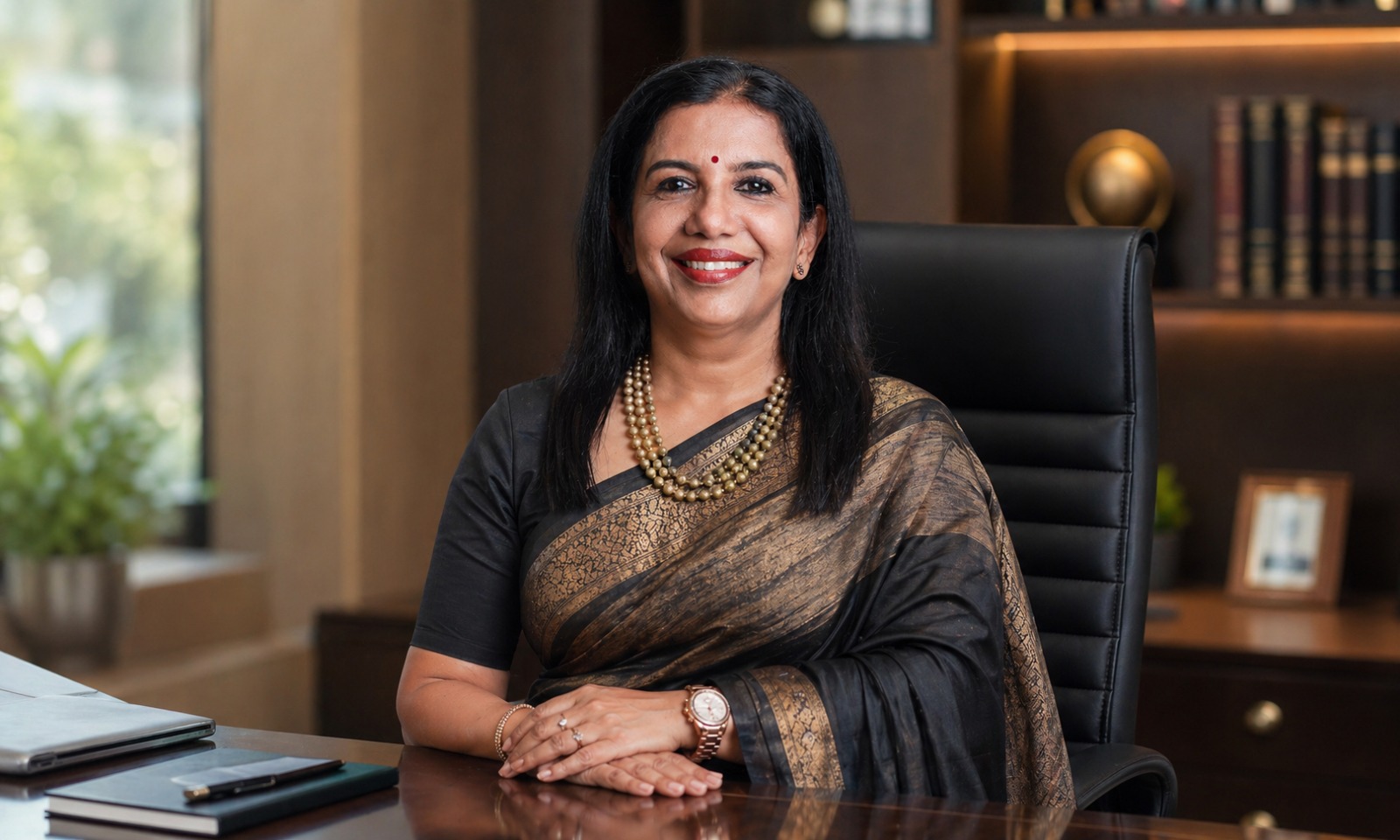
Lekha Balachandran is the Managing Partner/Director of Resitech Electricals, a prominent, Kerala-based manufacturer of heavy electrical equipment, including epoxy resin cast transformers and switchgear components. With over 30 years of experience, she is a pioneering woman entrepreneur in a male-dominated heavy engineering field. She is overseeing operations and driving growth in the heavy electrical equipment sector. Lekha is a B.Tech graduate from Calicut University. She began her career in 1989 and gained early experience in transformer manufacturing, later growing ResiTech into a renowned name.
Key Factors
Full Name: Lekha Balachandran
Education: B.Tech, Calicut University
Occupation: Managing Partner/Director, Resitech Electricals
Industry: Heavy Electrical Equipment Manufacturing
Experience: 30+ years
Known For: Pioneer woman entrepreneur in Kerala’s heavy engineering sector
Associations: FICCI, KMA, CII
Notable Award: TiEcon Kerala Women Entrepreneurship Award (2018)
The Industrial Journey
The factory floor hums with a constant, low-frequency rhythm. Coils are wound with near-microscopic precision, resin is cast under controlled temperatures, and transformers take shape in stages that demand both patience and exactness. There is little room for error here. Even a minor deviation in insulation thickness or curing time can compromise an entire unit.
In this space, Lekha Balachandran moves with quiet authority. She is not an observer, but part of the system itself, fluent in its language of voltage ratings, thermal endurance, and dielectric strength. In a sector where leadership is often associated with technical dominance and decades of shop-floor experience, her presence is both unusual and, over time, outstanding in its consistency.
Early Life and Entry into Engineering
Lekha’s entry into engineering followed a conventional academic route, but her career trajectory did not.
A B.Tech graduate from Calicut University, she began her professional life at a time when engineering, particularly heavy electrical manufacturing, remained overwhelmingly male-dominated. Her entry into the industry was shaped by circumstance as much as choice, coming after her marriage into a family associated with the sector.
What might have remained a peripheral association quickly became central. Instead of remaining at the edges of the business, she stepped into it, choosing to engage with the technical and operational aspects rather than confining herself to administrative roles.
Learning the Industry
Heavy electrical manufacturing is not an industry one learns through theory alone. It is built on tacit knowledge, accumulated through years of observation, trial, and error.
Lekha’s early years in the sector were defined by immersion. She spent time understanding transformer design, insulation systems, and production workflows. Epoxy resin cast transformers, one of the core products she would later specialize in, require a high degree of process control, particularly in environments where humidity and temperature can affect performance.
Learning the industry meant navigating both its technical complexity and its cultural barriers. Shop floors, vendor networks, and engineering discussions were not spaces where women were commonly seen, let alone heard.
Her approach was not confrontational but persistent. Credibility, in such environments, is earned through competence rather than assertion. Over time, her ability to understand the nuances of production and problem-solving established her position within the ecosystem.
The Birth of Resitech Electricals
After nearly 18 years of working within the industry, Lekha made a decision that would redefine her career, stepping out to build something of her own.
Resitech Electricals was founded as a partnership with her husband, Balachandran, who brought complementary strengths in marketing and business development. The division of roles was clear. While he focused on market expansion and client relationships, Lekha anchored the technical and operational backbone of the company.
The early years were marked by the familiar challenges of industrial entrepreneurship, capital constraints, vendor dependencies, and the difficulty of establishing credibility in a market dominated by established players.
Unlike consumer-facing businesses, where branding can create initial traction, manufacturing firms are judged almost entirely by performance and reliability. Products must meet stringent standards, often under demanding operating conditions.
For Resitech, survival depended on getting the fundamentals right, product quality, delivery timelines, and consistency.
Building a Manufacturing Brand
Over the past two decades, Resitech Electricals has evolved into a recognized player in its segment, particularly in epoxy resin cast transformers and related high-voltage equipment.
These transformers are critical in environments where fire safety, compact design, and maintenance efficiency are essential, such as commercial complexes, hospitals, and industrial facilities. Unlike oil-filled transformers, resin cast variants offer advantages in safety and durability, making them increasingly relevant in modern infrastructure projects.
Resitech’s positioning has been built on reliability rather than scale. The company has focused on delivering products that meet performance standards consistently, rather than aggressively expanding into unrelated categories.
Lekha’s role in this growth has remained deeply operational. Even as the company scaled, she continued to engage with production processes, quality control, and technical problem-solving.
This approach reflects a broader philosophy, that in manufacturing, leadership cannot be entirely detached from the shop floor.
Leadership in a Male-Dominated Sector
The challenges of operating in a male-dominated industry are often discussed in abstract terms. In practice, they manifest in subtle and persistent ways.
From initial skepticism about technical competence to exclusion from informal networks where business decisions are often influenced, women in heavy engineering face multiple layers of resistance.
Lekha’s response has been pragmatic. Rather than attempting to change perceptions directly, she focused on demonstrating capability through work.
Over time, this approach shifted the narrative. Clients and collaborators began to associate her not with novelty, but with reliability. In industrial sectors, where performance is measurable and outcomes are visible, this transition is critical.
Her leadership style reflects this grounding. It is less about visibility and more about execution, less about rhetoric and more about results.
The Role of Family
Behind the professional narrative lies a strong family framework that has supported and sustained her journey.
Her partnership with Balachandran has been central, not just in founding the company but in navigating its growth phases. The clarity in role distribution allowed both to focus on their strengths without operational overlap.
Her daughters, Niranjana and Malavika, have also been part of this ecosystem, contributing to the continuity and evolution of the enterprise.
Lekha often emphasizes that entrepreneurial success, particularly in demanding sectors like manufacturing, is rarely an individual effort. It is built on shared responsibilities and collective resilience.
Industry Presence and Recognition
Over the years, Lekha has become an active participant in Kerala’s industrial ecosystem.
Her associations with organizations such as FICCI, the Kerala Management Association, and the Confederation of Indian Industry reflect her engagement beyond her own enterprise. These platforms allow her to contribute to broader discussions on industrial growth, policy, and entrepreneurship.
Her recognition at TiEcon Kerala in 2018 as a woman entrepreneur underscores her position within the business community. However, such recognitions are often secondary to the more enduring validation that comes from sustained business performance.
Vision and Advocacy
Lekha’s perspective on the future of manufacturing is shaped by both experience and observation.
She has consistently advocated for greater participation of women in technical fields, not as a symbolic gesture, but as a practical necessity. As industries evolve and skill requirements diversify, the inclusion of a broader talent pool becomes essential.
Her message to aspiring women engineers is grounded in realism. The challenges are real, but so are the opportunities. Entry barriers are gradually lowering, but persistence and competence remain non-negotiable.
She also recognizes the changing landscape of electrical manufacturing in India, driven by urbanization, renewable energy integration, and increasing demand for reliable power infrastructure.
Future Outlook
Today, Resitech Electricals occupies a stable position within its segment, known for its focus on quality and technical reliability.
The company’s future trajectory will likely depend on its ability to adapt to evolving technologies, integrate automation where necessary, and respond to shifts in energy infrastructure.
For Lekha, the question is not just about scaling the business, but about sustaining its core values as it grows.
Her legacy is not defined by scale alone, but by the pathways she has opened. In an industry where women are still underrepresented, her presence has expanded the boundaries of what is considered possible.
As she continues to lead and mentor, her journey offers a reference point for the next generation of engineers and entrepreneurs, one that demonstrates that persistence, technical competence, and clarity of purpose can redefine even the most entrenched spaces.
In the end, her story is less about breaking barriers in a dramatic sense and more about steadily dissolving them, an outstanding achievement in a field where change often comes slowly, but decisively.
Recognition
She is an active member of industry bodies like FICCI, KMA, and CII,
TiEcon Kerala Women Entrepreneurship Award in 2018.